article
Reaching the fata morgana, by Inês Mendes Leal, at the Boavista Gallery
“In Reaching for Fata Morgana, which, surprisingly, is her first solo exhibition—curated by Francisca Portugal—all of this happens. Continuing with a strong interest in the magic of air, the artist establishes heat as a source of research, developed between periods in the Atacama Desert in northern Chile and during her artistic residency at No Entulho, where she explores matter through the phenomenon of fata morgana, an optical illusion of image inversion on the horizon caused by differences in air temperature and whose etymology, it is said, originates from Arthurian legends, with the sorceress Morgan le Fay, suspected of shape-shifting and deceiving sailors at sea with supposed mirages.”
I am truly thrilled to discover a reflection on the contexts of artists so clearly pointed out at the heart of their practices. When this happens, the work encompasses and reveals a depth that, in my view, establishes a genuineness that produces an unparalleled sense of origin. I am, therefore, describing the feeling I have every time I encounter the work of Inês Mendes Leal.
Having followed the artist's career for some time, I'm very interested to know that her work—at least from a certain point when, I believe, it gained much more consistent momentum—stems from remembering sailing trips with her father. Traveling with the wind, then, led her to develop a curiosity about the invisible forces of the natural laws of our universe, driving her to explore how she can eventually give them some form by bringing them into an exhibition space in a site-specific or site-sensitive style, while simultaneously trying to preserve their qualities of sensation and relationship through sound and moving images. I confess, it's truly stimulating to observe her processes and quickly realize that they exhibit a well-balanced organization between notions of exploration and investigation, a union of diverse fields of knowledge that allows her to increasingly expand her results with a refinement that is becoming ever more distinctive.
In Reaching for Fata Morgana, which, surprisingly, is her first solo exhibition—curated by Francisca Portugal—all of this happens. Continuing with a strong interest in the magic of air, the artist establishes heat as a source of research, developed between periods in the Atacama Desert in northern Chile and during her artistic residency at No Entulho, where she explores matter through the phenomenon of fata morgana, an optical illusion of image inversion on the horizon caused by differences in air temperature and whose etymology, it is said, originates from Arthurian legends, with the sorceress Morgan le Fay, suspected of shape-shifting and deceiving sailors at sea with supposed mirages1.
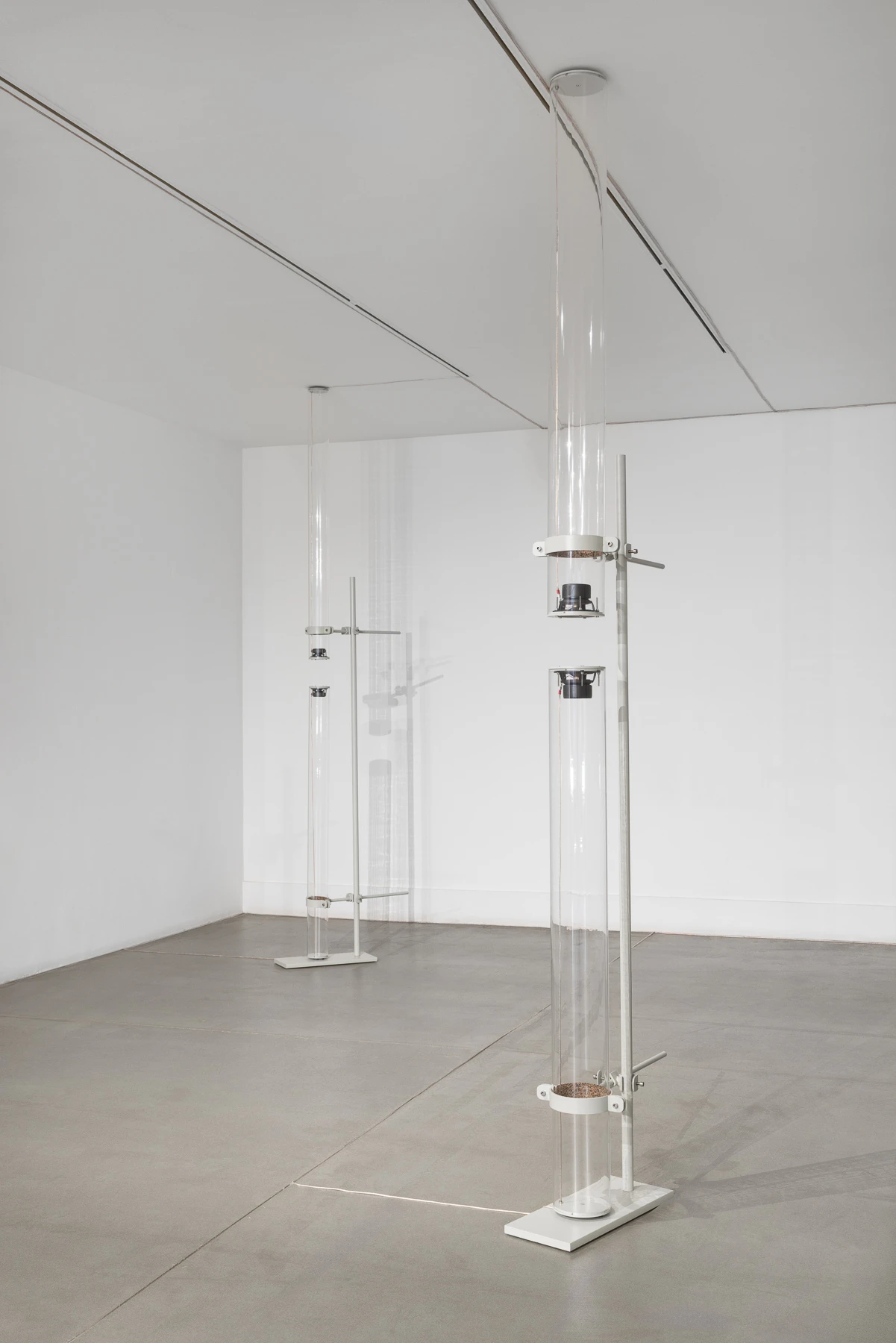
Under this premise, the first piece presented to us, on the ground floor of the Galeria da Boavista, is Out of phase, an installation composed of a glass pipe arranged along the elongated room, which seems to whisper something. As we approach them, the sounds both define themselves, sketching the landscape with chirps, reverberations, sounds of wind recorded in the desert, and Inês's voice, and then dilute and fade away. This sonic fading in the tubes, produced by the insertion of two columns facing each other where one produces the negative frequency of the other, reflects, in a strongly conceptual way, the temperatures that produce the mirage and, in the end, cancel each other out.
Upstairs, Concert of Fire is shown, a video that presents the artist's catalytic curiosity with an original demonstration of the pyrophone, the musical organ composed here of pipes identical to those in the previous work, whose sound is produced through the combustion of flames. The heat destabilizes the air, producing reverberations within the glass, where the flames become singing, playing a melody with poetic notes that evoke the possibility of the sorceress's voice, a semi-anatomical sketch of natural invisibilities. When I spoke earlier about the notions of investigation and exploration, I was thinking about how Inês manages to understand the congruence between science and art as a creative possibility, particularly evident in these two pieces. It is here that her work excels, in a refinement that seems to be in constant evolution, between an increasingly unique visual style, attentive theoretical thinking, and an ability to make her presentation sufficiently open that it gives us opportunities to connect with it.
Finally, the video that gives the exhibition its title is presented, showing, for about eight long minutes, the artist walking away from us in the Atacama Desert. Going further and further away, the artist's figure is distorted more and more by the illusions of Fata Morgana until, finally, her head appears at her feet and her body is inverted, eventually dissolving into thin air. This may be the climax of this project, when the air thickens with doubt… Has the artist finally achieved Fata Morgana? Is she, now, Fata Morgana herself?
I would say none of the options. And I believe Inês doesn't even want an answer to that. The exhibition itself, in fact, establishes an impossible answer; the exhibition is itself impossible. Fata morgana will never be attainable, just as the horizon will always elude us. The premise of the artist's work is an impossibility, and that, there it is, is precisely the best that can happen. The work becomes free, detaches itself, and it itself reaches its moment of infinity or, in a slightly more radical way, can transform into a landscape. I remember the day the Little Prince, on his tiny planet-asteroid, saw 43 sunsets simply by slowly moving his chair a little further forward, never letting the sun fall behind the horizon and the day end. Inês Mendes Leal, in a way, does the same.
Reaching for Fata Morgana, by Inês Mendes Leal, will be on display at the Galeria da Boavista until September 6, 2026.
1 In fact, this phenomenon is perhaps the main factor behind the countless tales and myths of magical or supernatural occurrences throughout the ages.
BIOGRAPHY
Tomás Saraiva (b. 2002) has a bachelor's degree in Art and Heritage Sciences from the Faculty of Fine Arts in Lisbon and a master's degree in Curatorial Studies at the College of Arts of the University of Coimbra. His work focuses on the intersectionality between the practice of the visual arts and the practice of curation and mediation, through an exploration of relational mechanisms and their impact on the apparatus of thought and action. At the same time, he has been organizing and participating in various exhibitions both nationally and internationally.
ADVERTISING
Previous
article
11 Aug 2026
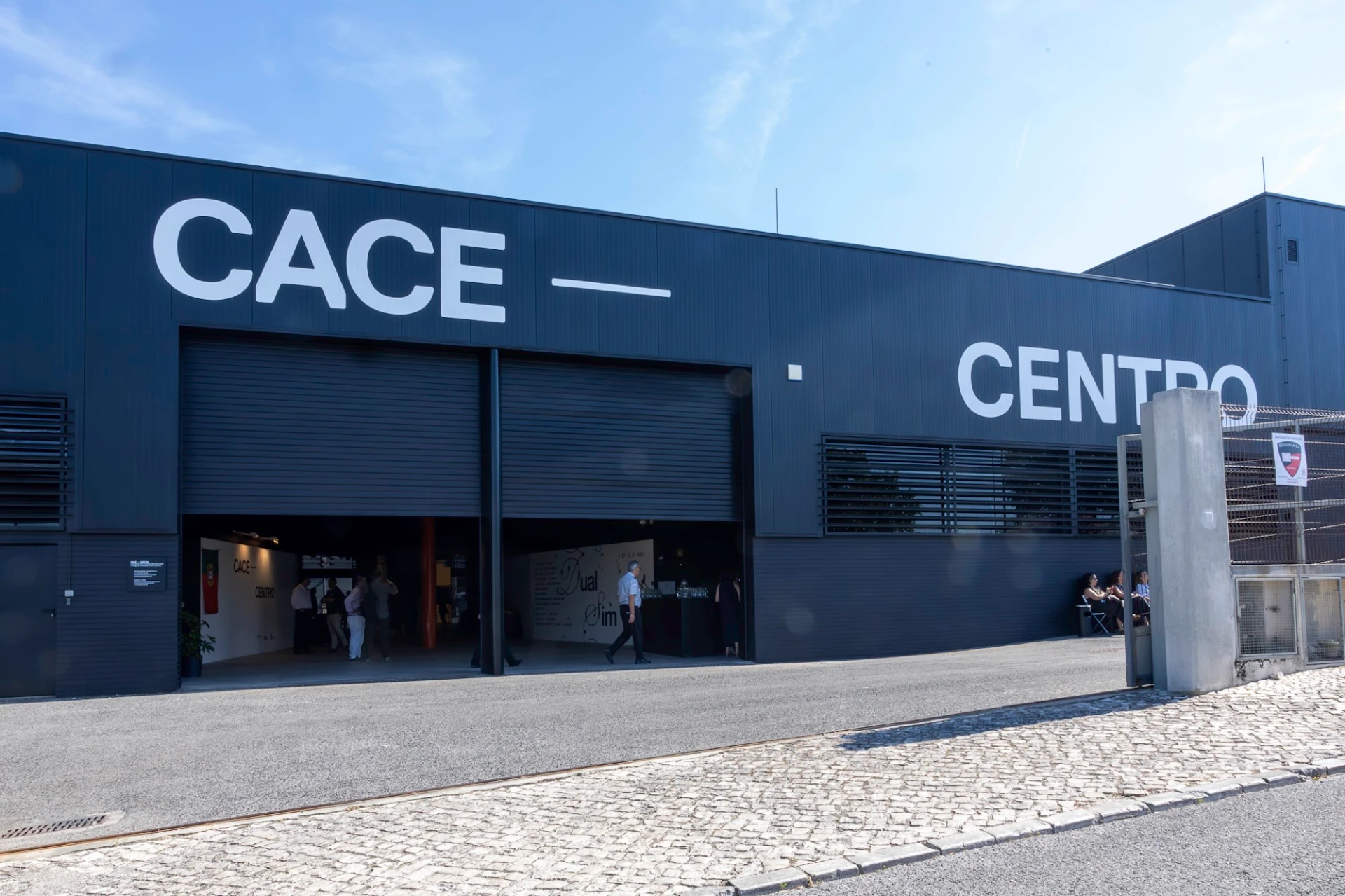
Dual Sim at CACE-CENTRO: what a collection produces
By Laurinda Branquinho
Next
article
17 Aug 2026
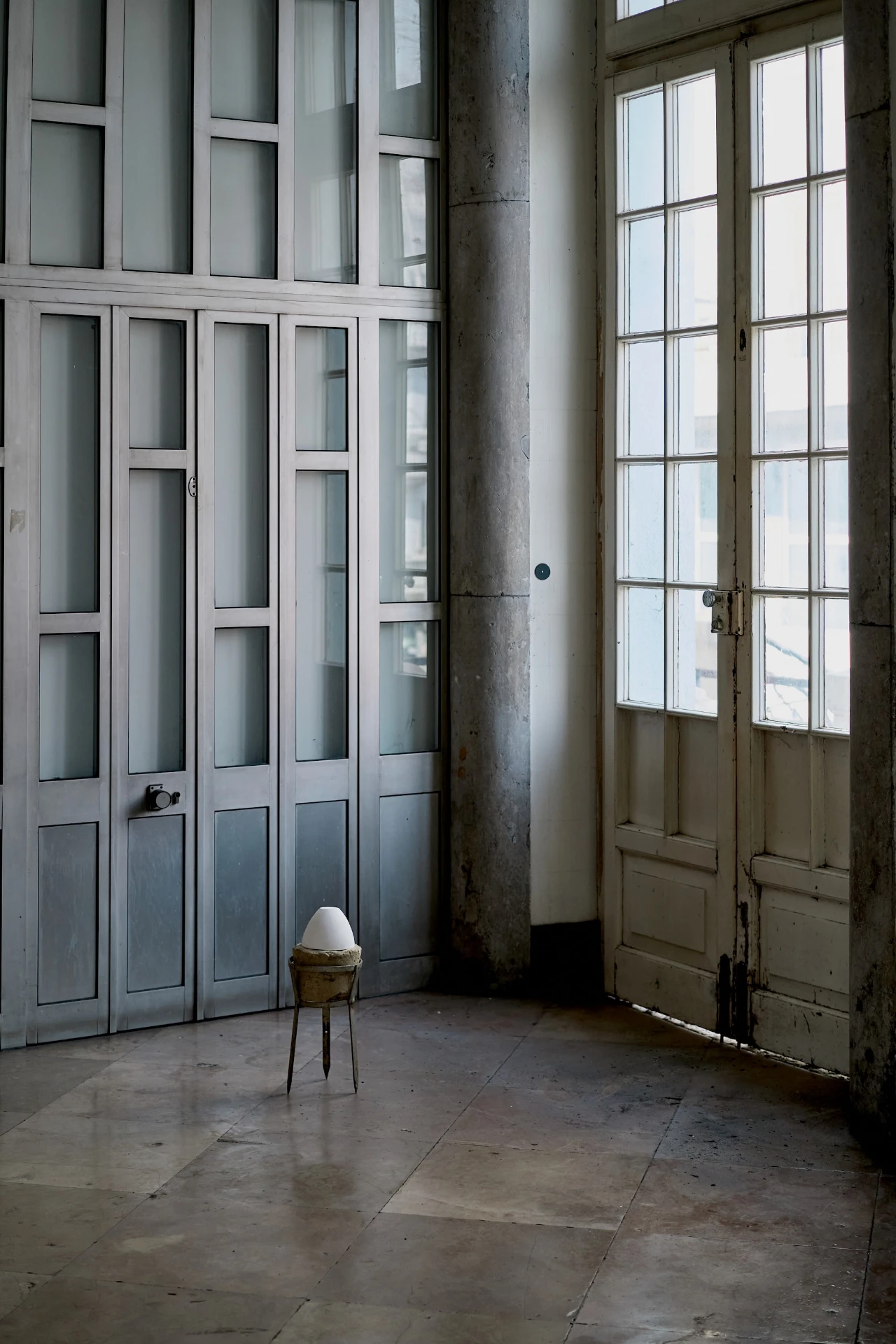
Intervalo, by Eduardo Matos: the first step in a station that has already passed
By Rita Barqueiro
Related Posts
article
03 SEP 2026
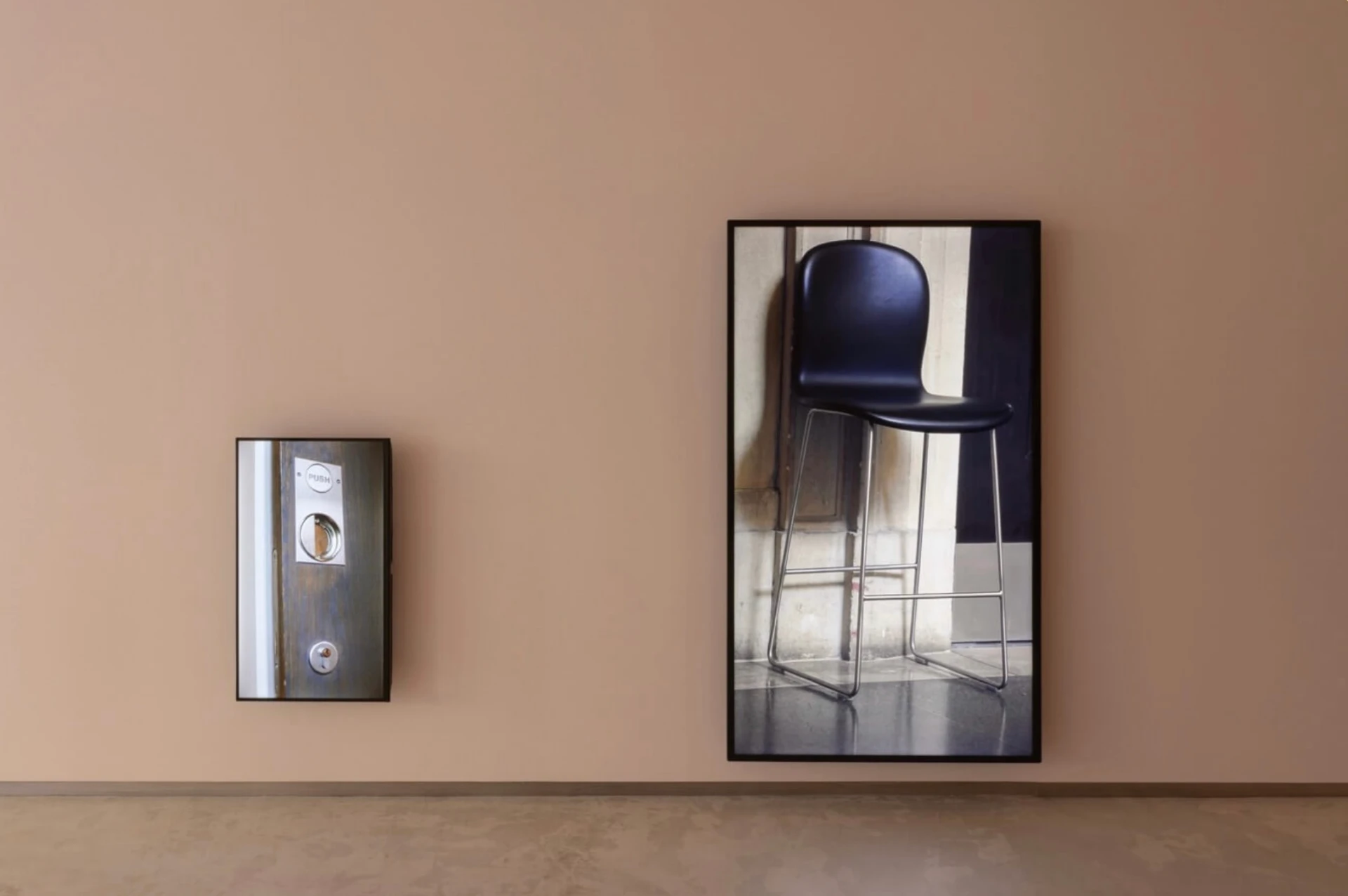
Radical Gestures, by Tatiana Macedo, at Rialto6
By Tomás Saraiva
article
13 AUG 2026
Reaching the fata morgana, by Inês Mendes Leal, at the Boavista Gallery
By Tomás Saraiva
article
13 MAY 2026
itede, itepe, by Dorota Jurczak, at Rialto6
By Tomás Saraiva
article

16 MAR 2026
Espaço Intermédio, by Cristina Ataíde
By Tomás Saraiva