agenda
The duo Carla Cruz & Cláudia Lopes was selected for the UmbigoLAB artistic residency at Fundação da Casa de Mateus 2026
According to the Jury's decision – comprised of Umbigo, the Casa de Mateus Foundation, the Millenium bcp Foundation, Liliana Coutinho, and Matilde Seabra – among the various eligible applications, the proposal by Carla Cruz & Cláudia Lopes stood out for the distinct nature of its approach compared to projects previously developed during their residency at the Foundation, as well as a coherent continuity with their artistic trajectory and vocabulary.
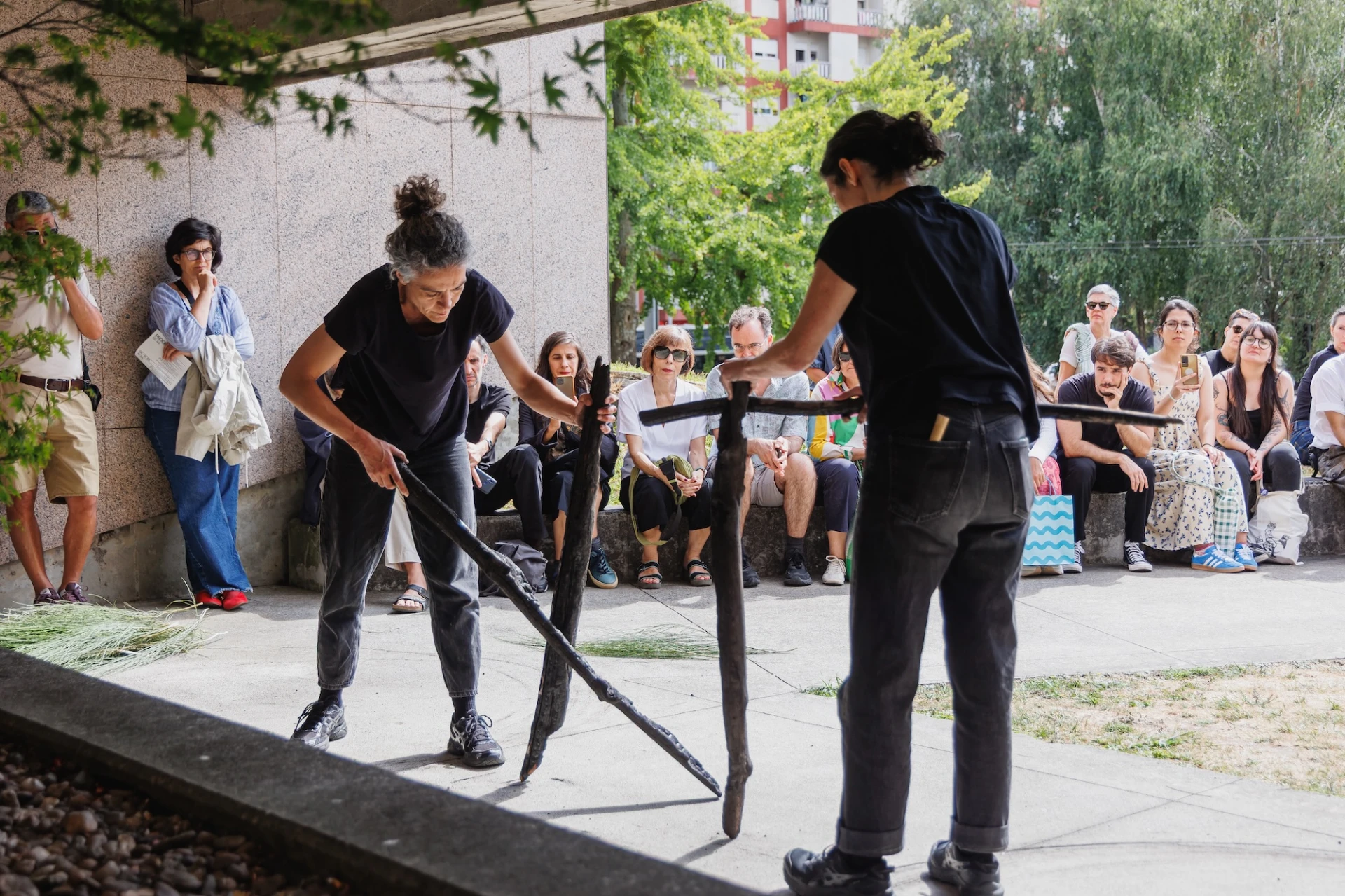
The Jury also highlighted the duo's consolidated trajectory in the field of performance and how the proposal stems from concrete research on the territory, revealing a particular interest in the issues of sedimentation and crossed temporalities – dimensions considered especially fertile for reflection on heritage. The duo's previous research on subterranean landscapes, particularly the Wolfram Mines, was also highlighted, its relevance reinforced by the territorial proximity of the Casa de Mateus Foundation to the lithium extraction area in the Vila Real district. Furthermore, the fact that Carla Cruz and Cláudia Lopes live and create from Trás-os-Montes also places their practice at the center of urgent reflections on the depopulation of the Iberian Peninsula, which is also relevant for thinking about the territory of the Casa de Mateus Foundation.
Since 2020, Carla Cruz and Cláudia Lopes have been developing a joint reflection on the notion of time and the relatively ephemeral relationship we have with it, in contrast to the persistence of objects, places, and geologies. In their projects, they explore themes such as circularity, fragmentation, sedimentations, landscapes—natural, constructed, transformed, and fictional—as well as crossed temporalities, ends of the world, and other speculative prefigurations. Between 2021 and 2023, they participated in a research project in the old tungsten mines of Regoufe, which gave rise to the exhibitions Pedras, at the Monastery of Arouca and the Trilobite Museum, and Escombreiras, at the Ferreira da Silva Laboratory in Porto, as well as the publications Medula and Escombreira, published by i2ADS.
They also presented the solo exhibitions Sedimentos (2021), at the Júlio Dinis House Museum, in Ovar; Superfície (2023), at the Extéril Gallery, in Porto; Inerte (2023), at Espaço UM, in Guimarães; do subterrâneo (2024), at the Nuno Centeno Gallery, in Porto; and Gramáticas Pardas (2025), curated by Ana Anacleto, at CAAA, in Guimarães. They participated in the Trás-os-Montes Biennial (2024), with the installation Superfície, and presented the performance Ar (2025), developed during a residency at the Maceira School, at the Maia Biennial.
The duo will now have at their disposal a considerable wealth of knowledge, techniques, and materials, which can dictate new directions in their artistic investigations and practices, and they can also take advantage of the territorial integration that the Casa de Mateus Foundation fosters.
ADVERTISING
Previous
agenda
14 Sep 2026
The Supporting Act Foundation opens its 2026 Grants
By Umbigo
Next
article
14 Sep 2026
Space and time: lugar-depois, at Museu Zer0
By Ana Isabel Soares
Related Posts
agenda
14 OCT 2026
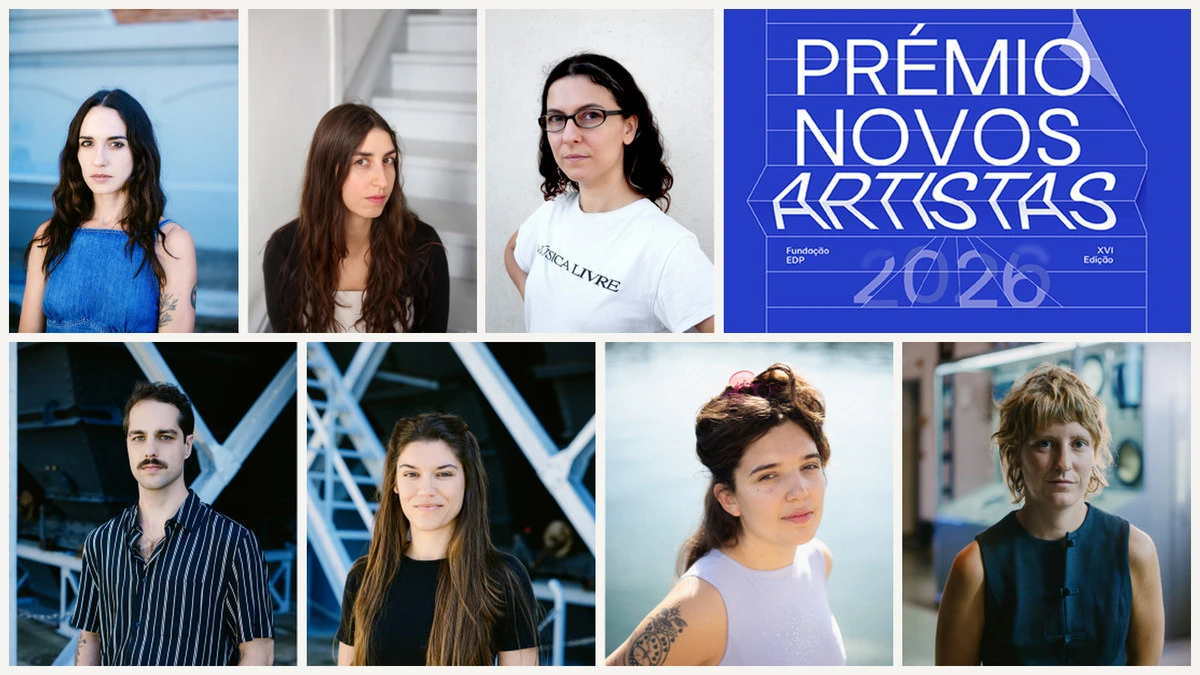
Meet the finalists of the 16th EDP Foundation New Artists Award
By Umbigo
agenda
23 SEP 2026
Opening of the NOVA Mafra Hub – Music, Art and Technology with the exhibition 'Amor Fati'
By Umbigo
agenda
22 SEP 2026
Cycle of conversations ‘FLAD Collection: The Dialogues’
By Umbigo
agenda
14 SEP 2026
The duo Carla Cruz & Cláudia Lopes was selected for the UmbigoLAB artistic residency at Fundação da Casa de Mateus 2026
By Umbigo