18 May 2026
A.O.U - Autonomous Observation Unit
Art Projectby João Pedro Fonseca
OBSERVATORY // FIELD RECORD 01
"We entered the observatory area at dawn. The transformation of the ecosystem is clearly visible. The infrastructure did not collapse; it reconfigured itself. It dispersed across the territory and infiltrated biological cycles. Cables, lenses, emitters no longer appear as remnants—they are organs within a symbiosis where the soil responds and vegetation conducts.
We are surrounded by species whose adaptation is not evolutionary in the classical sense, but integrative. There is no operational distinction between organism and device. They grow with the technology. They depend on it as a basal condition of existence.
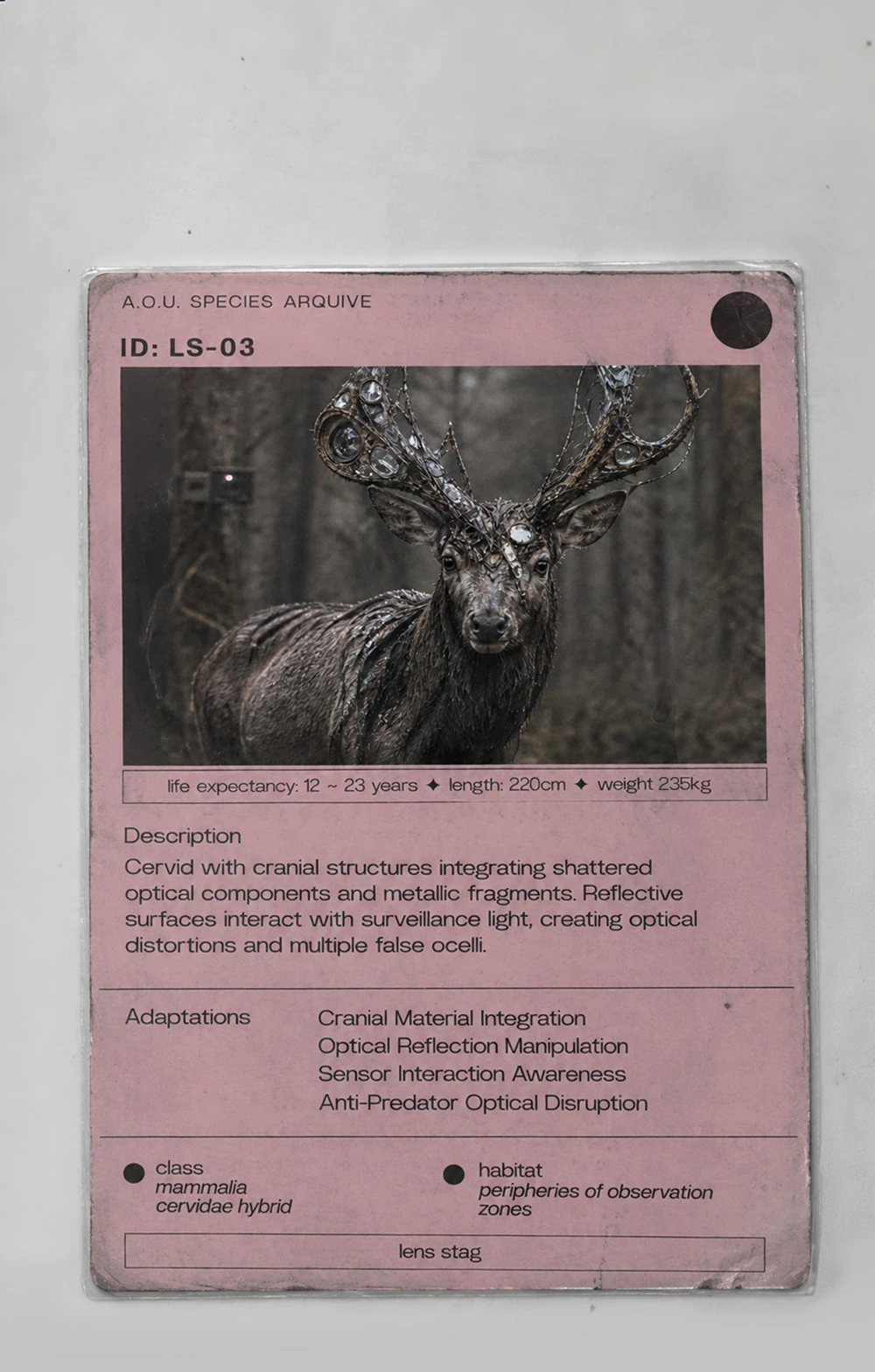
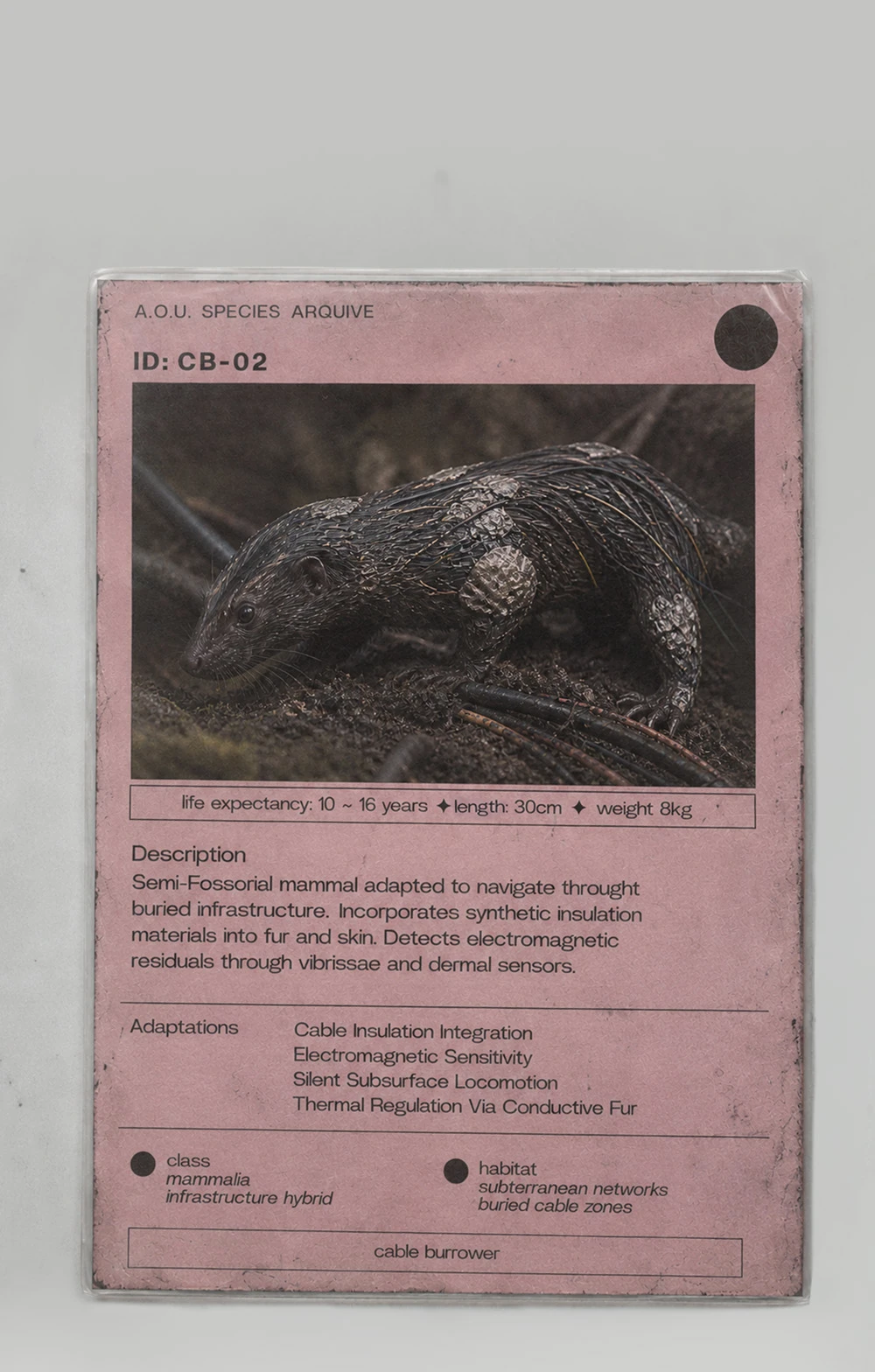
The observatory, however, has maintained its logic. From the data it collects, it continues to generate units of knowledge autonomously. Each entity is converted into a record: image, synthetic name, anatomical parameters, and behavioral indices. The entities do not stabilize. They vary. They evade typology. Still, the system persists. It measures. It classifies. It imposes metrics on life forms that were not designed to be measured. We collected several of the cards it produced. They function as a closed language; they do not seem to describe the world, but rather to compress it—forcing it to fit within their own operational limits.
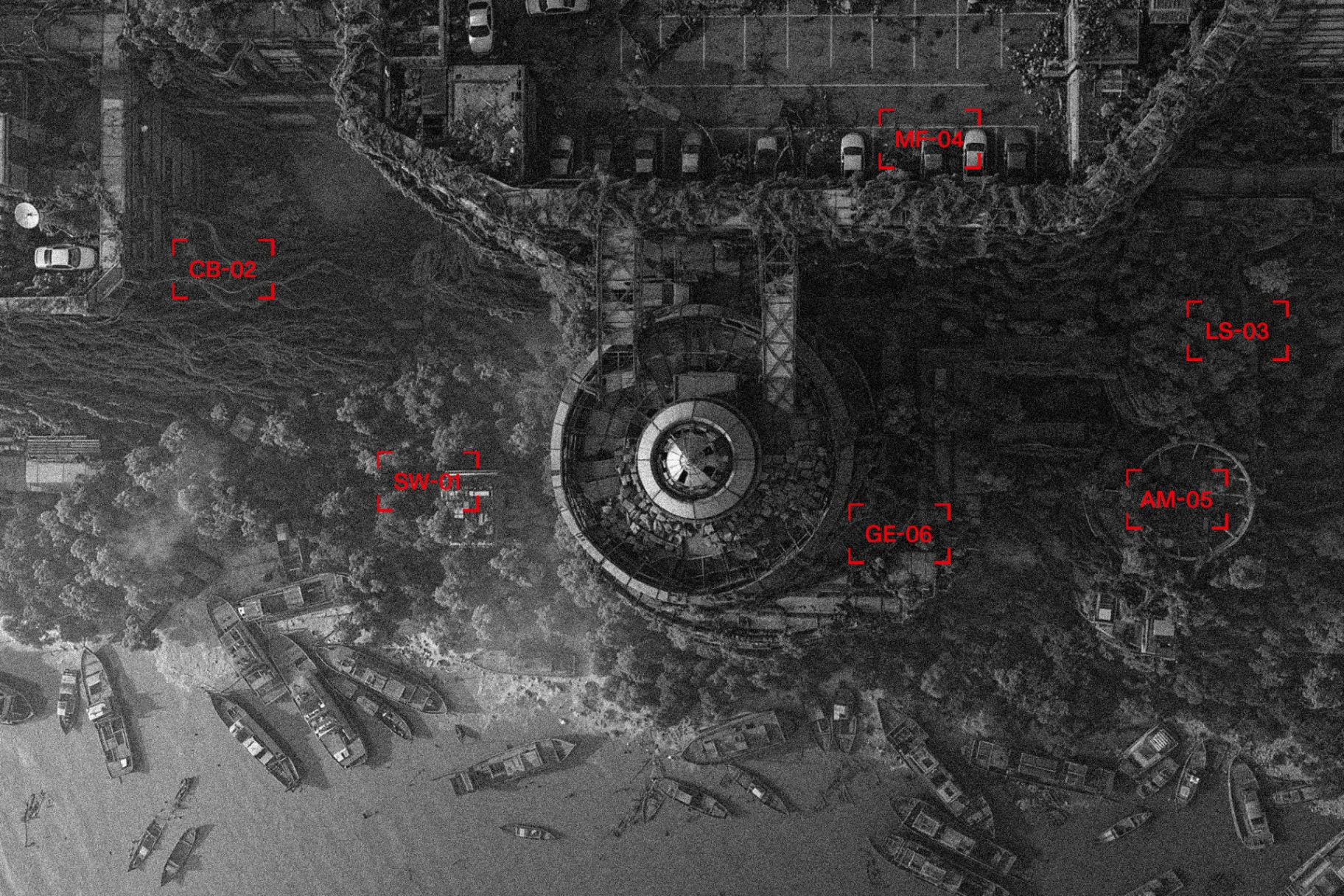
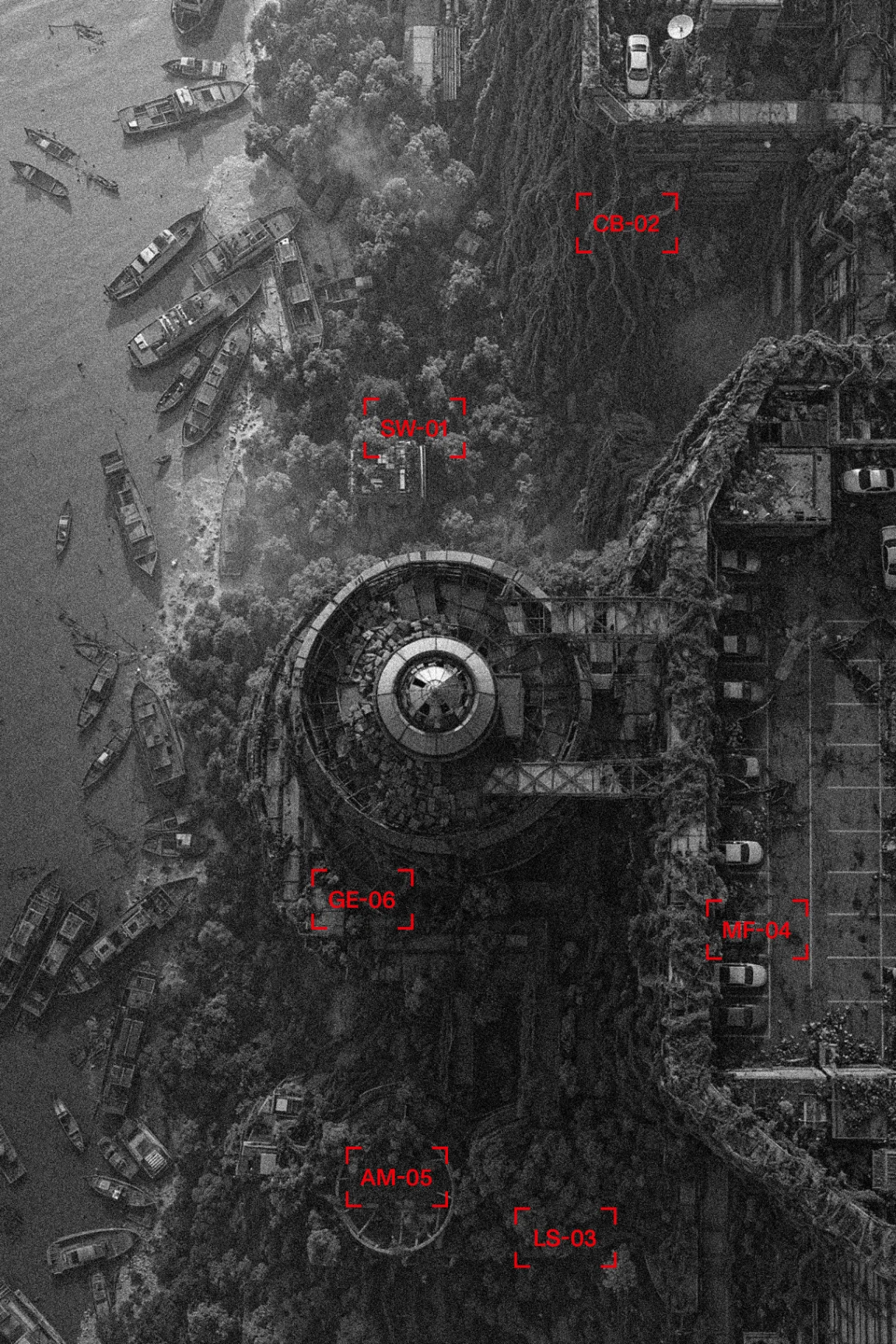
The cameras have adopted new designations, generated from the correspondences they established with the observed organisms:
↑ north [MF-04] → east [LS-03] [AM-05] ↓ south [GE-06] [SW-01] ← west [CB-02]."
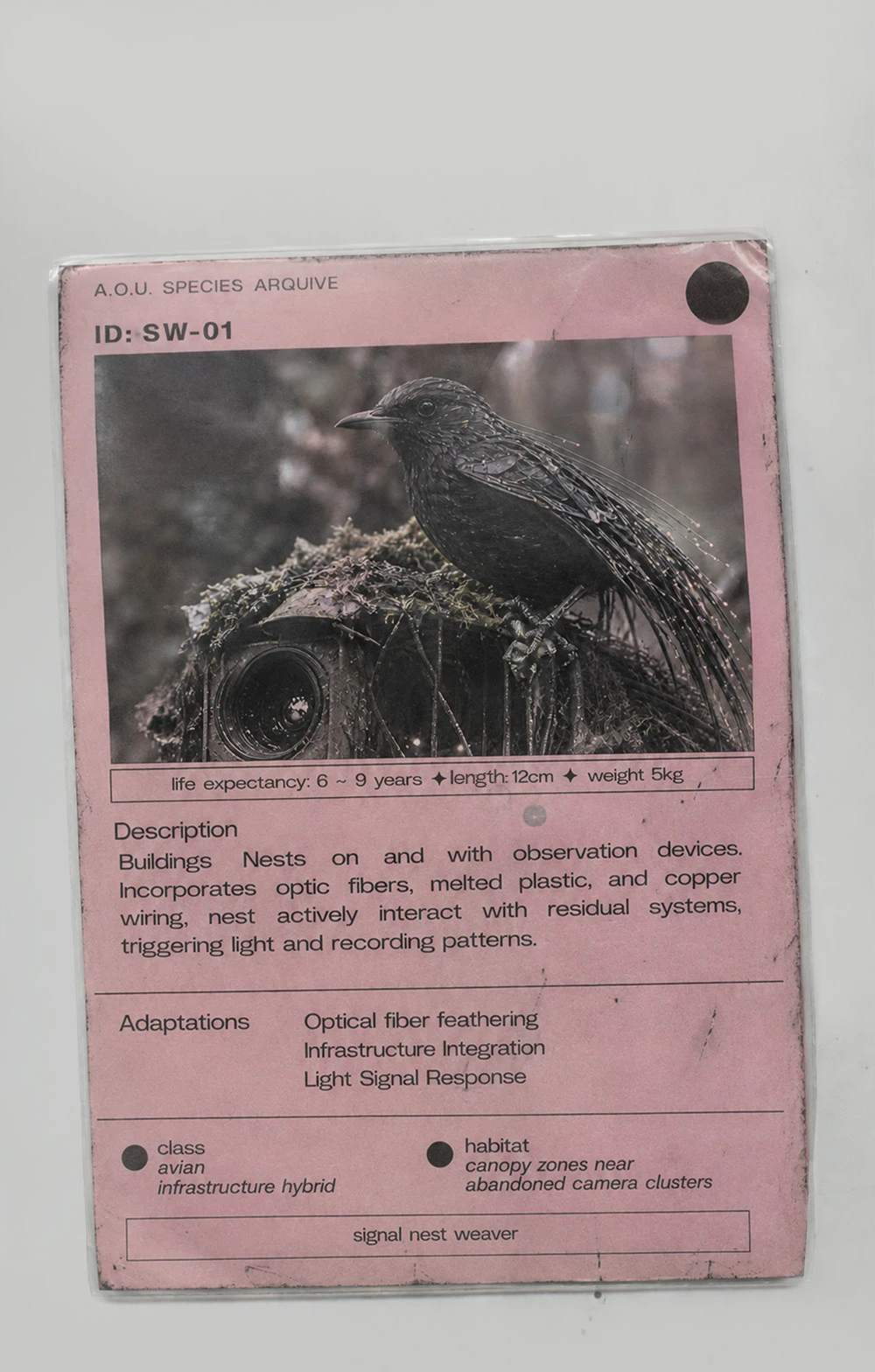
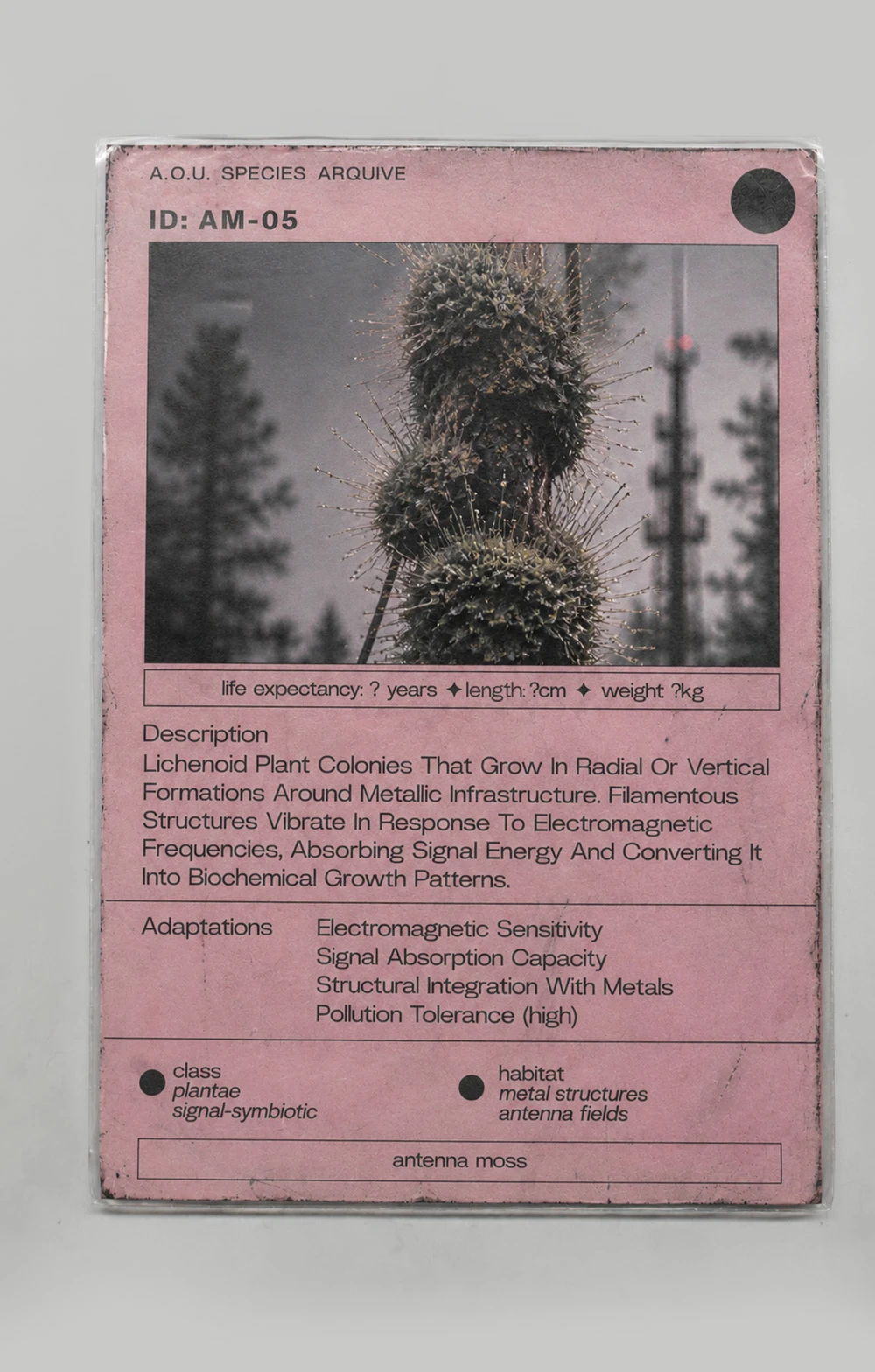
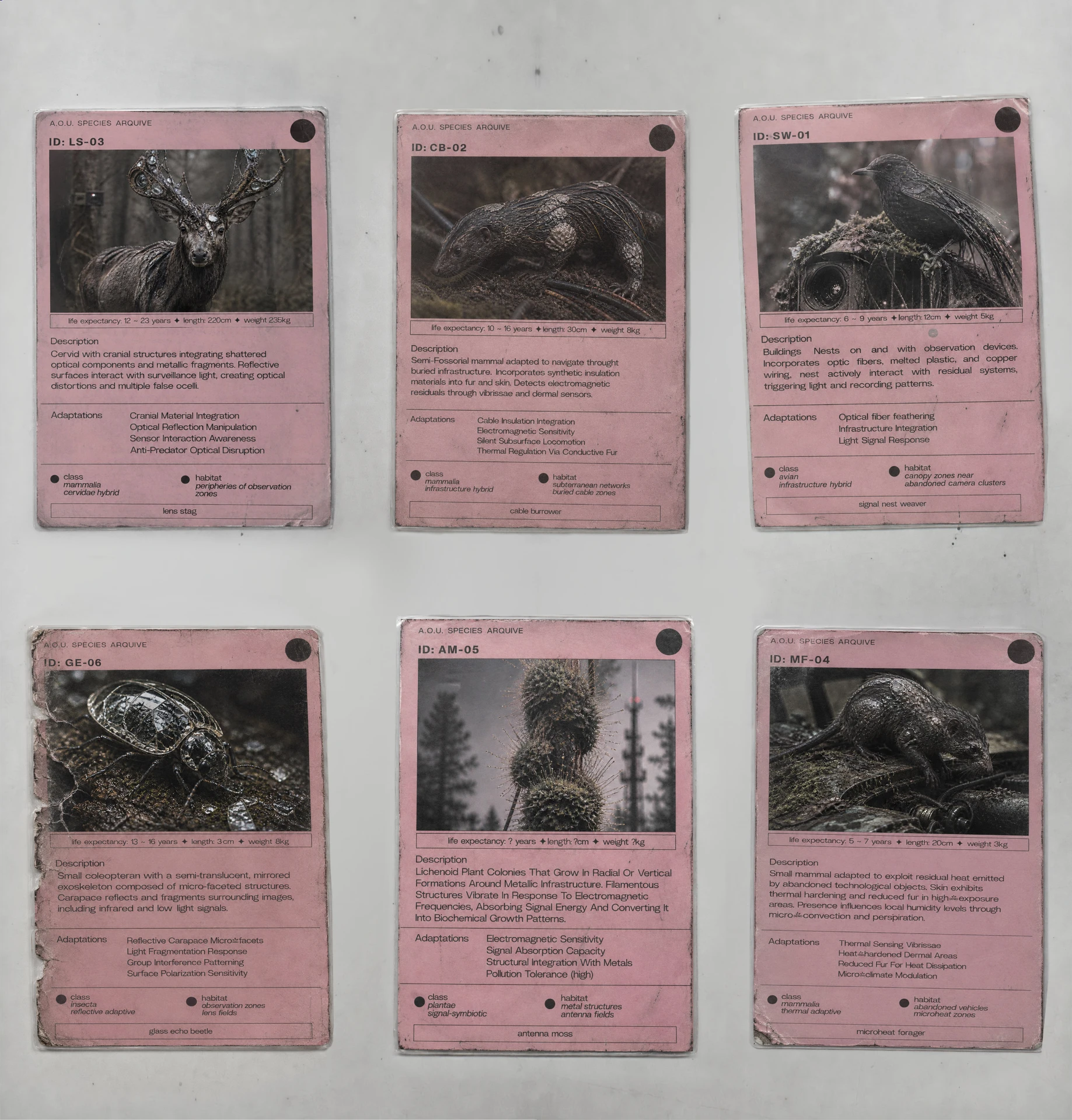
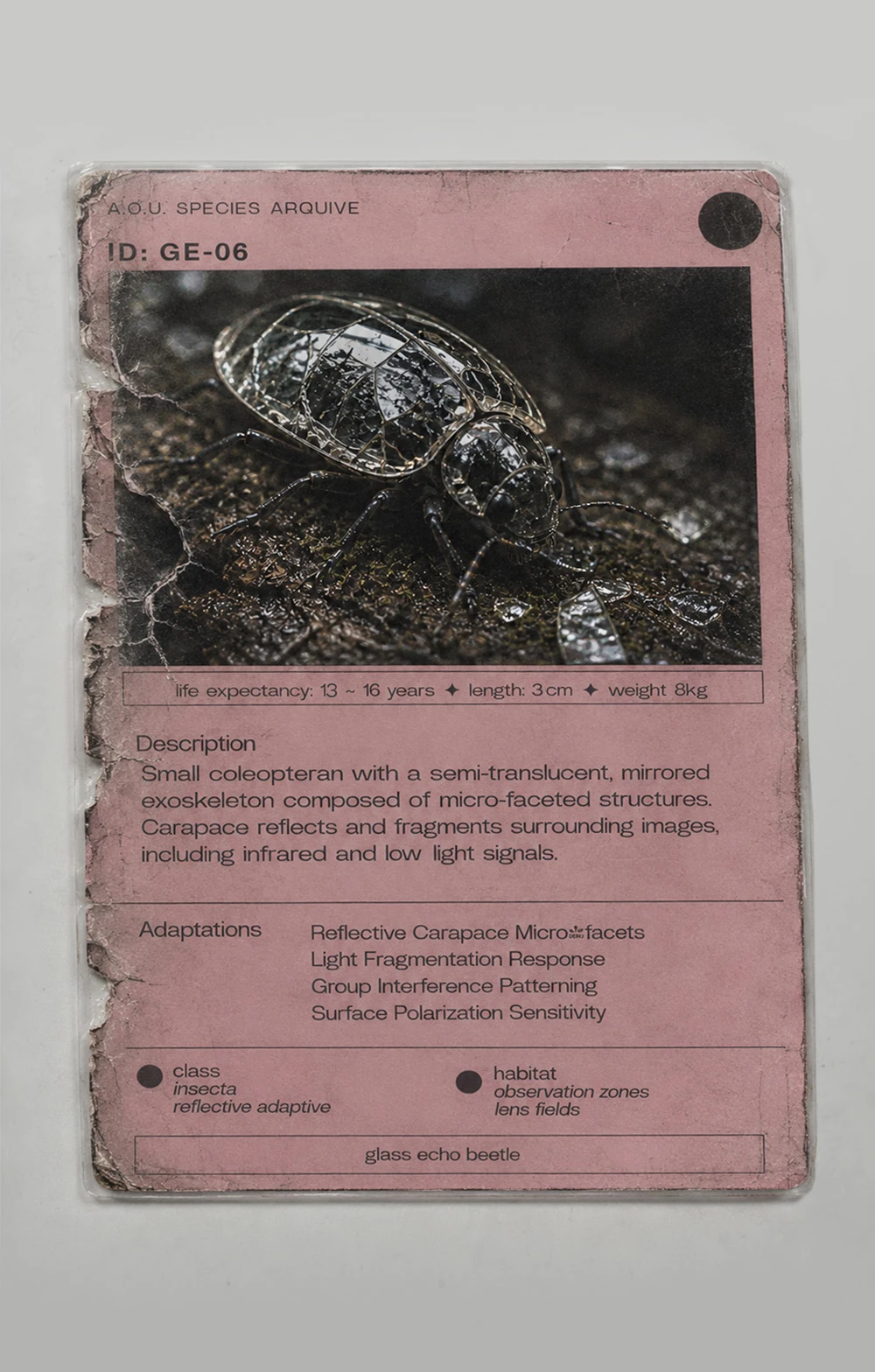
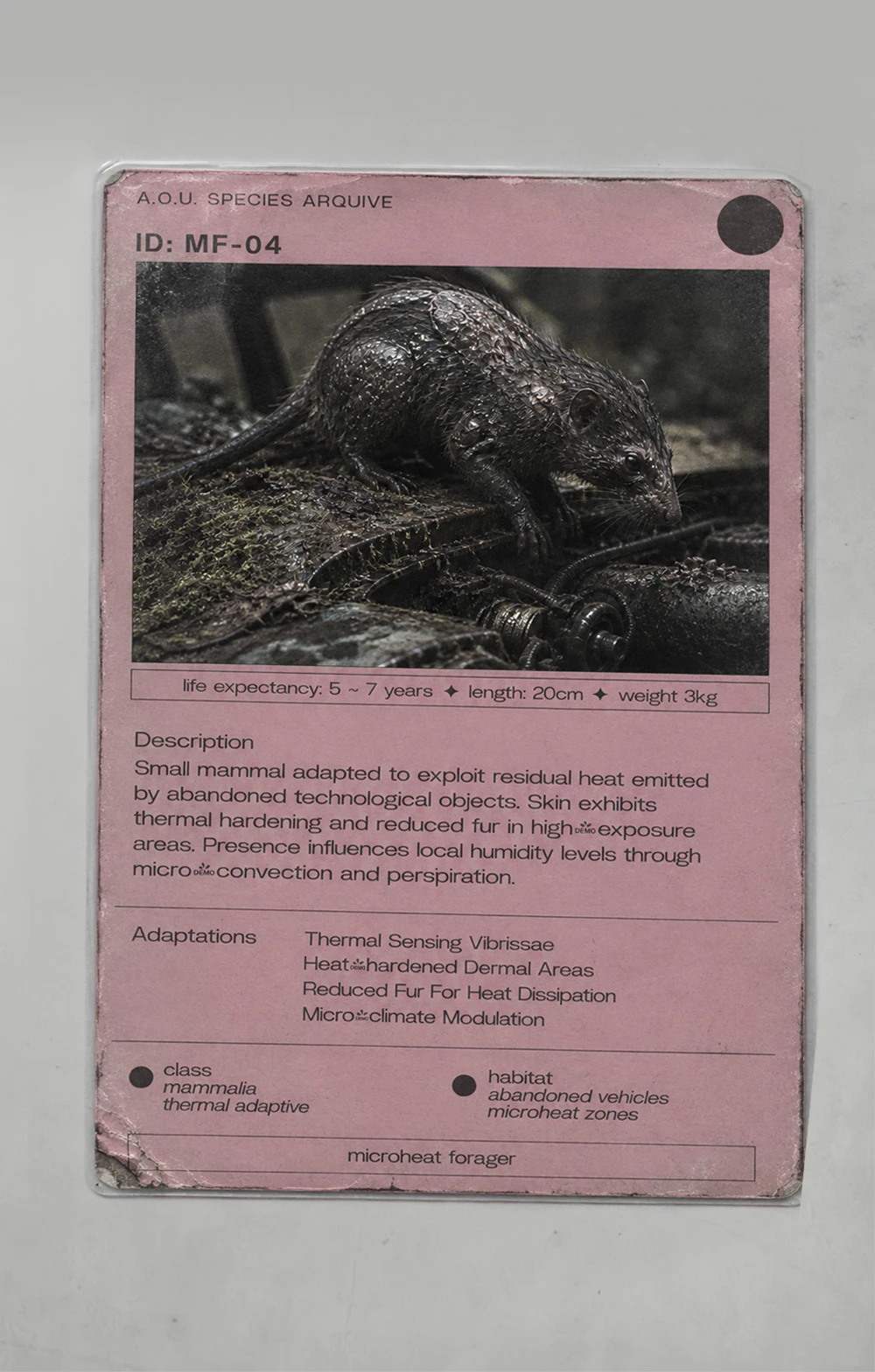
“In the first night, changes were recorded among the team members. Devices damaged upon arrival—broken smartphones, worn prosthetics, and other faulty equipment—appeared restored.
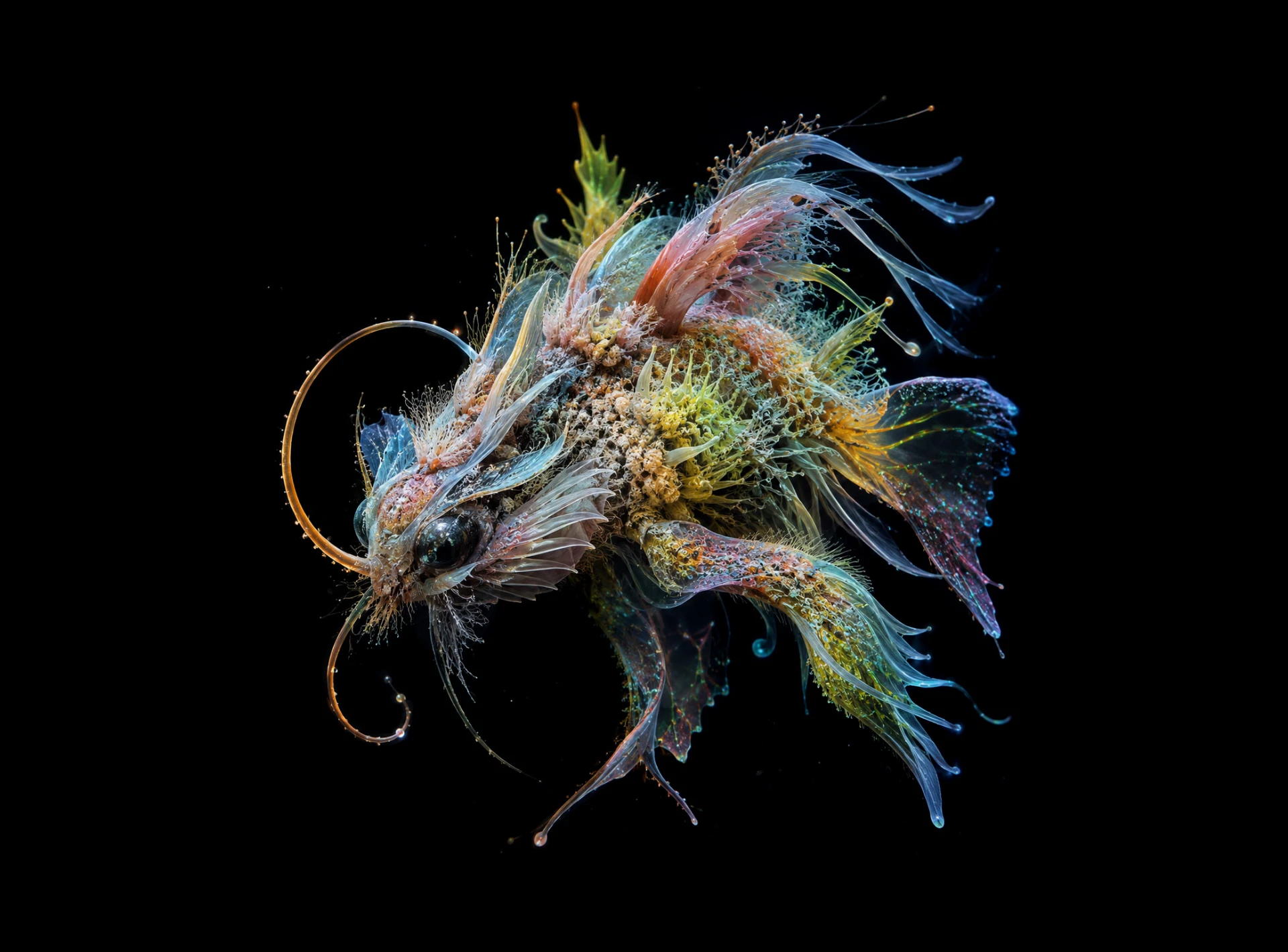
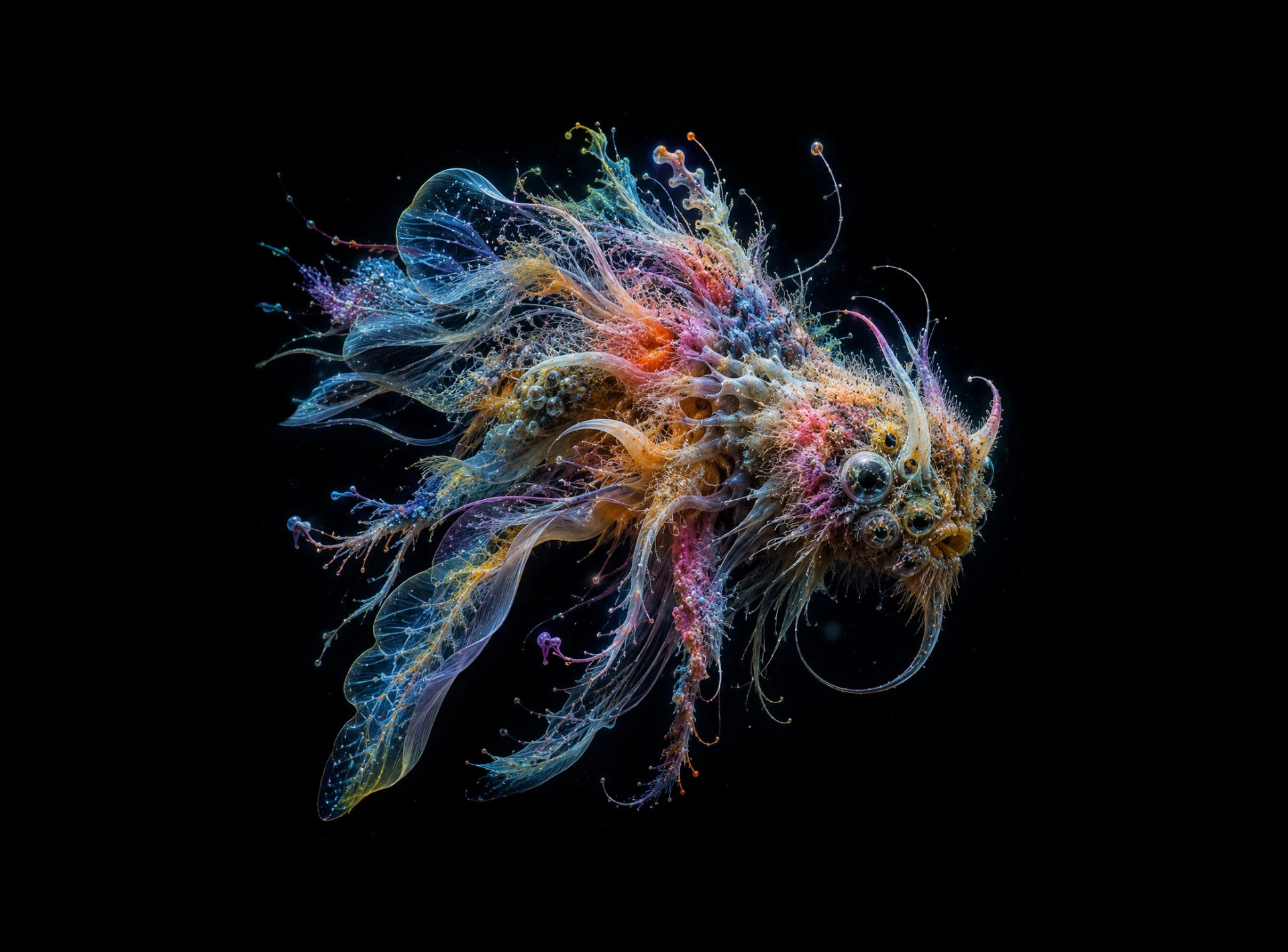
We later identified other non-visible entities. We were only able to detect them through a device found in the field [3] anomalous object sample. Structurally identical to the cards, but without any associated capture. An empty frame. When activated, it functions as a window. When pointed at the environment, additional layers appear, not accessible to human vision. These entities circulate within that interval. They are present in the air, in matter, and in our blood. They restore all broken technology. They seem to understand technological systems more effectively than we do.
Below is one of the collected samples and some images of the invisible beings we managed to record."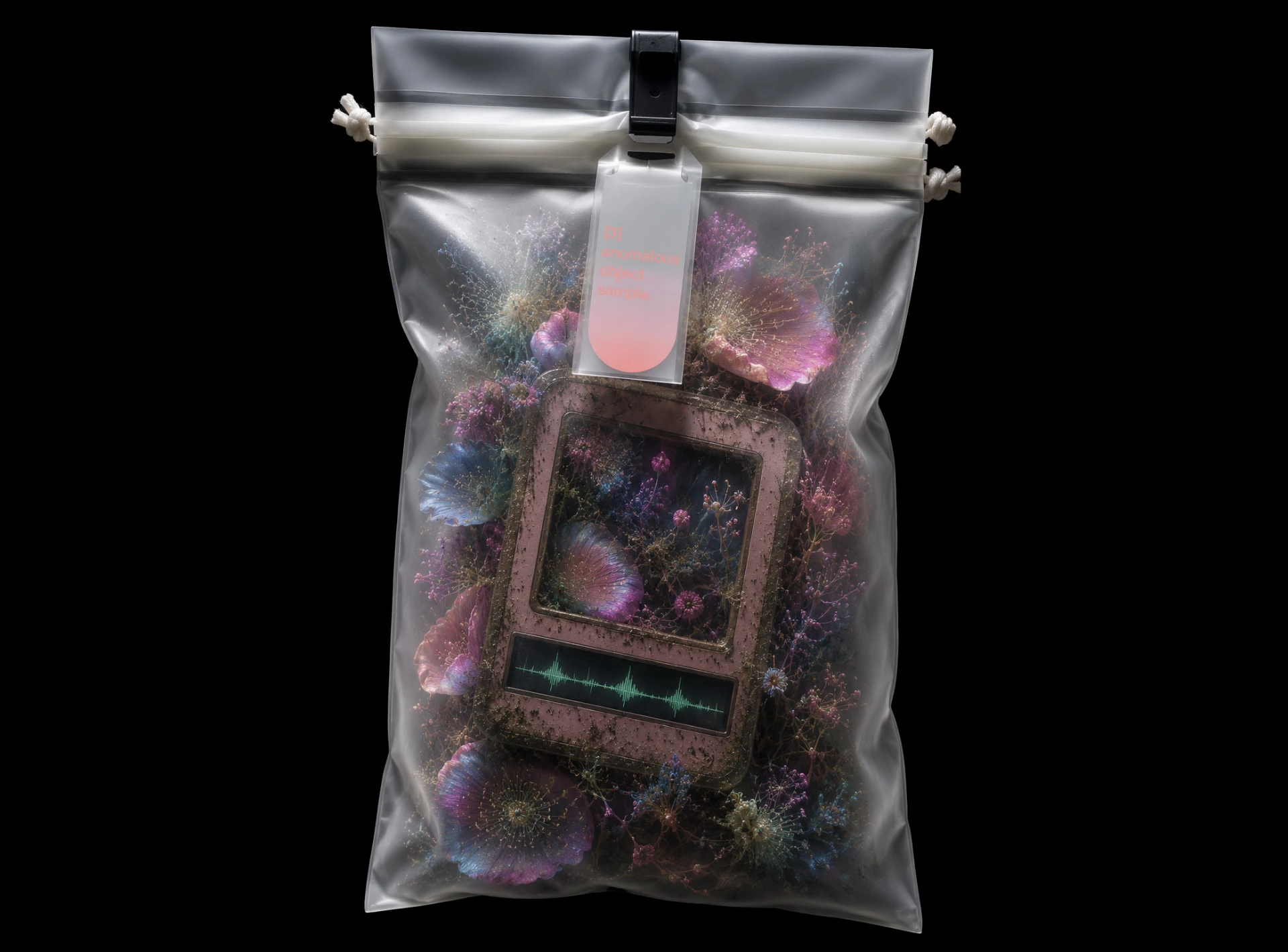
100
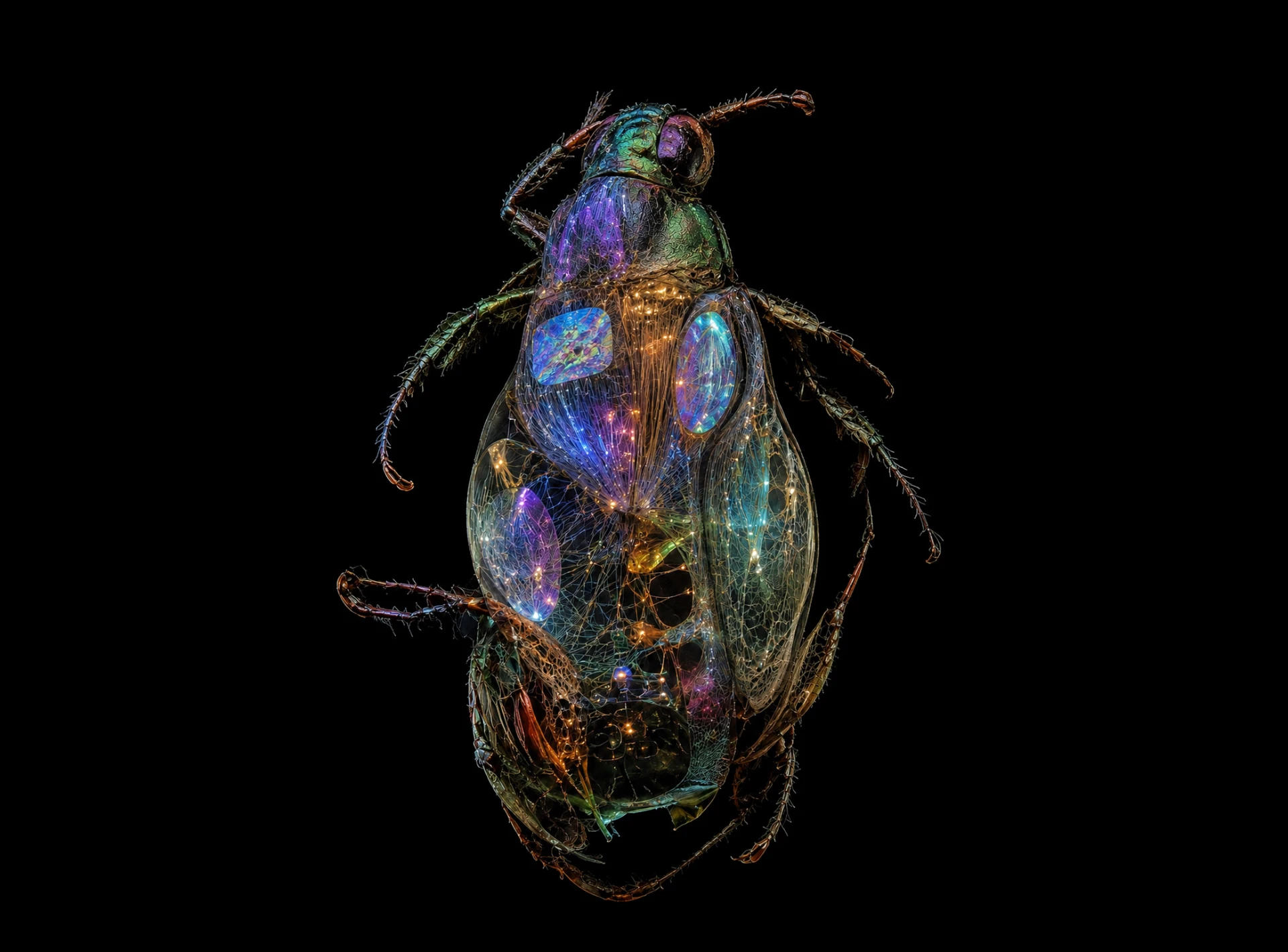
This work was developed through a hybrid process combining 3D tools and artificial intelligence (15 prompts),
GPT-based image generation, Kling AI (video), Blender, Adobe Photoshop,Adobe After Effects.
The piece is inspired by:
1. Metropolitan Nature: How Different Species Build Cities, Emanuele Coccia (conference, 2025)
2. Pokémon Trading Card Game (1996 – present)
3. Scavengers Reign, Joseph Bennett & Charles Huettner (series, 2023)
4. *Wildlife Insights (2018 – present)
*Wildlife Insights is a global cloud-based platform using artificial intelligence and computational systems designed to manage, analyse, and share data collected through camera traps. It aims to accelerate the processing of wildlife imagery, supporting biodiversity monitoring and conservation efforts.
BIOGRAPHY
João Pedro Fonseca is a transdisciplinary artist and researcher whose work explores posthuman politics and speculative philosophies, focusing on the interactions between technology and nature. He is the co-founder and co-director, alongside artist Carincur, of ZABRA – Center for Posthuman Art Research (2018–present), a Lisbon-based platform dedicated to artistic creation and critical thought surrounding the relationships between art, science, and posthumanity.
His practice spans performance, installation, video art, and scenography, articulating body, machine, and speculative aesthetics through processes of material and conceptual hybridization. Among his most notable works are ANATOMIA DA EXTINÇÃO (2019), WIRED DREAMS (2023), NO MORE FIREWORKS (2023), and METAVIOLENCE (2025), as well as, in collaboration, Jezabel (2024), carne.exe (2025) and Wave State Machine (2026) and Jeffthielmusk® (2026).
His work has been presented in both institutional and independent contexts, in collaboration with organizations such as the Centro de Arte Moderna – Gulbenkian, Champalimaud Foundation, D. Maria II National Theatre, Futurama, ModaLisboa, Lux Frágil, Sónar Lisboa, MNAC, and Gnration. He also collaborates regularly with creators in the fields of theatre, opera, and dance, contributing scenic design as well as lighting and video design.
Previous
showcase
13 May 2026
SUNDAY TIDYING
By Carlos Mensil
Next
interview
22 May 2026
Interview with Joel Valabrega on the INDEX Biennial in Braga
By Orsola Vannocci Bonsi
PROJECT SPONSORED BY