article
Flavia Regaldo: On the proportion of shapes
Perhaps it all begins on a mountain, in the awakening of the earth raised on high peaks, in ancestral sedimentations of wonder and mystery. From there, on the descent of the steep escarpments, life happens, shelters in the crevices, reproduces on the slopes, feeds in the caves. Perhaps that is also why, when a mountain disappears, a part of us ceases to exist, and something is interrupted in the multi-species dialogue in which we are embedded. The void suddenly overwhelms a landscape where, despite the efforts of new vegetation, there is always that space to be filled. A scar.
Flavia Regaldo's printmaking work stems precisely from these assumptions, from a perspective grounded in the rocky field ecosystem of Minas Gerais and the incessant extractive processes in this territory: if in distant, colonial times this place was occupied by rampant gold and diamond mining, now the same acts of ecological violence are perpetuated in what is currently iron ore extraction. Mountains disappear overnight.
Given this state of affairs, Regaldo presents the exhibition On the proportion of shapes at the Coletivo Amarelo gallery, curated by Giulia Lamoni and Margarida Brito Alves. It is a dive into the artist's latest investigations, who, despite her multidisciplinary trajectory (including visual art, drawing, and installation), has been specializing in printmaking. This creative movement resulted in the series Deslize and Morfológicas, both begun in 2024, which contemplate similar concerns regarding the human relationship with mineral matter, comprising the majority of the exhibition. Also included are two installations, Oscilação (2025) and Íngreme (2025). The first consists of a silkscreen print on fabric mounted on an iron structure, and the second is formed by engraved copper plates suspended from a metal frame.
In turn, the Deslize series deals with the issue of glacial melting and emerged from a residency in Spain to reflect on this phenomenon in the Spanish Pyrenees, especially in the Aneto and Maladeta peaks. In a set of six metal and aquatint engravings, in reddish tones of astonishing clarity, the rugged reliefs of these peaks are observed, and a search is made to capture the movements of the mountain range, establishing a contemplative relationship with geological time, in a play of scales between humanity and minerality that incites awareness of the different – but also coinciding – ways of looking at the space and time we inhabit together with the mountains.
The Morfológicas series, in turn, comprises a series of ten engravings – also in metal and aquatint – and draws from Regaldo's broader collection of archives and maps to reflect on issues that seem to affect what could be considered a “geological affectivity.” That is, if at first we observe a cartographic inclination, an aerial observation of the territory, where the use of geomorphological maps leads to detailed attention to contours, unevenness, and elevations, making us intimately scrutinize the mountainous forms and proportions; in a second moment, Morfológicas begins to delve into the ground, in a stunning grounding, where the engraving becomes microscopy, where what previously seemed to be a map ends up becoming a microorganism.
Summoned words also appear in what the artist considers unconscious writing: "Caminho por voltas, caminho por séculos, caminho por orlas, caminho…" ["I walk through turns, I walk through centuries, I walk along edges, I walk…"] where it becomes impossible not to think of the famous assertion by the conservationist and environmental philosopher Aldo Leopold: "Think like a mountain." And in this, we not only think like it, but we also become it, which is what Flavia Regaldo's refined artistic and investigative work finally manages to evoke: a reflection of proximity on mountains, time, and affections.
On display at the Coletivo Amarelo gallery in Marvila until January 24, 2026, this is an opportunity to discover a stimulating work about the relationships we establish with the natural world. Admission is free.
ADVERTISING
Previous
article
 [A] Guilherme Parente, [L] FCC-bj2nj.jpg)
15 Dec 2025
Luminous Anesthesia: Guilherme Parente at the Carmona e Costa Foundation
By Tomás Camillis
Next
article
16 Dec 2025
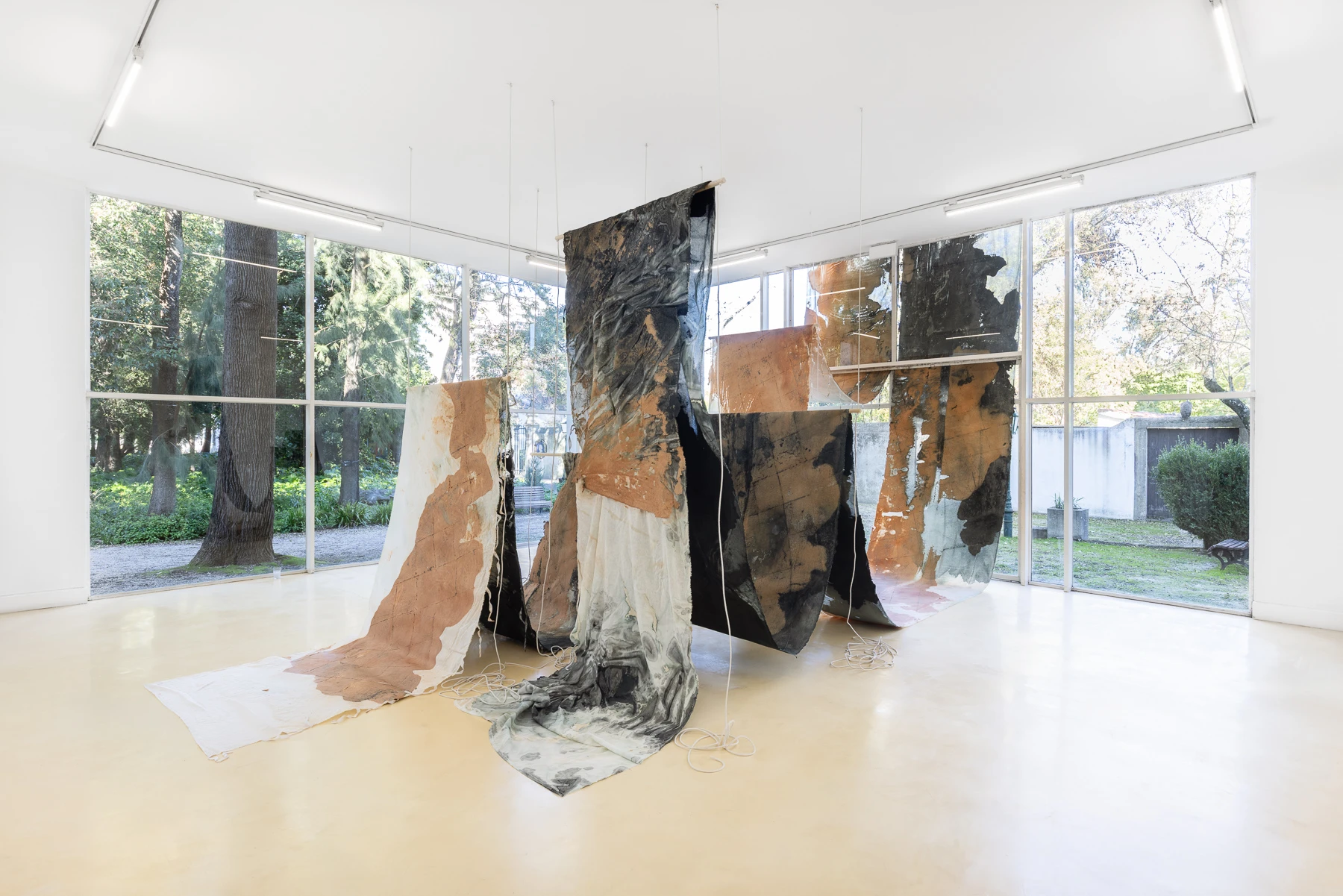
The time greater than time, by Paula Prates and Rita Gaspar Vieira
By José Pardal Pina
Related Posts
article
03 SEP 2026
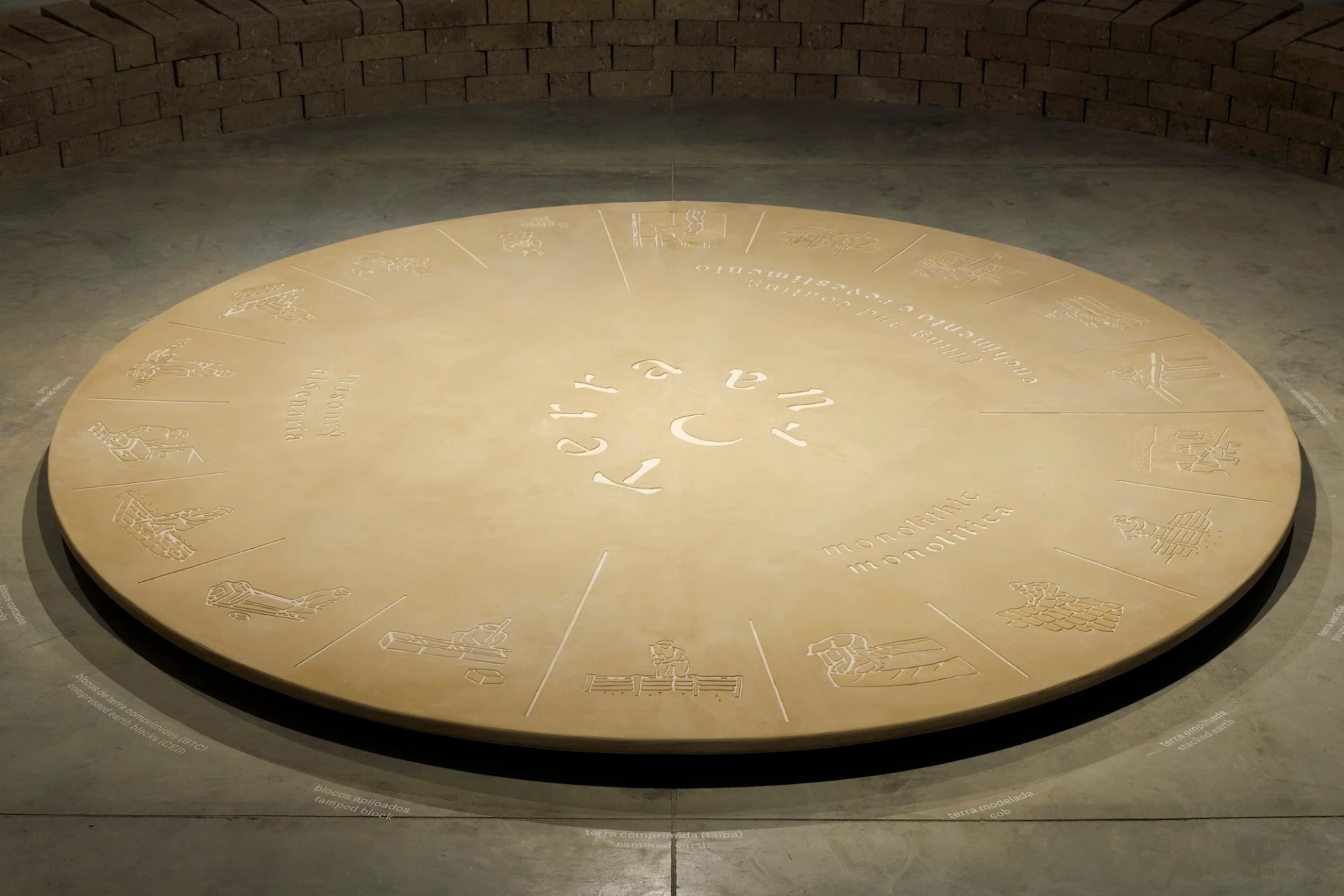
Terra Crua at MAC/CCB - Architecture Centre
By João Pedro Soares
article
23 JUL 2026
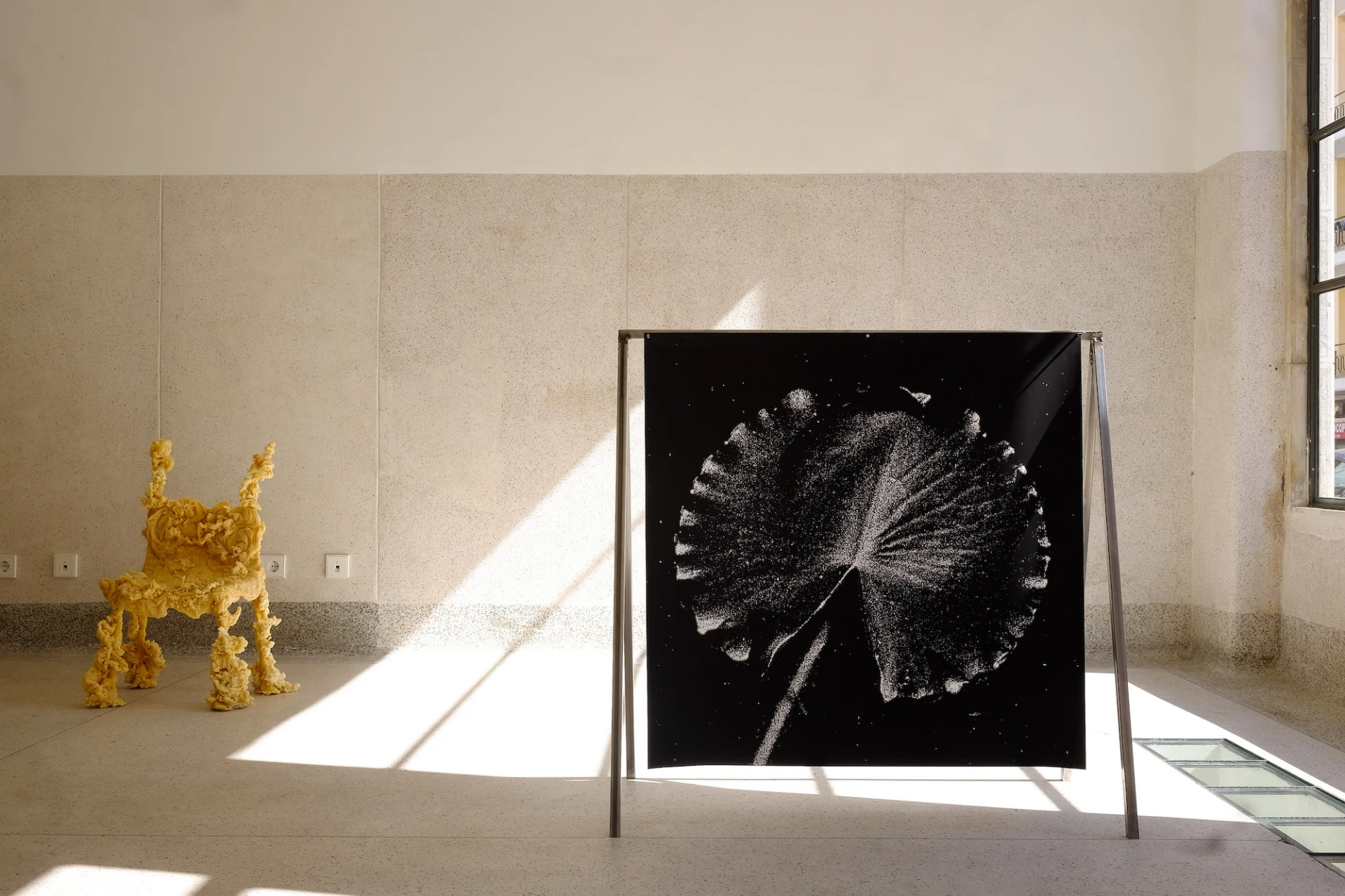
Dobra #2: Vergado Desejo at SPACE ZERO
By João Pedro Soares
article

29 JUN 2026
Housing (Non) Humans at Galeria Filomena Soares
By João Pedro Soares
article

25 MAR 2026
Notes on the 1st anniversary of MACAM
By João Pedro Soares