article
On Desisto – o que não vejo imagino (I give up – what I can’t see I imagine), by Nuno Sousa Vieira
“Sousa Vieira's works are arranged, in effect, as a scenic promise, inviting the viewer to imagine a script, an outcome, while their body wanders through the gallery, in an unavoidable theatrical occupation of the space: imagining the invisible then involves yielding to the temptation to see ourselves from afar and to participate in a necessarily collective event, assuming our existence in relation, suddenly placed at the service and/or framed by the artistic—and, of course, ethical-political—conception of the artist Nuno Sousa Vieira.”
One shouldn't always start at the beginning. That is, the proposed beginning shouldn't always be read first. However, the title of Nuno Sousa Vieira's exhibition - I give up – what I can’t see I imagine - imposes a disposition that we must pay attention to and understand to proceed with the visit. If the title were to remove that first inflection of the verb "to give up," in the first person singular of the present indicative, we might think it's redundant, or at least obvious: in fact, if something doesn't reveal itself to us, is it possible to stop the flow of images in our heads? Perhaps our imaginative capacity is proportional to the invisible witnessed. That is, perhaps we are capable of imagining to the extent that we are capable of witnessing the magnetic presence of the invisible. The capacity for premonition, a suspicion, astonishment? It is, therefore, about feeling a presence not through visual recognition, but through the activation of another sense, which stimulates the first by suggestion. If all this is true and may seem obvious, the truth is that it isn't until someone says it, as, indeed, many good poetic expressions do, generating in us a feeling of familiarity such that its contemplation had been, until then, impossible, but finally unlocked. Art, therefore, gives us a permissive distance from recognition. The core of the title is the word I give up, as it encapsulates an invective against blind proximity in favor of creative distancing and, consequently, an affective bond with objects that ultimately refuse to be reproductions of pre-established ideas. Here, giving up doesn't mean the failure of a project in the sense of impotence, but rather the capacity to circumvent a grammar, to seek to deviate from languages applied to what is seen, under a supposedly indebted intention of deciphering. The proposal is to move from the place of witness to that of experience, from passive receiver to active agent (this, too, cannot be said to be redundant). To see, to know how to see, to look creatively at things involves this renunciation, as an exercise analogous to distraction as attention to something else, that other thing which the norm marginalizes because it does not serve functions of coexistence and common sense. Thus, the artist's proposal involves a movement of cutting, as disruptive as our capacity to recognize a non-condemnable fault, avoiding moralizing—(self-)blaming—judgments, and the willingness to activate a critical-creative sense: critical because it demands a revision of established grammars and creative because it intuitively proposes, in this cut, an alternative suture of the skin.
The languages of the exhibition are verbal and visual, the latter divided into painting, sculpture, installation, and video. The multiplicity of expressive resources contributes to the suggestive interview with a carnal future, of which the exhibition pieces would thus constitute the garment to be donned. Sousa Vieira's works are arranged, in effect, as a scenic promise, inviting the viewer to imagine a script, an outcome, while their body wanders through the gallery, in an unavoidable theatrical occupation of the space: imagining the invisible then involves yielding to the temptation to see ourselves from afar and to participate in a necessarily collective event, assuming our existence in relation, suddenly placed at the service and/or framed by the artistic—and, of course, ethical-political—conception of the artist Nuno Sousa Vieira.
While the languages present in the exhibition are verbal and visual, their greatest virtue unfolds in a tactile suggestion, for clothing is a kind of hands whose touch we become so accustomed to that, more often than not, we don't even notice the friction generated by contact with our skin. Therefore, we are given back a playful plasticity that, of course, involves an awareness of what we are wearing.
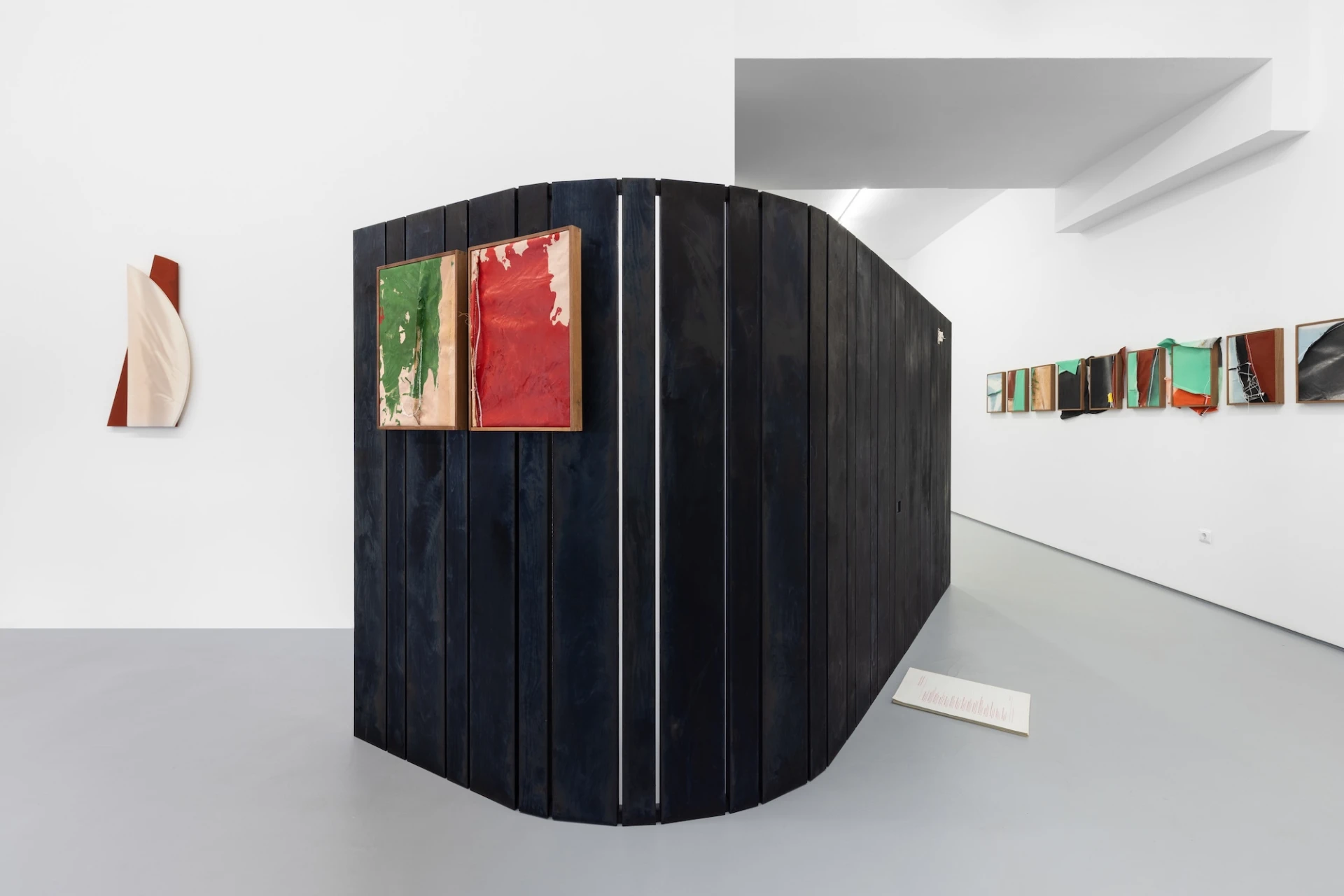
A printed book, a kind of written theater, invites us to assume a role. Each character holds a function only fixable by the appeal it (re)signifies in intersection with that of the other characters, forming an infinitely disassemblable and recombinable dramatic game. Elemento 1: duplo vivo, two superimposed screens, the lower one blood-red, the upper one resembling a disturbed shroud, preserving the memory of touch, is the double character, split in an unknown power, a shadow of a first encounter that will accompany us throughout the exhibition. We circulate around a curved screen, or the fourth wall materialized in an open-air theater-exhibition, the invisible revealed, the point-of-view of the other made manifest and forcing an imaginative deviation of the gaze. A corridor of clothes or, perhaps it would be better to say, of open and sutured skins, improvised — Corpo-Ferida — presents itself to us as a parade of clothes laden with memory, beginning with the memory of hands. Sousa Vieira reminds us of the impurity of the skin, of how it signals a history whose limits cannot be summarized in a biography, but are always launched into a becoming that makes the skin itself excessive, while simultaneously pointing to the urgency of amplifying the very word that designates it. And remembering this impurity, as constitutive as it is healthy, means attributing responsibility for our being alive, among other things.
The lower floor synthesizes the figurative and abstract inclination that the exhibition takes as its dramatic benchmark. Ana Anacleto, in the exhibition leaflet, raises the highly interesting hypothesis of the operatic virtue of the show—which, in the figures of the Declaimer and the Shadow Artist, acquires a surrealist value, with the Artist appearing as one of those melted figures by Salvador Dalí, as if charred, and a sketch, also black, of a circus image—the Declaimer—a lunar figure due to the darkness that summons itself to reveal itself in images, for now, contained in a mouth, high, as high as the invisible dreams during the day—a mouth where new dictionaries to be articulated reside. Fallen things become raised objects, for example, on a wall (like Elemento 2: objeto caído). And at the maximum height, at the level of the hands that work the matter—an unpredictable game—our eyes overflow, in the video Mais alto do que a luz.
Nuno Sousa Vieira sends us to the plane immediately above the matter he illuminates, placing us at the level of the sensible surface, where bodies are neither cause nor effect, but pure event, revolving around the aseptic rule of law, in the unpredictable wake of language.
The exhibition Desisto – o que não vejo imagino can be visited at 3+1 Arte Contemporânea until September 12, 2026.
BIOGRAPHY
Master's degree in Portuguese Studies from Universidade Nova de Lisboa, with a thesis on Nuno Bragança. She is currently writing a doctoral thesis on Agustina Bessa-Luís and Manoel de Oliveira and melancholy. FCT scholarship holder, she has contributed to anthologies and has published poetry and essays in national and international magazines. She has published two books of poetry: “E o Coração de Soslaio a Todo o Custo” (2025) and “Penhasco” (2025). She is co-editor of Lote magazine. She writes literary criticism for the Observador newspaper.
ADVERTISING
Previous
agenda
16 Jul 2026
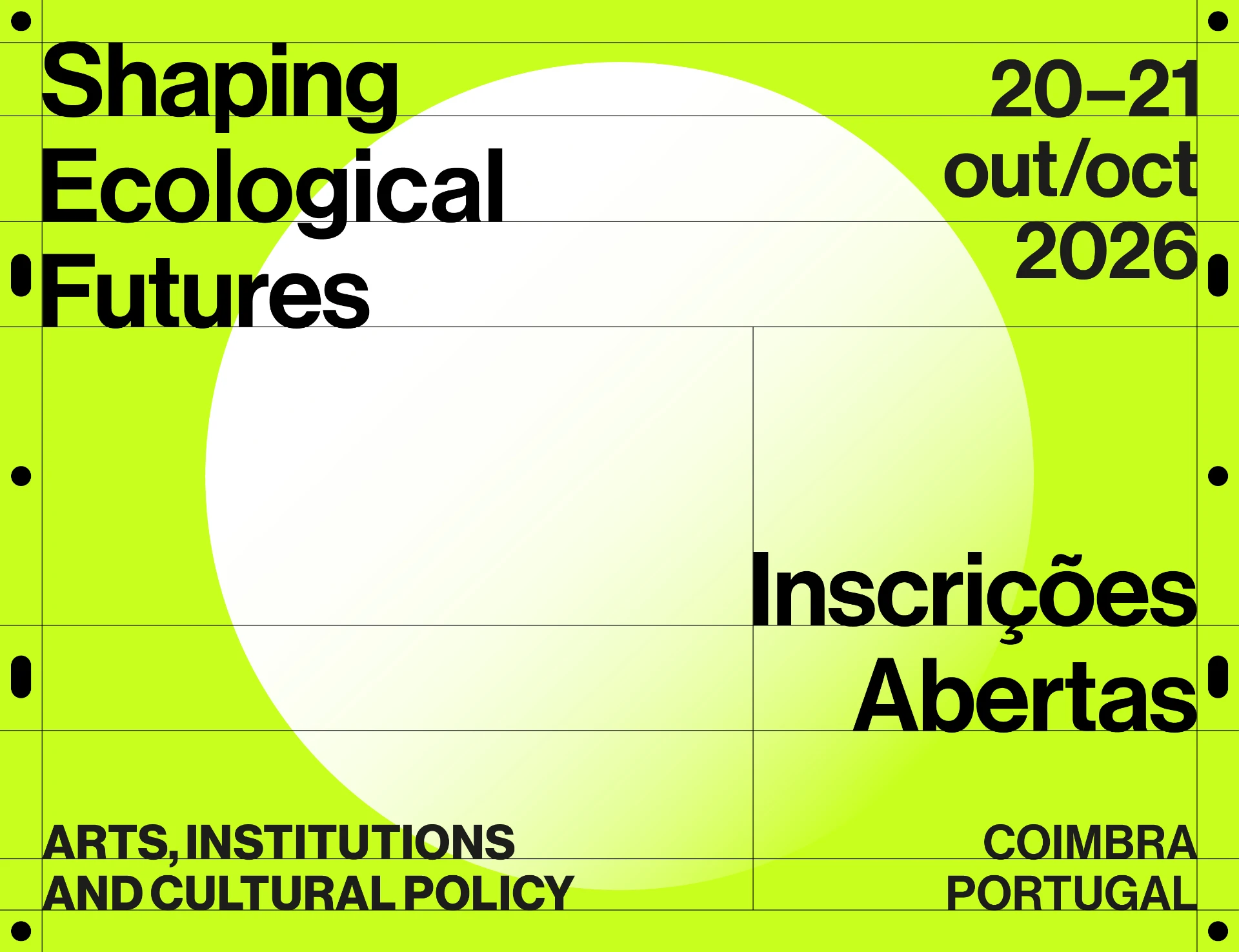
Application open for the International Conference ‘Shaping Ecological Futures: Arts, Institutions and Cultural Policy’
By Umbigo
Next
article
22 Jul 2026
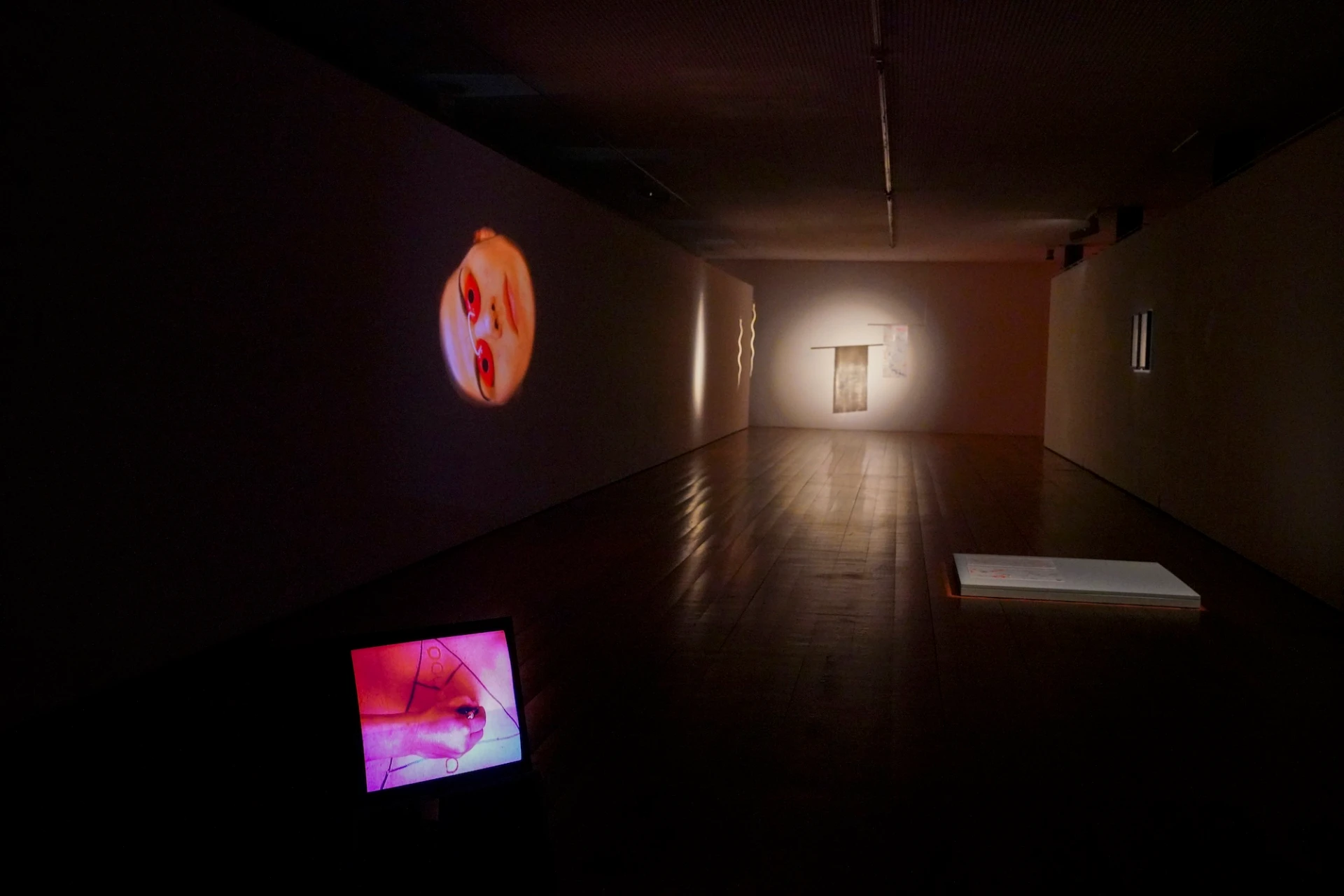
Against the explanation’s rush: Só me saem duques e cenas tristes at Vila Flor Palace, in Guimarães
By Margarida Prata
Related Posts
article
21 JUL 2026
On Desisto – o que não vejo imagino (I give up – what I can’t see I imagine), by Nuno Sousa Vieira
By Maria Brás Ferreira
article
18 MAY 2026
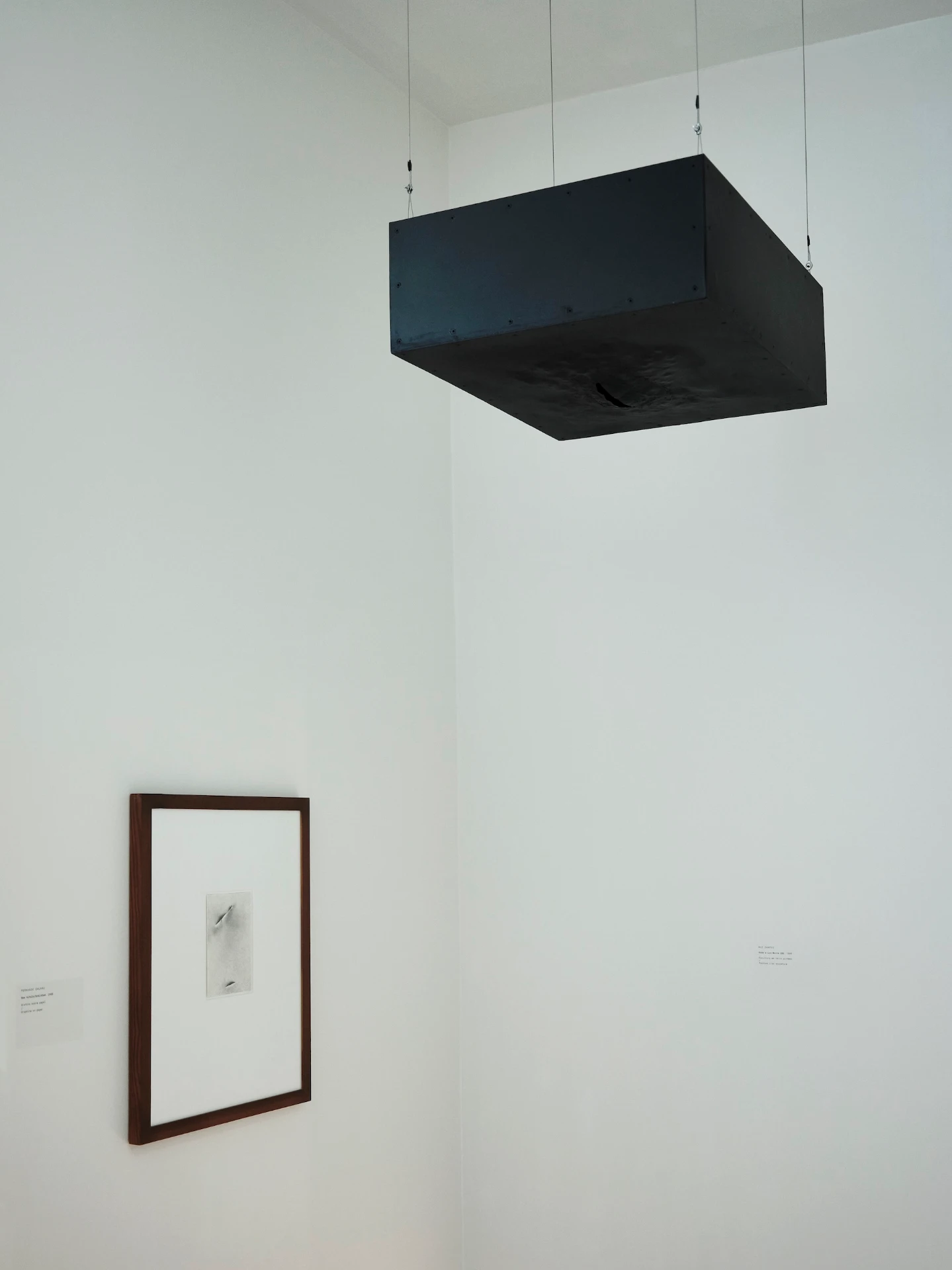
Depois de Para Sempre, at Pavilhão Julião Sarmento
By Maria Brás Ferreira
article
17 APR 2026
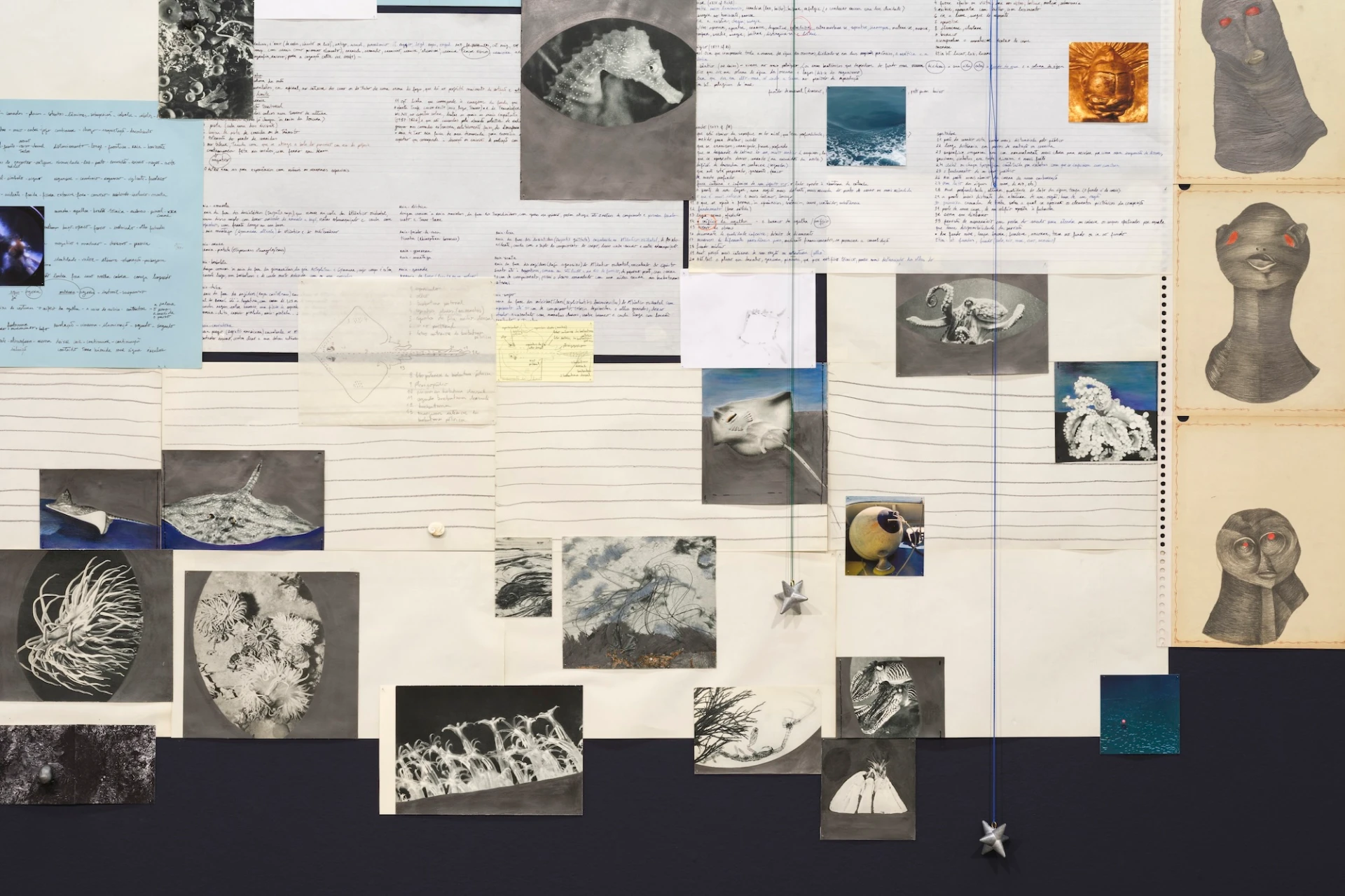
About "antes de subir à tona", by Cristina Robalo: to set the stage for a shipwreck, to know how to love the otherside of a portrait
By Maria Brás Ferreira
article
27 JAN 2026
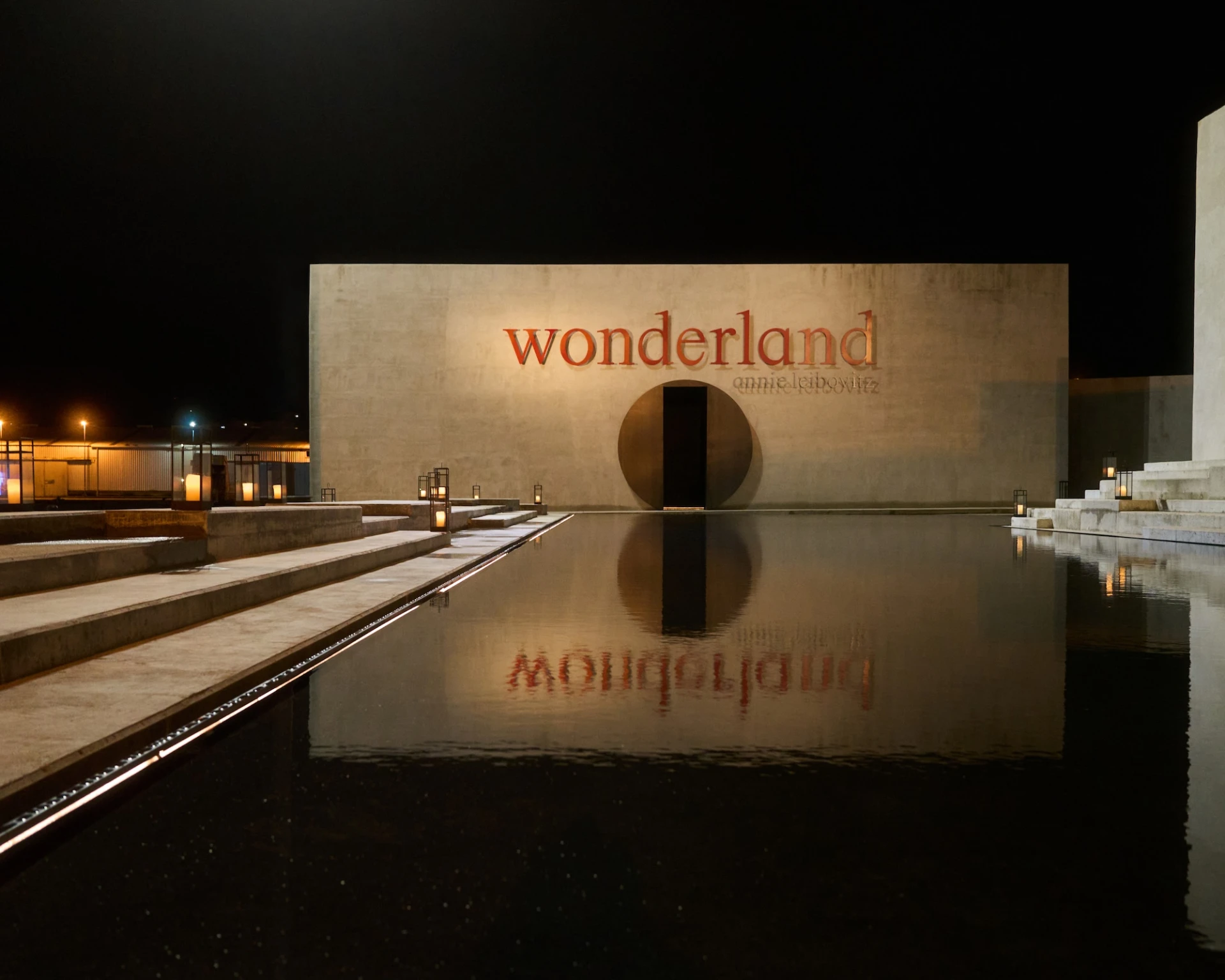
Annie Leibovitz's apples and faces in Wonderland, at the MOP Foundation
By Maria Brás Ferreira