article
A home in CAM, by Carlos Bunga
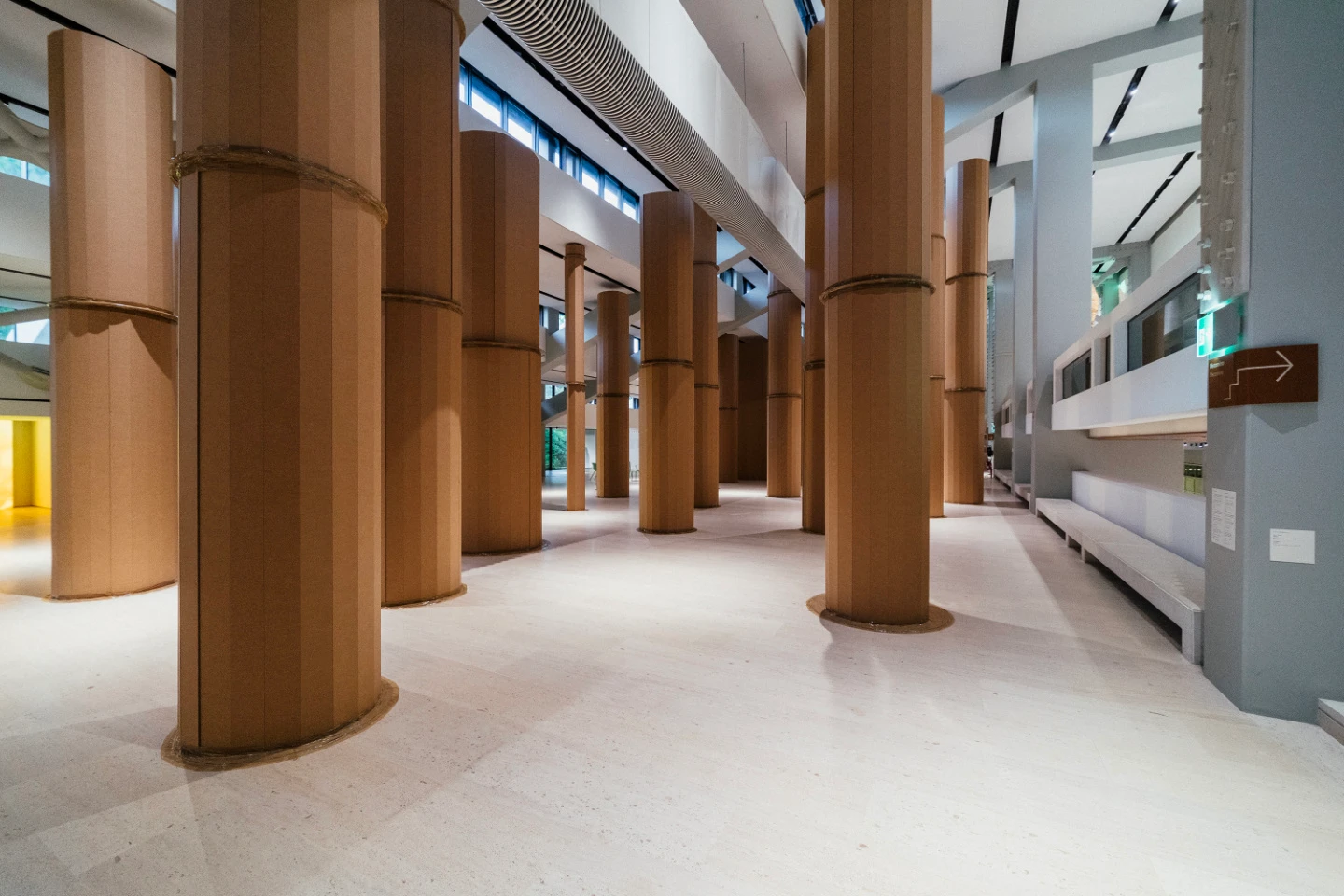
The exhibition Inhabit the Contradiction is part of one of Carlos Bunga's largest and most impactful installations. Bosque [Forest] materializes in a profusion of cardboard columns, or rather, trees, that invade the large nave of the Calouste Gulbenkian Foundation's Modern Art Centre. Its space and status as a museum are challenged, transforming it into a garden, a home for everyone.
“For me, it’s essential to call this space a home and not a museum. A home that is for everyone,” says the artist at the beginning of our visit. He explains, along with curator Rui Mateus Amaral, that the pieces, where we recognize everyday objects – chairs, rugs, tables – were placed in the entrance atrium with the intention of humanizing the institution and announcing this domestic space.
Xavier Monteys and Pere Fuertes, in their book Casa Collage, describe a house as "a dwelling, plus the people who live in it and the objects it contains." We use the word "house" instead of "dwelling" because of "the identification the term establishes with its occupants."[1] These statements give meaning to Carlos Bunga's work, making its relationship with the public obvious and an essential element in the activation and completion of his installations. Performance is fundamental to his practice, being associated with an idea of permanent transformation and acting in the fields of space and time. Exercises that enter the domains of Architecture and that pursue its archetypes. It is no coincidence that we encounter two videos at the entrance of the exhibition, one about the Gulbenkian ballet, which ceased operations in 2005, and a performance by the artist himself, From Space of Circulation to One of Freedom I. Here, Carlos Bunga states, "this is a piece that only makes sense when we are all here; it is a work to be touched, to be circled, to be involved with." In conclusion, the dancers you identify with most are the people.
People are thus invited to go in. Chairs, similar to those already present in the garden, placed throughout the museum space, encourage lingering, freely enjoying the space and the artwork. The cardboard columns, despite the fragility and impermanence of the material, are monumental and mark the scale of the exhibition gallery. With varying heights and diameters, they create a rhythm that reads the space, being carefully positioned. They generate moments of greater and lesser density, of greater and lesser clarity, just as happens in the external garden. "I wanted to bring the garden inside," he continues. Alberto Carneiro conceived, Uma floresta para os teus sonhos [A Forest for Your Dreams], using materials from nature. Carlos Bunga designed a forest made of cardboard, as if it were a full-scale model. Faced with an imposing space, the artist understands it and (re)writes it through his installation, not allowing the space to overshadow his work nor his work to overshadow the space, but rather establishing a dialogue between the two. A work that develops around a reflection on Architecture. Through a careful observation of the place, the artist weaves its transformation, recovering memories inscribed in its history, the CAM, which was once a Zoo or even a Popular Fair.
It is possible to enter the interior of these columns at specific times. As we walk through them, we are immediately transported to Richard Serra's ellipses, our bodies enveloped and absorbed by their surfaces, which create small refuges, places of introspection. Outside, several works appear that reinforce the blurring of the lines between interior and exterior, some of which are also refuges. The ruins of an old well are transformed into a Beijódromo [Kissing Zone], "a place where we can kiss, where we can date, a piece that wants to invite the public to be together," a necessary and essential place in the face of "the polarized, manipulated, digital world" in which we live, and in a time when the accelerated pace, disconnection from the real world, and alienation from others overshadow pause, connection with roots and with others. Carlos Bunga thus creates moments of pause that promote encounters with ourselves and with others, building a space that is a refuge, a home, that transforms itself and echoes the garden within the museum. "It's a forest that wants to echo the forest outside and the forest inside, which is home," he says.
An echo that mirrors the artist's most intimate side, which in turn is projected and reflected in us, as spectators, who see ourselves in him. Thus, two places that no longer exist, inhabited by the artist and his family during his childhood, are summoned in an "act of resistance against the erasure of memory," as he mentions. These are a bed in the refugee center, formerly located in the space of the old political prison of the Peniche Fortress, and house number 17 in Torres Vedras, built within the framework of the Housing Development Fund after April 25th.
In turn, through Motherhood, a series of enlarged photographs of his mother taken in the 1980s, the artist personifies all women, reflecting on motherhood and what it means to be a woman. He quotes the text he wrote: “Looking at my mother, I realize that motherhood breaks down the boundaries between the intimate and the collective. She taught me that vulnerability is not weakness; it is a starting point for challenging unjust structures. (...) In this work, I reflect on how the female body, even when traversed by violence and prejudice, can become a space of insurgency, care, and creation. My mother made her own body a territory of affirmation, refusing silence and subordination. Maternal care, when thought of as a political gesture, is an act of insurgency, creation, and love.” A feminist portrait of the condition of women is unveiled through the image of the artist's mother. The concept of home is related here to an idea of origin, of beginning, of root – our first home was a woman's womb, our mother's. Intimacy and architecture overlap, giving meaning to the domesticity that Carlos Bunga evokes for the museum space. Art and life blend together.
Furthermore, the bodies of his daughters served as molds for some of the nomads we find scattered throughout the exhibition. Bodies of children, not yet fully formed and therefore in transformation, humans in their most genuine condition, or even the bodies of animals—stray dogs, street dogs, survivors, among others—headed by houses, personify a nomad, the artist himself, or someone who lives in various places and seeks to understand or find their home or what is home for them, personifying it in their own body. “The nomad has the capacity to look at emigration and embrace it. The issue of the emigrant is extremely important,” he says, referring to his own condition as an emigrant, as is the exhibition curator Rui Mateus Amaral, adjunct curator at the Museum of Contemporary Art Toronto-MOCCA, and Gulbenkian himself.
Carlos Bunga was also invited to explore and interact with the CAM collection, choosing pieces that had been exhibited less frequently to establish a dialogue and explore affinities between his works and those of other artists, such as Manuel Amado, Helena de Almeida, Túlia Saldanha, Francisco Tropa, Larry Clark, Sara Bichão, Doris Salcedo, or Lourdes Castro.
Rémy Zaugg referred to his dream art museum as a place for work and humanity[2]. According to curator Rui Mateus Amaral, Carlos Bunga's actions in conceiving this exhibition "reflect the desire to change the center of the institution—both physically and conceptually—and make it as public and personal as possible." By transforming the CAM space and proposing its occupation beyond the nave and mezzanine to the atrium and garden, challenging the museum's limits, Carlos Bunga seeks something permanent, since, according to him, "what is permanent is the constant transformation of things," so that "museums become more homes and less museums."
The exhibition Habitar a Contradição [Inhabit the Contradiction] can be visited until March 30, 2026, at the CAM of the Calouste Gulbenkian Foundation.
[1] Xavier Monteys / Pere Fuertes: "Casa collage-Un ensayo sobre la arquitectura de la casa", Gustavo Gili, 2011.
[2] Rémy Zaugg: "The Art Museum of My Dreams or A Place for the Work and the Human Being", Sternberg Press, 2013.
BIOGRAPHY
Joana Duarte (Lisbon, 1988), architect and curator, lives and works in Lisbon. She concluded her master in architecture at Faculdade de Arquitectura of Universidade de Lisboa in 2011, she attended the Technical University of Eindhoven in the Netherlands and did her professional internship in Shanghai, China. She collaborated with several national and international architects and artists developing a practice between architecture and art. In 2018 she founds her own studio, concludes the postgraduate degree in curatorial studies at Faculdade de Ciências Sociais e Humanas of Universidade Nova de Lisboa and starts collaborating with Umbigo magazine.
ADVERTISING
Previous
agenda
04 Dec 2025
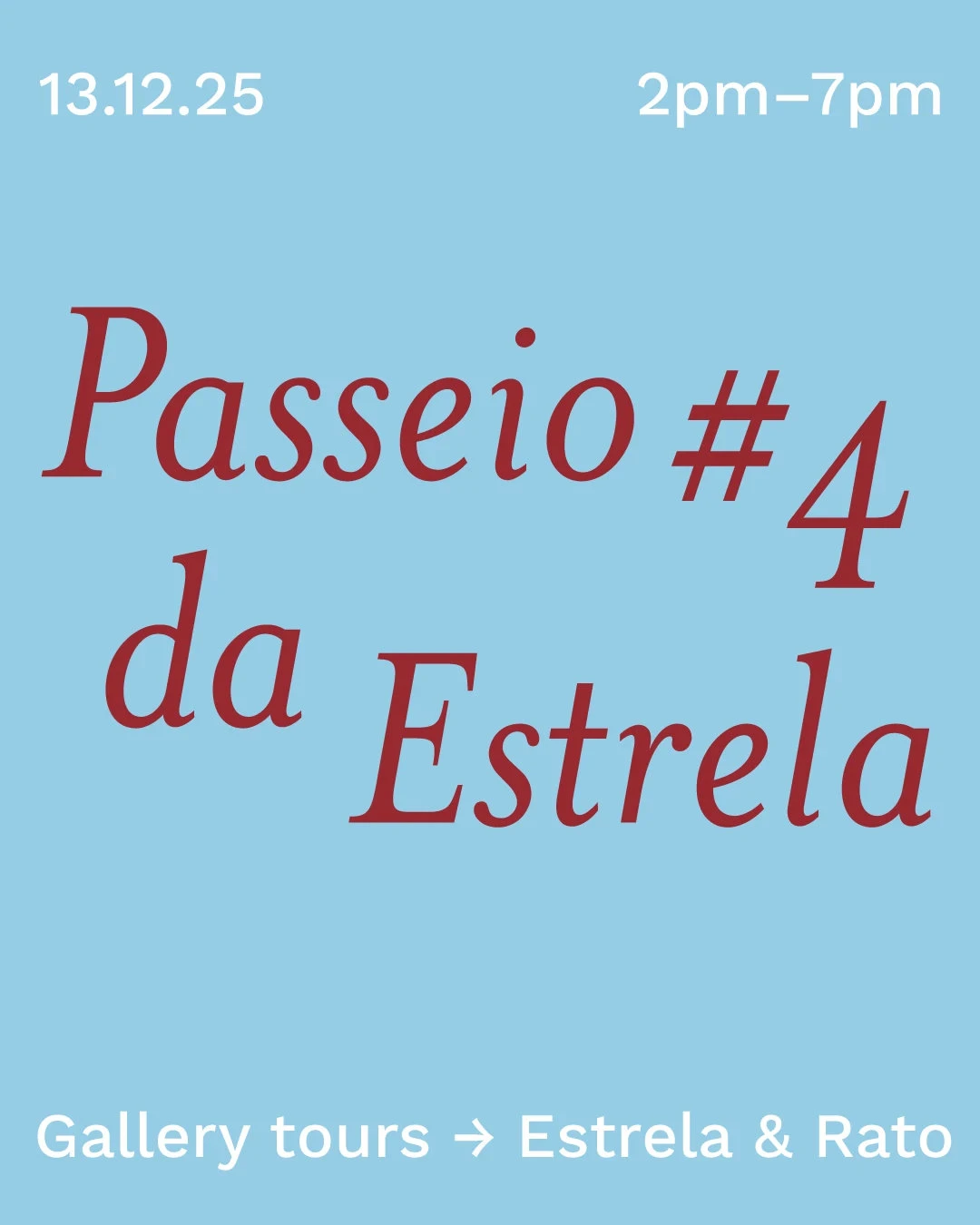
4th Edition of Passeio da Estrela – 13 December
By Umbigo
Next
article
09 Dec 2025
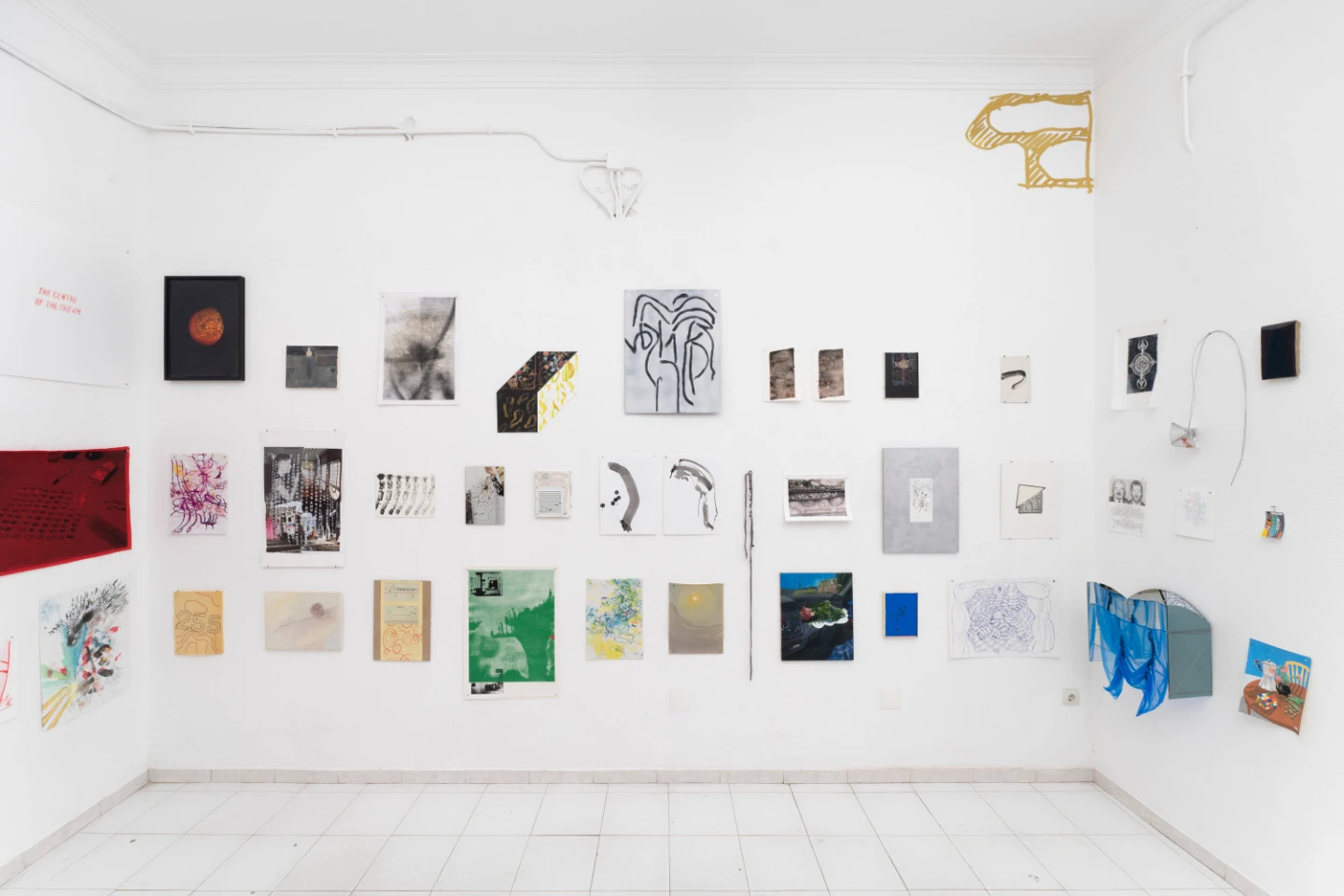
Think of Others: With <3 to Palestine at MALA
By Ayşenur Tanrıverdi
Related Posts
article
05 DEC 2025
A home in CAM, by Carlos Bunga
By Joana Duarte
article
30 JAN 2025
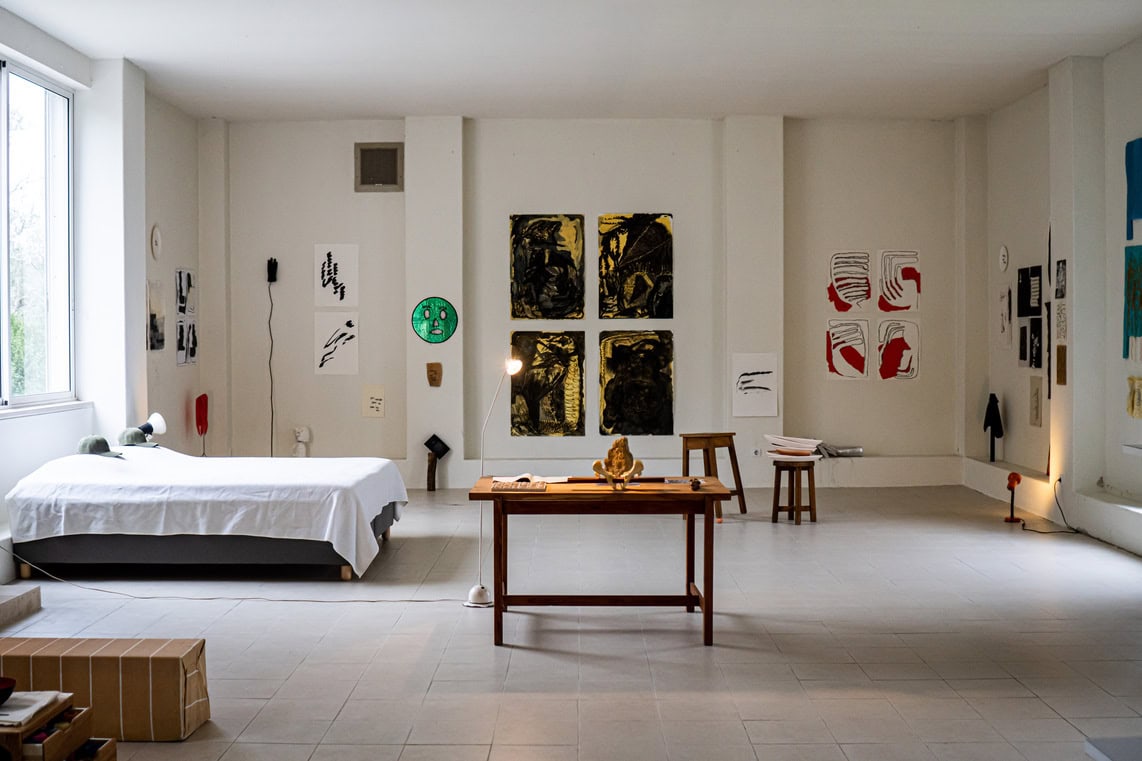
Celeiro Air welcomes Pedro Valdez Cardoso and Vítor Serrano for a residency leading up to the Playlist exhibition at Casa d’Avenida in Setúbal
By Joana Duarte
article
09 DEC 2024
Nesta ilha, nesta escola by Francisco Janes at Escola da Vila do Porto Santo, PORTA 33
By Joana Duarte
article
25 JUN 2024
Learning to Unlearn is the theme of the 11th edition of the Arquiteturas Film Festival
By Joana Duarte