article
A chat with Shirley Paes Leme
"From this visit to Shirley Paes Leme's work, I retain a fond memory of the rigor of her work, which is reflected in the fact that her sculpture is free from excess, leaving only its essence. In a sentence, I would say that more than capturing "nothing," the artist's work leaves us at the mercy of the remains of a childhood memory in Goiás, which she carries with her everywhere."
At the sun´s edge (Arthur Verocai, Vitor Martins)
In my countryside hometown
All that arrived, arrived by train
My mother gazed out at the station
And seeing journeys within me
In her womb, she drew one more sibling
In my countryside hometown
For those who live there, that’s where heaven lies
I remember mornings at the sun’s edge
I go from the avenue to the station
Afraid of my parents, or out of loneliness
All my life I’ve watched it pass
In the shining rails of a train
That comes to me and leaves each morning
Swallowing tunnels we hold inside
That laziness never let us close
In my countryside hometown
Near the morning, at the sun’s edge
For those who live there, that’s where heaven lies
At the end of March, at the end of summer in Brazil, the tropical rains signal the approach of autumn. Carnival also ends, and the year begins a new cycle of activities after a long pause, where the revelry, mixed with countless vibrant colors, takes on more pastel tones, heralding this change of season, which leads to a different dynamic of life in the cities. In a metropolis like São Paulo, when residents return from their travels, the frenzy is replaced by a focus on work. And during this period of assimilating the city routine, São Paulo residents take occasional escapes to nature throughout the rest of the year.
This was also the case for me on my last visit to Rio de Janeiro, the main reason for which was a lecture by the artist Shirley Paes Leme, which took place in the auditorium of UERJ – the State University of Rio de Janeiro, as part of the postgraduate program in arts. Under the theme My land is in me, the artist spoke to the students about her journey and recounted some of her stories, immediately after the opening of a solo exhibition in Porto Alegre entitled Dias Normais, preceding her arrival in Rio.
In this and other exhibitions, as is typical of her career, her work is expressed on several fronts, ranging from drawing to other works that require cutting-edge technology. As the title of the conference indicates, her interest in belonging to her land and the desire to make it known are closely related to a knowledge of vernacular and urban architecture. Thus, the transit from one reality to another, also represented in her work, refers to the exodus between the city and the countryside, the metropolis and the hinterland. But regardless of this idea of flow, since she was a girl, in her childhood spent in Cachoeira Dourada, where she was born, Shirley's greatest fascination was with natural elements, with which she regularly interacted at the farm. I am referring to the air in the form of dust, the fire from the wood stove and oil lamps, at a time when there was no electricity, and, of course, the water from the waterfalls.
It was in this rural context of the interior of Minas Gerais that Shirley's games took on the contours of premises for her first ideas as an artist. Around her childhood home, in a grain storage shed, there were picumãs, a word in Tupi-Guarani with a possible translation for "wig." As a young girl, the artist captured these forms, destroying their original shape through this action—from another perspective, a transformation—in which, by applying an evaporating gel, she fixed them onto a sheet of paper. This natural process of capturing the ephemeral was the beginning of a research into the very ephemerality of art.
In 1970, Robert Smithson's Spiral Jetty was a landmark in Utah and marked, among other works, the birth of land art; at that time, Shirley was still a teenager and may have discovered in this construction of soot a phenomenon that has been present in her work ever since. The smoke rises like the grease from wood-burning stoves, joining with spiderwebs, creating soot; natural materials that the sculptor has always used. This process inevitably culminated in the use of the smoke itself frozen on paper, as an attempt to fix or capture it, despite its immateriality. From this emerged a series entitled Através da Janela para Amílcar de Castro, made with smoke, which pays homage to the sculptor's work.
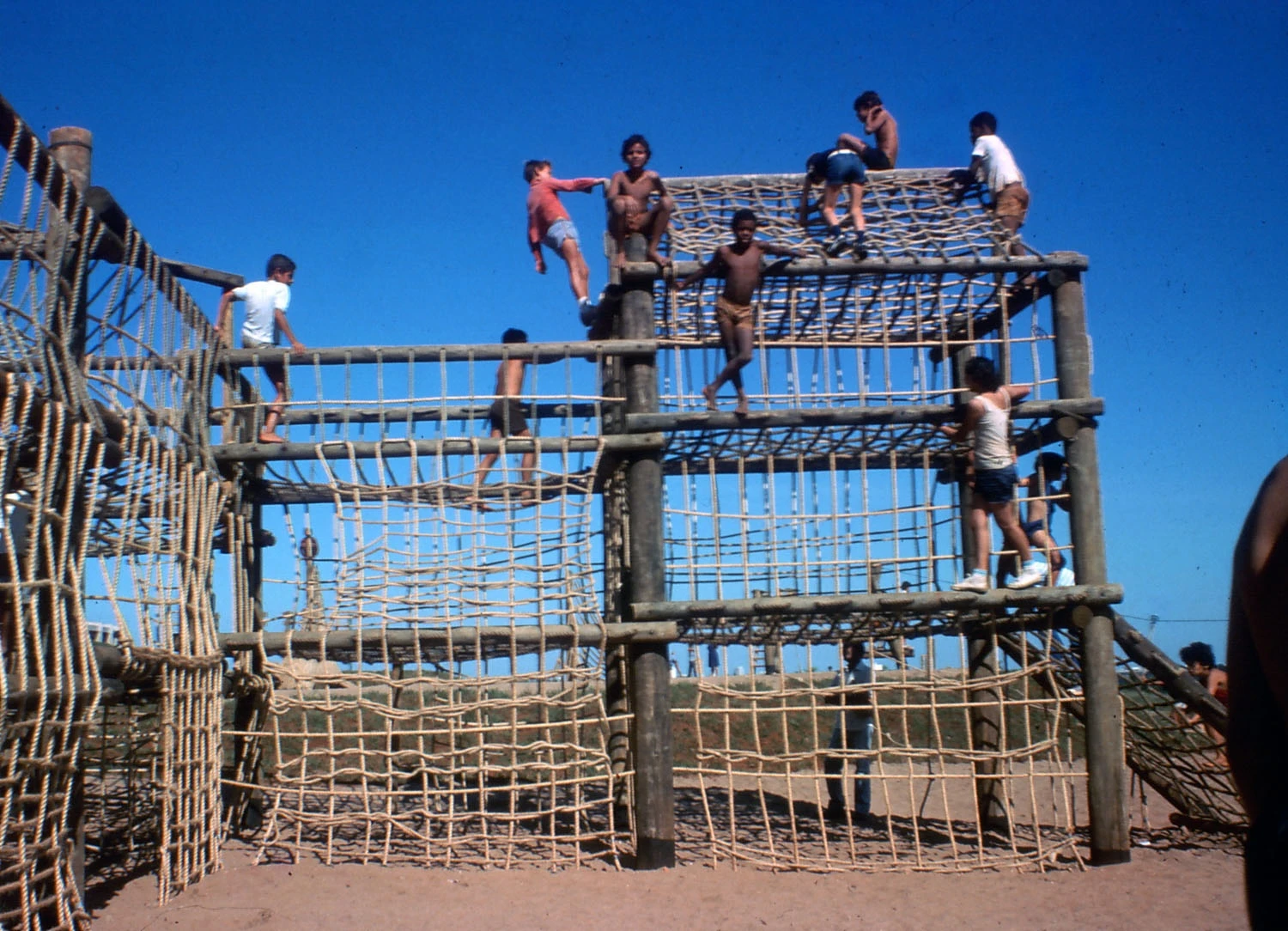
Before creating her sculptural drawings, during a time when she was teaching at the Federal University in Uberlândia, and when the return to painting was the main focus worldwide, the artist created her largest-scale work to date, called Formas Lúdicas Tecidas no Espaço (Playful Shapes in Space): a playful park for children, in Sabiá Park, in the same city. One of the park's main attractions was the Túnel Sonhado, a structure woven with sisal ropes through which children could pass, a 60-meter-long tunnel bathed in natural light. This work marked Shirley's starting point for her subsequent large-scale installations.
After the park project was completed, the artist received a Fulbright Commission scholarship and continued her art studies in the United States. Meanwhile, her return to Uberlândia, where she had her first studio, was delayed by the beginning of an international career, only returning to exhibit at the Galeria da Oficina Cultural de Uberlândia in 1998, eighteen years later. In the gallery, amidst the silence and the absence of a single breeze, one could glimpse a series of overlapping branches covering the entire area of the space. In the exhibition Pela Fresta, in the center of the room, a protected flame could be seen, also announcing the imminence of a calamity. But misfortune did not manifest itself in this exhibition, as there was no fire. Instead, years later, the city hall destroyed Sabiá Park to build soccer fields in 2005. This episode signaled a different relationship with Uberlândia, coinciding with her move to São Paulo. With her new studio in the city, her research on smoke intensified its close relationship with its pollution index, research that began in 1984 in the United States. Perhaps the concept of culture, which for a long time was associated with Nature (a division that Kant announces), became for Shirley, in her new residence, the binomial of "culture as nature"/"only culture exists in the city". And this eloquence of words, present from very early on in Shirley Paes Leme's work, became an integral part of her sculptures in 2014, in an exhibition in Belo Horizonte, where words became images reflected in a mirror of water: one of the four elements of the earth mentioned at the beginning of this text.
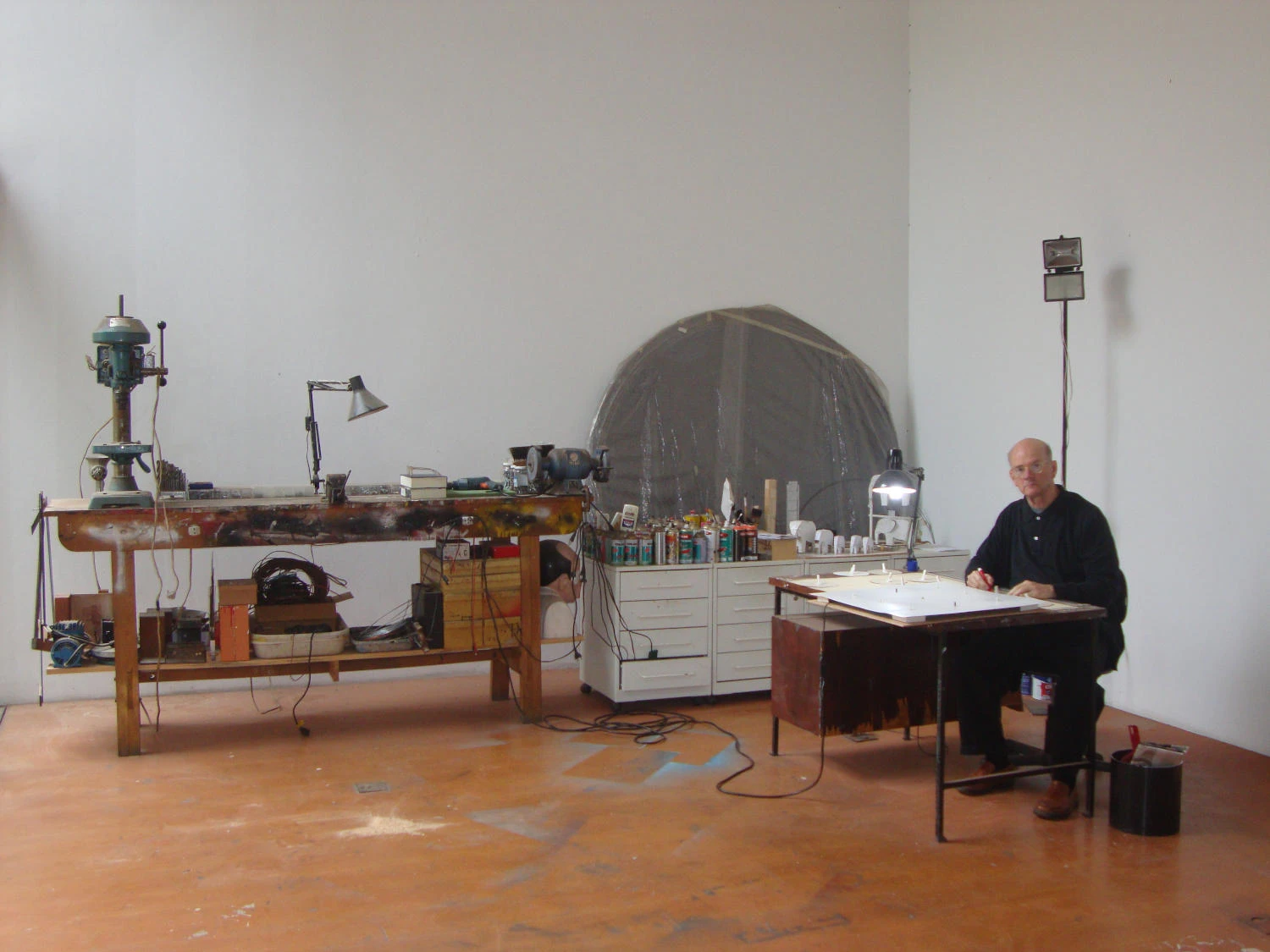
Nevertheless, her use of language and poetry is strongly linked to her passion for literature and to the fact that she was a professor, notably at the Santa Marcelina Faculty in São Paulo. The same city, where her current studio is located (not far from the Raquel Arnaud Gallery, which represents the artist's work), was synonymous with reflection on air quality, using used car filters as forms to create drawings/collages that, while sculptural, allude to the idea of landscape, alluding to the city skyline, In this studio, where she spends her days, she divides her time between creating maquettes for new ideas and projects, preparing exhibitions, including the Appleton Square exhibition which will open in Lisbon on July 2nd, 2026. Furthermore, she dedicates herself to the restoration and maintenance of some pieces whose fragility requires constant care as part of her work practice, and also to the inventory of the artist's personal collection of books from decades of research.
I can breathe a sigh of relief, even though I'm back in São Paulo and it's not advisable to breathe the city air: from this visit to Shirley Paes Leme's work, I retain a fond memory of the rigor of her work, which is reflected in the fact that her sculpture is free from excess, leaving only its essence. In a sentence, I would say that more than capturing "nothing," the artist's work leaves us at the mercy of the remains of a childhood memory in Goiás, which she carries with her everywhere.
BIOGRAPHY
Diogo Bolota (Lisbon, 1988). Lives and works in São Paulo. He studied Painting at the Faculty of Fine Arts of the University of Lisbon between 2006 and 2008, and graduated in Architecture from the Faculty of Architecture of the University of Lisbon in 2012. In 2013, he completed his MA in Drawing at Wimbledon College of Arts, University of Arts, London. He has exhibited regularly since 2014. His solo exhibitions include: Nítido e Oscuro, 2025, at Obejto Particular in São Paulo; A infamiliaridade das coisas, 2024, CAMA - Kubikgallery, in São Paulo; C'est quoi cette danse?, 2024, Dialogue Gallery, in Lisbon; Partida do Fim, 2023, Gabinete Giefarte, in Lisbon; The Air-Conditioned Nightmare, 2021, Uma Lulik Gallery, in Lisbon; Undone Defect, 2020, at the Contemporary Art Headquarters of Abrantes; Sinalefa, 2016, at Mu.sa - Museu das Artes de Sintra; Esgaravatar, 2016, at the Casa-Museu Medeiros e Almeida, in Lisbon; Objectar, 2016, at the Geological Museum of Lisbon; and Sabotage, 2015, at The Island in Bad Habits, in Porto. Among the group exhibitions that stand out are Escuta à procura de som, 2019, at the Consulado Geral de Portugal em São Paulo; Nome do meio, 2018, at Moradia; Cidade Jardim, 2017, at Galeria Diferença; Babel, 2015, at Miguel Justino Contemporary Art; and Canto Chanfrado, 2014, at Espaço Avenida 211. His work has been published by the publishers Sistema Solar/Documenta, Caixa Negra (Saco Azul) and the Serralves Foundation. In 2024, he was nominated for the Norberto Fernandes Award from the Áltice Foundation and in 2017, he was nominated for the Novo Banco Revelação Award from the Serralves Foundation. In 2019, he was an artist in residence at the Armando Álvares Penteado Foundation (FAAP) in São Paulo, Brazil.
ADVERTISING
Previous
article
10 Apr 2026
Carlos Mensil – A Grande Dança
By Mariana Machado
Next
article
14 Apr 2026
When nothing else can: Ruth Asawa in Bilbao
By Maria Inês Mendes