article
Intervalos – WhiteBox #1, at Museu do Caramulo
"This heterogeneity is what José Maçãs de Carvalho saw as an opportunity, as it is through the heterochronicity of the collection that its intervals are revealed. White Box #1 emerges as a counter-proposal to an initial contemporary artistic intervention, Black Box, held in 2017 and curated by João Louro. However, Maçãs' methodology is residential, aiming to revive the philosophy of Abel Lacerda himself, which was to bring contemplation (of art) to the mountains."
At Museu do Caramulo, we find two collections: an automobile collection and an art collection. In tourist circuits, it's a well-known museum for its automobile collection, but it was the art collection that motivated its creation in 1952. Conceived by the collector Abel Lacerda and carried out by his brother João Lacerda, the building, which we can still visit today, was inaugurated in 1959 with great fanfare.
In its ethos, the collection is valued as an index of who the collector is and the individuality of the works. The works on display and the museum´s archive represent an eclectic identity of donations from both artists and collectors over time, and the collection embodies this polyphony as its signature. This heterogeneity is what José Maçãs de Carvalho saw as an opportunity, as it is through the heterochronicity of the collection that its intervals are revealed. White Box #1 emerges as a counter-proposal to an initial contemporary artistic intervention, Black Box, held in 2017 and curated by João Louro. However, Maçãs' methodology is residential, aiming to revive the philosophy of Abel Lacerda himself, which was to bring contemplation (of art) to the mountains. Thus, Maçãs de Carvalho invited four artists interested in some of the museum's major themes: automobiles, the surrounding nature, portrait painting, and the relationship between the history of Portugal and the world. Over several months, the artists interacted with the museum and produced original works specifically for this space.
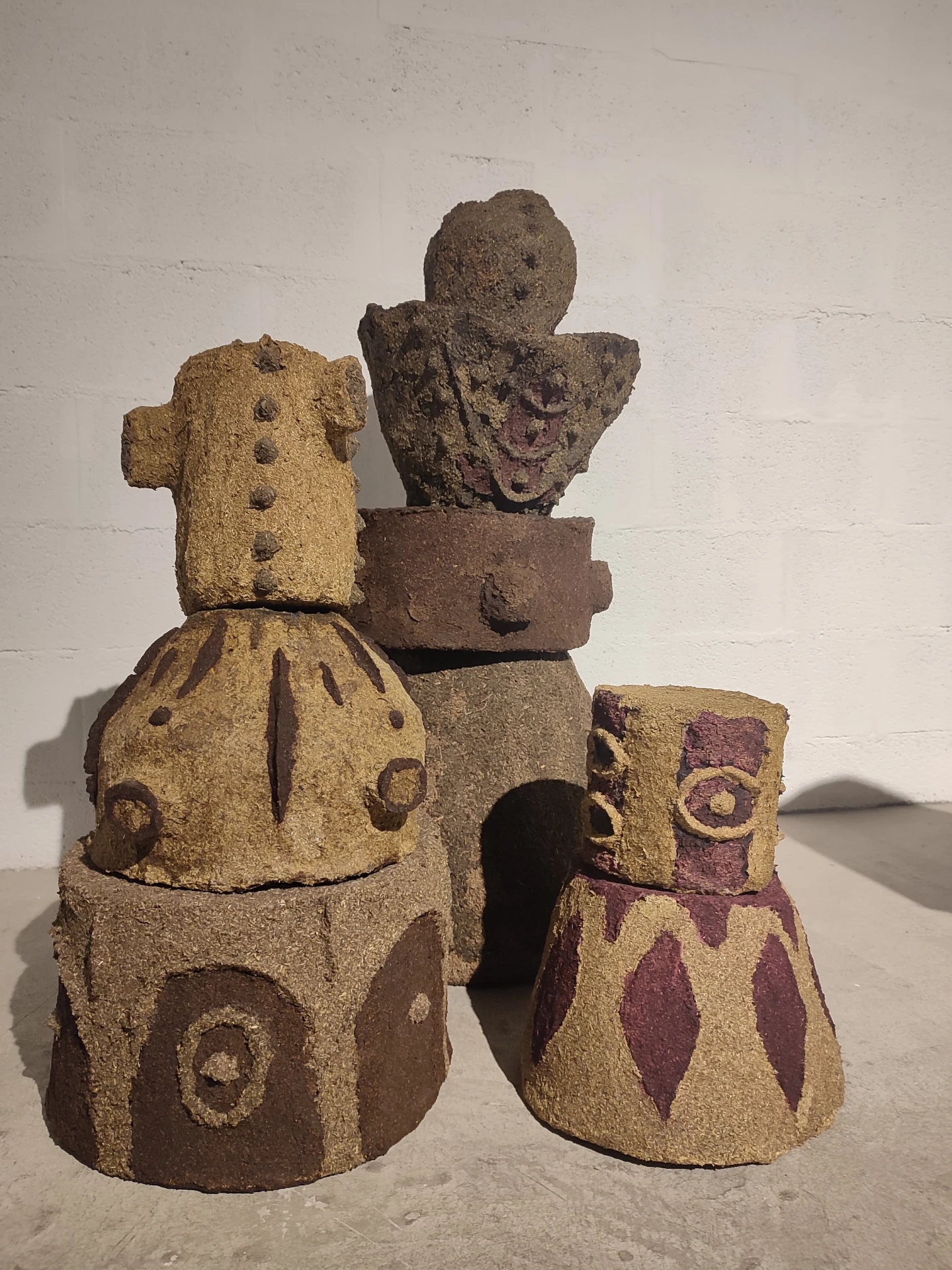
The exhibition prompts the observer's gaze, at times, to seek out new works and, at other times, to consider the relationships that have been shown between them and those already existing in the museum. With a predominantly formal approach, the entire exhibition reveals the artists' experiences within the collection. In the case of Catarina Leitão, this also extends beyond it. Her work thrives on the investigation of our relationship with what we understand to be nature. In this exhibition, she presented several sculptures dubbed 'portable gardens', which, due to their textile characteristics, converse with the tapestries in the collection. But it was in Jacob Jordaens' painting Vertumnus and Pomona that Leitão found a strong dialogue, as it reveals (Roman) mythologies associated with the maintenance of gardens and orchards. The sculpture Naturfatura 5.0 B, placed right next to this monumental painting, echoes the formal aspects of the trees in the painting, as well as underlines the hybrid character of her work, since an orchard is ultimately the product of cultural care and natural gift. The artist also presents a set of drawings and a more intimate dialogue with tableware, producing a collection of artists´ books entitled Montanha Mágica (Magic Mountain). Intertwined with the plates and ceramics in the display case, Leitão navigates her work, exploring both two- and three-dimensional aspects within the Museum.
It was in the tapestries À maneira de Portugal e da Índia that the exoticism of the Portuguese maritime arrival in India was documented. Commissioned around 1520, they depict the glorification of the colonial process, which João Fonte Santa oversaw. In a vibrant red, with an energy present only in gore scenes like in Kill Bill or Japanese comics, the meticulous paintings of the tapestries' details transform into a game of finding 'Onde está a pintura?' (Where is the painting?) in the museum space. It's not that the canvases are small. However, while some are impossible to miss, others seem to have been on the museum's walls since the beginning, easily assimilating into the company of the other works in the collection. This is certainly a consequence of José Maçãs de Carvalho's methodology, who, during the catalog's inauguration, spoke of an "addition, subtraction, and substitution" of the permanent exhibition, a process resulting from his curatorial approach.
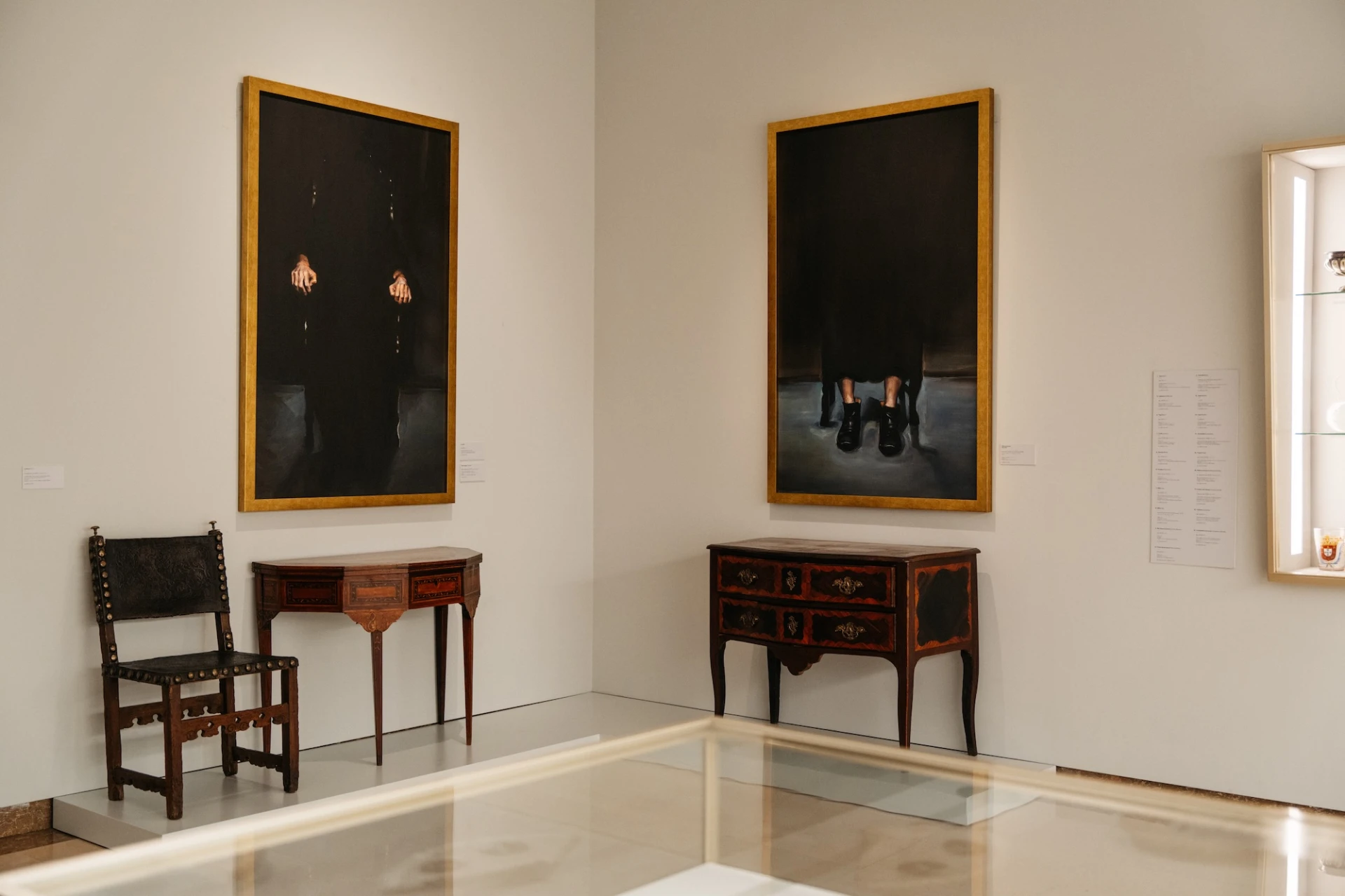
Also dedicated to painting, the work produced by Daniela Krtsch could only have been done during a residency, as she chose to portray the people who work at the Museum. Her work, Mensageiro, sober yet luminous, reflects the human side of the Museum. When we talk about a museum, we immediately think of a building, exhibition rooms, collections, programming, founders, or artists and curators who have programmed there. Those who are almost invisible to the general public have been immortalized in the Museum's collection through a lens focused on the representation of the human body, democratic, and the formality of placing it on a canvas, constituting an ironic loop. The sober tones, which feature a very personal lighting technique so characteristic of Krtsch's painting, focus on the singularity of human existence and therefore show that institutions, even those that are historically collections of privilege, do not function without ordinary mortals.
To complete a residency at the Caramulo Museum, it was natural that one of the artists would have a predilection for cars, and this presence was envisioned with Fabrizio Matos. A master of charcoal drawing, the artist presents us, right in the first room (next to a work by João Fonte Santa), with Alfa Romeo Disco Volante, which evokes movie posters, framing the Serra do Caramulo as the setting for a fictional film. With a prolific body of work during this residency, the backlit work on furniture, taken from the archive for this exhibition, alludes to Italian Futurism and allows us, according to Maçãs de Carvalho, to “hear the sound of cars or Álvaro de Campos”. The work Untitled B, Composition of several superimposed drawings, overflows with movement. It is, in fact, in Italian cinema that many of Fabrizio Matos's references find their origin. Both his affinity for movement and his particular affection for the spatial dynamics confined within these vehicles recall the imagery of filmmakers like Paolo Sorrentino. It was through these influences that Fabrizio Matos composed, during his residency, a Luso-Italian cultural landscape.
The ‘Intervals’ created by each artist in residence call for the interpretation of a collection that has the peculiar characteristic of wielding its heterogeneity. It becomes evident throughout the exhibition that bringing together artists with such distinct practices broadens the possibilities for dialogue with the collection, allowing it to be updated, subverted, or questioned from contemporary perspectives. Starting from formal encounters with the museum's works, the works developed during the residency in the mountain refuge promoted not only a closer connection between the artists and the collection, but also the integration of unique perspectives, constructed and deepened throughout the process. This exercise revealed how different dimensions of each resident's artistic practice resonated within the museum, thus fulfilling the ultimate purpose of the Museum as envisioned by Abel Lacerda.
Curated by José Maçãs de Carvalho, the exhibition is on view at Museu do Caramulo until August 8, 2026.
ADVERTISING
Previous
agenda
22 Jun 2026
UmbigoLAB Call: Art residency UmbigoLAB @ Casa de Mateus Foundation 2026
By Umbigo
Next
article
23 Jun 2026
TERRACRONIA - Masterclass with Federico Campagna in Montemor-o-Novo
By Mariana Varela