article
Egyptian Reggae, by Manuel Caldeira
Manuel Caldeira exhibits for the first time at the Balcony contemporary art gallery in Lisbon. The Lisbon-based artist has been creating an eclectic body of work that articulates different approaches, ranging from drawing and painting to sculpture. In this case, Egyptian Reggae encompasses a set of works made primarily in ceramics, also featuring a bronze sculpture and two watercolor and gouache paintings on paper.
Inspired by the artist's trip to Egypt, the myths and cosmology of the Arab world ultimately influence a minimalist aesthetic, which brings together an earthy, modest plasticity, composed of elegant forms and carefully crafted lines, uniting the exhibited ceramic pieces with an unexpected fluidity and lightness. However, the apparent simplicity hides mysteries that make the eye carefully scrutinize the textures of the stoneware, which are lost in the uncertain and spontaneous cadences of the glass, where its fragmentation, caused by the different firing times compared to the fine-grained clay, creates a highly suggestive experimental effect of fragmentation.
Manuel Caldeira introduces a term that permeates all the exhibited pieces, a conceptual line underlying the forms originating there: ornithomancy. That is, as the artist explains: "The art of reading the future through the flight, landing, and silence of birds." Hence, the mastery with which he endows the ceramics with a sensed lightness unfolds in a rhythm of materialities reminiscent of birds. Hanging wings, torsos, beaks, and feathers, are imagined among the forms, textures, and composition of the presented pieces. There is something that refers to the sacredness of ancient temples, somewhere buried in the sands of time, where today only small, incomplete memories of clay remain. It is precisely in this calculated primitivism that we find what Caldeira considers to be an "invented archaeology."
But not everything is ceramic, since, as initially indicated, two paintings on the second floor bring together abstract forms, motifs previously observed in some pieces, where watercolor reveals blurs and watery spills, bringing other meanings to the exhibition, which intercept and complement the sandy materiality of clay to which Caldeira had accustomed us on the upper floor. In these paintings, leitmotifs seen in the ceramics now manifest themselves in bluish and orangey-red tones, sacred colors in Ancient Egypt, symbols of life, the sky, and creation. Also found close to the floor is a bronze bust resembling a bird, in which tactile marks are visible, syncopated in hypnotic rhythms that shine in the contrasts of light across the object's surface, subtly revealing the technical importance of this metal, coinciding with the Bronze Age, and the subsequent apogee and development of Ancient Egypt.
The exhibition spans two floors, in a well-thought-out layout, where dispersion, or mental and imaginative flight – in addition to aesthetic enjoyment – is more than enough reason to justify a visit. It is on display at Balcony gallery until March 21st. Admission is free.
ADVERTISING
Previous
article
09 Mar 2026
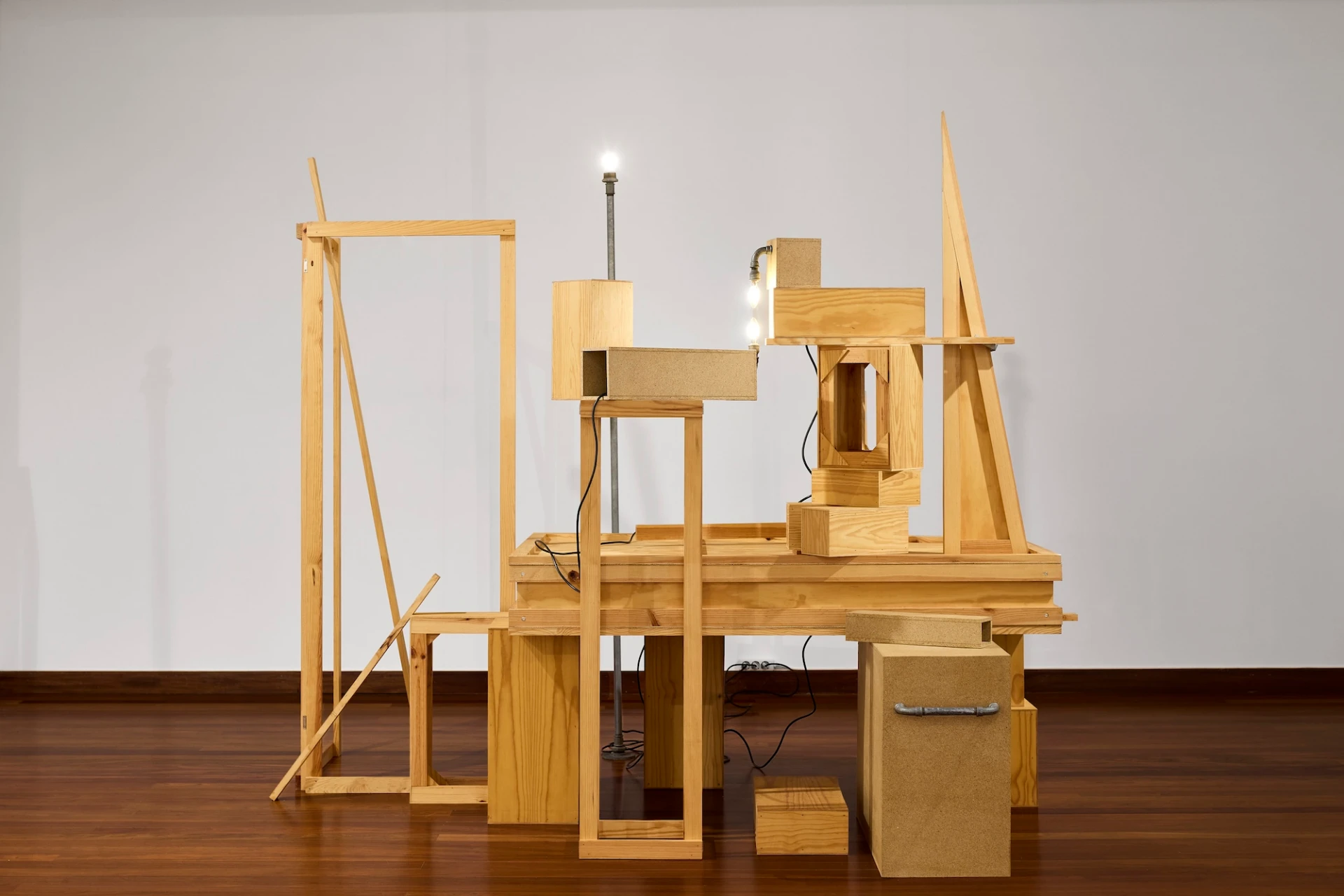
Rui Sanches: Line and Stain, Body and Machine
By Ana Isabel Soares
Next
article
10 Mar 2026
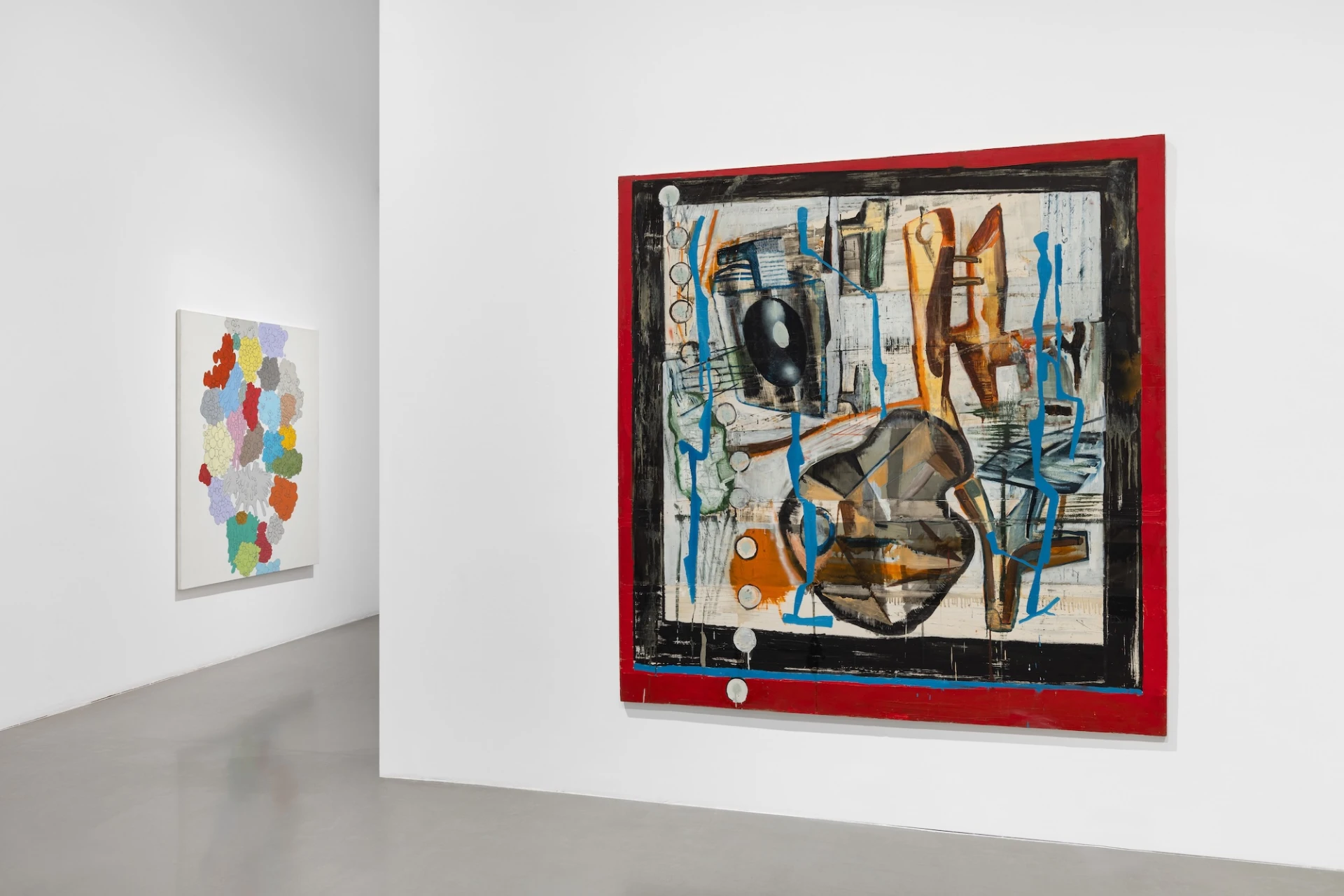
Deviation as structure: four decades of painting by Pedro Casqueiro
By Maria Inês Augusto
Related Posts
interview
25 SEP 2026
Interview with Isadora Alves, author of the Umbigo.space cover
By João Pedro Soares
article
03 SEP 2026
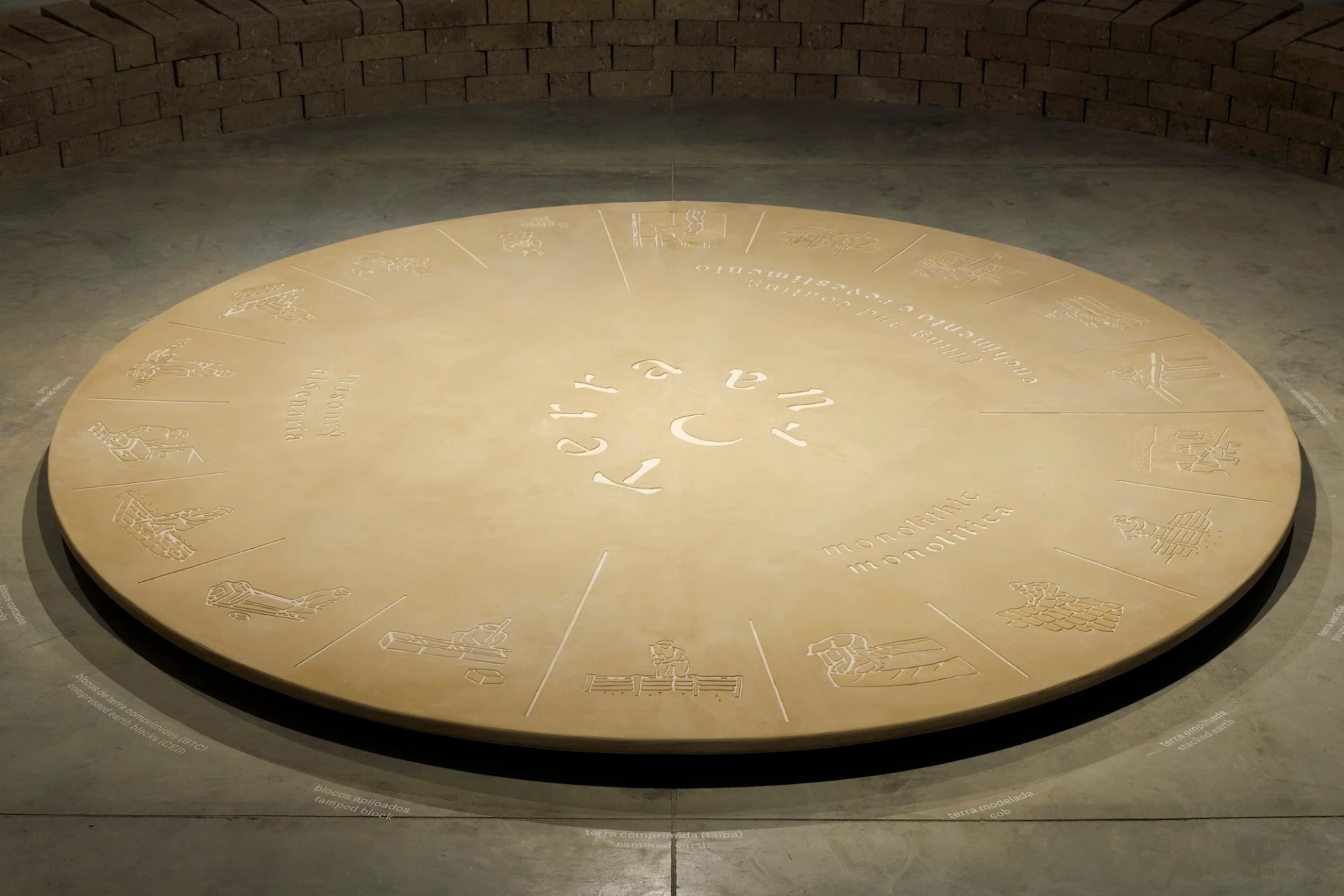
Terra Crua at MAC/CCB - Architecture Centre
By João Pedro Soares
article
23 JUL 2026
Dobra #2: Vergado Desejo at SPACE ZERO
By João Pedro Soares
article

29 JUN 2026
Housing (Non) Humans at Galeria Filomena Soares
By João Pedro Soares