article
Paraíso. Works from the Serralves Collection: The Past as Raw Material
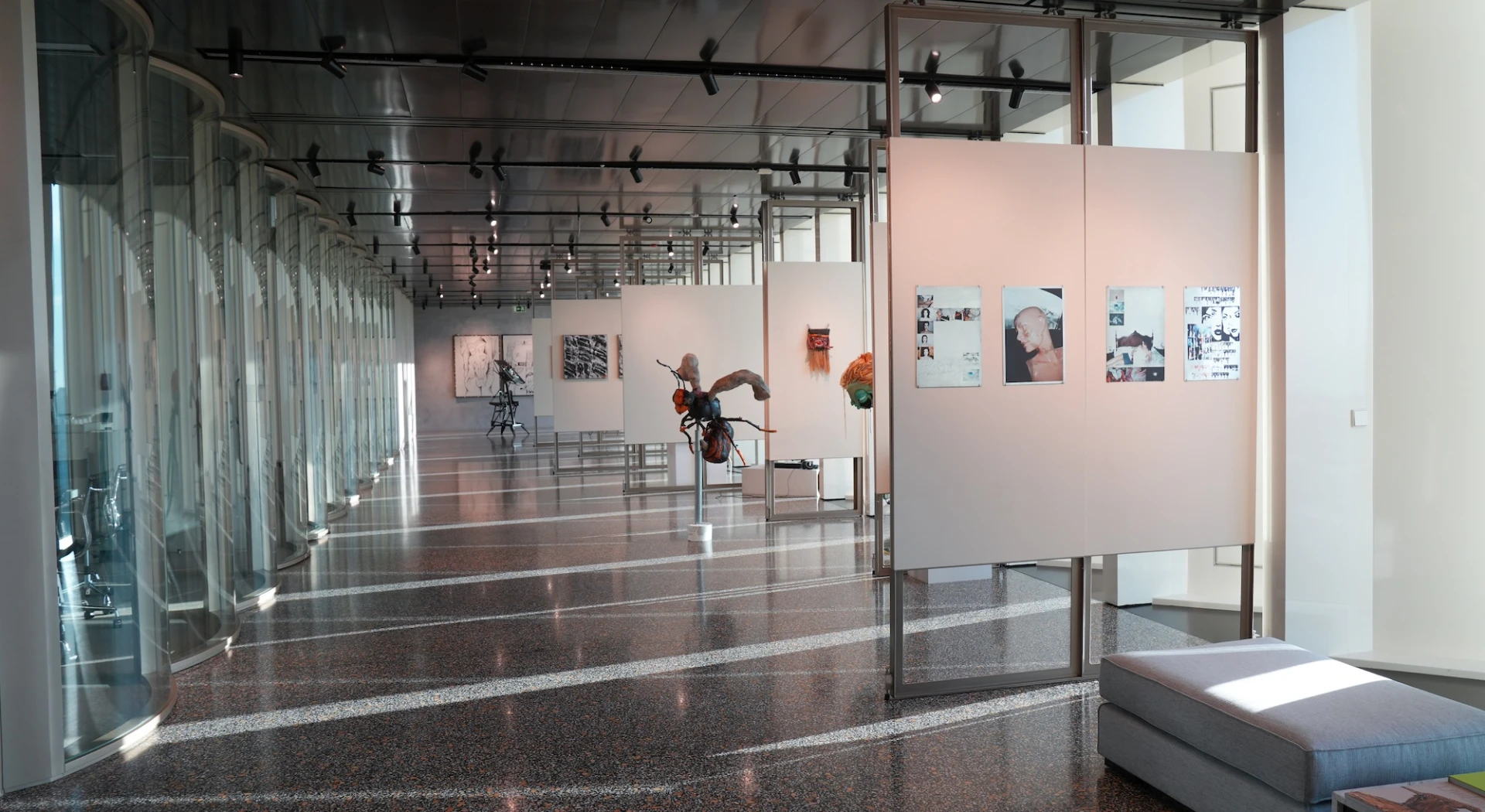
“In Paradise, relationships with the past take different forms, from Sasha Gordon's direct appropriation to Ana Manso's material transformation, passing through Charlotte Moth's installation and the dialogues between Eduardo Luiz and Horácio Frutuoso. It is not necessary to bring them together under a common intention to recognise that they all allow us to think, in different ways, about the persistence of the images and languages we inherit. The past does not emerge only as memory, but as matter that continues to be worked on, reorganised, and constantly questioned. The doubt, however, seems to remain open, only resolvable through practice: is this insistent return of contemporary art to the references that precede it due to an abundance of possibilities yet to be explored, or to a dependence on its authority?”
There is something particular about the persistence of images. Centuries after they were produced, they are continually revisited, as if in their historical condition there remained some unresolved question, an irresolvable doubt that time announces but never solves. In most cases, it is not a matter of nostalgia or a desire to recover an idealised past. Perhaps it is rather a profound difficulty in imagining the future without resorting to what we already know, as if creation were condemned to negotiate with a history it can never abandon. Art seems to move in this precise interval, between the will to break with inherited models and the impossibility of ignoring them, and with each of its gestures it becomes pertinent to question what it means, after all, to return to an image of the past and to what extent such a gesture actually transforms tradition, instead of simply confirming its permanence.
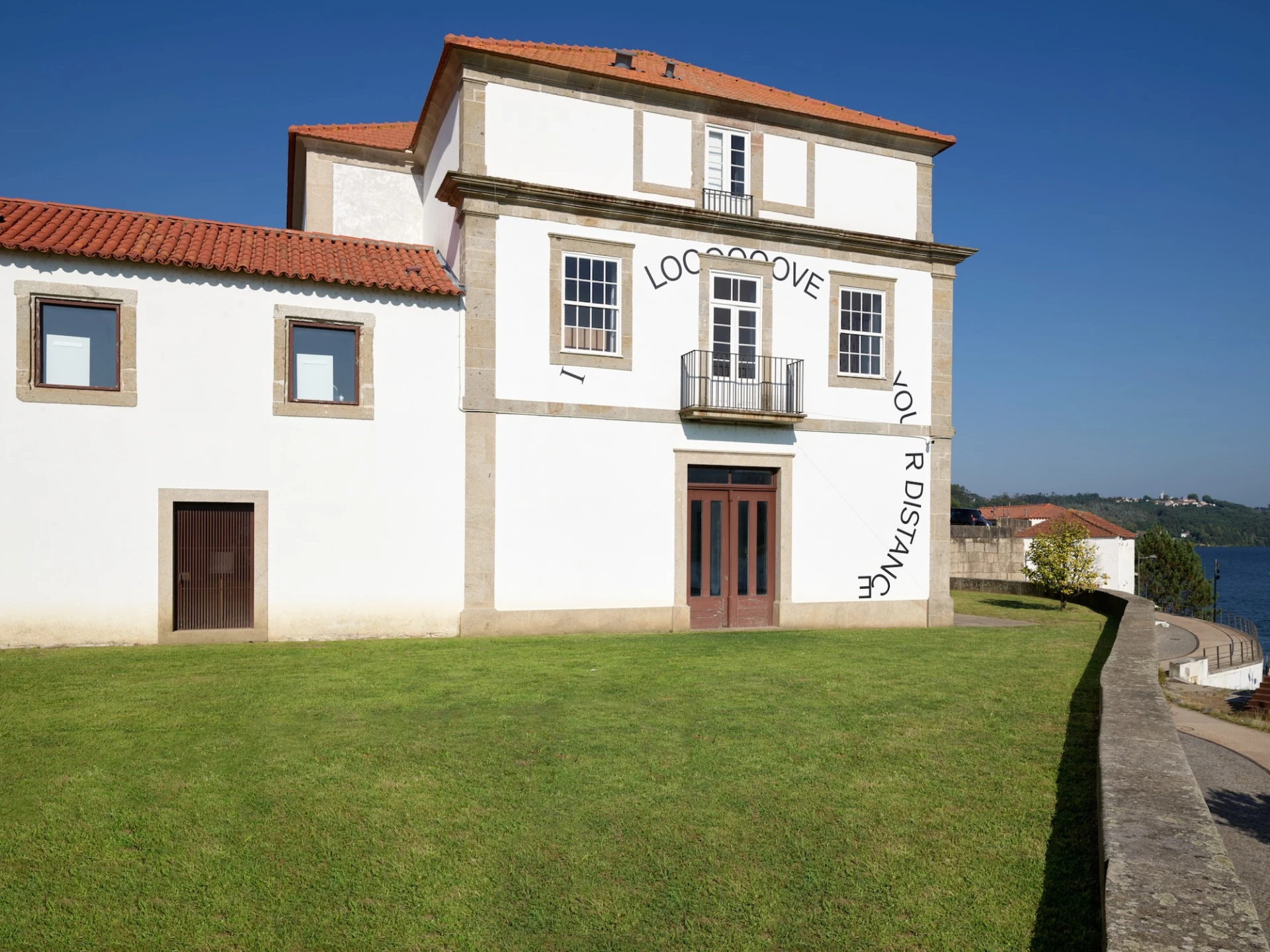
It is precisely from this relationship with history that the exhibition Paraíso, at Casa Branca de Gramido, in Gondomar, takes its title from the frescoes that Masaccio painted around 1425 in the Brancacci Chapel, in Florence. More directly, the figure of Eve, expelled from the Garden of Eden, is revisited in Trimmings (2023) by Sasha Gordon in a self-portrait that shifts the Renaissance image into current questions about the body and identity. The distance between the two works is not simply chronological. There is also a distance between the values each image carries and the possibilities of representation that each era not only produces but also admits. The past, therefore, appears less as a model to be respected and more as a presence with which it is understood that negotiation is necessary. It is in such an ambivalent relationship — between inheritance and transformation, recognition and contestation — that it becomes opportune to question the canon and the place it continues to occupy in contemporary art.
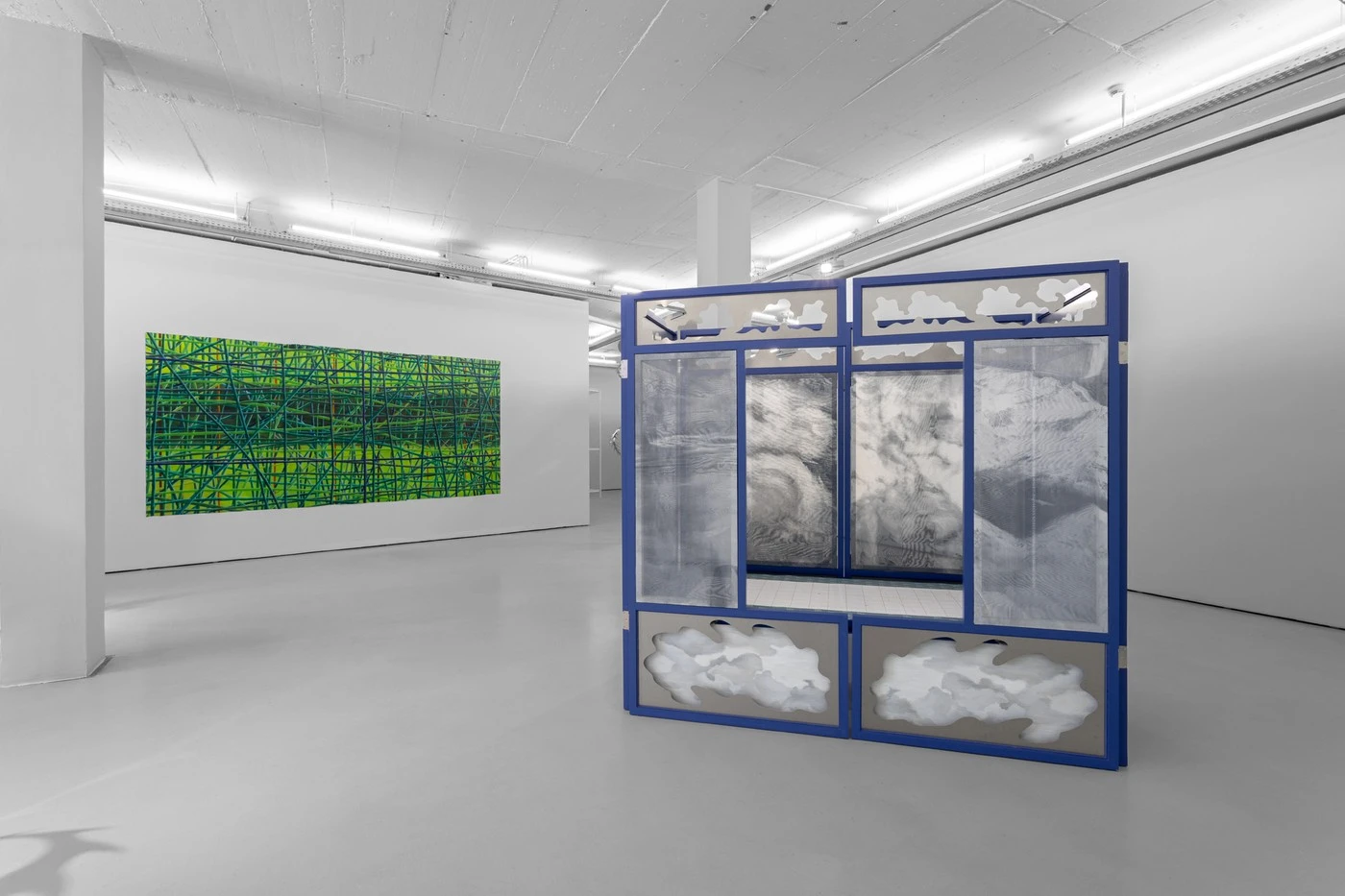
The relationship with tradition, however, is not exhausted by the recovery of recognisable images from an archived past. In Millefleur (2019), Charlotte Moth draws on a visual language associated with medieval tapestry to construct an installation of coloured fabric leaves whose configuration adapts to the space in which it is presented. The reference to La Dame à la licorne evokes a tradition in which nature appears organised in an ornamental composition, transformed into a landscape that is simultaneously symbolic and idealised. Moth seems to revisit this relationship between nature and artifice, however introducing an instability that prevents the work from settling into a definitive form. The garden, that place often associated with harmony and perfection, reveals itself here as a construction; a construction that is inevitably dependent on choices, arrangements, and conventions. And perhaps it is precisely this condition that makes the idea of tradition interesting in this context. Enveloped by Charlotte Moth's ordered leaves, tradition reveals not its capacity to provide stable models, but the possibility of making visible the processes by which these same models were constructed. Looking back at the past can therefore mean understanding that what comes to us as natural or timeless is also a product of a particular way of perceiving things.
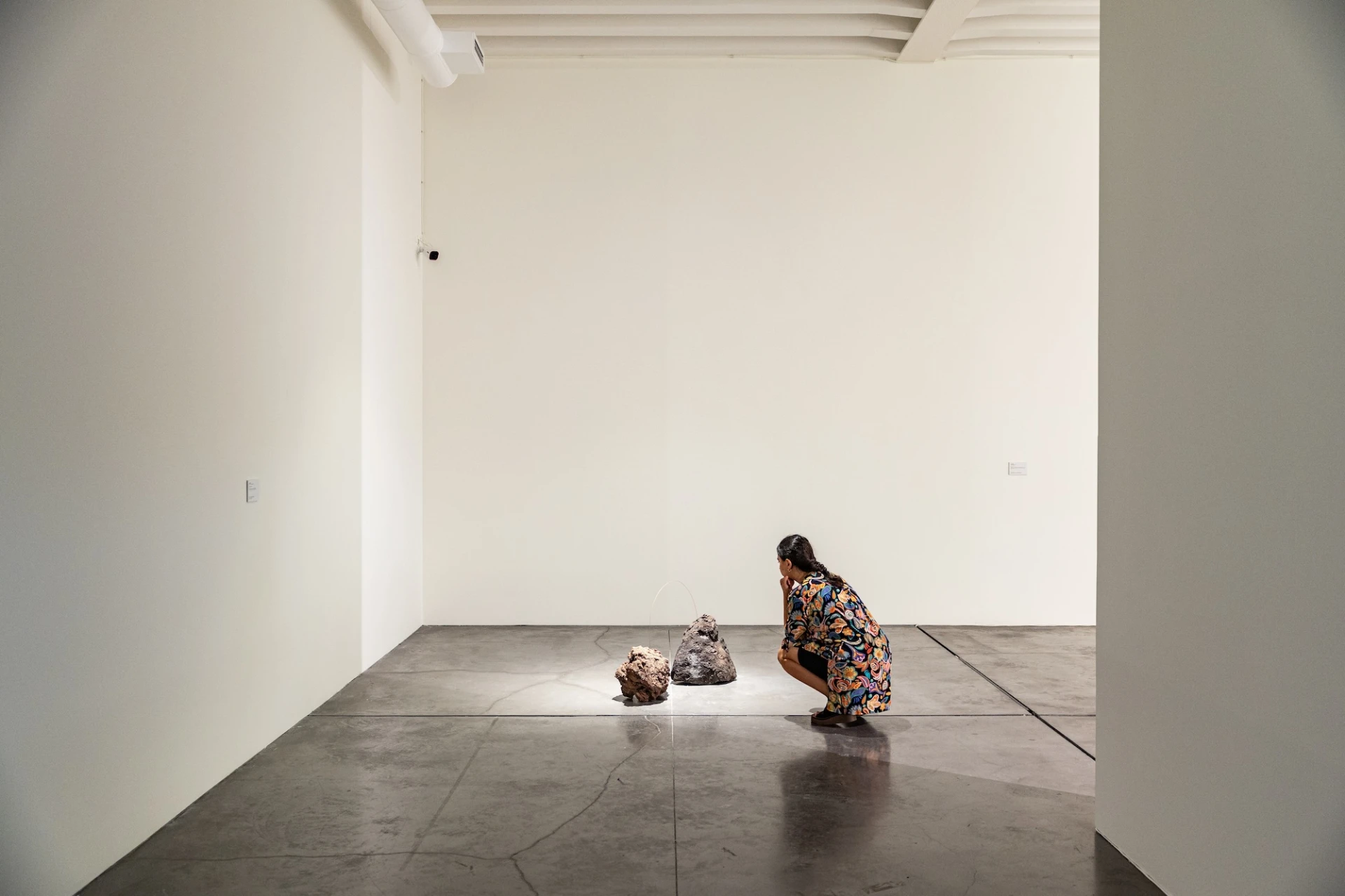
In Ana Manso's work, the relationship with this issue takes a different path. In Koi (2024–25), the artist starts from the observation of colourful carp, although she does not seek to represent the fish that gives the work its title. The painting develops through multiple layers, in a process where the distinction between figure and background becomes unstable and the viewer's gaze hardly finds a point of rest. If the Renaissance tradition is often associated with the constant search for balance, proportion, and formal clarity, Ana Manso's painting invites us to consider an experience of the image that does not depend on a stable organisation or a predefined meaning. It would not be fair to take this difference as a direct rejection of the canon. In fact, such a movement opens up space for a broader question: is it necessary to explicitly confront tradition to transform its assumptions? Perhaps the revision of inherited models can occur through a search for difference, whether that difference lies in other ways of producing, constructing images, and establishing a relationship with those who observe them. Perhaps it is not foolish to suppose that the past and tradition need not be cited for their influence to be questioned; perhaps it is in the very silent transformation of ways of doing things that other possibilities and a truly constructive relationship with the past become visible.
The issue takes on a different dimension when we move from representation to the language and social conventions that images carry. In Mendigo com o seu cão insultando um homossexual (1982), Eduardo Luiz presents a scene marked by the tension between figures and the violence inscribed in social relations. The work allows us to think that tradition is constituted not only by artistic forms but also by ways of representing others, establishing differences, and determining who occupies a legitimate place in the common space. The dialogue with Horácio Frutuoso becomes particularly suggestive in this context. In tenho de renovar constantemente a abstracta decoração (2026), developed from a verse by Raul de Carvalho and in dialogue with the work of Eduardo Luiz, the very idea of renewal arises linked to the persistence of a structure that needs to be continually remade. The notion of constant renewal carries an ambiguity that extends beyond the formal question, since renewal simultaneously implies both transformation and permanence. It could be argued that the same applies to the canon, whose authority can be challenged without ceasing to constitute the main frame of reference.
This ambivalence helps explain the place the canon continues to occupy in contemporary art. Even when seeking to revise inherited values and confront historical authority, artistic production frequently returns to the same images, historical periods, and authority figures. This movement can, in fact, translate into a critical relationship with the past, but it also raises doubts about the capacity to imagine other references and other genealogies. Criticism often risks confirming the centrality of what it seeks to question, thereby transforming contestation into a new form of recognition. It would be reductionist, in any case, to interpret all revisiting as a sign of an inability to break with the past. History is not a territory outside the present, disposable when unwanted; on the contrary, it is also the means through which we learn to recognise and interpret the images that surround us. We are historical beings. The question, perhaps, does not reside in the constant return to the canon, but rather in whether this return effectively modifies its meanings and limits. Tradition is a reference without remaining an authority.
In Paradise, relationships with the past take different forms, from Sasha Gordon's direct appropriation to Ana Manso's material transformation, passing through Charlotte Moth's installation and the dialogues between Eduardo Luiz and Horácio Frutuoso. It is not necessary to bring them together under a common intention to recognise that they all allow us to think, in different ways, about the persistence of the images and languages we inherit. The past does not emerge only as memory, but as matter that continues to be worked on, reorganised, and constantly questioned. The doubt, however, seems to remain open, only resolvable through practice: is this insistent return of contemporary art to the references that precede it due to an abundance of possibilities yet to be explored, or to a dependence on its authority? Perhaps it is not necessary to choose between two hypotheses. Perhaps it is more pertinent, rather, to perceive what changes in each return, what meanings become possible and what remain unquestioned, to apply a careful look to the fruits of this movement which, whether we like it or not, seems to be an inevitable condition of Being and, consequently, of art.
The exhibition can be visited at Casa Branca de Gramido in Gondomar until November 1st.
BIOGRAPHY
Guilherme Sota is a multidisciplinary artist, music producer and co-founder of the Vertigo collective. He holds a degree in Painting from the Faculty of Fine Arts at the University of Porto and is currently completing a Master’s degree in Art Criticism and Curatorship at the Faculty of Fine Arts in Lisbon. His artistic practice spans various fields, including painting, sound, installation and writing, through which he explores themes related to ontology, sexuality and iconography. Since 2020, his work has been shown in group and solo exhibitions, notably ‘Do Ser e do Seu Desvelar’ at ÁRVORE Cooperativa, Porto (2025), ‘Microcosmos’ (2026), at Espaço Cultural Mercês, Lisbon, “Na Fenda da Forma” at CC Penedo da Saudade, Coimbra (2025), as well as in various exhibitions organised by his collective. He received the “Jovens Criadores na Árvore” award (2025), amongst others, and was selected for the “CreArt 3.0 AiR” artist residency in Kaunas, Lithuania (2025), amongst others. Alongside his artistic practice, he writes for Umbigo magazine, is responsible for curating and producing the Vertigo events, hosts a monthly programme on the Brazilian radio station Function!, and regularly produces musical projects.
ADVERTISING
Previous
article
23 Oct 2026
Life Inside Homes #2: Dona Olívia
By Zara Ferreira
Next
agenda
26 Oct 2026
Closing program for the exhibition "O Silêncio de Hefesto" at Arquipélago – Centre for Contemporary Arts
By Umbigo