article
To Whom It May Concern, at Carpintarias de São Lázaro
“I am writing this letter regarding To Whom It May Concern, the latest project by João Bragança Gil, presented at the Carpintarias de São Lázaro in Lisbon. The exhibition, whose title borrows this formal salutation used when the recipient’s name is unknown, is itself structured as a letter. It originates from João Bragança Gil (Lisbon, 1989) and is addressed to a giant cybernetic entity, an indescribable creature with multiple forms that unfold throughout the exhibition space.”
Dear readers,
I am writing this letter regarding To Whom It May Concern, the latest project by João Bragança Gil, presented at the Carpintarias de São Lázaro in Lisbon. The exhibition, whose title borrows this formal salutation used when the recipient’s name is unknown, is itself structured as a letter. It originates from João Bragança Gil (Lisbon, 1989) and is addressed to a giant cybernetic entity, an indescribable creature with multiple forms that unfold throughout the exhibition space.
The letter I am writing is addressed to the visitor who did not have the opportunity to speak with the artist. To Whom It May Concern, he tells us, emerged following a previous project, Paraísos Artificiais (2023), which presented the garden as a techno-scientific device. “The research drew primarily on Jodi Berland’s book Virtual Menageries: Animals as Mediators in Network Cultures (2019), which argues that animals have been used as affective codes to inhabit the digital world.”1 This reading gave rise to an almost obsessive interest in the beings inhabiting this digital environment, evident in the piece Virtual Menageries (After Jodi Berland), which presents us with a collection of caged animals and logos, as if the television were delineating the space of a virtual cage, a proto-zoo. This process would go on to gain momentum, leading to a broader investigation into the forms — beyond animals — that this entity might take.
To Whom It May Concern, the video that gives the exhibition its title, traces a history of cybernetics, using found footage and a 1990s aesthetic to construct a kaleidoscopic and fragmented archaeology-genealogy of this identity. But these ultra-digital elements are also interwoven with imagery drawn from classical mythology and pop culture. Alien, for example, draws on the character from the 1979 film, transporting us into the digital realm, which is as strange as it is alluring. In turn, Hydra, produced in electro-engraved stainless steel, presents us with the image of the fearsome multi-headed aquatic serpent from Greek mythology. “I was interested in introducing this classical element, especially as I see certain similarities with the digital realm. Just as the Hydra, whose heads grow back after being cut off and which we can never truly master, the digital realm also multiplies and eludes our control. Its mechanisms are too impenetrable and persist even in ghostly form, as is the case with the aesthetics of obsolete devices, which survive long after their demise has been announced” 2, he explains.
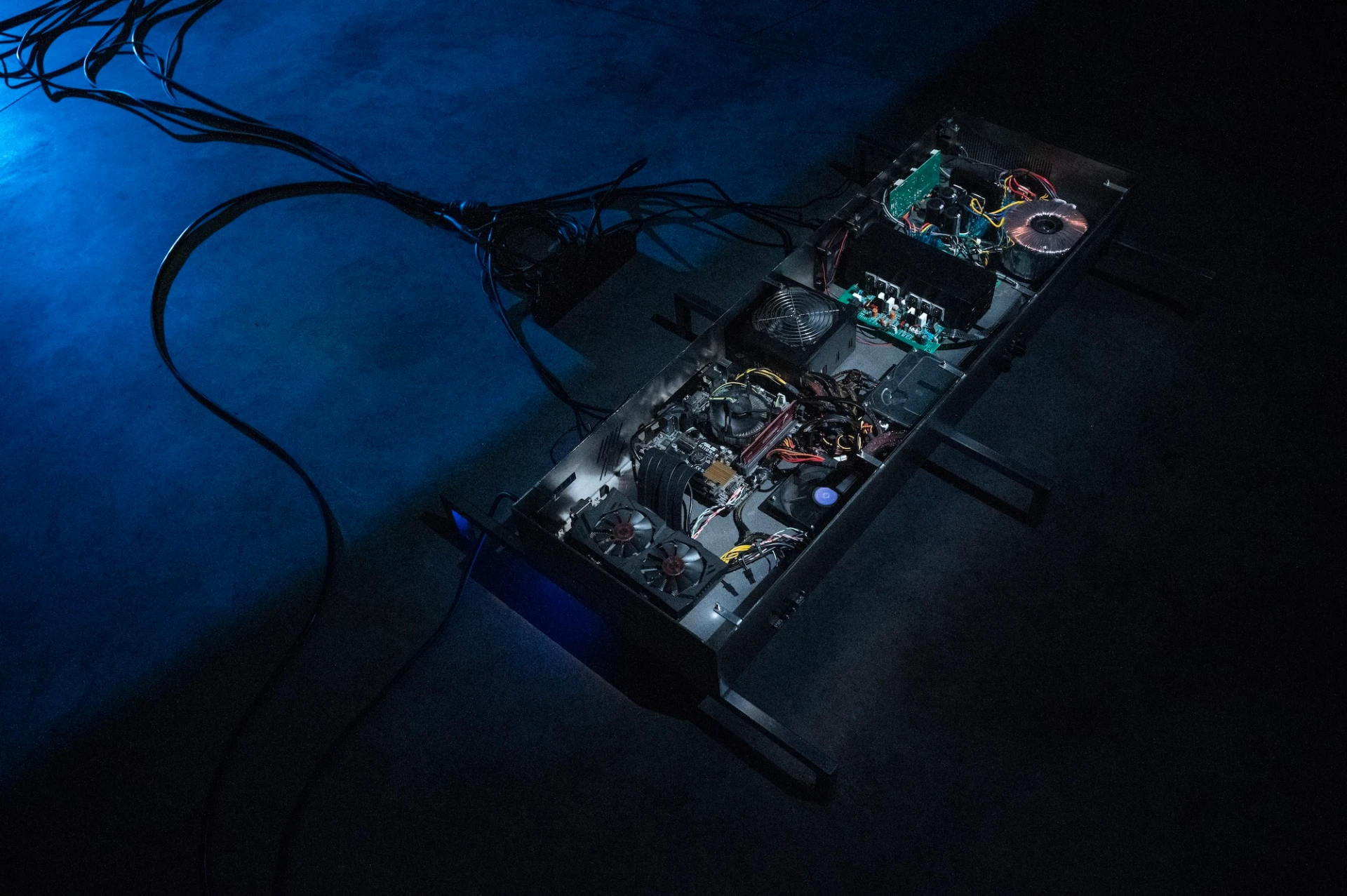
I am also writing this letter because it is difficult to scrutinise this cybernetic entity and because writing, or the production of text, is always a response to that innate wound which prevents us from knowing, as Umberto Eco wrote. It was precisely this impossibility of grasping that stood out most during the visit and seems to guide the entire exhibition, whose scenography was designed so that the exhibition space itself would be transformed into the creature to whom the letter is addressed. From the dim light of the exhibition emerge servers, interfaces and devices that become ambiguous objects, simultaneously functional and obsolete. 3 They are the ghosts and unfulfilled promises of the digital world, which linger in the space as suspended forms. We see countless cables, made visible by the lighting, and imagine ourselves inside this disembowelled being. Spotlights stand out, illuminating the various pieces within a cavern or a dark bunker. They are glimpses of access to a luminous truth that never quite materialises in full. We can see it in the distance, without ever truly emerging from the darkness. “I’ve never sought to provide answers. No matter how much research I do, there is no single direction. I’m interested in opening up as many perspectives as possible and fragmenting that perspective as much as I can,”4 tells João Bragança Gil.
Perhaps that is why the exhibition is also an open letter. A letter that casts points of light and ephemeral constellations upon something, the installation of which precisely formalises this openness. It originates with the artist, but is not confined to him. It remains open to the myriad associations and constellations that visitors may construct here, to the interplay of references, and to the different forms this creature may take. Open because it experiments rather than concludes; because it casts trails of light into a dark cave that merely clear a possible path towards understanding this mythological and technological being, which we do not fully comprehend, but whose cables, interfaces and traces continue to envelop us. Open because closure can never be the mechanism for dealing with the unknown. Because to be an artist is to be curious and, I’ve heard it said, it’s very strange when artists say things that are spot on. 5 It is rather their role to ask questions.
With nothing further to add, I take my leave. I remain entirely at your disposal for any further clarification.
With best regards,
Maria Inês Mendes
Curated by Carolina Quintela, the exhibition is on view at Carpintarias de São Lázaro until July 19, 2026.
1 João Bragança Gil, 10.07.26.
2 João Bragança Gil, 10.07.26.
3 Exhibition text, written by Carolina Quintela.
4 João Bragança Gil, 10.07.26.
5 A quote from the sculptor Rui Matos, which was passed on to me by Tomás Serrão.
BIOGRAPHY
Maria Inês Mendes is studying for a master's degree in Art Criticism and Curatorship at the Faculty of Fine Arts of the University of Lisbon. She completed her bachelor’s degree in Communication Sciences at NOVA University Lisbon and wrote about cinema for CINEblog, a website run by NOVA’s Institute of Philosophy. She is currently in charge of managing UMBIGO online, where she publishes regularly. Contributes to BEAST – International Film Festival and À Pala de Walsh.
ADVERTISING
Previous
agenda

10 Jul 2026
Open Letter for the participation of professionals from the arts in higher education
By Umbigo
Next
article
15 Jul 2026
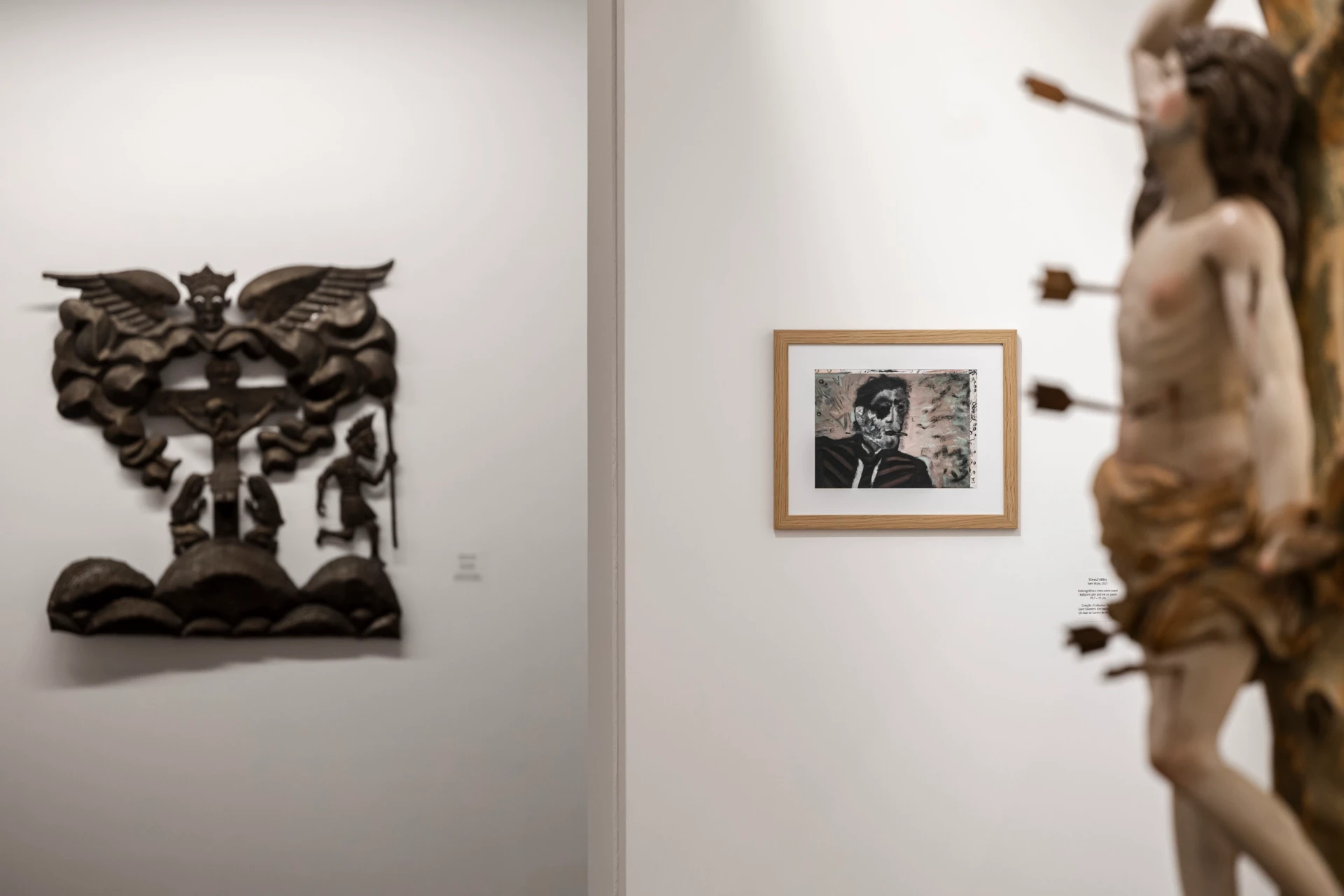
Sacred Heart, at Fundação Eugénio de Almeida
By José Pardal Pina
Related Posts
article
01 SEP 2026
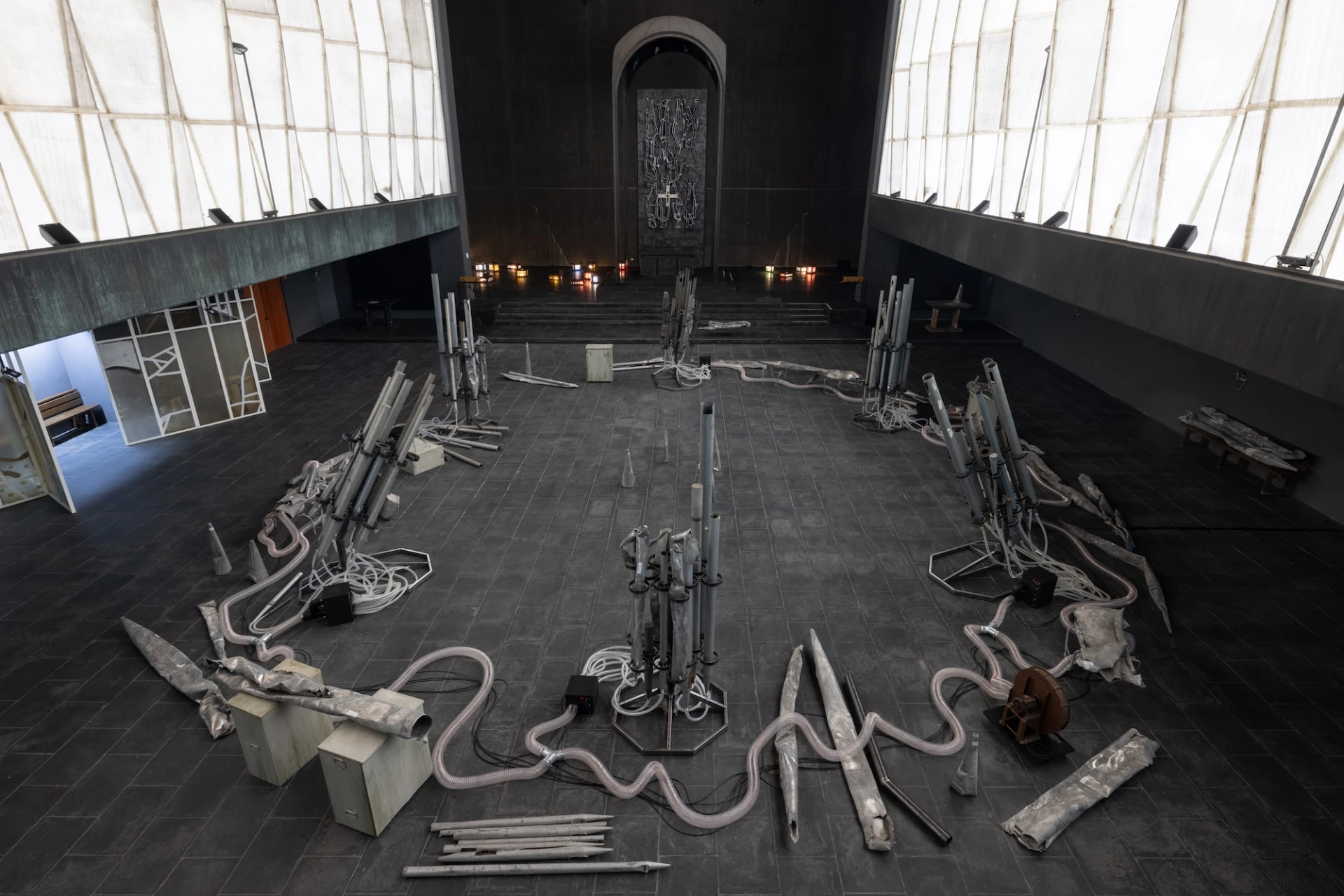
THIS IS (NOT) A CHURCH: Can a church be a place for encounter?
By Maria Inês Mendes
article
14 JUL 2026
To Whom It May Concern, at Carpintarias de São Lázaro
By Maria Inês Mendes
article
02 JUN 2026
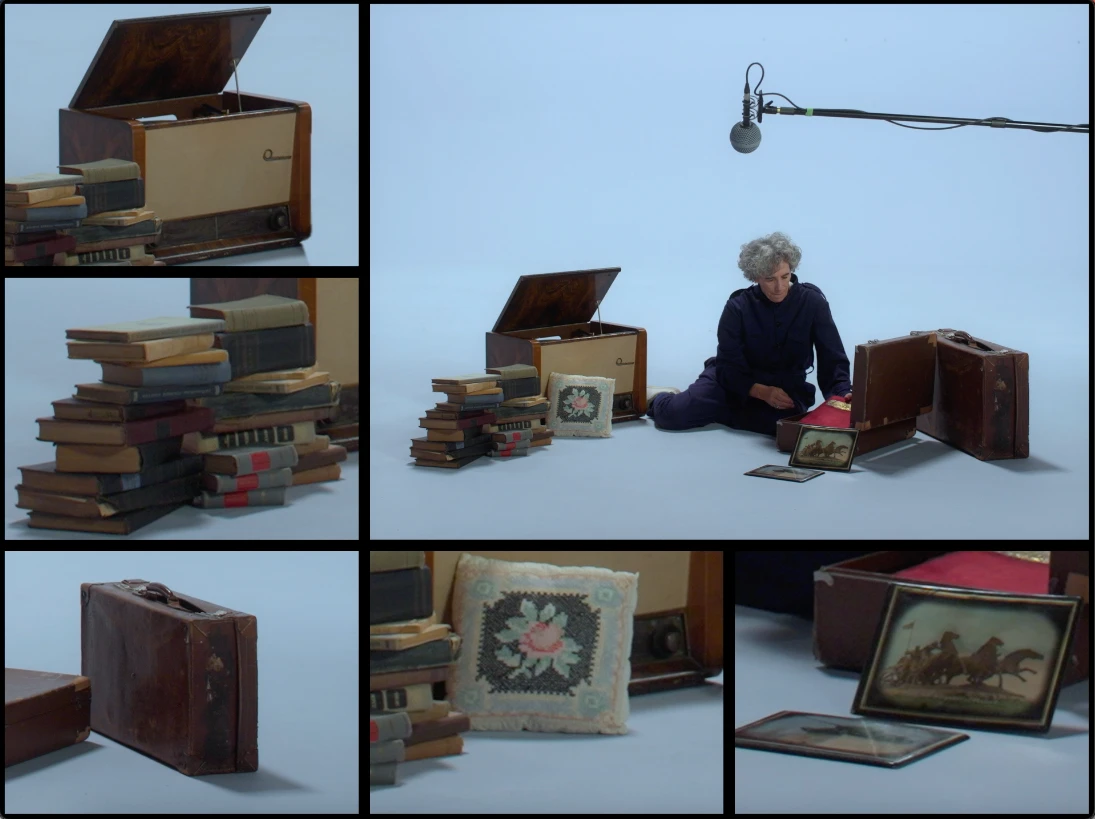
¿De qué casa eres?, by Ana Pérez-Quiroga
By Maria Inês Mendes
article
11 MAY 2026
Brief notes on Art Brussels 2026
By Maria Inês Mendes