article
3 Projects X 3 Encounters: Maintaining the Future
At a time when the word sustainability is frequently used in cultural contexts, it's important to understand what the term means in the discourse of independent cultural structures. In this context, sustainability doesn't just refer to responsibility for environmental commitments, nor just to its financial meaning; it refers to its root: the capacity to live.
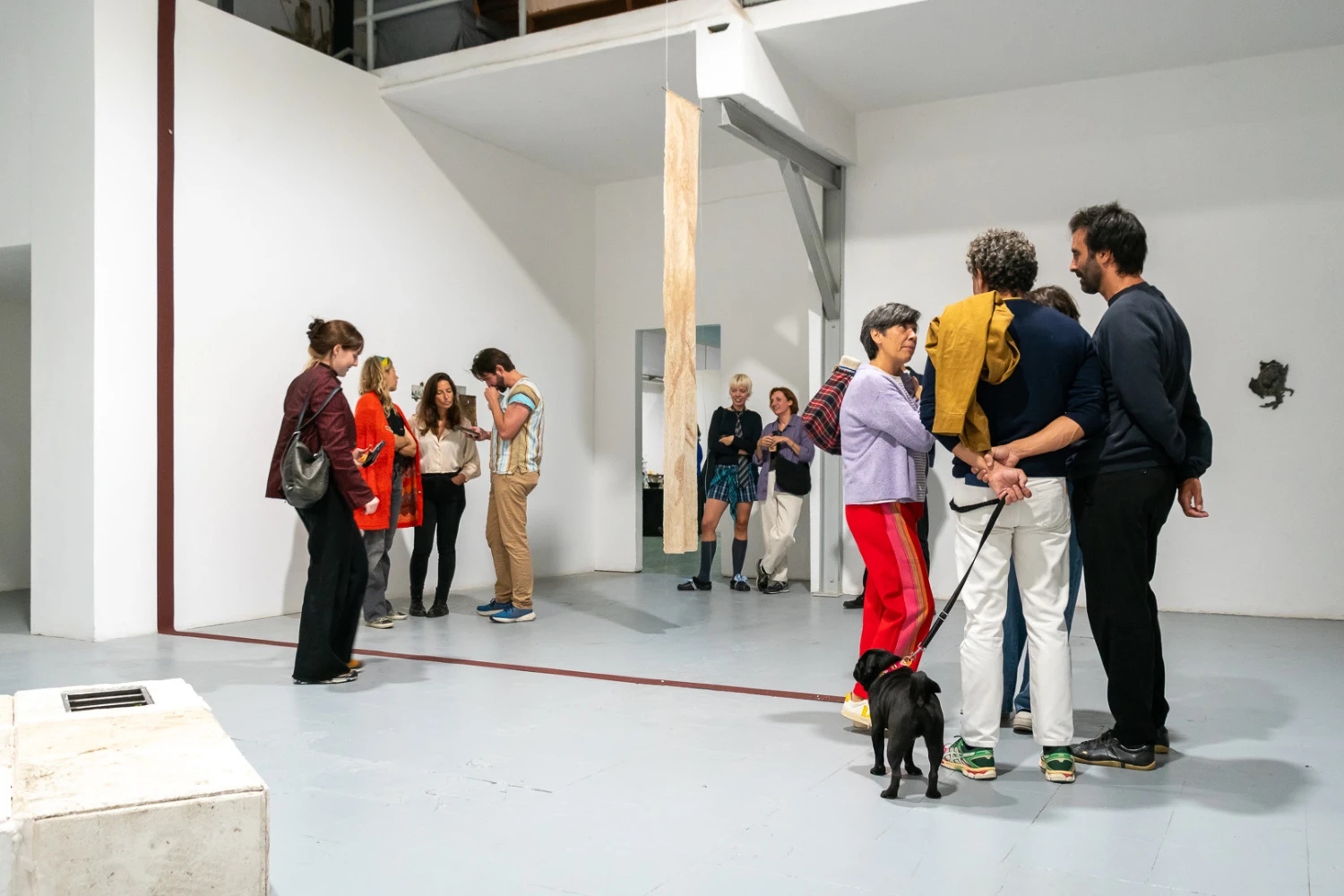
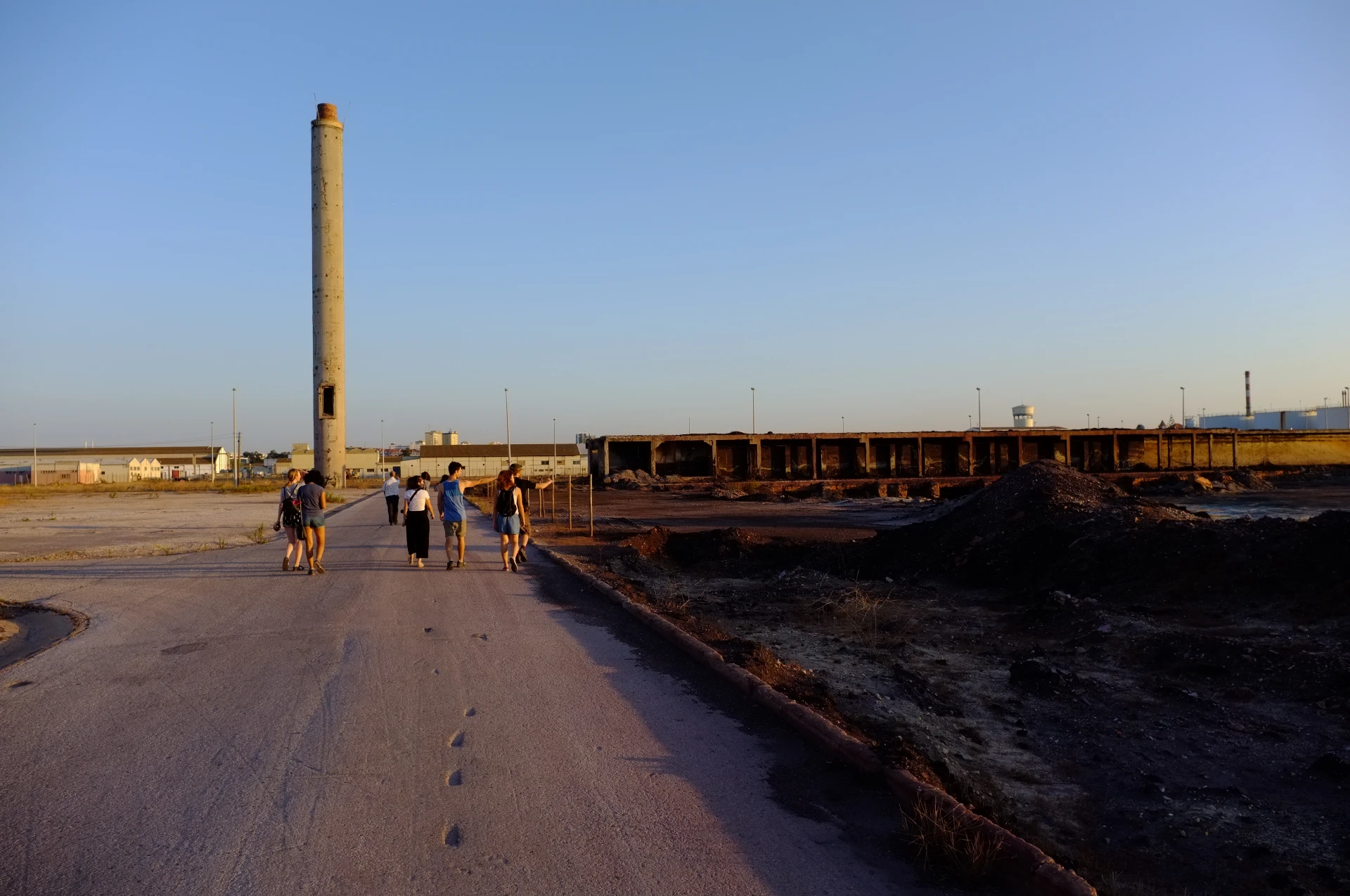
To find shared radicality, three projects—AiR 351, PADA Studios, and pó de vir a ser—part of the Rede Portuguesa de Arte Contemporânea, begin a dialogue about the energy dedicated to maintaining their own existence, taking into account their peripheral status. It is important to emphasize that these structures do not compete with museums or the gallery scene, nor do they seek visibility in the independent scene or replace informal or artist-run spaces. Their intentions, strengths, and missions refer to those that sustain the daily work of art and the patient construction of spaces for artistic research, which can be understood as the foundation of the cultural fabric. These projects often reveal the invisible labor that enables development processes and do not claim for themselves the power of images and their respective presentation. They are lovers of the journey, of guided discovery, and of proximity. Despite their importance and the recognition of their ability to create community, sustain practices, and offer artists a place of attention and sharing, these structures are fragile due to the small size of their teams and the intermittent support that enables them. If we were to invoke an organic metaphor, we would call RPAC the skeleton and these structures its flesh, viscera, and organs: what makes the cultural body a living body.
It is in this body that an often-forgotten constitutional principle is discreetly enforced: the right of all to cultural enjoyment and creation. And here a crucial reflection arises: when access to culture depends on fragile structures, sustained by small teams and the almost sacrificial dedication of their members, aren't we faced with a contradiction? That our right depends on their resistance. Sustainability thus becomes an everyday practice of survival, no longer a category or theme.
The meetings organized by 3 Projetos X 3 Encontros—which brings these three structures together in three sessions to share and discuss anxieties and enthusiasms—brought this to light. More than a thematic alignment, what emerged from these moments of relaxed and emotional dialogue was the awareness that these entities live in a permanent state of precariousness. Paradoxically or not, given that precariousness presents itself as the initial condition of their existence, it also structures their creative energy. It is around this precariousness that solutions and responses are built.
The problem isn't individual, but structural: while people are busy with applications, reports, and deadlines, postponing the possibility of experiencing the present of small achievements and pleasures until the future, the cultural ecosystem loses vital energy. While bureaucracy ensures minimal maintenance, it also drains the transformative force. Sustaining means hijacking time and energy from invention in favor of project continuity and maintaining its vitality.
To reflect on this complex tapestry of paradoxes, I turn to a sports metaphor. 3x3 basketball, born on street courts, is played under pre-established, albeit improvised, conditions. Teams form haphazardly, rotation is rapid, and joy arises as a result of this anticipated unpredictability. In competition, what's at stake isn't victory. What's celebrated is the pleasure of playing within the game. This is also how these structures function: improvising rules, forming unlikely alliances, persisting in fields not designed for them. They inevitably compete for support and resources, but it is in establishing a network and encounters that they discover the possibility of applauding one another. Love for the jersey, a banalized and capitalizing expression of enthusiasm, here means fueling the common cause of keeping an artistic ecosystem alive under adverse conditions.
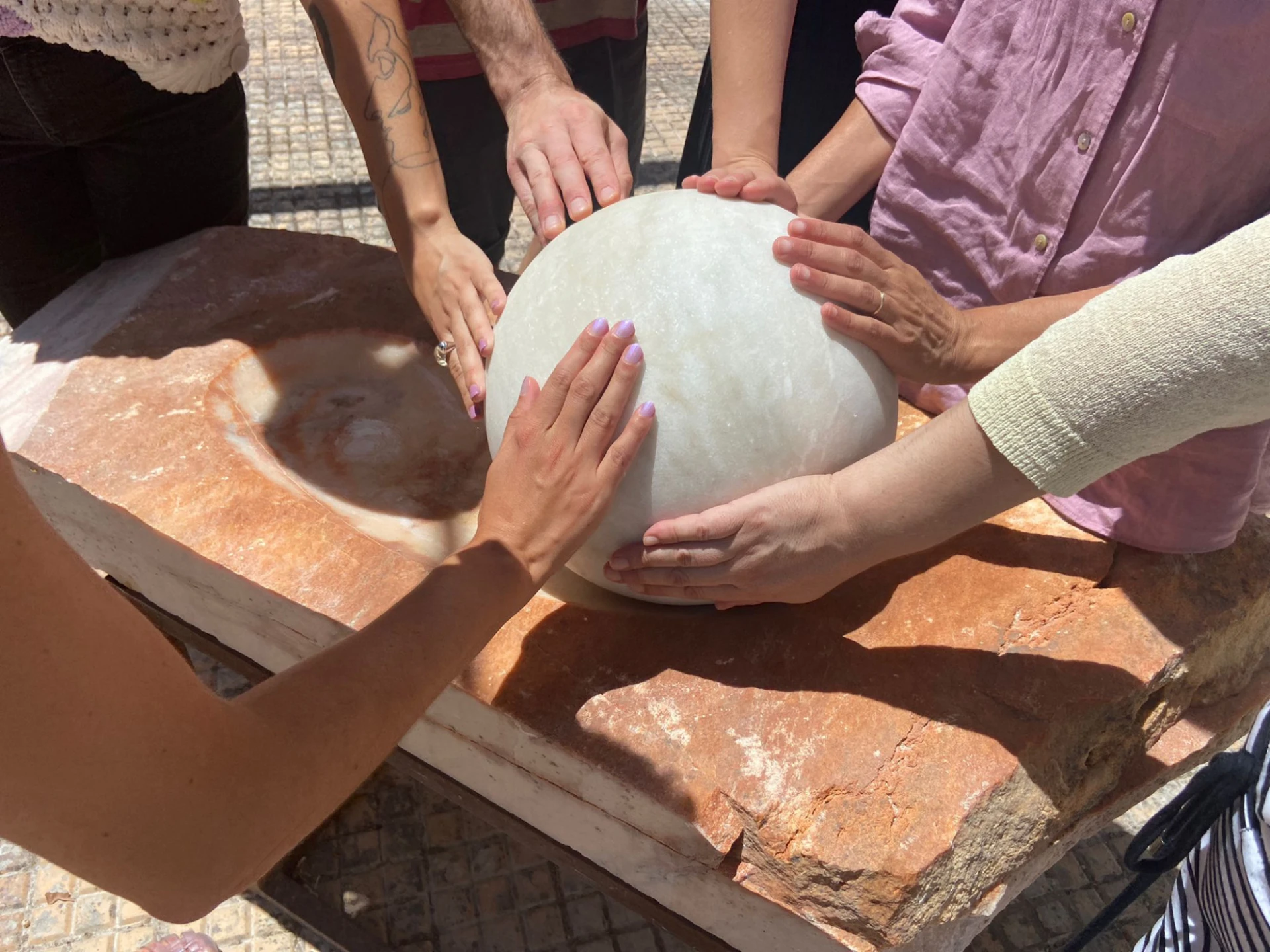
The desire and need to share experiences and weaknesses points to other dimensions, such as the importance of these structures as spaces for social invention. Artistic creation intersects with the creation of ways of life; it is in sharing housing, cooking together, and improvising equipment that the limits of what is possible are continually redefined. More than offering studios or tools, these structures enable belonging to a community in which the act of creating merges, admittedly, with the act of living. In this context, sustainability takes on even broader contours; it refers not only to the ability to live, but to the continuous creation of that same experience, the continuous creation of the conditions for a communal existence, of coexistence.
In the painful pleasure of the experience, the risk of emotional and material overload for those who keep these structures alive is continually latent. Dedication is both a virtue and a trap. The vitality generated by precariousness can quickly translate into exhaustion. The reflection must be incisive: to what extent can small teams be expected to maintain a right that is collective and constitutional? To what extent does the rhetoric of enthusiasm disguise the need to ensure the basic conditions for maintaining this constitutional right?
What we witness on the ground—the network that was already there and that RPAC formalizes and makes visible—is the struggle to ensure continuity. Longevity is certainly built through willpower, but only if the necessary resources are allocated.
Despite all this, said and shared, they persist.
They persist because artistic practice, even under adverse conditions, contains an inexhaustible force of invention. They persist because, in the encounter, both concrete difficulties and the capacity to celebrate achievements are revealed. They persist because, even exhausted, these structures continue to generate contexts in which artists can experiment, fail, and reinvent themselves. They persist because pleasure continues to permeate everything they do. Pleasure is not antagonistic to seriousness: on the contrary, it is what keeps the flame burning when resources are exhausted.
The first of three meetings of this joint project doesn't allow for conclusions; it opens the way for a rethinking of the shared understanding of the word sustainability. Sustaining must be understood as keeping alive an artistic and human ecosystem that insists on continuing to create, even in the face of unfavorable conditions. It must mean demanding favorable conditions so that a shared future can be imagined, as a space for collective invention.
In the texts that follow, it will be inevitable to expand on these reflections, discussing the relationship between artistic residencies and informal education and the relevance of these projects to the territories they inhabit. For now, the image of the game remains: three structures that, like three teams on the same improvised field, meet, compete, and applaud each other. And discover in their vulnerability a vital energy.
Perhaps the analogy allows us to read sustainability not as a guarantee of the stable future we must continue to demand, but as the ability to reinvent the conditions of possibility of the game itself. And thus, allow for the pleasure of the cultural body.
BIOGRAPHY
Catarina Real (1992, Barcelos, Portugal) works at the intersection of artistic practice and theoretical research in the expanded fields of painting, writing and choreography, mostly in long-term collaborative projects that address the question of how we can live better collectively.
She is a doctoral student at the Centre for Humanistic Studies at the University of Minho with research that crosses art, love and capital. She maintains a practice of commenting - in the form of reflective texts, introductory texts to exhibitions, interviews and moderating conversations - on the works and processes carried out by artists in her generational group, with the intention of contributing to a healthy environment of criticism and collective and community creation. She has been vice-president of the French association Artistes en Résidence since 2019 and editor at Edições da Ruína since 2022.
ADVERTISING
Previous
article
17 Oct 2025
Circuitos´25
By Margarida Oliveira
Next
agenda
-kbzk9.jpg)
20 Oct 2025
Drawing Room Lisboa returns to the Sociedade Nacional de Belas Artes from October 23 to 26
By Umbigo