article
The distant work: Ana Vieira at Galeria Vera Cortês
“The work then becomes a series of evocations that fail to establish a final image, resulting in a process of discovery and ambiguity. In Ana Vieira’s work, the exhibited object functions as a sort of backdrop for distant images.”
The act of tracing silhouettes involves an uncanny, ghostly quality. The process of drawing a shape in graphite or sculpting it in bas-relief requires us to witness a figure emerging beneath our hands. I cannot dismiss the idea that such a fascination drew the very first humans into the deepest recesses of caves, to allow forms to emerge from the bowels of the earth. The emanation from such creations provides a silent confrontation. This is the silence typical of the visual arts through which a work gradually draws us in, until it ultimately possesses us. That artistic experience is somewhat incestuous in its seduction: the offspring watches its progenitor, undressing it for itself. This confrontation with the artwork, looking at us whilst we look at it, like an object of desire that unexpectedly reveals the secrecy of our voyeurism, is a pale fire that slowly burns through us, capturing our hearts.
This is how the work absorbs us, astonishing us, without ever gaining the upper hand: it is better to love than to be loved because the beloved is a passive entity that cannot feel anything, whilst the lover is overflowing with fiery passion, engulfed in a flame that will ultimately transform them. This is also why the work remains untransformed; it is what it has always been, modified only by our changing perception of it: the masterpiece would therefore extend itself over us, able to adapt to all our attempts, instructing us not through doctrines but through experience. Should we then conclude that the artist is someone overwhelmed by a passion for the yet-to-be, needing to create that which they already love? Nevertheless, contemplating images is risky: we may become lost in this web we have woven ourselves, motivated by the desire to know. This is how most of the mythological chain of events comes about: The first betrayal by Zeus was committed against Io, a priestess at the temple of his wife Hera, whom she perfectly emulated, as Zeus coveted the mirror image of what he already possessed.
Not much is said about this intangible aspect of artistic practice. Most often, we just comment on a work as a collection of formal operations and discursive content. Personally, I think that, more than any political interest or artistic approach, what captivated Ana Vieira throughout her career was this spellbinding experience: being caught up in, and being part of, the magic circle of an artistic experience. No wonder so many of her works address the subtleties of contours.
This mutual voyeurism is in some ways defiant: an artist sees the work, which looks back at them, driving them to see themselves as they observe. This is actually more complex because we see ourselves reflected in the artwork: much like in life, where we often feel observed because we internalize the eyes of others upon us, we also internalize the eyes of the artwork watching us. We are thrown back upon ourselves by the reflection of an intriguing artwork, resulting in constantly shifting interpretations of the self. We do not have the object revealed in this context, but rather the self being revealed as a world-shaping entity: we find ourselves shocked when we perceive the viewpoint of that which is staring at us. Does the work attempt to elude us, or does the self elude itself through an elusive work? Many of Vieira’s pieces contain a vanishing image, reinforcing the ambiguity of the experience. Things run through us: the artworks are not born of the artist, but originate somewhere else, passing through them. In Vieira’s case, perhaps the artworks were not meant to be concluded by her either, so that they might also run right through us, as viewers, forming an experience in which we actively take part, as part of this regime of incompleteness underlying Ana Vieira’s craft.
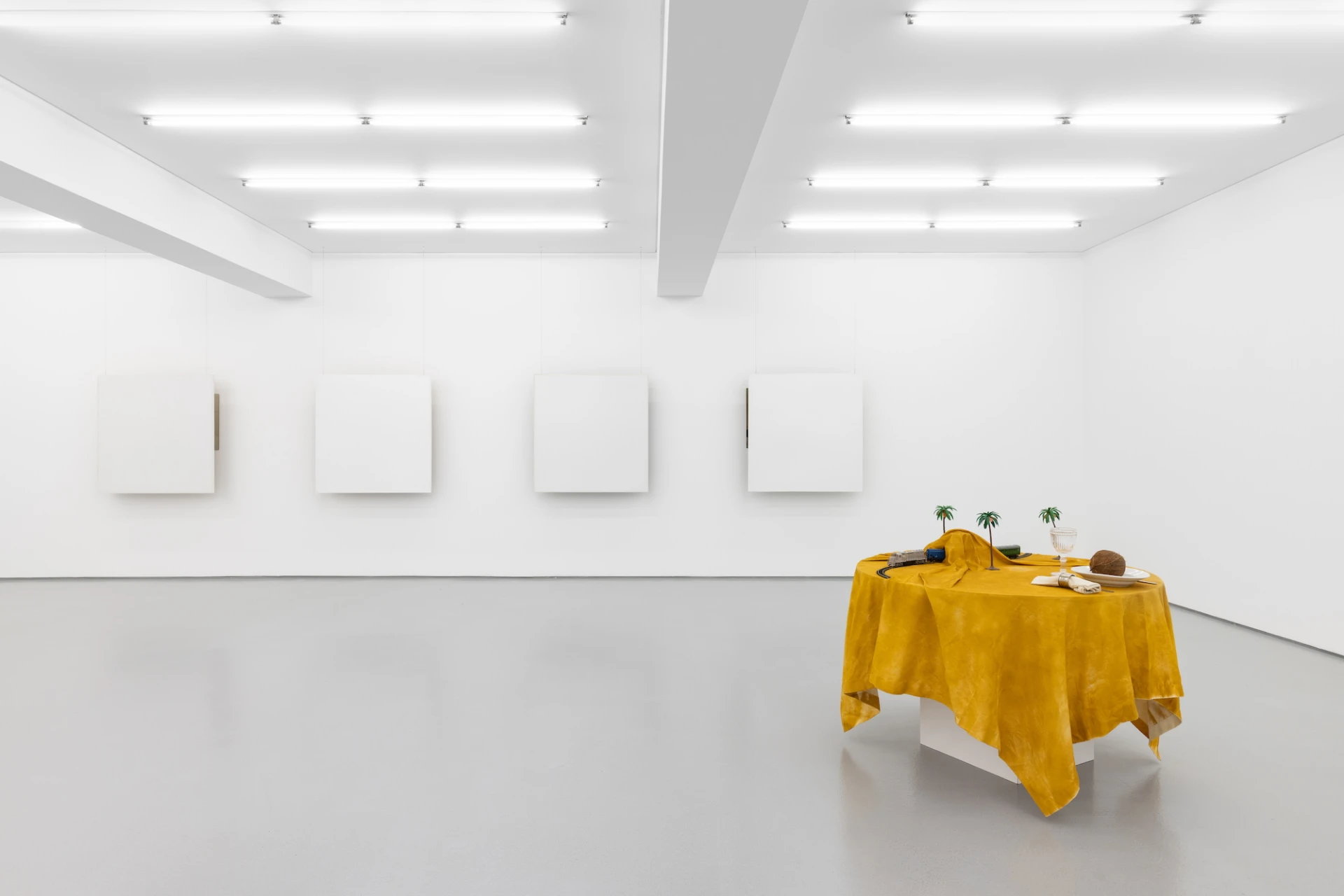
Where do things actually emerge from? Does contemplating the source of things mean tapping into a purity beyond circumstances? Is whiteness the symbol of the source? But whiteness is a blinding brightness that burns itself out in its own glow, fading away in full light. This is perhaps why, in Ana Vieira’s series on display, eight white panels are hiding a somewhat darker, labyrinthine visual arrangement. As a matter of fact, the white does not hide but initiates the arrangement: since we see the white panel first, the moment we do so marks the work’s starting point, its origin in our experience, the evidence of something that has been lost, only to be found again, albeit not entirely. Indeed, Ana Vieira has never been particularly interested in objects, but rather in the evocations born from within us, surfacing from our encounters with the unknown.
We can see a system of imperfect mirrors behind the panels, reflecting domestic scenes. Our metaphysics often argues that the true is hidden behind the visible, but herein the interior of the white panel is itself a mirror distorting an image, which is itself a distortion of something else — a washbasin, a piece of cutlery, a lamp, a set of paintbrushes, a mannequin, a pack of cigarettes. What is the origin of these objects? Do they come from the artist’s home? We all have equivalent items in our lives and, although they may not be the same, they are similar enough: everyday tableware cannot be given the label of ‘original’ or ‘unique’. A mundane object does not even exist in itself, as it is reduced to its practical use. Even now I do not recall either Vieira's cutlery or any other that has crossed my path, nor whether what I now see in my mind’s eye is merely a mixed-up blend of so many others. All are offshoots without an origin: the original cutlery does not exist.
Vieira would say that the object itself matters truly little, as evocations are worth more, with every evocation being an intimate realisation. Common tableware lasts no so long, not even in our memory — only minutes after being used, it is already blurred in our minds, merged with all the others. These objects are like the name of someone who has just introduced themselves, soon forgotten. What good is a name when you have the other person’s face right in front of you? But even the face is partly forgotten: its details slip away from memory, into a haze of indistinct features. This is perhaps why there are hardly any faces in Vieira’s works, only light-hearted evocations of obscure drawings. Vieira prompts us to accept this half-light world for which human perception is the lightning bolt, where the dazzling scene the lightning reveals to us is not the world itself, but the entire range of possible realities at that very moment. The core issue here is the experiencing of an event without clear boundaries, drawing us into its depths precisely for that reason, in our anxiety to know that which can seduce us, presenting itself as an absence to keep us occupied. If we are what we contemplate, presenting the viewer with still-indistinct images allows them to build their own understanding whilst also constructing what they are perceiving in the present moment. According to our experience, things do not exist in and of themselves. What is seen is inextricably bound to the one who sees (this intertwining of exterior and interior, typically found in Vieira’s work, is also explored in the piece Mesa-Paisagem, that rounds off the exhibition: a landscape tailored to the dining table, stage of this most essential human activity — the digestion of the world into new compositions).
Arranged along the edges of the panels, the photographs are not merely a collection of objects, but remnants of suggested events. The world cannot be understood as a collection of permanent objects that leave their mark on an equally enduring subject – everything exists only partially. By formalizing things within their perception, the subject also formalises themselves. We cannot emerge unscathed from any experience. This is the fate of modern art, at least since Manet: it pulls us in, not to teach us, but to demand an impossible resolution. Just like us, it is unaware of itself. This is also why it is so appealing. Can two incompletions clarify an image? The home itself, as a whole, is also rejected by Vieira, who prefers to suggest only fragments, domestic moments. After all, the home is an absolute idea, since no one experiences a home in its entirety, but rather each detail individually. The lived, complex and mysterious home, steeped in archetypes, made it possible for her to unleash the evocative power she pursued.
The artist’s concern is to construct an atmosphere that disrupts the conditions of visibility to which we have, out of laziness, become accustomed. Even more so: in its earliest stages, the work of art has a religious origin, and Ana Vieira’s almost liturgical interludes also inspire in us a certain reverence. Here, however, the artwork cannot be seen as an untouchable monument before which we kneel: it is an ungraspable entity to be explored. The very concept of the artwork comes under scrutiny — what is the artwork? The object, the mechanism, the subjective perception? The artwork is whatever lies there, beyond all layers, without distinction. This distant element is the anti-classical, everything that remains in the background. Maybe because of this, in many of Vieira’s works, we cannot penetrate their atmosphere. We see them as if through a crack, from a distance, gripped by a craving that lies somewhere between reality and fantasy. Her works avoid any confrontation. We must circle them, trying out different perspectives, pushing the ideal viewpoint into an almost baroque territory, as the artist herself has said. This denial of the work’s own presence is countered by the denial of our own bodies as a form of presence. We are nothing more than a starting point, and we project ourselves forward into this perilous realm of desire and imagination that goes beyond mere visuality. The work then becomes a series of evocations that fail to establish a final image, resulting in a process of discovery and ambiguity. In Ana Vieira’s work, the exhibited object functions as a sort of backdrop for distant images.
Ana Vieira’s exhibition The Narrative Structure is on view at Galeria Vera Cortês until September 19.
BIOGRAPHY
Tomas Camillis is an author and researcher based in Lisbon, working on fiction and on essays in the interplay between art, philosophy and literature. He has a master's degree in Art Theory by PUC-RJ. In recent years he has participated in researches, taught courses in cultural institutes, helped organize conferences and published in specialized magazines. He currently collaborates with the MAC/CCB Educational Service and Umbigo magazine.
ADVERTISING
Previous
article
17 Aug 2026
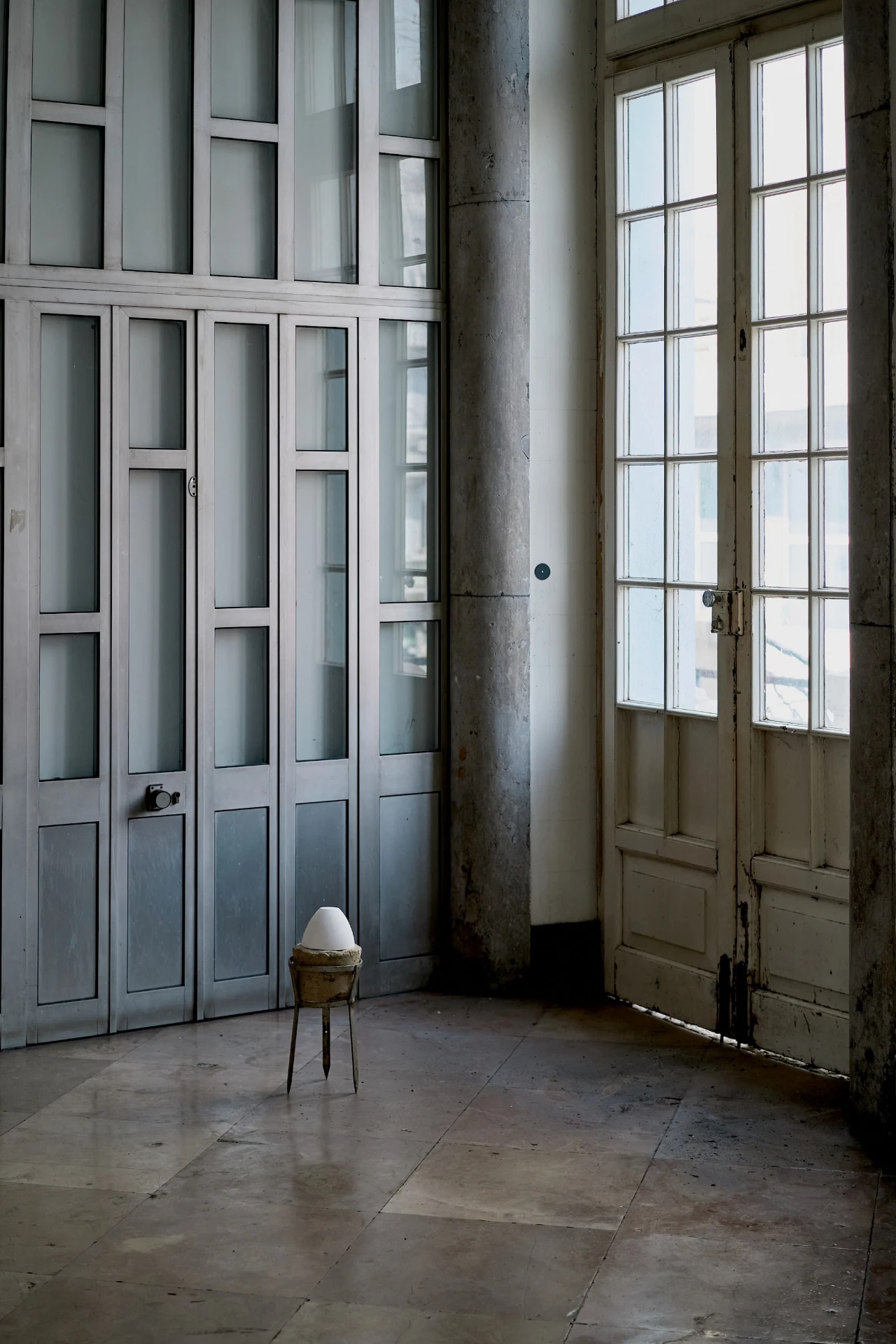
Intervalo, by Eduardo Matos: the first step in a station that has already passed
By Rita Barqueiro
Next
agenda
20 Aug 2026
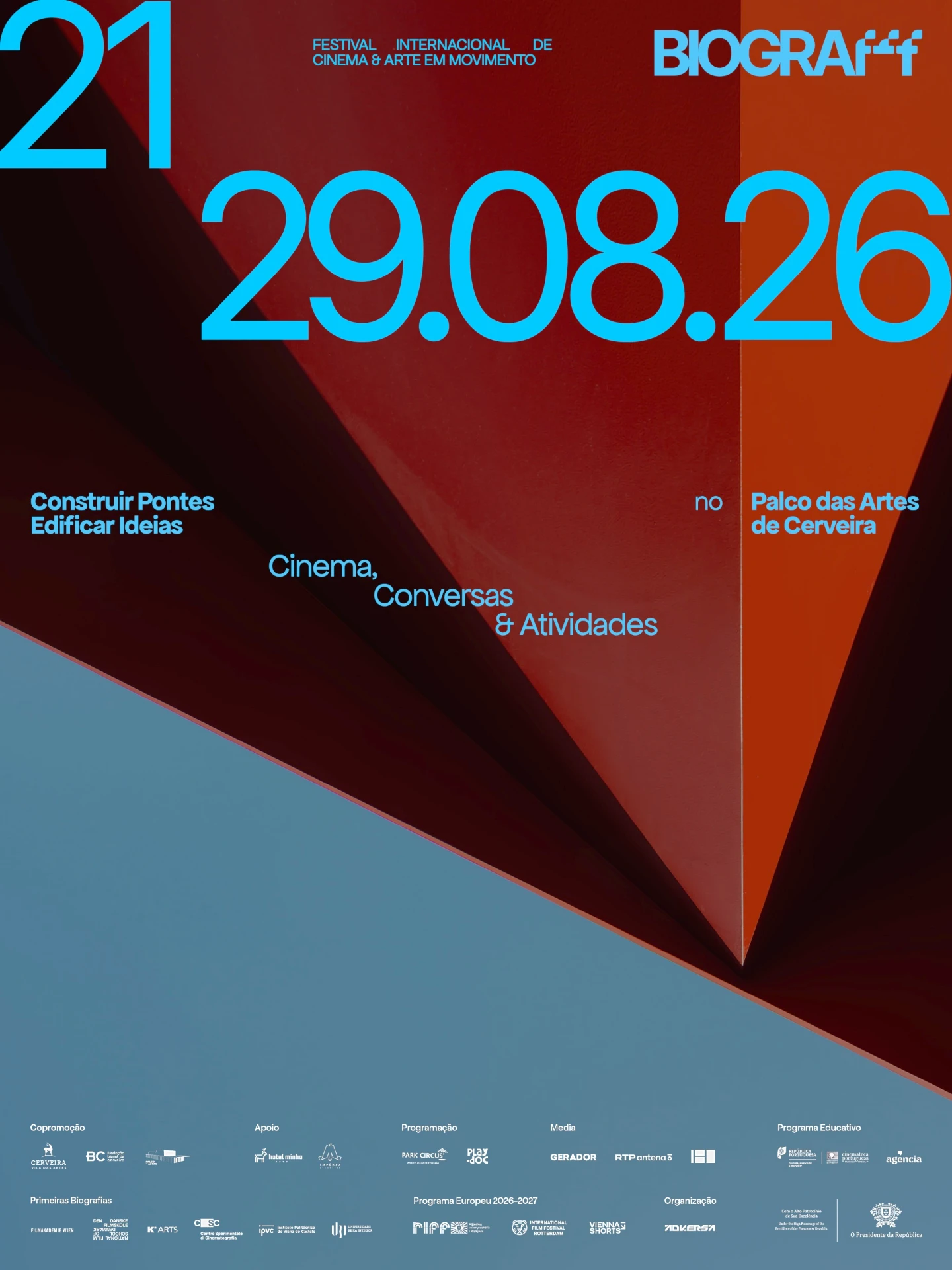
BIOGRAF - International Film and Moving Arts Festival, from 21 to 29 August, in Vila Nova de Cerveira
By Umbigo
Related Posts
article
25 AUG 2026
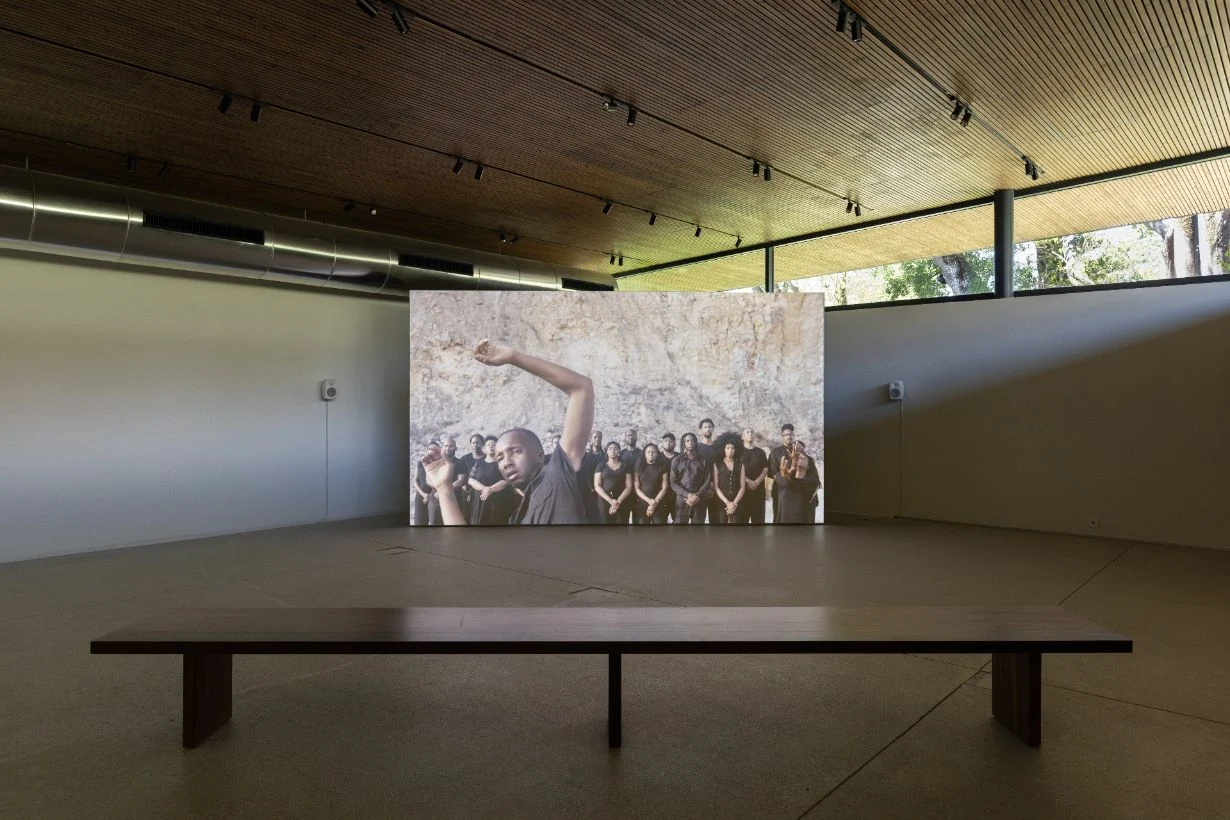
Foreign Monuments: Grada Kilomba at Fundação Albuquerque
By Tomás Camillis
article
18 AUG 2026
The distant work: Ana Vieira at Galeria Vera Cortês
By Tomás Camillis
article
30 JUL 2026
Excess and Silence
By Tomás Camillis
article
08 JUL 2026
TOWARDS TERRA INCOGNITA: Interview with Giovanbattista Tusa
By Tomás Camillis