article
Excess and Silence
“Walking around the exhibition means contemplating, amongst this never-ending series of artistic expressions built on the fringes of conventional perceptions, a disturbing overview of our spiritual condition. Having lost interest in society, the art brut artist becomes wholly absorbed in an intimate vision, one that ultimately transcends them in the name of something greater.”
Carl Jung had long been investigating art therapy as an important way of exploring his patients’ psychological processes when, writing in a short essay in 1932, he claimed that Picasso’s artistic career demonstrated signs of schizophrenic expressiveness. His argument did not address the artist’s personality, but the intimate, personal components of his life that were reflected in his art — after all, in some measure, we are all a little bit crazy. The Jungian analysis is interesting, and should be understood from a broader perspective, as I believe he himself intended: against the backdrop of history. Picasso is a sign of the times, he wrote. In Jung's view, modern humanity is the outcome of an almost complete destruction of our innermost values. The materialistic thrust of our society has turned us away from the psychological ancestry of past peoples. Jung understood art as Nekyia: a healthy descent into the underworld of the unconscious, into the cave of initiation and hidden knowledge, and the journey back to the upper world. ‘I seldom, if ever, encountered a patient who did not return to Neolithic artistic forms or who did not enjoy evoking Dionysian orgies.’ Today, if we have grown one-sided, this historical adventure alone could restore the whole human, now neglected, which would be ‘opposite to the contemporary human, as it is always the one we used to be, whereas today we exist only for the short term’. To embrace the full breathtaking beast of our spirituality, we would need to burst the mould of our modern mind.
In Jung's eyes, apart from the schizophrenics, there were also the neurotics, who produced images that were more synthetic, as they pursued a unifying meaning or feeling, whereas the schizophrenics produced contradictory images without cohesion — to which Picasso’s group would belong. Could this be why modern art is fractured? The classical artist may paint disturbing themes, but their clarity is not compromised by the darkness. Meanwhile, the modern artist experiences the very pathology to which they commit their art, experiencing both the ecstasy and the anguish derived from their creative freedom and their disbelief in truth. Romanticism had already conceived of art as the exploration of an inner landscape which, when in contact with a spiritualised nature, becomes fragmented into a spread-out energy. Also swept away by life, the schizophrenic melts into different elements stripped of any broader meaning. The role of the Sublime in modern art is just that, as some would put it: sheer vastness which, when encountered head-on, causes structures to collapse. As opposed to technique, this collapse is where talent takes the front seat — the vulnerable ecstasy that holds onto the energy of such an encounter. Art built on talent alone is also a reaction to the industrialisation of society. Much like raw form, which sheds the energy of inner impulses imposed on a reality sometimes too technical. But more than just the raw: the typical modern art and literary collages would also, in Jung’s view, be schizophrenic. But could we describe classical symmetry as an obsessive neurosis?
Our position lies between fragmentation and obsession. But maybe it has always been this way. Foucault maintains that madness is a modern construct, the result of a simplistic belief in reason. Perhaps the insane are those who, according to medieval belief, were touched by angels — those who witnessed the vastness. Is modernity a response to that immensity? As soon as we abandoned the psychological and religious structure of our ancestors, seeking to replace the gods ourselves, we became subject to an existential hostility that called for answers. Aristotle had previously stated that nature abhors a vacuum — this horror vacui had remained undisputed until the seventeenth century, when Torricelli proved it was possible to obtain a vacuum in the very same experiment in which he developed the mercury barometer. Pascal verified this by taking a barometer to the top of the Puy de Dôme, in this impressive relationship between the meticulousness of a scientific process and the enormity of a natural landscape. And Pascal himself was astonished by the vacuum he had just verified, describing his dread of the universe’s eternal silence, with its infinite reaches. This anxiety has always existed: horror vacui can also be understood as the artistic motif that lined the edges of manuscripts and the tops of columns, eliminating the anxiety caused by empty spaces. Yet, in our time, the void has transformed into not only the very condition of the universe, but also the emptying of our beliefs in a cosmic solidity. This may well be the source of Nietzsche’s philosophy (and madness), whose Will to Power can be construed as our effort to subdue everything that exceeds our grasp, filling this terrifying void with an unwavering thirst for occupation.
Maybe the external void is nothing more than a reflection of the inner void — mysticism used to be the search for the inner divine, much like the drop that contains the ocean. The absence of God gives rise to an inner void teeming with monsters that have not been integrated into either the divine structure or divine revelation, both of which used to give meaning to things. Who can explore this inner void, in the night of the world? Who can carry the barometer of sensitivity to the top of the spiritual mountain?
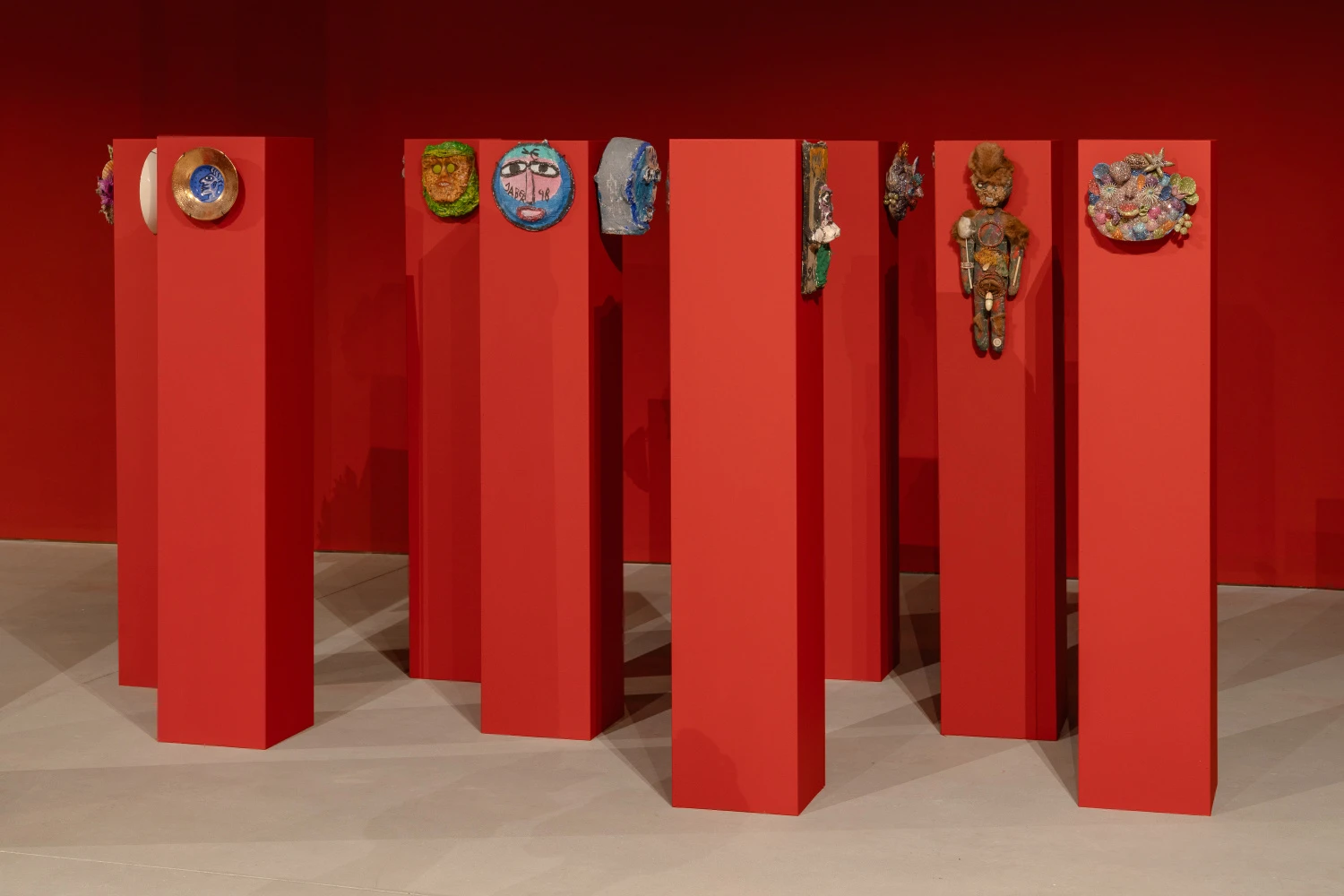
The exhibition horror vacui, now shown at Centro de Arte Oliva, features eighty-five anthropomorphic works by fifty artists, all part of the Treger Saint Silvestre art brut collection, which is housed there. Marta Jecu's curation reflects an elegant approach to exhibition design and a profound respect for the autonomy of the works, evident in her decision to arrange the objects on pedestals, inviting us both to contemplate them in their entirety and to be overwhelmed by them, with their edgy vitality as they spread throughout the space. Walking around the exhibition means contemplating, amongst this never-ending series of artistic expressions built on the fringes of conventional perceptions, a disturbing overview of our spiritual condition. Having lost interest in society, the art brut artist becomes wholly absorbed in an intimate vision, one that ultimately transcends them in the name of something greater. We could almost regard art brut as a mystical experience, given that these artists are those who reject conventional technique and submit their crude talent to an intimate revelation. This tormented spirituality is suffused with extremes, with experiences too vast to be realised in concrete forms. The night of the world is also the night within us, and art brut is deeply rooted in experiencing this absurdity. This obsessive verticality runs counter to the horizontal scattershot of so much contemporary art, more concerned with the social system of images and rhetoric than with the individual’s private drama.
Indeed, in a society steeped in technical knowledge and analytical scholarship, the ‘artist brut’ takes revelation as the primary model of knowledge — this rare event that comes to visit us, requiring passionate submission. And revelation may not be the laying bare of truth, but rather the metaphysical trauma implied by the recognition of something more. This void resulting from such an experience could then be explored by the artist, through their unwavering commitment, their provisional structures and their ever-growing collection of utterances. This excess of life is the excess of energy which disrupts and renders forms bestial. Art becomes like a borderline experience, where complete horror and pleasure intersect — the monster dwells on these frontiers, an ineffable creature, in dialogue with otherness. And brutality becomes the language of this confrontation with the void (when rational impetus probes our identity, it dismisses the void, since the intellect always comes first, ordering the void and regulating energy through logical structures — the reason there is no place for despair in Mondrian).
Hence, I find in this exhibition not only the true presence of art brut but also a series of works more concerned with a grotesque style which, by virtue of being purely visual artistry, do not emanate from an inner experience. Nor does their process originate from a tormented talent, but rather from the implementation of a set of formal techniques whose purpose is to achieve some artistic effect. A work arising from the agony of experiencing emptiness and the vulnerability of a personal vision (even if closely related to certain popular styles) takes on a roughness entirely distinct from works concerned only with the unusual as an aesthetic. This is probably the key difference, for example, when comparing the works of Joaquim Vicens Girondella, Jaber or Battista Podestà with those of Pierre Dessons, Agnès Baillon and La Mère François. This distinction is quite similar to that between expressionism and caricature: we laugh at caricature, but we are expressionism - after all, just as the classical style remains uncontaminated whilst idealising, so too does caricature ridicule without being compromised by its subject matter. I would therefore argue for a distinction between the stylised unusual genre and the art brut genre, whose absence of technique and overflowing talent reveal the coarse nature of our condition. Those who contemplate it are changed by the experience, which is why, in this sense, the raw artist may be, in contrast to the trained artist, someone who has been destined to fulfil this role, performing it as best they can, forever searching for the other within themselves, in pursuit of the incomprehensible.
Not surprisingly, many of the works on display here are figures who stare at us with their enormous, glassy eyes. That act of looking in itself embodies almost everything — interest, fragility, expression. The wide-eyed stares strive to dominate, but ultimately reveal, in the figure's harsh countenance, which is also the artist's own image, the shadow of a void that never truly manifests itself. The eyes can no longer stay shut, because in art brut everything flows from an obsessive, all-consuming experience that swallows up the watcher.
Curated by Marta Jecu, the exhibition horror vacui, also featuring a sound piece by the Portuguese author Gonçalo M. Tavares, is running at Centro de Arte Oliva until January 24, 2027.
BIOGRAPHY
Tomas Camillis is an author and researcher based in Lisbon, working on fiction and on essays in the interplay between art, philosophy and literature. He has a master's degree in Art Theory by PUC-RJ. In recent years he has participated in researches, taught courses in cultural institutes, helped organize conferences and published in specialized magazines. He currently collaborates with the MAC/CCB Educational Service and Umbigo magazine.
ADVERTISING
Previous
article
29 Jul 2026
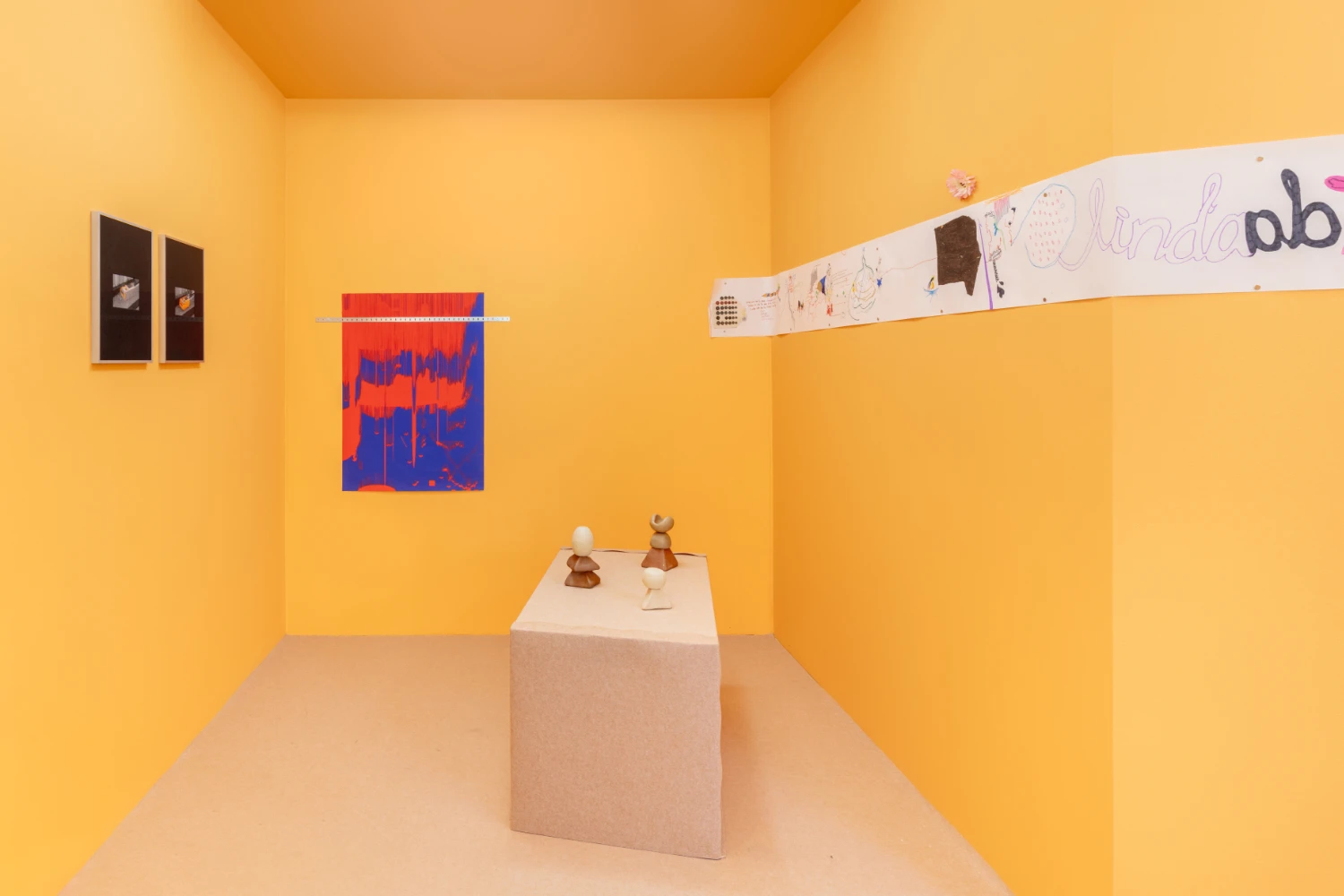
Sweet Dreams, at OSTRA practice
By Katya Savchenko
Next
article
 [A] Rodrigo Cass, [L] Brotéria-h6ebz.jpg)
03 Aug 2026
Is there such a thing in nature as a perfect square?
By Inês Folgôa Moreira
Related Posts
article
25 AUG 2026
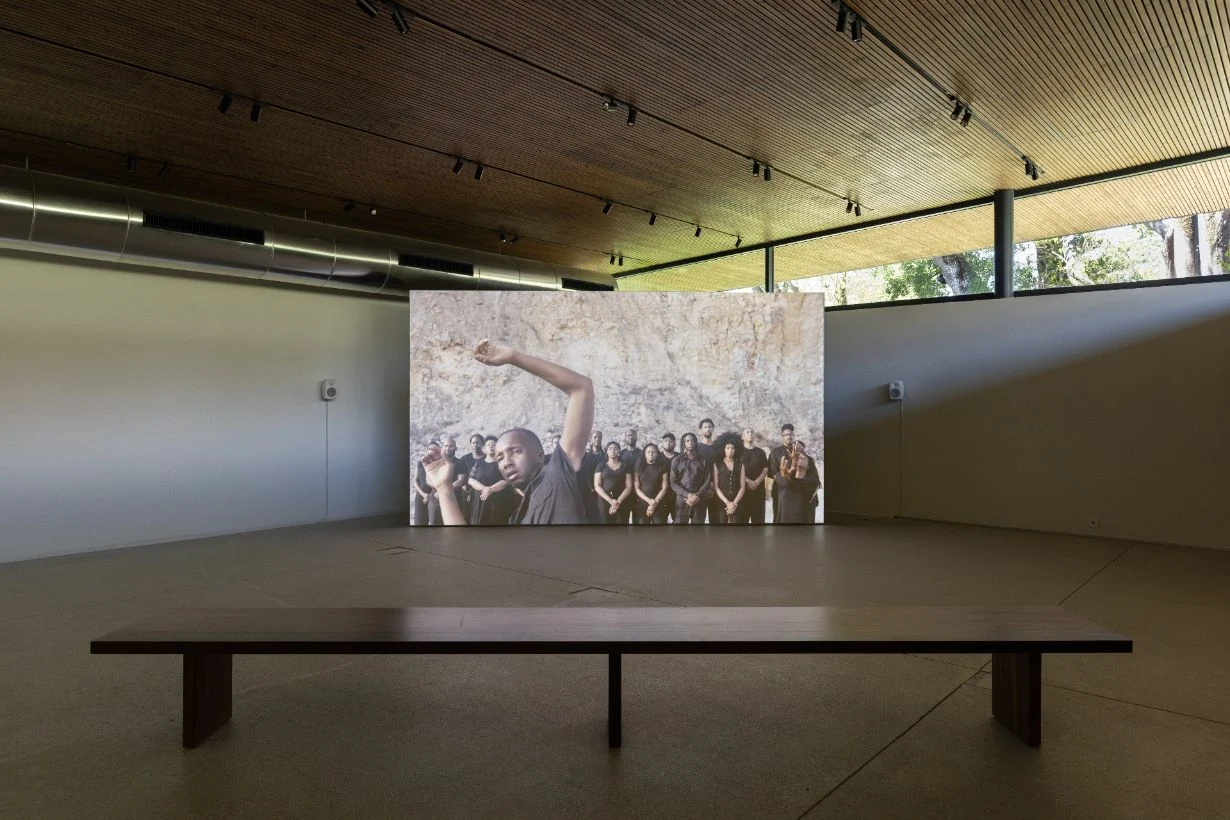
Foreign Monuments: Grada Kilomba at Fundação Albuquerque
By Tomás Camillis
article
18 AUG 2026
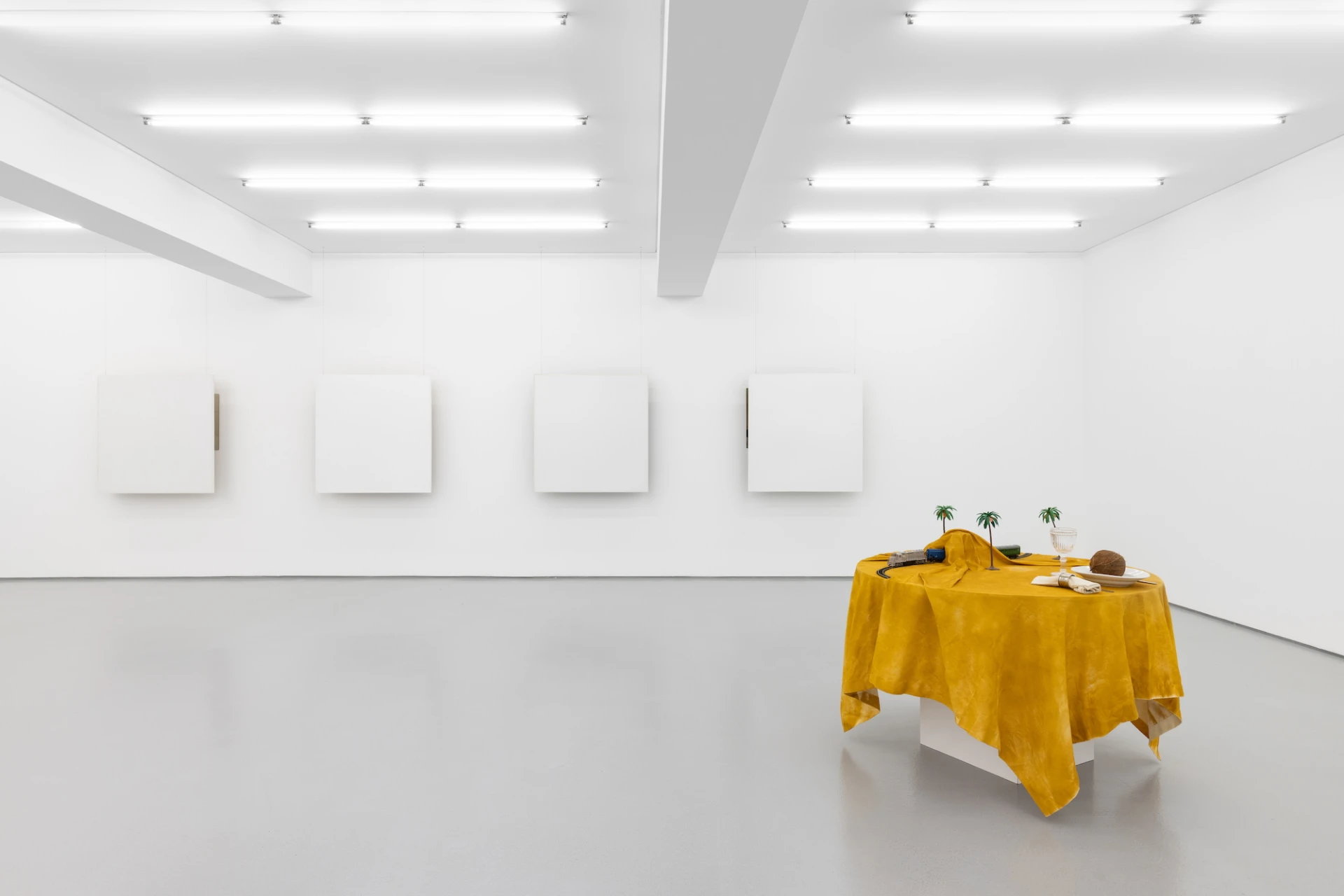
The distant work: Ana Vieira at Galeria Vera Cortês
By Tomás Camillis
article
30 JUL 2026
Excess and Silence
By Tomás Camillis
article
08 JUL 2026
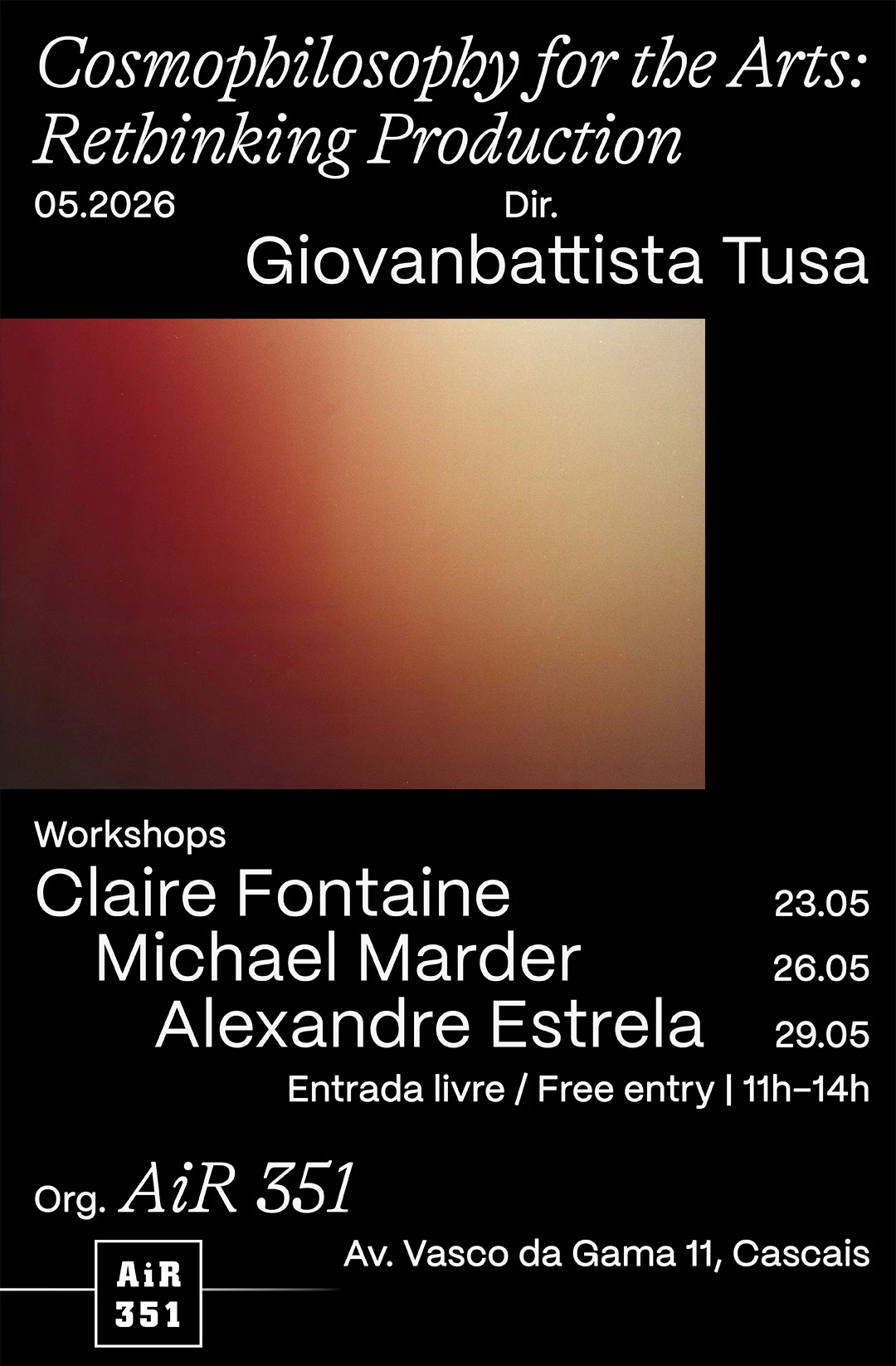
TOWARDS TERRA INCOGNITA: Interview with Giovanbattista Tusa
By Tomás Camillis