article
Interview with Vera Appleton: 18 Years of Appleton
“That is why independent spaces are so important—because they exist in that intermediate place, which is neither subject to market logic nor institutional rigidity. These spaces allow for real freedom—they are places of experimentation, where one can take risks, fail, and test ideas. And it is because of this freedom that they are absolutely necessary; they do not tidy things up, they do not follow a closed logic, they allow the unexpected to happen.”
Maria Inês Augusto: Before we talk about the exhibition Diante do Tempo, which opened on April 12 and marks the gallery's 18th anniversary, I would like us to talk first about Appleton's journey. How has it established itself over the years as a space for dissemination and experimentation in various artistic areas? What were the main challenges and achievements?
Vera Appleton: The main challenge has always been sustainability. We are in an area that is underfunded, and that in itself raises immense difficulties. More than dealing with artists, with the degree of experimentation we undertake, or with practical issues such as installations, what weighs most heavily is always funding. Basically, it's about funding a project, just as you would fund a hospital or a school—it's important to understand that this is also a public service. The truth is that you can't rely solely on DGArtes. On the other hand, private funding in Portugal is very scarce. The spirit of patronage, of philanthropy—of giving without expecting anything in return—is practically non-existent, and seizing these opportunities is hard work. We were closed for four months due to lack of support, and we were only able to maintain the structure thanks to the dedication of our patrons. In terms of achievements, I like to think that, for an artist, going through Appleton is a positive experience. Perhaps this is our greatest victory: having managed to create a space where people want to come, with a coherent, professional, and ethical program. Over time, Appleton has established itself as a place with its own identity, where artists have the freedom to create. This is fundamental. Another achievement that I consider essential is the fight for artists' fees. For a long time, curators, technicians, and writers were paid, while artists worked for free. From the beginning, even without support, we tried to counteract this. Sometimes it was 500 euros, which wasn't much, but it was what we could afford. I often sought parallel support just to guarantee that amount. Today we have a program with ten commissioned exhibitions, which allows us to directly support creation and give artists real conditions to work autonomously. And I believe that this is noticeable in the final result: in the programming, in the respect for artistic work.
MIA: Regarding programming specifically, how do you manage to ensure such diverse curation while also guaranteeing the quality and relevance of exhibitions and events?
VA: Appleton's programming is planned well in advance. Artists come to us in various ways: through direct proposals, studio visits, exhibitions we see. We build a list of names that interest us, and then we think about possible combinations, always with a concern for coherence, diversity, and also parity. What interests us is having a balance between young artists, mid-career artists, and more established ones. And it is important to say: we never wanted Appleton to be an elitist space—on the contrary, it is an open, democratic place, where there is room for the unexpected. Even though our core business is not exactly launching young artists, we have had several first solo shows and we continue to pay attention to these paths. We also do not follow a rigid thematic logic, but we are interested in understanding what is concerning artists at the moment. Social, political, cultural issues—I don't know what they're going to do, but I know they're thinking about certain themes, and that alone is enough to invite them. And then there's total freedom in the way they work—that's fundamental for us. Sometimes unexpected trends emerge—there was a year when almost all the artists wanted to present video, even those who came from painting. This year, for example, we have much less audiovisual work and much more painting. And that says a lot about the moment we are living in. I think that Appleton, over time, has also become a reflection of these trends—anyone looking at its history can understand what was happening in contemporary art in Portugal. And that is an important achievement. Of course, there are limits, especially physical ones, but apart from that, everything that is possible happens. That freedom is really essential here.
MIA: How do you evaluate the impact of Appleton on the Portuguese art scene? How important are cultural associations such as Appleton in the development and promotion of contemporary art in Portugal?
VA: Appleton and associations such as Appleton play an important role in contextualizing and promoting what is being done in the arts in Portugal. The art system is very much divided into two parts: on the one hand, there are commercial galleries, which connect artists to the market and enable their economic survival; on the other, there are museums, which function as institutions of legitimation and attribute symbolic value. Both are essential, but they are not enough. That is why independent spaces are so important—because they exist in that intermediate place, which is neither subject to market logic nor institutional rigidity. These spaces allow for real freedom—they are places of experimentation, where one can take risks, fail, and test ideas. And it is because of this freedom that they are absolutely necessary; they do not tidy things up, they do not follow a closed logic, they allow the unexpected to happen. But this freedom comes at a cost. If there are no sales, how can sustainability be ensured? Funding is needed, and that is where reality hits hard. Large companies only invest where there is visibility and immediate return — which leaves independent spaces off the radar. As I mentioned, public programs, such as DGArtes, although fundamental and even well regarded abroad, remain insufficient — especially in the visual arts, which are always at the end of the support line, behind theater, music, and other areas. There is still that persistent idea that in the visual arts you can do a lot with very little, but the truth is that we all need to make a living: artists, producers, curators. I myself work full-time for Appleton. There are teams involved, there are families. And that is why it is urgent to pay real attention to these independent spaces, which are truly an essential part of contemporary art.
MIA: Regarding what happened on the 12th, it was a beautiful day in Elvas, with two distinct moments. Let's start by talking about the performance by the Osso Exótico collective at the Cisterna. How did this idea come about?
VA: Osso Exótico is a very interesting group. André and David Maranha, Patrícia Machás, Francisco Tropa, and Manuel Mota are all quite different from each other and have been quietly developing work that is always of the highest quality and very special. From the outset, I knew I wanted them in the exhibition; I just didn't know how. The initial idea was to include them permanently, but for reasons of space we found a different solution, which ended up giving an interesting dynamic to the opening. Their presence was important because it really bothered me that, at first, not all the artists involved were there, and Elvas was a key moment, it was the entrance to the exhibition—and even more special because it was Ana Cristina Cachola who launched this whole challenge, who gave me the book Diante do Tempo and told me to read it. We thought about several spaces and ended up choosing the cistern, which I know well and which has a strong connection to the aesthetics of Osso Exótico. What was presented there was a unique performance, which will never be seen in the same way again. And that, for me, makes the moment even more special. It was a completely unrepeatable moment, almost as if we were watching a rehearsal of what the complete version will be—if there ever will be a final version, because with them you never know. But that is precisely the beauty of our work: that good unpredictability. And that spirit is also very present in this exhibition.
MIA: Regarding the concept behind the exhibition Diante do Tempo—an exhibition that brings together works by 12 artists and collectives and proposes a reflection on the passage of time in art, on heritage, politics, and temporality in matter—can you tell us a little about the curatorial concept? How were the artists selected?
VA: The exhibition seeks to convey some of Appleton's spirit to that place. From the outset, it was decided that each room would have one artist—a structure that is very familiar to us: individual exhibitions within a collective. I wanted to emphasize this logic by inviting authors to write about each artist independently, which further reinforced this idea of independence within a whole. That was the curatorial basis. Then, of course, there was a more intuitive, even affective side, but always with a rationality behind it. It was like closing my eyes and remembering things that had marked me. And of course, if I kept my eyes closed longer, more and more names would come up, more artists—if I could, I would have invited many more. There are many artists I would have liked to have worked with on this occasion, but I imposed limits on myself. I wanted diversity—of practices, of generations, of gender. Although the selection was born out of personal intuition, there is a clear balance in the media represented: sound, painting, installation, performance, video, almost cinema or cinema itself. Michael Biberstein's work, for example, is painting, yes, but it largely transcends that category—there is an almost spiritual dimension to his work that is absolutely unique. Joana Villaverde, on the other hand, brings a very strong political message, which corresponds to the moment she is in now, and which has to do with Palestine. Susana Mendes Silva provokes us one last time with a sound piece. Ultimately, there was no fixed or thematic criterion—it was a choice made based on many variables: affection, professional admiration... there are so many variables, so many emotions mixed with reason... And that was it, that was the choice.
When thinking about the curatorial project, I also remembered Appleton Recess. There is a sense of continuity here, but also of rupture—in the sense of opening up space for other voices and ways of thinking. That is how the invitation to Bruno Marchand and Ana Anacleto to design the exhibition came about. Their choice—three generations of artists who intersect—brought something unexpected. I discovered, for example, Sara Graça, whom I did not know. And the connections they created, such as with Hatherly or Pedro Diniz Reis, worked very well. They brought a different perspective—and that was fundamental. It couldn't just be me, it couldn't just be us, Appleton—an external element was needed.
MIA: At the opening, you talked about collaborations. Diante do Tempo is organized in partnership with several institutions, such as the Elvas Museum of Contemporary Art, the Castelo Branco Center for Contemporary Culture, the Visual Arts Center in Coimbra, and Córtex Frontal in Arraiolos. How did these collaborations come about, and how important is it to work together?
VA: I think this type of collaboration is fundamental. It is essential to invest in new centers, however difficult that may be. It is not just a question of decentralization, but of ensuring that there are new places where art can be exhibited, where people can have access to culture and contemporary art. The Portuguese Contemporary Art Network (RPAC) is very interesting in this regard. It brings together very diverse spaces that can host exhibitions. We knew they couldn't be small spaces. We needed something that could accommodate almost anything. So, one of the criteria for choosing the places was their spatiality, but also the relationships that had already been created over the years. Córtex Frontal is an example of this, so it made sense for us to be together. It is also important to mention that behind all the work of collaboration between institutions is the work of several teams that are fundamental to the success of each stage in each space. When we talk about the difficulties we faced, such as assembling the most complex pieces and the technical issues that arise, we must recognize everyone's dedication and commitment. Ocean Cargo, for example, was not just a carrier. They became true partners in the execution of the project, bringing solutions to the problems that arose, alongside professionals such as Pedro Palma, who played a key role in managing the tight schedule. Furthermore, the audiovisual technical work of João Chaves from Balaclava Noir was essential to ensure the successful assembly of the pieces. Without the collaboration of everyone involved, none of this would have been possible. Therefore, it is fundamental to recognize and value the collective effort that ensures a project like this is completed.
MIA: Is it important to ensure that more funding becomes available so that these cultural events can continue to be held with the necessary quality and relevance?
VA: Yes, it's important to emphasize the need to ensure that these aren't just words, but concrete actions, so that moments like these can continue to happen. But even with more funding, there's a problem that has recently become very evident. When we're setting up an exhibition, we suddenly realize that behind it all are people with enormous goodwill, who truly dedicate themselves fully, and without these people, the work simply wouldn't happen. However, often the technical and physical conditions of these spaces are not adequate. And that's something that worries me a lot. I question what these people receive for so much effort. There needs to be a standardization of quality. We need to ensure that human resources are qualified, that the artistic programmers of these places have the appropriate training and support. If we want to create a solid contemporary art circuit, the spaces need to be more independent, they need to be emancipated, to have the necessary autonomy to make decisions and implement their projects without interference. In my opinion, there should be a meeting between the spaces to discuss this. It would be very important to organize a discussion about what can be improved, what really needs to change, because otherwise, as I said in my opening speech, it all ends up being just a dream. It is essential that everyone involved is aligned; everyone involved, from the artists to the technicians and programmers, deserves the right conditions to do the best possible work. And this is something that must be discussed, to ensure that we are all moving in the same direction.
MIA: Diante do Tempo will be presented in several cities, as we've already mentioned. How does touring contribute to a decentralization of cultural offerings? And, besides touring, what do you think is necessary to attract a larger audience?
VA: I believe that mediation is essential in this process and should be a clear priority. Public engagement needs to accompany exhibitions in different locations, intending to involve local communities, but also attract visitors from other parts of the country. It is also fundamental to mobilize people from Rio de Janeiro to exhibitions outside the major centers. We know that many end up visiting on the opening day or the last day, but the real challenge is to stimulate continuous access to these more remote spaces, transforming them into new art centers. And this is only possible with consistent local work, rooted in the community. We want the exhibitions to provoke something—to open paths, evoke emotions, change perceptions. To help people see contemporary art in a different way. The programmer's role is basically to reach new audiences. As Teresa Anacleto, who is part of the core team, says, our desire is for people to "fall into the cauldron" of contemporary art. The exhibition doesn't end at the opening. That's just one moment. The essential happens afterward, when the work is experienced with time and attention. The presence or absence of the public changes the experience. For example, video works, like Albano's, suffer from the typical commotion of an opening. Others, like Sara Mealha's, interact well with the movement. But, in general, there's always something lost when you don't experience the exhibition in its entirety. I would like to see more critics, institutional representatives, and professionals visiting exhibitions in decentralized contexts. But I know it's difficult—and it's demanding work. Still, it's a worthwhile effort.
MIA: Regarding the future, after these 18 years, what comes next? Is there a clear direction you already know you want to take?
VA: Yes. At the moment, our programming is finalized until 2026, thanks to the biennial support we received. This programming was conceived by me and my team—it's always a collaborative effort—but during this process, I realized that Appleton needed a new direction. You're the first person I've publicly told this to: we're choosing a new person to take over the artistic direction starting in 2027. I will remain connected to the project, perhaps as general director, but more removed from the day-to-day operations. It's been 18 years of intense work, and I feel it's time to pass the torch. The new board will have complete autonomy for four years. I find it fascinating to imagine how another person will look at the space and propose new paths. I want to take a break from the practical side and dedicate myself to studying topics such as cultural funding, philanthropy, and management models, understanding what works abroad, what can change in Portugal, and what changes can be made, also by us, cultural agents. Perhaps this will open new paths for Appleton itself in the future… I've thought, for example, about creating a programming center linked to training, with workshops and other parallel activities. I wouldn't be the one programming, but I could create the conditions to bring in other people, to renew, to open the space to other perspectives. Renewal is indeed essential. I'm 49 years old, I started this at 31, and I feel that now is the right time to pass the torch. It will be interesting to see what comes next.
BIOGRAPHY
Maria Inês Augusto, 34, has a degree in Art History. She worked at the Museum of Contemporary Art (MNAC) in the Educational Services department as a trainee and for 9 years at the Palácio do Correio Velho as an appraiser and cataloguer of works of art and collecting. She took part in the Postgraduate Programme in Art Markets at the Faculty of Social Sciences and Humanities of Universidade Nova de Lisboa as a guest lecturer for several editions and collaborated with BoCA - Bienal de Artes Contemporâneas in 2023. She is currently working on an Art Advisory and curatorial project, collaborating with Teatro do Vestido in production assistance and has been producing different types of text.
UMBIGOLAB LINKS
ADVERTISING
Previous
article
20 May 2025
A ‘snap’ to recover the future: the fourteenth Mercosul Biennial
By Filipa Oliveira
Next
article
21 May 2025
Para Todos Vocês com Fantasias, by Diogo Nogueira
By Carla Carbone
Related Posts
article
29 SEP 2026
Multiple Eyes, to unlearn how to see
By Maria Inês Augusto
article
25 JUN 2026
Scrolls, at Buraco: The Two Sides of the Same Coin
By Maria Inês Augusto
article
12 JUN 2026
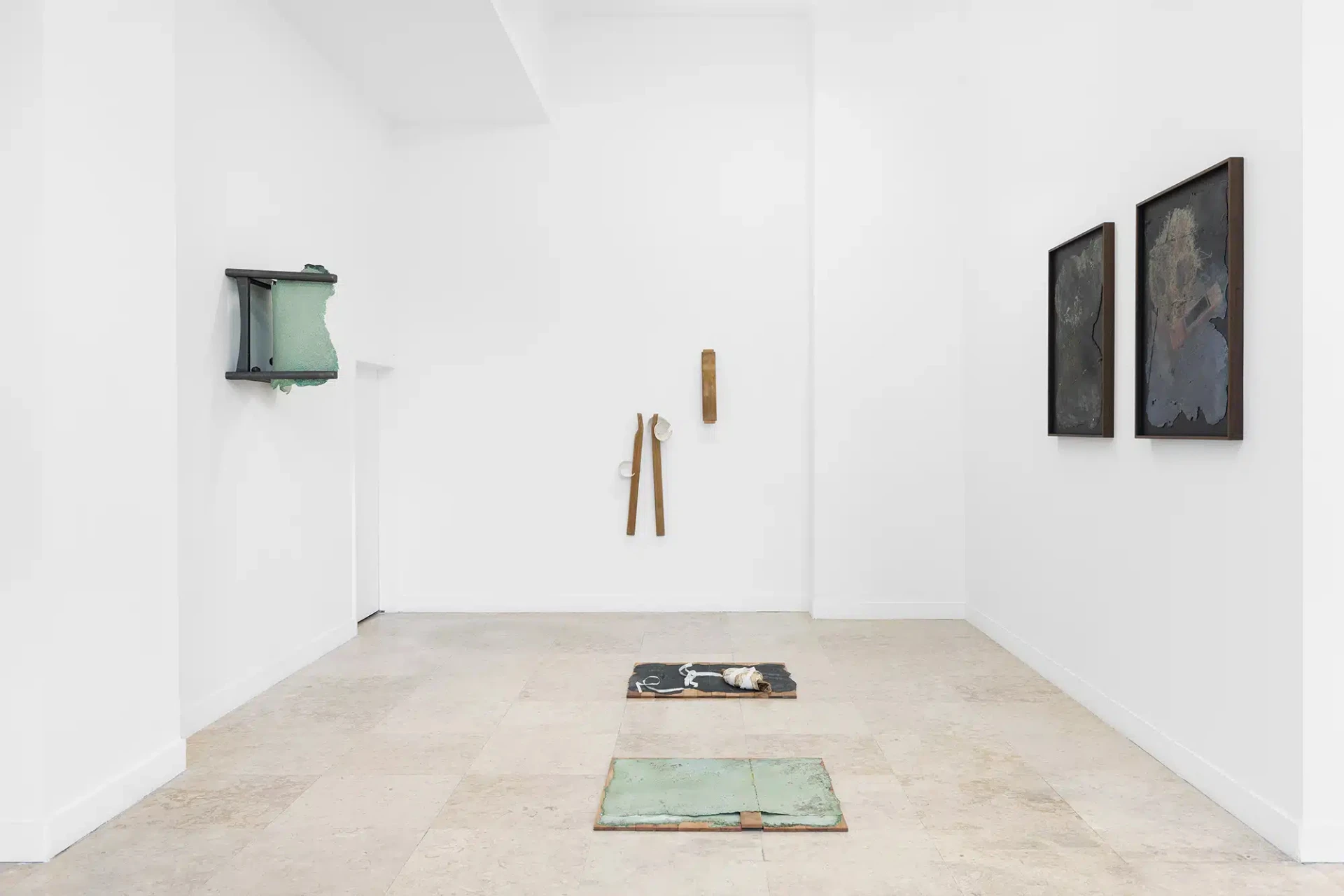
Tabique, by Rita Gaspar Vieira
By Maria Inês Augusto
article
12 MAY 2026
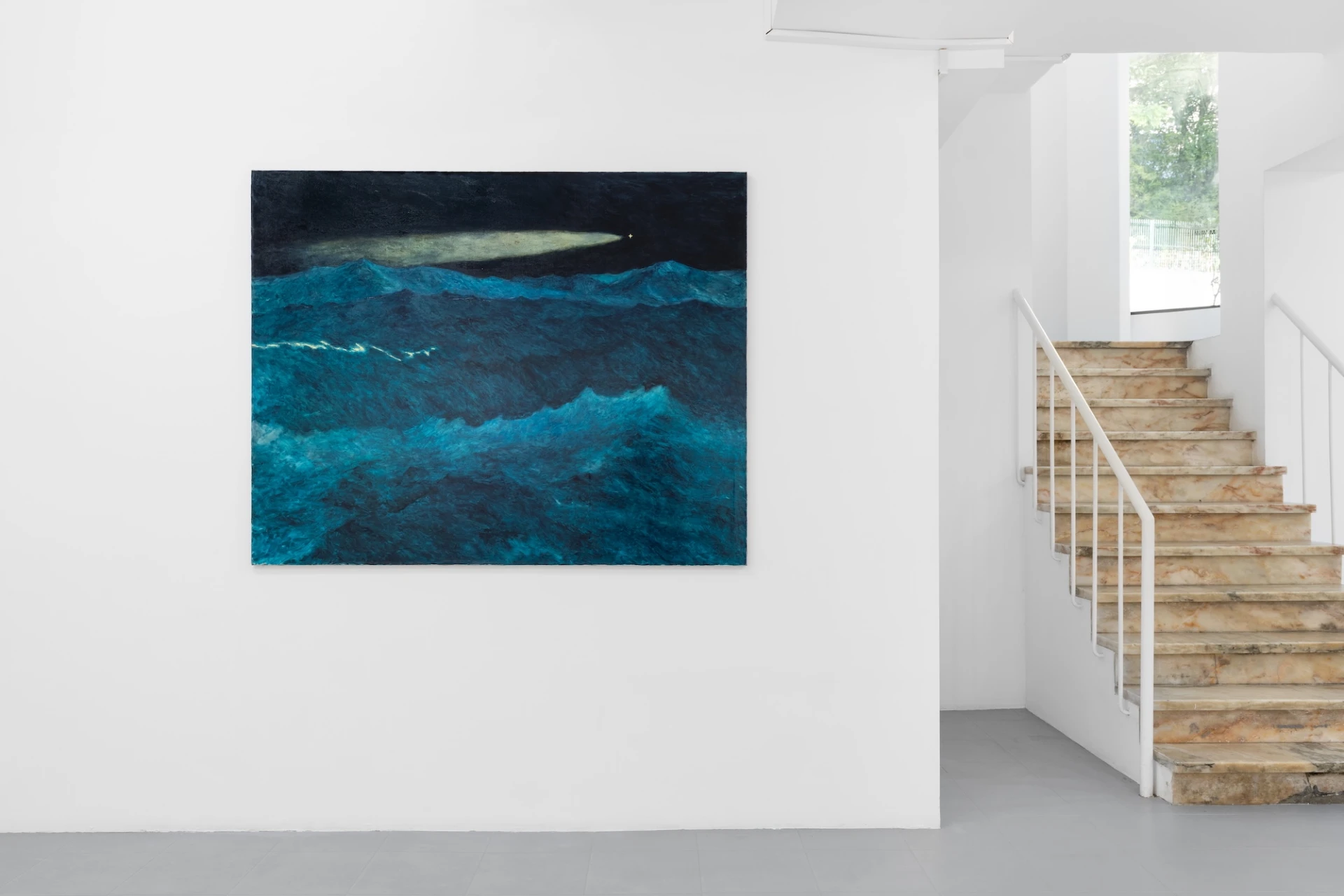
Phantom Tales, by Pedro Zhang
By Maria Inês Augusto