article
O Eco das Palavras Mudas…images that scream
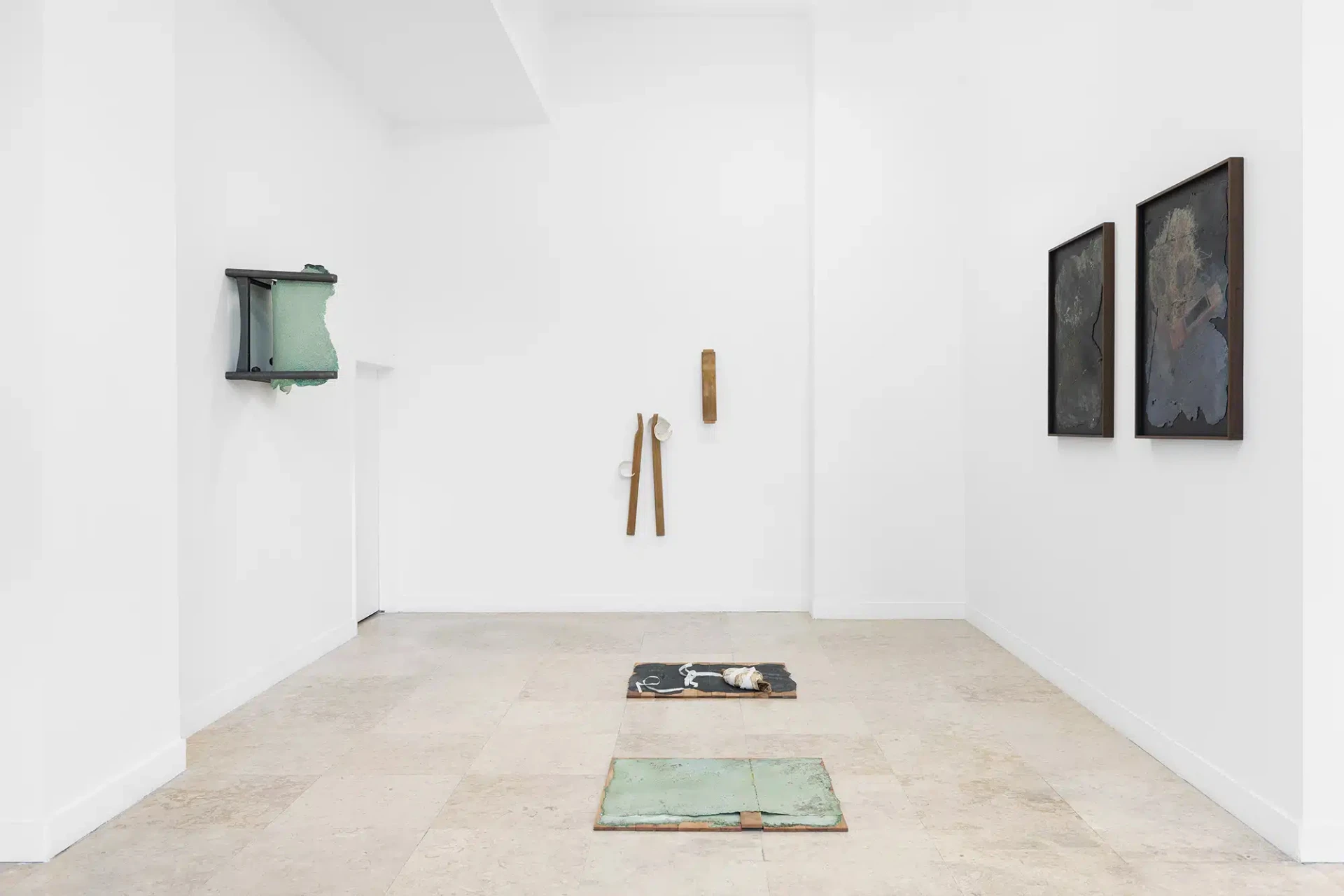
The exhibition O Eco das Palavras Mudas, which brings together works by artists Eduard Árbos and Fernando Prats at the Dialogue Gallery, subjects image, trace, and word to a test of resistance. It is a convergence founded on a long-standing complicity and a sharing of formal and political concerns that create a place of resonance, a medium through which they propagate and mutually transform each other. It is not a mirroring of practices, but a reverberation. Like an echo, each gesture displaces the other, prolongs it, alters it, contaminates it. The exhibition, curated by João Silvério, arises from this friendship and this prior dialogue, where the artists, although not producing works together, build a common ground.
The title, from the outset, expresses a constitutive unease: the echo of what is mute, the reverberation of an unspoken word. Together, they suggest language as a vestige of a silent, internal thought that extends through space and time. This idea permeates the entire exhibition as an invisible structure, as if a line united all the works, making them dependent on one another, like a nervous system, where each piece contains the memory of the other. In Eduard Árbos's work, this problem acquires a singular materiality. The phrase "Nothing to See beyond the line," converted into Braille and inscribed on the wall through perforations made during the opening, introduces an inflection in the usual regime of perception. Writing, traditionally linked to graphic visibility, is here made tactile and, at the same time, illegible for most viewers. Those who can read do not see; those who see may not be able to read. The wall, painted black, becomes a surface where language is inscribed through the subtraction of matter, exposing the fragility of vision as a guarantee of knowledge. The artist's personal experience facing the threat of sight loss lends an additional depth, broadening the question even further—what status does the visible have when access to it is contingent? To what extent does what we see coincide with what the image actually leads us to understand?
The very line evoked in the statement functions as both limit and horizon. That which seems to mark the end of visibility, or limit it, paradoxically opens a field of thought beyond it.
His work stems from a rigorous graphic and visual component, where each element is conceived as part of a coherent visual architecture. The artistic practice develops from continuous dialogue with diverse references. Cinematic images, visual fragments, become critical material, an archive of atmospheres and anxieties that the artist reconfigures in the static space of the paper. By extracting frames from the narrative flow of cinema and rewriting them in drawing, he decontextualizes them and allows new layers of meaning to settle. Possible narratives, suspended temporalities, states of consciousness, and promises are glimpsed. These are images that seem to contain a before and after.
The artist also inscribes in his work a subtle biopolitical awareness, an unstable horizon, a deferred hope, perhaps even denied to some. He speaks to us of the complexity of the future, of persistence as a possibility, and of the difficulty of continuing, also explored in the video he presents on the first floor of the gallery — Crossing (2025). Here, the solitary crossing of the bridge, filmed at dawn, initially seems destined to capture only the architectural structure; however, the unexpected presence of a figure crossing the frame becomes decisive. This brief and indifferent passage introduces the dimension of the body and raises the question that the future is not equally accessible to all, that the crossing is not the same, thus becoming a discreet metaphor for a social fracture where destinies are distributed unequally.
Fernando Prats, in turn, addresses analogous issues from a distinct materiality. In the performance De obscuridade en obscuridade (2026), also performed at the opening, in front of Eduard Árbos's work, he inscribes forms in the smoke deposited on glass through the movement of his body, mouth, and saliva. The gesture, almost ritualistic, acquires a magical dimension. By imprinting, fixing, and making emerge, the artist instigates a reflection on the instability of matter and memory, summoning an experience that traverses the senses and language itself. Smoke—traditionally associated with combustion and destruction—becomes, here, a possibility of vestige. Used by the artist for decades as a kind of pictorial material, the smoke sediments in layers, can disappear upon touch, and carries a symbolic charge linked to catastrophe and ascension. Here, the inscription becomes a limiting gesture, an attempt to give form to that which exceeds any representation.
The “Mapas mudos” (Silent Maps) deepen the investigation into meaning by shifting cartography from its descriptive status to a field of symbolic dispute. By excavating photographs and maps, the artist transforms them through perforation. Interrupted outlines, voids that tear the apparent neutrality of representation, become images that scream, that evoke political violence, the impossibility of any representation capturing the totality of reality. The perforated paper becomes skin upon which layers of soot, tragedy, and geographies marked by conflict are deposited, but which, at the same time, seems to rescue ancestry, strength, and the almost mystical dimension of territories. This reminds us that there is something that remains, that persists beyond destruction. These maps, far from being neutral, refer to concrete historical contexts—such as the coup d'état in Chile and the authoritarian drifts in Latin America—and transform cartography into wounded memory, into geopolitical and poetic cartography where border, displacement, and violence are inscribed as scars.
In the video documenting the action in Chaitén — Acción Chaitén, 21. Sismografía de Chile (2009) —, the buried and displaced house seems to appear as a metaphor for an identity torn from its place of origin. On the partially buried roof, the artist climbs the unstable structure to inscribe a gesture that seems to me one of resistance. The landscape becomes an archive of trauma, a territory marked by natural violence that recalls human precariousness. The horizon, vast and seemingly indifferent, confronts us with the fragility of the human condition in the face of forces that exceed any political control. The house transforms into a kind of involuntary memorial of a community forced into displacement, and the gesture makes visible the memory of the catastrophe and the dignity of those who lost what they knew.
Despite the diversity of media—perforation, graffiti, smoke, video—both artists converge on a practice based on an intensified relationship with the surface as a place of inscription, confrontation, and construction of layers. Both recognize themselves as painters, even though they operate beyond the traditional support. Painting expands onto the wall, onto glass blackened by smoke, onto excavated paper, onto the body in action. They work both by addition and subtraction, by removing matter, by the gesture that inscribes and excavates. In both cases, the surface becomes a field of critical thought, where regimes of visibility are explored. By dismantling the immediate association between seeing and understanding, they summon the recognition of the limits of perception itself, of language itself.
In a historical context marked by explicit censorship and structural silences, conceiving the possibility of a word that subsists as an echo—even when prevented from being uttered—is to recognize the power of thought. Even that which cannot be said resonates, infiltrates. And it is in this subterranean permanence that language finds its political power. The word changes, the image screams, asserting itself as forms of resistance. The echo, far from being mere repetition, transforms into consciousness—a consciousness that insists, that is deposited in layers, that persists even when the horizon seems closed.
How can we make visible that which tends to be invisible, that which burns, that which sinks?
The exhibition can be visited until March 21, 2026, at the Dialogue Gallery.
BIOGRAPHY
Maria Inês Augusto, 34, has a degree in Art History. She worked at the Museum of Contemporary Art (MNAC) in the Educational Services department as a trainee and for 9 years at the Palácio do Correio Velho as an appraiser and cataloguer of works of art and collecting. She took part in the Postgraduate Programme in Art Markets at the Faculty of Social Sciences and Humanities of Universidade Nova de Lisboa as a guest lecturer for several editions and collaborated with BoCA - Bienal de Artes Contemporâneas in 2023. She is currently working on an Art Advisory and curatorial project, collaborating with Teatro do Vestido in production assistance and has been producing different types of text.
ADVERTISING
Previous
article
06 Mar 2026
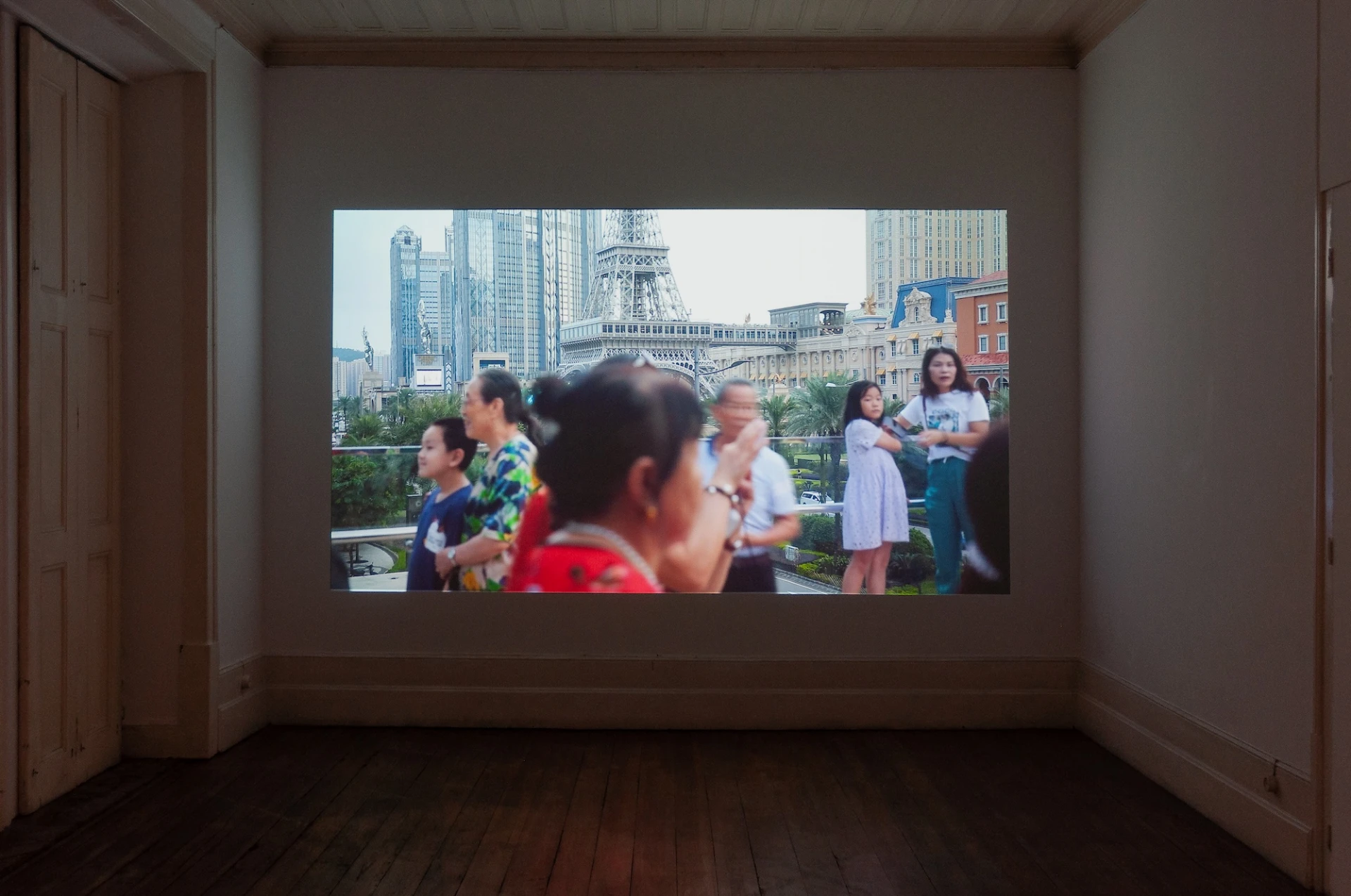
21 minutes pour une image, at Círculo de Artes Plásticas de Coimbra
By Mafalda Teixeira
Next
article
09 Mar 2026
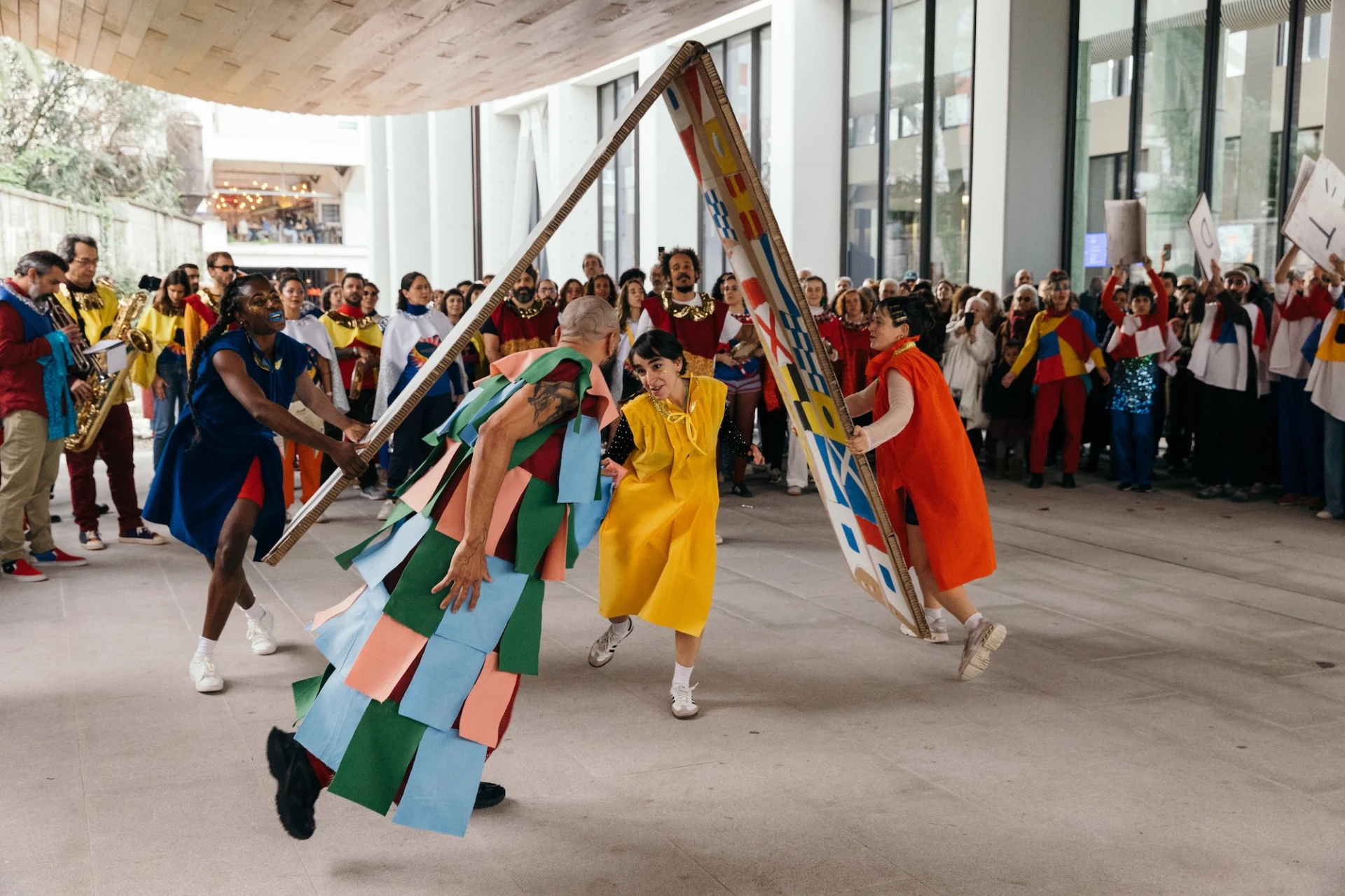
CARAVANSERÁ: Liberty in Motion
By Ayşenur Tanrıverdi
Related Posts
article
29 SEP 2026
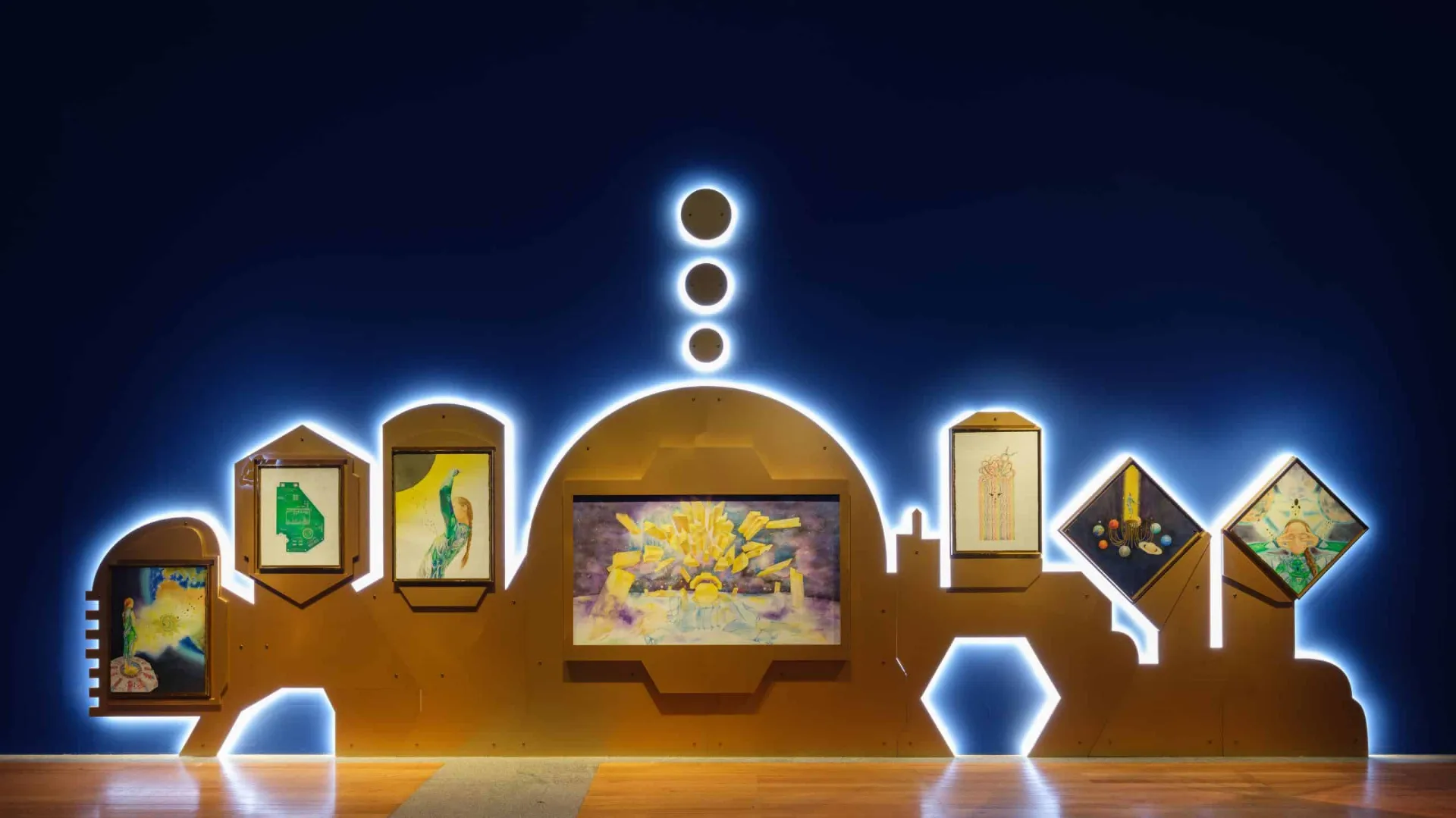
Multiple Eyes, to unlearn how to see
By Maria Inês Augusto
article
25 JUN 2026
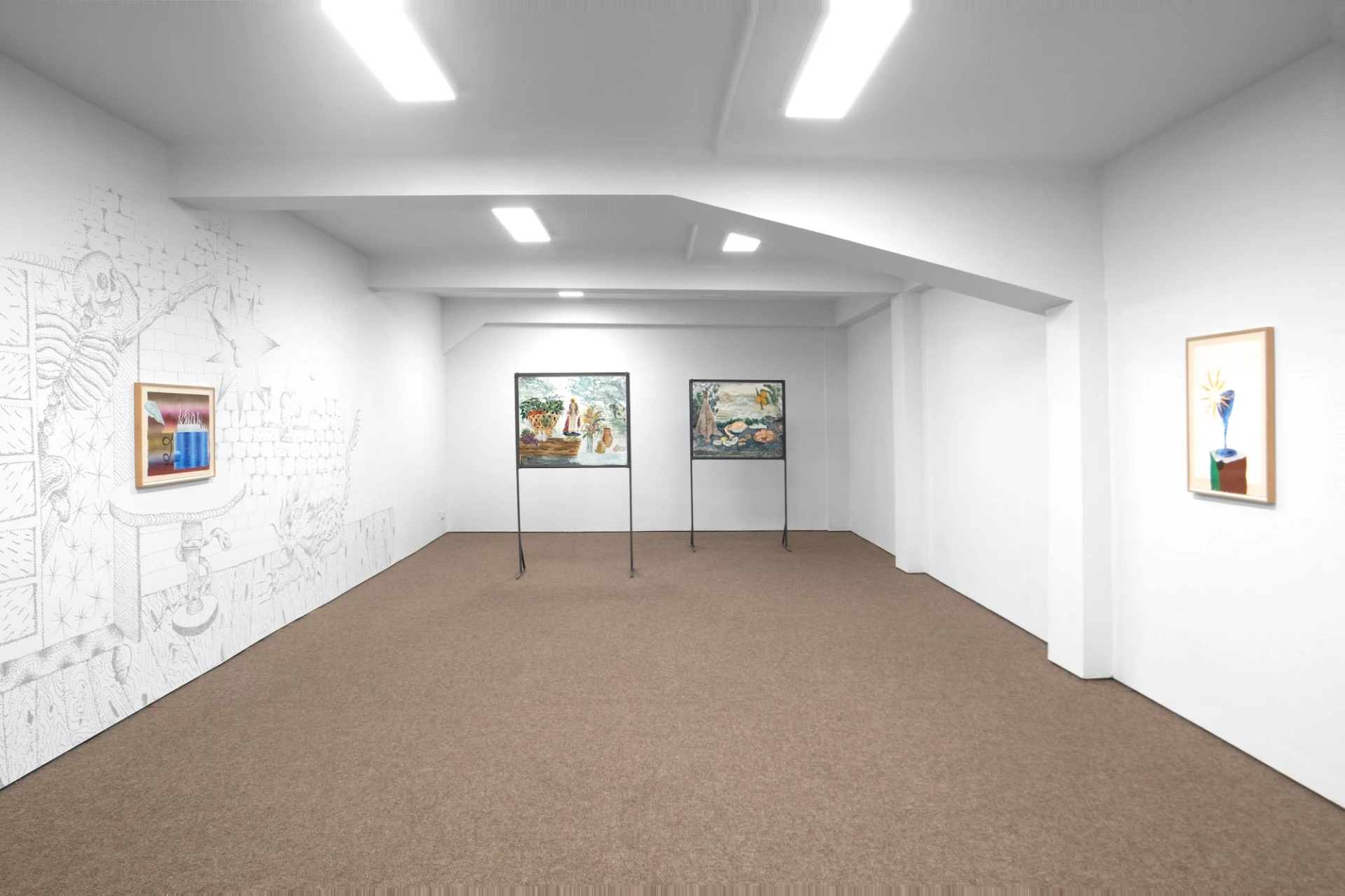
Scrolls, at Buraco: The Two Sides of the Same Coin
By Maria Inês Augusto
article
12 JUN 2026
Tabique, by Rita Gaspar Vieira
By Maria Inês Augusto
article
12 MAY 2026
Phantom Tales, by Pedro Zhang
By Maria Inês Augusto