article
Notes on ARCO Lisboa 2026
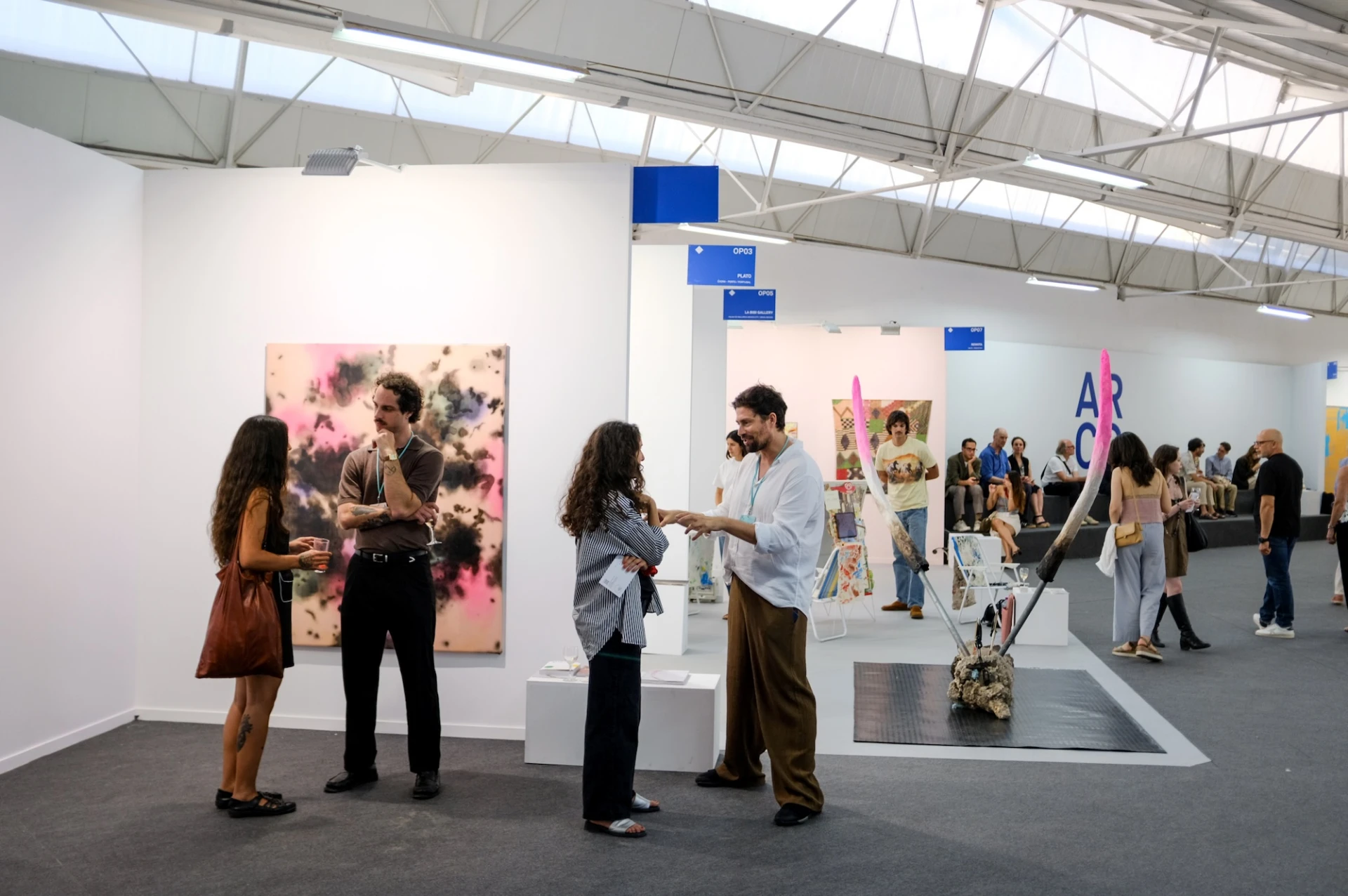
“Curated by Sofía Lanusse and Diogo Pinto, with the support of Sofia Montanha, the Opening Lisboa section brings together seventeen galleries committed to emerging artistic languages and alternative exhibition spaces. The curators describe it as an “orbit”, a fitting metaphor as everything here seems to be in motion, shaped by a constant process of interaction. It is a remarkably vibrant environment that engages with the uncertainties of the contemporary political landscape while simultaneously reflecting on art’s enduring capacity to resist the passage of time.”
This year at ARCO Lisboa, an ironic quotation caught my attention. It came from Ozymandias, one of Percy Bysshe Shelley’s most celebrated poems. The poem tells of a traveler who encounters the shattered statue of an ancient king, half-buried in the sands of a desert. Inscribed on its pedestal are the words:
“Look on my Works, ye Mighty, and despair!
Nothing beside remains. Round the decay
Of that colossal Wreck, boundless and bare
The lone and level sands stretch far away.”
To me, the poem beautifully captures the tension between political and material power on the one hand, and artistic endurance on the other. Although Shelley emphasizes that “nothing beside remains” beyond the ruined statue and its pedestal, something has in fact survived over the centuries: art.
Only a few minutes before encountering Shelley’s poem, I had been speaking with Diogo Pinto, one of the co-curators of the Opening Lisboa, about the significance of curated programmes within the ecosystem of large-scale art fairs such as ARCO. In the aftermath of a poem concerned with power, time, space, and permanence, many of the ideas we had discussed seemed to take on a renewed significance.
“Of course, curated sections remain a highly commercial environment, just like the rest of the fair. But specific resources are brought together here - for instance, exhibition costs are kept lower - so that a space can be created for experimentation, trial and error, risk-taking, and discovery”, he explains, adding “these are, in a sense, the tastemakers of tomorrow.”
Pinto’s remarks suggest that the pressure for financial success can easily overshadow work that is unusual, daring, or more challenging for the average art buyer. What ultimately matters is whether visitors can engage with the urgency of current affairs, experience a sense of novelty and surprise, and feel the excitement of encountering new artistic voices.
Curated by Sofía Lanusse and Diogo Pinto, with the support of Sofia Montanha, the Opening Lisboa section brings together seventeen galleries committed to emerging artistic languages and alternative exhibition spaces. The curators describe it as an “orbit”, a fitting metaphor as everything here seems to be in motion, shaped by a constant process of interaction. Looking more closely, one has the impression of moving through a group exhibition animated by a shared energy rather than a conventional commercial fair. It is a remarkably vibrant environment that engages with the uncertainties of the contemporary political landscape while simultaneously reflecting on art’s enduring capacity to resist the passage of time.
New to this edition is Archipelago of Art Histories, a project led by Cosmin Costinas that explores the lineages and inherited forms of knowledge shaping contemporary practice. The project featured the participation of six galleries. In Millennium Art Talks, discussions focused on collecting, patronage, and the content of the fair’s curated sections, among other topics.
What was at stake in the fair’s curatorial sections was precisely the possibility of creating a space for emerging collectors and audiences that felt inspiring, encouraging, and open—a space in which intuitive responses were not dismissed as mistakes. In this sense, the reflection on power articulated in Ozymandias acquired a distinctly contemporary resonance. The financial and political forces that so often dominate the art world seemed to cast a different kind of light here, one capable of overshadowing established hierarchies. Under this illumination, inherited paradigms, entrenched structures of power, and the assumption that financial resources must flow through a single dominant channel appeared to dissolve, much like Ozymandias’s kingdom. What remained was not the empire but the poem; not authority, but the enduring capacity of artistic expression.
While no account can ever do full justice to an event of this scale, I would like to offer a few brief observations of my own.
One of the artists represented by Chilli Gallery, Tada Keisuke, works from the theme of “Memento,” allowing the present to seep through the cracks of historical texture. His paintings, drawing inspiration from the Barbizon School of 19th-century French painters, depict rural landscapes. The surfaces appear fractured, layered as if peeling away in successive strata, so fragile that one imagines they might disintegrate at the slightest touch. There is no overt drama in these paintings. Only people quietly carrying out their work, and ears of grain moving in the wind, just as they are meant to be.
From Seville, the artists represented by DiGallery, Pepe Domínguez and Emma Mating, approach the theme Num Limiar through the condition of liminality: They articulate the curvature in the space-time continuum through a notion of bodily alienation.
“Individuality” writes Henri Lefebvre, “is, depending on the angle and historical period from which it is observed, both concrete and extremely abstract; historically it is both the most mutable and the most stable element.” In this sense, alienation between the individual and the collective produces a fundamental antagonism. We are familiar with space, yet we do not feel we belong to it; we recognize our bodies, yet we may still be governed by an anxiety whose origin remains obscure. Is it possible, then, that an entire life unfolds on the edge of a threshold, suspended in perpetual hesitation?
Alienation in modern society is defined through a dual movement of objectification and externalization, of both realization and its failure to be realized. Liminality, as a condition of “being-in-between,” offers perhaps the most precise articulation of this tension.
Speaking of space, it was striking to encounter the works of Salón Silicón, presenting the artist Sandra Blow. In these works, one witnesses intimate moments in which the boundaries of space dissolve entirely. Orientation and spatial knowledge - as ways of situating ourselves in the world - are suddenly destabilized by the invitation of the photographed figures themselves, and it becomes apparent that spatial coordinates are, in fact, a form of self-construction.
As I mentioned earlier, this section triggered a series of intense emotional shifts in me. I had previously encountered the works of Eduardo Antonio at Plato Gallery in Porto while aimlessly wandering through the city by chance. I still recall the flashes of light erupting within deep shadows. The works feel as if they belong to a figure of immense physical presence, almost frighteningly large in stature, yet who paradoxically carries an extraordinarily tender and fragile heart. Through their palette and affective density, they construct a world that seduces the viewer slowly, with deliberate and heavy steps. They suggest a convergence of pleasure and unease, akin to lifting the scab of a profound and long-held wound, all within a poised and restrained surface.
André Breton once described art as “a precaution against the temptation of despair.” One of the most striking ways of yielding to the allure of despair, paradoxically, may be through art, through its thorny and often ironic language.
Gonçalo Pena and Sara Graça, from Dialogue Gallery, both make effective use of this thorned path. Their works disarm forms and postures that consider themselves overly dignified or self-important, turning them upside down to expose their absurdities. In doing so, they assume a protective role against oppressive figures.
Contemporary humour, in this sense, functions much like Dadaist humour: it is an erosive force of dismantling, a great laugh that punctures fanaticism.
From Santiago de Chile, Espacio 218, through the works of Javiera Gómez and Noël Saavedra, offers a contemplative and soothing journey held under the abstract light of perception. As in Novalis’s Hymns to the Night, the entire universe seems to soften within the chest, concealed within a slow, rhythmic heartbeat. We open onto Saavedra’s cosmic universe in their textile pieces through Gómez’s works, which unfold behind the delicately crafted handle of a door, or within the barely perceptible veil of a glance.
In addition to this, under the programme of Lisboa Cultura, an anthological exhibition by Jorge Martins was presented on the ground floor of the Torreão Nascente at the Cordoaria Nacional, while the Torreão Poente hosted the opening of TRÊS.
TRÊS, As coleções da Fundação EDP marked the 10th anniversary of MAAT, offering a rich perspective on the relationships between humans and machines, knowledge and thought, consciousness and experience. The mechanical foundations embedded within contemporary thought suggested a continuity, as though the contemporary and the classical had always been engaged in a quiet, ongoing collaboration.
The result was a space in which historical documentation and artistic imagination intertwined, producing a light, almost ironic threshold between the real and the speculative. The experience felt playful precisely because a subtle, sardonic humour seemed to run through both the contemporary works and the mid-century advertising posters, where domestic labour and its everyday burdens were often refracted through humour and visual wit.
The Fair as Space
I am particularly fond of ARCO Lisboa’s annual venue, a distinctive industrial building designed by the architect Reinaldo Manuel dos Santos, stretching approximately four hundred metres along the Tagus River. Formerly a rope-making factory, it continues to play a decisive role in shaping the experience of the fair. Its long, linear architecture produces a continuous sense of forward movement; the fair unfolds as a walk in which thought accumulates in a linear flow.
It allows me to organize the works I encounter into mental sections, making it easier to situate encounters and images within memory.
Reflecting on the success of ARCO Lisboa, Filipa Oliveira, director of the National Museum of Contemporary Art, notes that the Portuguese art scene has reached a particularly compelling moment in its development. She emphasizes that Portugal now hosts artists of international stature, while the scene itself remains animated by a palpable sense of possibility and untapped potential.
According to her, this openness to innovation has contributed to the strengthening and resilience of ARCO over the past ten years. It has also ensured more substantial support for artists. One of the key factors behind this development, she argues, is the contribution of cultural actors arriving from different geographical contexts, which has made the Portuguese art scene more diverse, dynamic, and interconnected. Despite the structural limitations faced by artists, she adds, contemporary artistic production in Portugal is today remarkably vibrant and robust.
This year’s edition of ARCO Lisboa offered, in many respects, a comprehensive and intensified presentation of categories across both art and thought. As a result, art becomes more firmly embedded in everyday life in both theoretical and ideological terms. It is an intricate and expansive undertaking that ultimately deepens how we engage with contemporary artistic discourse.
The next edition of the ARCOlisboa International Contemporary Art Fair is scheduled to take place in late May 2027 in Lisbon. More information will be available soon.
BIOGRAPHY
Ayşenur Tanrıverdi is an Istanbul-based writer, living in Lisbon since September 2022. She studied at Istanbul University and is the author of two published works of literary fiction. A regular contributor to Cumhuriyet, a major Turkish newspaper, where she focuses on Portuguese culture. Her essays and critical texts on theatre, literature, and contemporary art have also been featured in various art magazines.
ADVERTISING
Previous
article
![Regenera, volta a criar [Regenerate, (re)create]](https://umbigo.s3.us-east-1.amazonaws.com/public/space/Im-F-191oc.jpg)
12 Jun 2026
Regenera, volta a criar [Regenerate, (re)create]
By Umbigo
Next
article
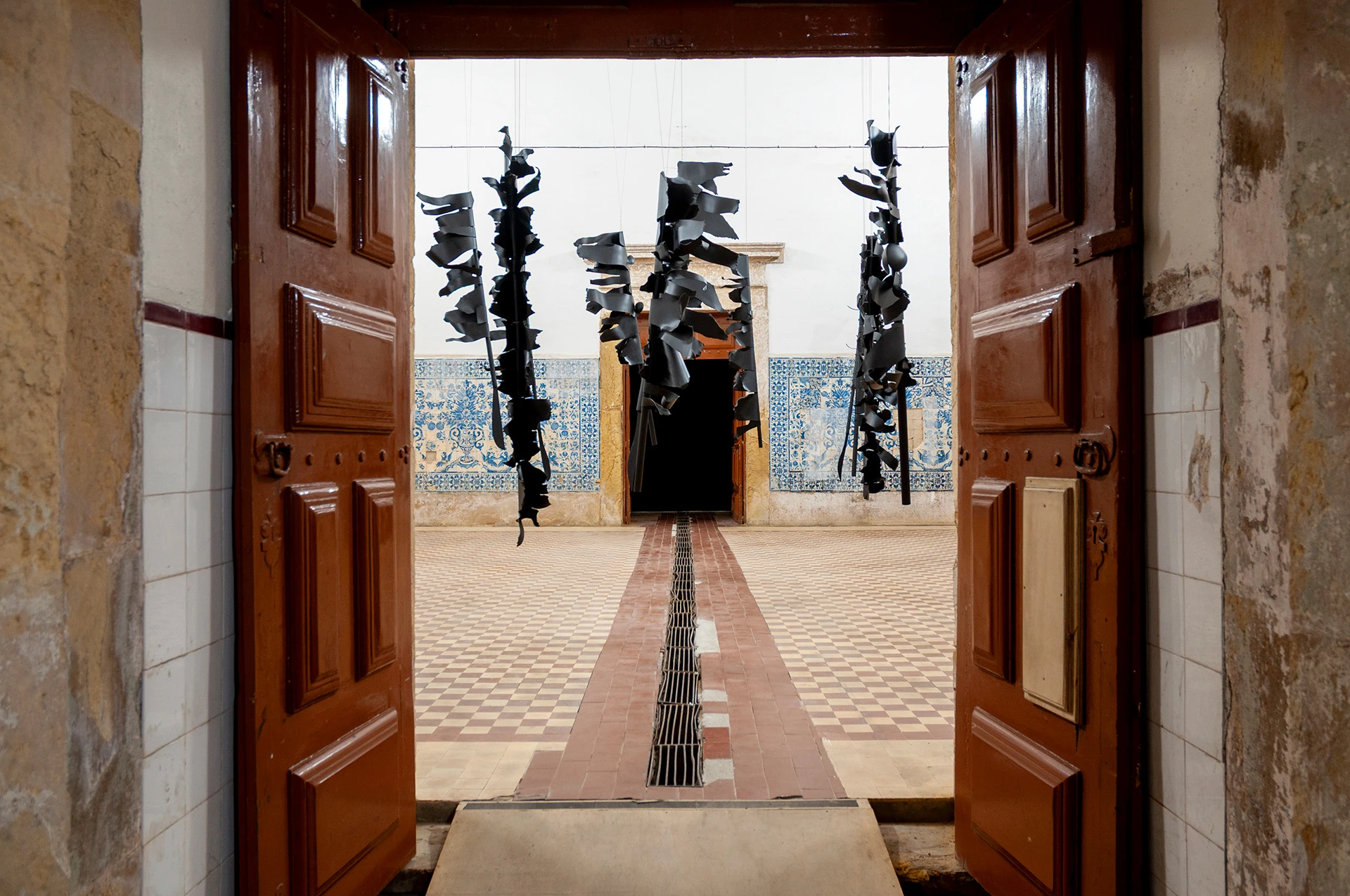
15 Jun 2026
ANOZERO’26 – Bienal de Arte Contemporânea de Coimbra: Segurar, Dar, Receber (To hold, to give, and to receive)
By Mafalda Teixeira
Related Posts
article
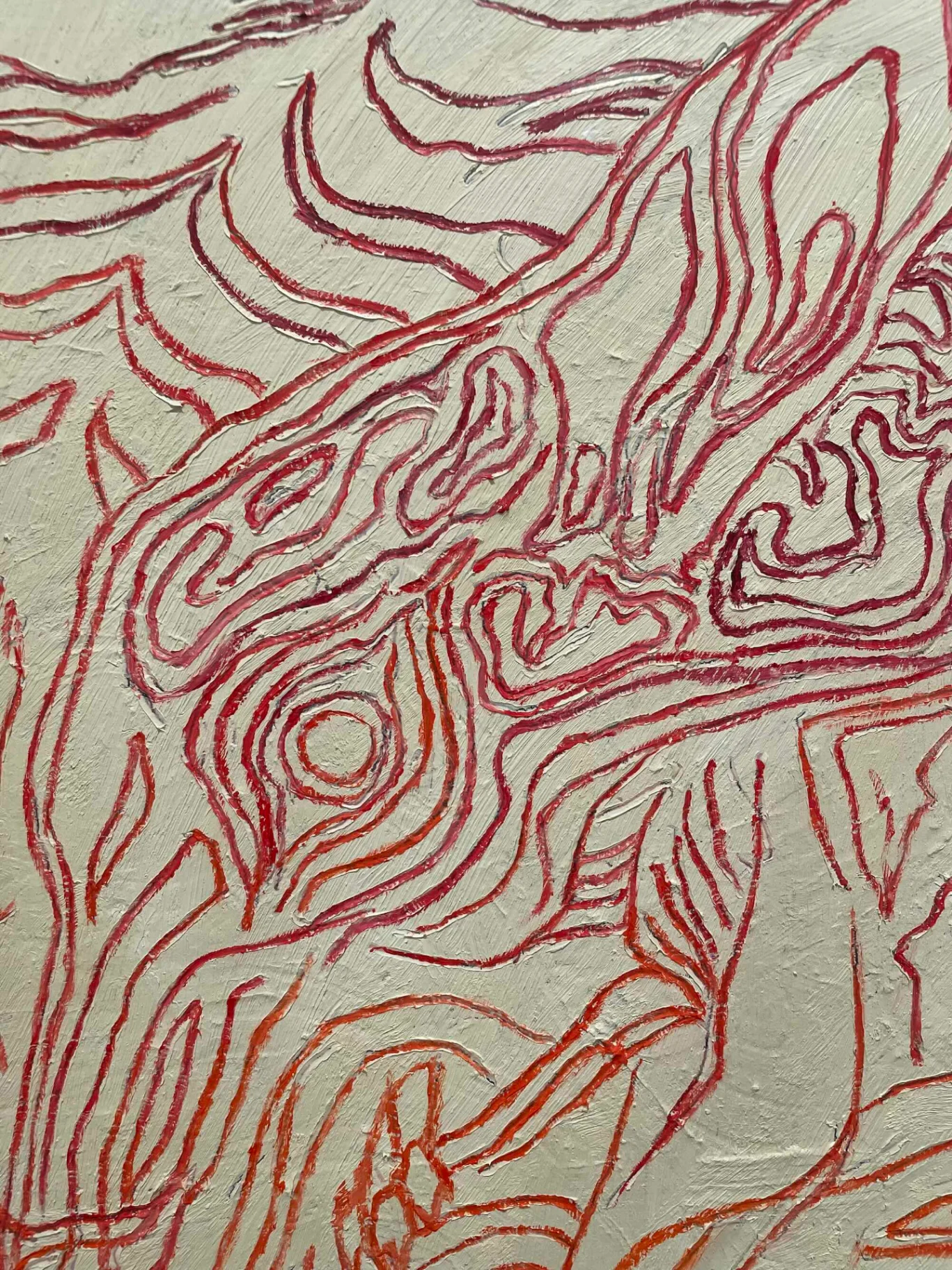
18 JUN 2026
Olho de Vidro, by Pedro Barassi: The Gravity of the Gaze
By Ayşenur Tanrıverdi
article
15 JUN 2026
Notes on ARCO Lisboa 2026
By Ayşenur Tanrıverdi
article

08 JUN 2026
Língua Turva: The Aesthetic Unconscious
By Ayşenur Tanrıverdi
article
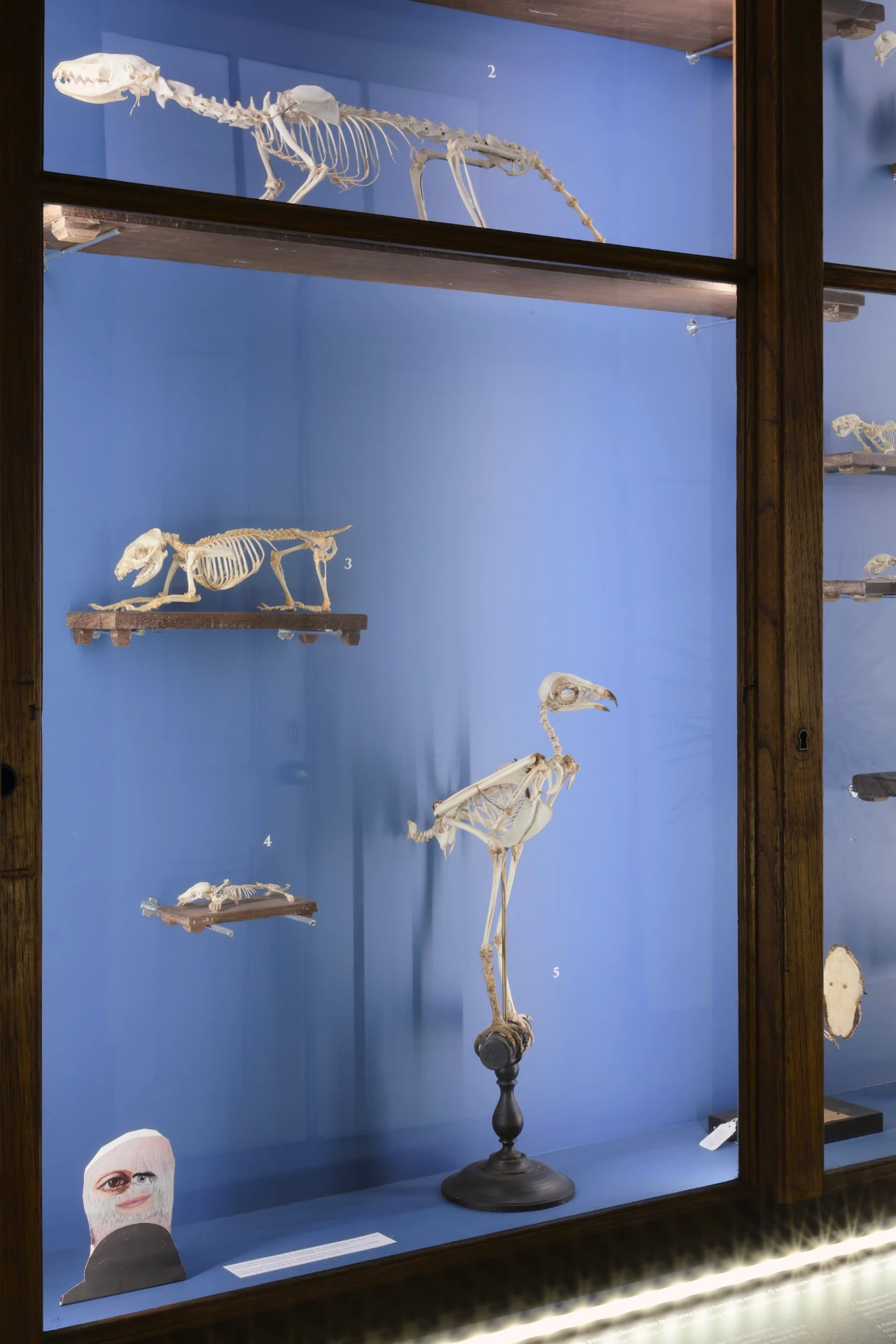
02 JUN 2026
On Wandering Among Beings: "Entre Seres" by Susanne Themlitz
By Ayşenur Tanrıverdi