article
Terra Crua at MAC/CCB - Architecture Centre
“Terra Crua (Raw Earth) emerges as a multidisciplinary exhibition that seeks to bring to the attention of the general public the potential of earth—a natural, local, and readily available resource—as a raw material for contemporary architecture. Terra Crua, curated by Madalena Vidigal and with curatorial assistance by Reka Szilvasi, is an ambitious exhibition on a conceptual level, which maintains this high standard through excellent formal execution. The exhibition brilliantly brings together the entire journey of working with raw earth, from the material itself to the act of creation.”
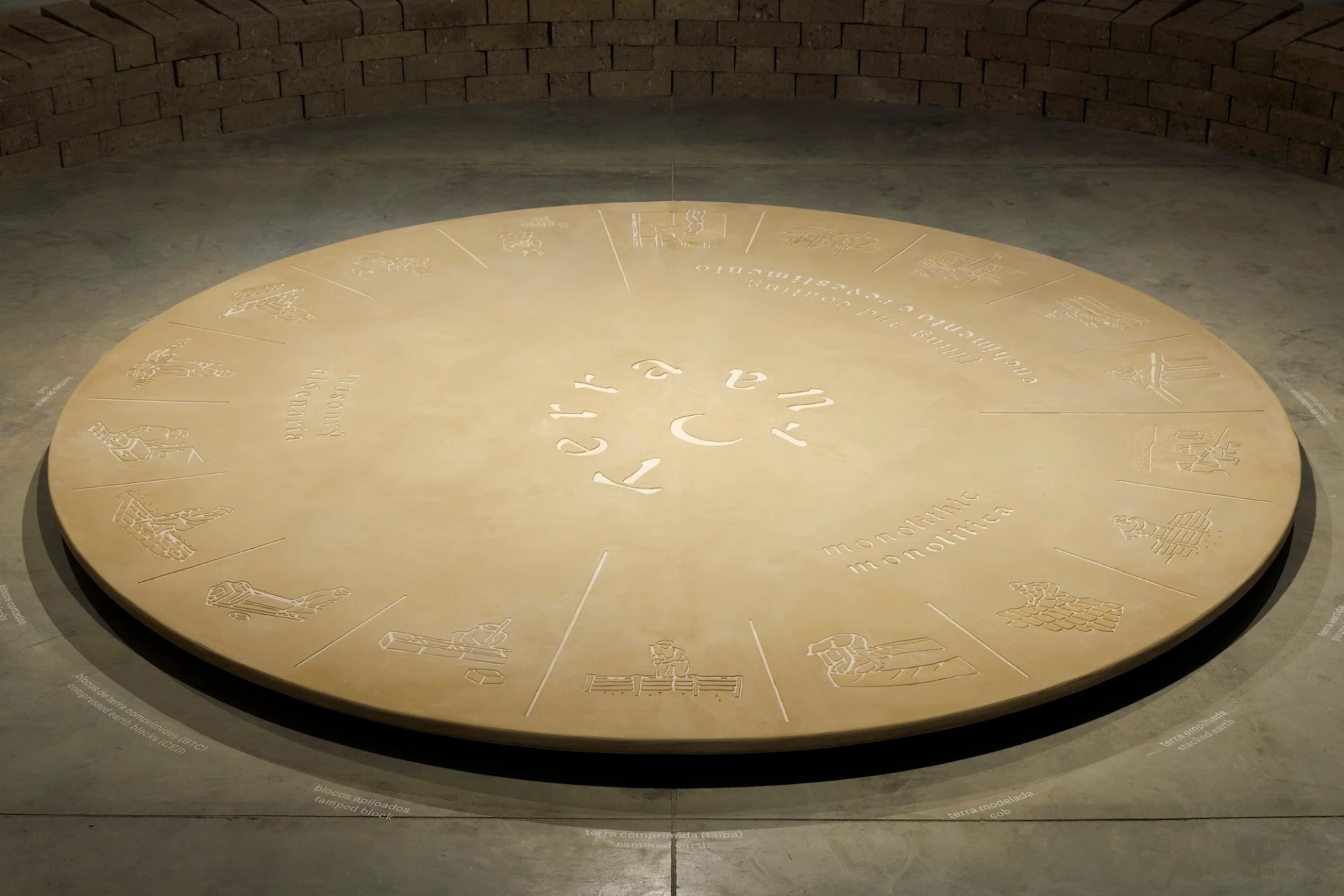
These are times of great strain on the Earth’s systems, making it increasingly urgent to explore alternative lifestyles, more sustainable construction and production methods, and to seek innovative solutions for a regenerative paradigm. With this mission in mind, Terra Crua (Raw Earth) emerges as a multidisciplinary exhibition that seeks to bring to the attention of the general public the potential of earth—a natural, local, and readily available resource—as a raw material for contemporary architecture. Terra Crua, curated by Madalena Vidigal and with curatorial assistance by Reka Szilvasi, is an ambitious exhibition on a conceptual level, which maintains this high standard through excellent formal execution. The exhibition brilliantly brings together the entire journey of working with raw earth, from the material itself to the act of creation.
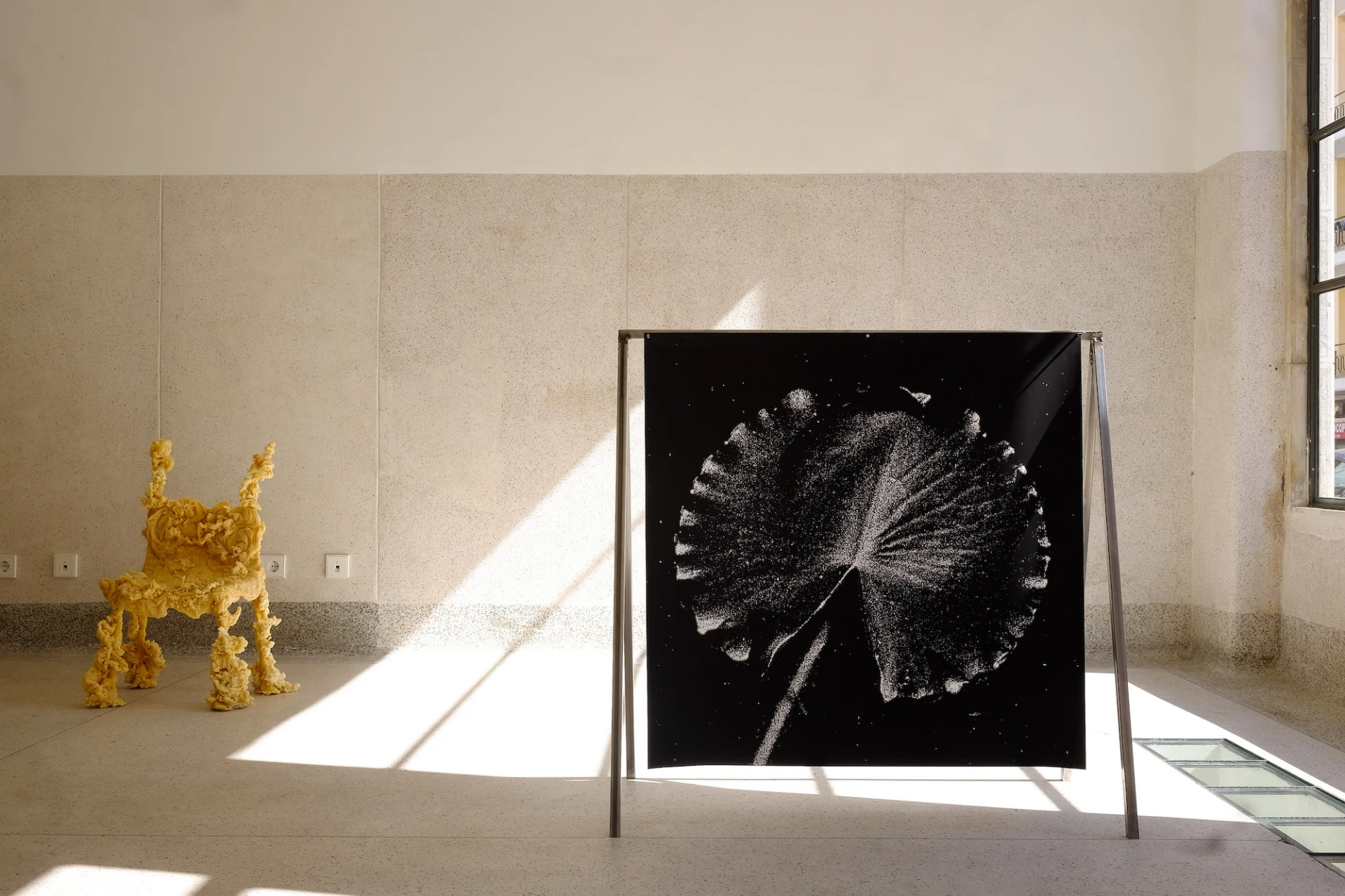
As the gallery is divided into different stages in the process of understanding and working with the earth, we begin by considering this material on both macro and micro scales, reflecting on what lies beneath our feet and examining soil samples from different parts of the country—from Madeira’s volcanic, grayish soils to the yellow, arid soils of Mértola. A vast palette of colors is on display, revealing the different types of Portuguese soil and helping us understand, as noted in the exhibition, that “despite its small size, Portugal boasts a great diversity of soils, resulting from the variety of geological formations and environmental conditions.” In this shift between scales, we are invited to observe, on a macro level, the soil monoliths (cut from a profile), which show a vertical cross-section of the terrain, allowing us to examine its physical characteristics and stratification; then, on a micro level, we delve into videos and microscopic photographs that reveal the earth as a heterogeneous material, with enormous mineral diversity, different textures, and grain sizes.
The gallery's second section is devoted to a triad of fundamental elements in earthen construction: air, clay, and water. There are installations, objects, and texts that provide a scientific explanation of how this type of construction works. Dynamics between millennia-old empirical knowledge and its integration with current technological knowledge are evident, allowing us to view traditional Portuguese techniques such as adobe, tabique, and taipa with fresh eyes. Then, in a coherent and gradual manner, the exhibition shifts toward less scientific and more practical elements, revealing walls, bricks, and the end result of earthen construction. Here, the fascinating work of the DOING.pt and CRU atelier studios is also showcased; these studios have been working in the field of eco-construction, with a particular focus on raw earth. Note the Terras de Lisboa project, which highlights the potential of soil as a circular resource, while also sparking a debate on the life cycle of materials, the reuse of demolition debris, and the housing issue itself. These themes converge at the climax of the Terra Casa (Earth House) installation—a facade built entirely of earth—which clearly demonstrates this new paradigm’s full potential.
In addition, small details—such as the exhibition walls being painted with different types of earth, or the “biblio-terra,” (biblio-earth) a library/archive that brings together a selection of works on earthen architecture and construction—complement an exhibition curated with the utmost care, in which, moreover, all the earth used was sourced through geological studies of Lisbon and brought from various sites where excavations are taking place, reinforcing this theme of circularity and material recovery.
Terra Crua successfully creates and elucidates a compelling argument for a new architectural paradigm in which architecture, territory, and community are interconnected and work together to explore new possibilities in construction. Ii is a must-see for anyone interested in alternative processes, eco-construction, and regenerative futures.
The exhibition can be visited at the MAC/CCB through October 11.
ADVERTISING
Previous
article
03 Sep 2026
Radical Gestures, by Tatiana Macedo, at Rialto6
By Tomás Saraiva
Next
article
04 Sep 2026
Deep Learning: e-book Towards an Automated Art? Learning Machines, Human Creativity And Uncertainty
By Umbigo
Related Posts
interview
25 SEP 2026
Interview with Isadora Alves, author of the Umbigo.space cover
By João Pedro Soares
article
03 SEP 2026
Terra Crua at MAC/CCB - Architecture Centre
By João Pedro Soares
article
23 JUL 2026
Dobra #2: Vergado Desejo at SPACE ZERO
By João Pedro Soares
article

29 JUN 2026
Housing (Non) Humans at Galeria Filomena Soares
By João Pedro Soares