interview
Interview with Isadora Alves, author of the Umbigo.space cover
Isadora Alves (Lisbon, 1996) is a Portuguese actress and artist who has developed work across performance, sculpture, audiovisual media, and writing. Her project Archives of the Earth, an artistic, performative, and site-specific investigation that took place on the Reykjanes Peninsula in Iceland, an active geothermal region, is now the cover of Umbigo.space. In this conversation, we discuss her trajectory and creative process, performative research, the convergence of art and science, and the relationships between archives and volcanic systems.
João Pedro Soares (JPS): I suggest we begin this conversation with a summary of your journey leading up to the Archives of the Earth project (2021-2026).
Isadora Alves (IA): I started working as an actress at sixteen; I began my studies very early… I also did a lot of sports, mainly extreme sports, and I think I found in theatre the same sense of presence, or very similar sensations, without that competitive aspect. Soon I started working as an actress, but I was always gathering hybrid references, studying philosophy, dance, and choreography, and remaining very passionate about art history, even at sixteen or seventeen years old.
JPS: Would you say that was the beginning of your own work?
IA: Yes. Because at the same time that I was doing theatre pieces or collaborating with choreographers, I also started making my own pieces, which usually involved creating a scenographic object with which the body interacts, with the relationship of placing the body in a space. With the search for places where the body is in an active, accentuated presence, in relation to things. When I was studying at the conservatory, at the School of Theatre and Cinema, for example, I often asked to be evaluated through performance rather than a play, and these creations always emerged, even back then, in unconventional spaces…
JPS: So, what followed?
IA: As soon as I finished the conservatory, I was already working as an actress. I did classical theatre, auteur cinema, all things I really enjoy. I studied for a year in Brazil, at the University of São Paulo. I studied sculpture, as well as photography and analogue developing processes. Even during that time, I spent a lot of time in the Andes, especially in Bolivia, and the relationship I have with the mountains, which dates back to childhood and has shaped my practice, grew even stronger during this period. There's a place, both in my personal life and in my work, that always has to do with the outdoors, with the great outdoors, with very, very wide landscapes.
JPS: Your connection with mountains began early in life, but when did you start to engage more closely with this type of place, so often considered inhospitable?
IA: When I was selected as a Young European artist, and largely as a result of that program, I met several people with practices similar to mine. People like, for example, Christoph Matt, an eco-social designer who lives near a glacier and who invited me to think more and more about the outdoors. Since that moment, over the last four or five years, my body of work has moved into very expansive places… like glaciers, volcanoes, and deserts. Each of these places is very specific, and therefore I also develop a unique relationship with their political, social, and ecological landscapes.
JPS: Archives of the Earth is precisely the result of this contact with Christoph Matt?
IA: Christoph and I had known each other for some time and, in fact, formed a collective called Sympoietic Society with eight other artists and did several projects in the Austrian Alps on glaciers and rivers. Two situations led us to this project. On the one hand, Christoph was living in Iceland when the eruptions began. On the other hand, I had started developing some works that I called Visions. I presented a sculpture, Vision 1 – Flashbox, centred on the figure of the oracle. I was very interested in finding an unformed community of people who had lost their sight in life and talking to them about their idea of the future and how they feel about climate issues, specifically lightning. Continuing this line of thought – in which nature is an expanded place that actively communicates – my next idea was to work on Empedocles and his fall into Etna. And that's when, together with Christoph, witnessing these eruptions and realising that the place where they happen in Iceland is the closest place to embodying Empedocles' philosophy, we started working on a project that grew and only made sense after many field trips, a lot of research work, and the help of a community with whom we built a relationship in Reykjavik.
JPS: So, initially, Archives of the Earth emerges from this, let's say, mythological matrix, but then it begins to take concrete form in this territory. How does this practice you call "performative investigation" materialise?
IA: Performative research is fieldwork that ends up resembling scientific research because it starts from the same precepts, very simple and similar to those of anyone who likes something: staying in one place for a long time and continuously asking questions. Specifically, Christoph and I built a kind of sculpture, some DIY objects that have a certain portability. These pieces were made with objects that attach to the body and are portable in mind, in reference to mountaineering, where packing a bag is very important. In that sense, we also built bags that these objects fit into: Chris's is a floor table,, and mine is a belly table.
JPS: And then where did you take the bags and these objects?
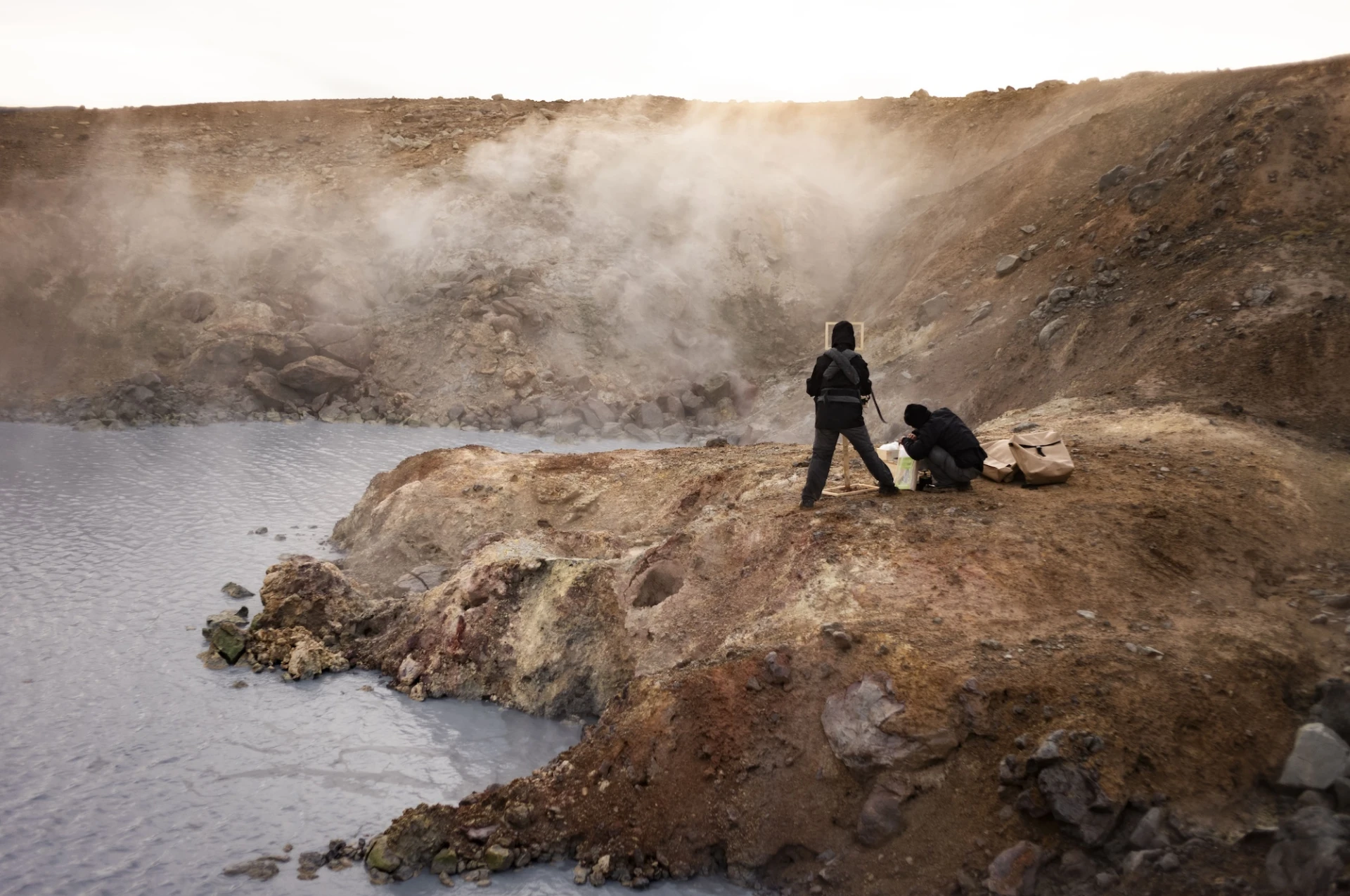
IA: We walked with them at night to the Reykjanes peninsula, which is a bay at the foot of Reykjavik, where the eruptions began in 2021 and will probably continue for the next hundred years. The Archives of the Earth begins at the same time as renewed volcanic activity in a place with seven volcanic systems… seven or eight… actually, there are many things you don't know. Here, we find the formation of small craters, but the volcanoes are formed differently. Often they are cracks in the ground, and the earth opens up. Because this place is exactly where the Eurasian and North American plates meet. So, these coordinates are between tectonic plates.
JPS: So these are the coordinates to where you walked?
IA: Yes, we walked to those coordinates, which were determined with geologists, volcanologists, disaster specialists, and people from the local communities who live there. Then, we stayed in the same place all day, exposed to the sun. We were in this sort of photosynthesis. Christoph spent the whole day by my side, in silence, extracting pigments from the soil and separating them. It's very rich soil, full of many unknown things and minerals, and he does silkscreen printing right there. Usually in rectangular formats, where you preserve or extract a very small part of a pigment from that soil for the paper.
JPS: And what do you do while this is happening?
IA: At the same time, I stand still and try to write what's in front of me. I have a typewriter, so my writing is conditioned by the lexicon of that object, which is the only one that survives these climatic conditions, often with sub-zero temperatures. And so, a relationship is formed among walking, stopping, observing, and the creation, with the body, of a bond that goes beyond what is consciously understandable about the landscape. Through this methodology and through the body's exposure to time, what returns from this work are always pairs, composed of a silkscreen of the ground and a written print.
JPS: These are two unique impressions, of a geological time, of tectonic movements, of a specific moment during an eruption…
IA: Exactly. The decision is that this silkscreen and this poem happen there, at that moment, and only at that moment. The texts are not edited, just as there is no retouching of the silkscreen, as if there were an encapsulation of that place and that time.
JPS: By incorporating and encapsulating this geological time, what kind of conclusions have you been able to draw from this artistic investigation so far? Have you achieved any complementarity between sciences, such as geology and volcanology, and your practices?
IA: I think so… especially because artistic investigation, like scientific investigation, is preceded by a relationship of depth… a search for depth with things, through a certain passion, a taste that we found in that territory and that the people we worked with found. So, this place of love, let's say, with this territory, happens among all of us and is shared. This is a place that has never had human habitation and never will. Therefore, it is a territory that questions elements in a very specific way, where nature is raw, in a unique manner… It also happens that some impressions and poems emerge in places where there has been no scientific research, and suddenly, a sensitive archive – which may even be somewhat crude and has its ironic side in relation to science – also becomes a record that can be studied, ultimately helping some scientists and the community.
JPS: Did you ever work closely with any scientists?
IA: It happened that we did this project together with Céline Mandon, a volcanologist who, at that time, was working in those coordinates with machines very similar to mine. What she does with the Icelandic Meteorological Institute is, in a way, to decant the composition of the air and geothermal gases where we usually are. Because these are places where the Earth is visibly in motion. Many of the poems I write, for example, speak of the wind because it is one of the most active elements, or of air and air density, in the same way that Christoph separates pigments that even scientists find unknown. Basically, Céline works on invisible matter and gives a name to invisibility. There is a great sharing of practice, despite having different languages.
JPS: This complementarity between art and science is fascinating and seems increasingly necessary to me. This also leads me to a question: you refer to this place as a raw space, the earth erupting, a series of gases… it seems to me an inhospitable place where it is difficult to work. Were there any specific challenges you experienced on the site that you would like to share?
IA: I think it's inhospitable, like many places… A glacier, for example, is also very dangerous. Iceland is highly monitored. The places we go aren't completely "kamikaze" (laughs), although an eruption could actually happen at any moment. The difficulties are always the possibility of not being prepared enough, of not respecting these places enough, places that communicate with us. I think the closest comparison with Portugal is the relationship with the sea. There are days when we go to the beach, we go into the water, and we feel that the sea communicates, that it says something we don't quite know what, but there's some intuition that we shouldn't be there, that we should get out of the water. It's similar. So I think that continuous listening to the place is one of the most important things. The great challenge is always trying to listen better.
JPS: Can you talk about the relationship that this set of volcanic systems establishes between the archive and the archivist? I find this dimension of the archive interesting, as something that trembles, disappears, departs, and re-emerges. It seems to me that the archive is also quite volcanic…
IA: Without a doubt. I think that around the idea of the archive and landscape, there is always a relationship with death. In this place, specifically, disappearance is very close to me; something happens: a re-signification of the idea of death, which, at the same time, is a reorganisation of materials and not a death per se. And this happens concretely, not symbolically, in this landscape, where there is no longer a binary between life and death but a constant reorganisation of materials. So, it is also fair to say that, in these places, we are always close to life, to the beginning of life. Geologically, Iceland is one of the newest places (if not the newest) on the planet. The Reykjanes peninsula even more so, given that the Eurasian and North American plates are diverging, opening by at least 2.5 centimetres per year, or more… Inhabiting this place between eruptions seems to me a possibility of feeling the four elements of Empedocles, a feeling that things are reorganising themselves. Furthermore, a volcano or volcanic system is an earth machine that is constantly archiving earth upon earth upon earth.
JPS: There's a profoundly poetic dimension to all of this, it seems to me. Archives of the Earth is an ongoing project that begins when the eruptions begin. Earlier, you mentioned that these can last for over a hundred years. Does that mean that Archives of the Earth can also have this temporal continuity?
IA: Of course it can.
JPS: Which is interesting, because it also establishes this oracular dimension of the archive and artistic practice as predictors of a speculative future, of how this space might change…
IA: Yes, in this case, and because the research becomes performative, the idea is: what is it like to stand still in one place for a long time? And to ask: “What exists, what can come to me, what is dialoguing with me? Are there words for this?” The oracular idea, the way I see it, is not to think linearly about the past, present, and future, because situations take on unforeseen meanings. There's something I feel as an actress and performer that has to do with a state of presence and connection with everything, whether it's an audience or, in the case of Archives of the Earth, a more-than-human immensity. There is, of course, the creation of an archive, which can disappear, but if the project continues for as long as we can, it will remain alive. For example, we have given classes at universities, schools, conferences, and created tools and methodologies to develop a language of relationship with the landscape. These are things that are shared, questioned with many people, and ultimately, continued…
JPS: And what other continuities exist in your current artistic journey?
IA: I've been working with Arizona State University for about two years, where I've spent a lot of time, and I've been working in the Sonoran Desert. Together with local populations, scientists, and members of different indigenous communities, we investigate nocturnal ecosystems. In that sense, I am currently preparing an exhibition in Portugal for 2027 about the extinction of night as a phenomenon, the need to be in the dark and experience darkness.
ADVERTISING
Previous
agenda
23 Sep 2026
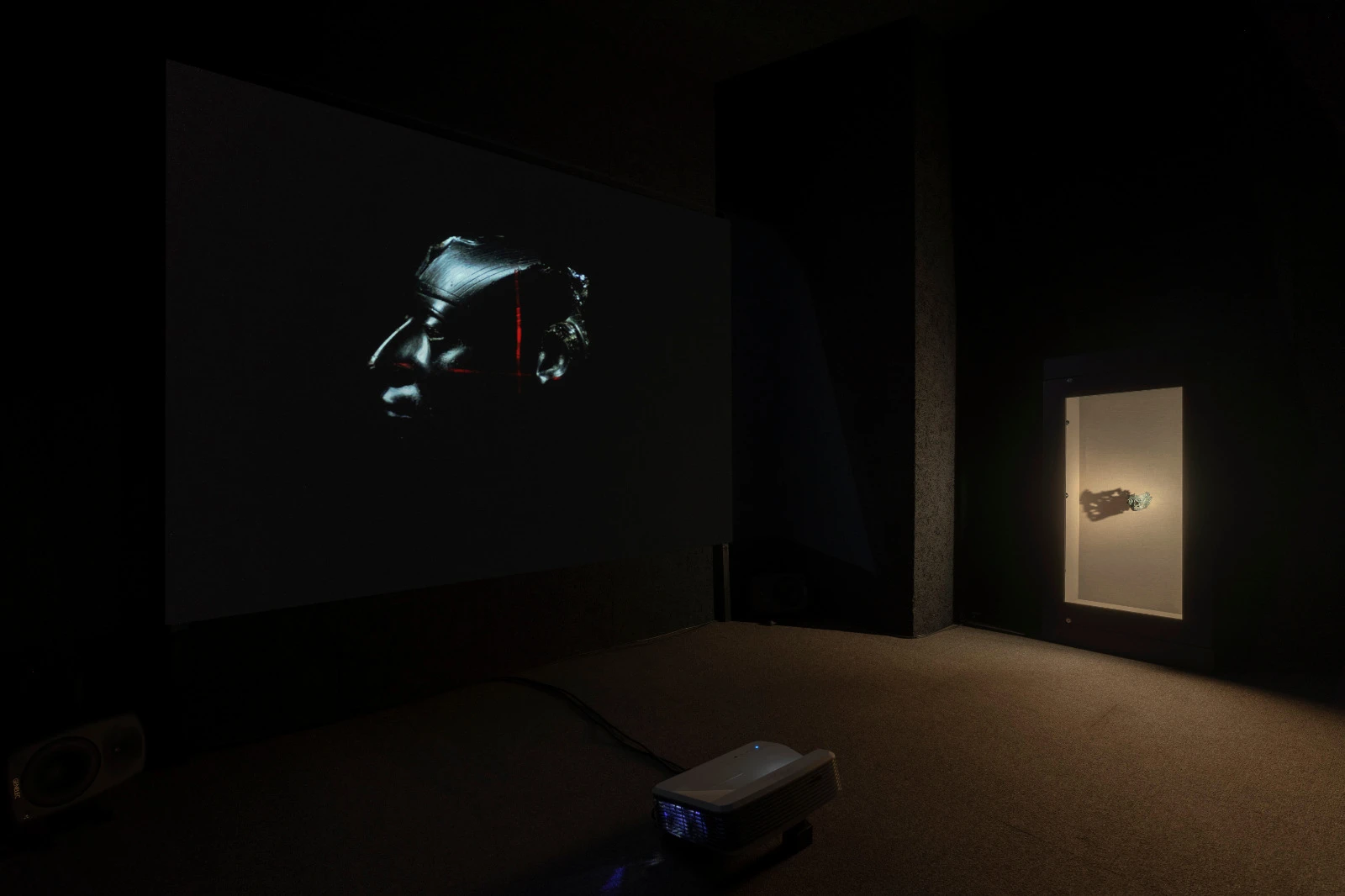
Opening of the NOVA Mafra Hub – Music, Art and Technology with the exhibition 'Amor Fati'
By Umbigo
Related Posts
interview
25 SEP 2026
Interview with Isadora Alves, author of the Umbigo.space cover
By João Pedro Soares
article
03 SEP 2026
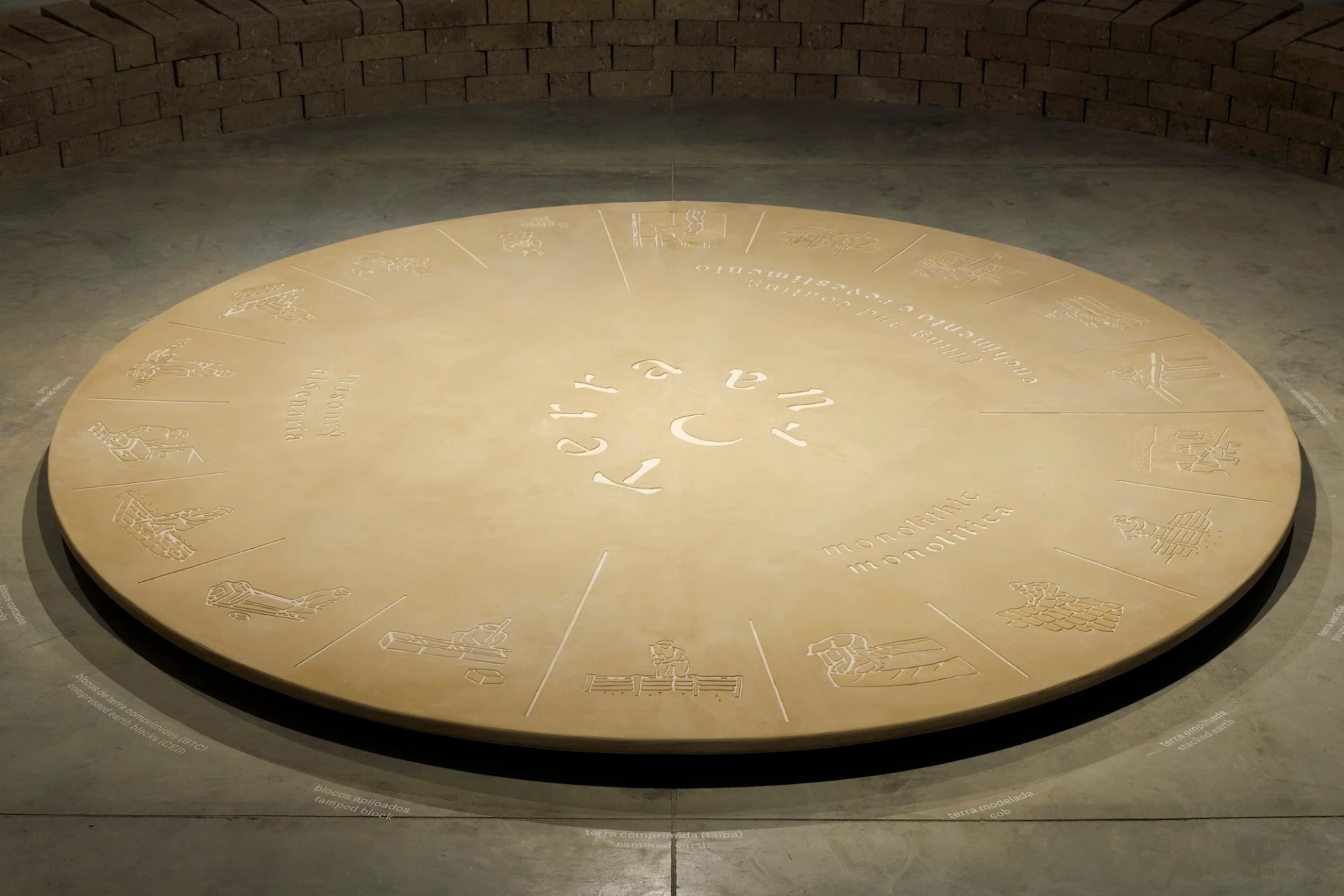
Terra Crua at MAC/CCB - Architecture Centre
By João Pedro Soares
article
23 JUL 2026
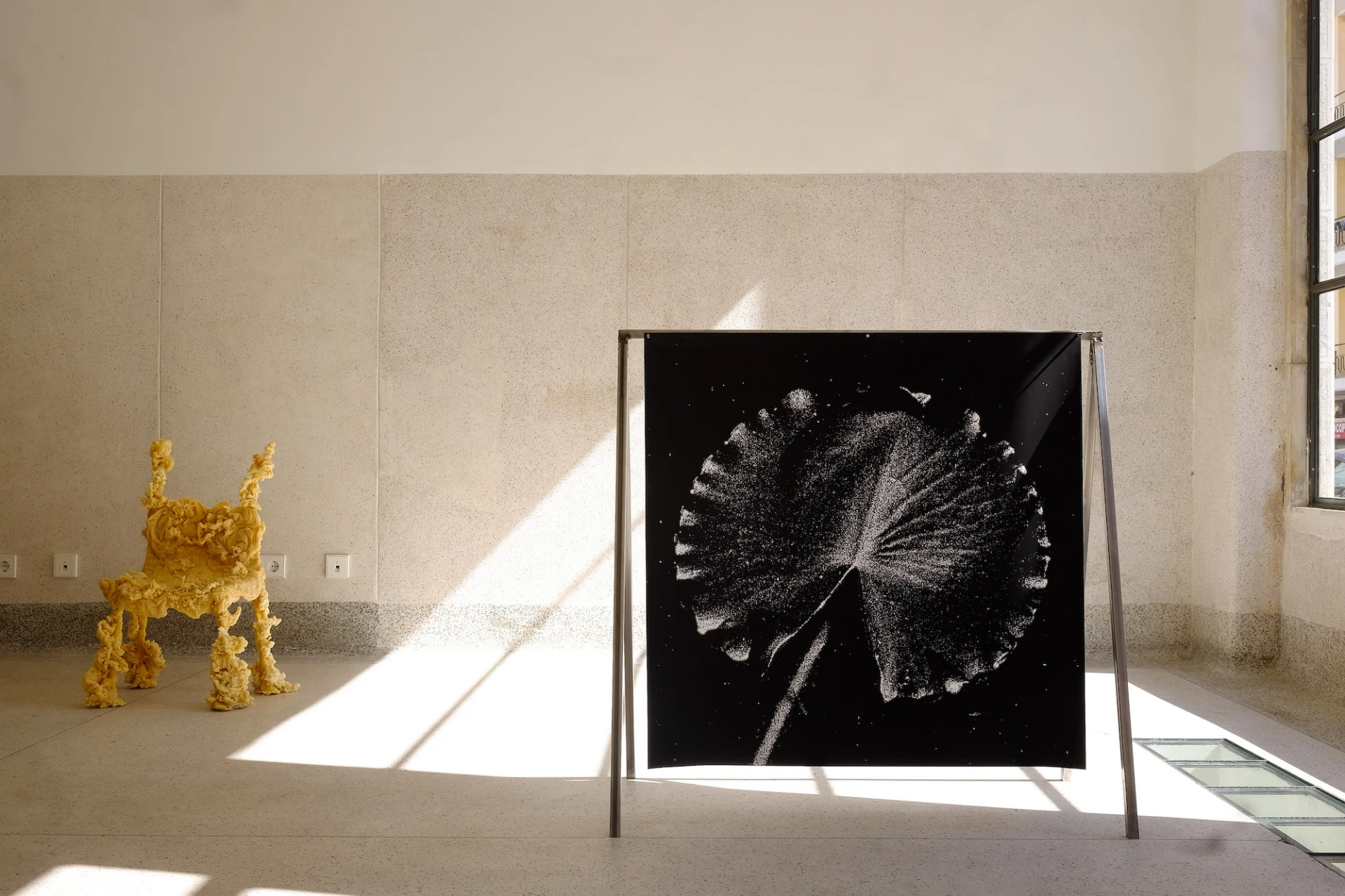
Dobra #2: Vergado Desejo at SPACE ZERO
By João Pedro Soares
article

29 JUN 2026
Housing (Non) Humans at Galeria Filomena Soares
By João Pedro Soares