article
¿De qué casa eres?, by Ana Pérez-Quiroga
“Without pretending to be a documentary, ¿De qué casa eres? is composed as a constellation of images that brings together some oral testimonies from Angelita Pérez – evoking the scenic device of Jeanne Dielman, 23 quai du Commerce, 1080 Brussels – archival documents and photographs, as well as images of installations previously presented by the artist within the Criatório project in Porto.”
In the cocoon:
a table, four or five shelves
books by the hundreds or thousands (...)
an Olivetti typewriter
with ink accumulated in the roundest letters
pipes, pottery, pewter, medals, photos
dolls, trinkets, souvenirs
some portraits of people coming or going
(...)
signs of my land too.
(The Cocoon, by Fernando Namora)
Ana Pérez-Quiroga has long investigated objects. The theme of the domestic, as well as its invariably obsessive inventorying, is already central to her practice – evident, for example, in her project Breviário do Quotidiano #8, conceived as a house-installation and, at the same time, as an exhaustive listing and categorization of all her belongings. In ¿De qué casa eres?, the artist's first film as director, objects recover their centrality, constituting the starting point for telling the story of her mother, Angelita Pérez, one of the three thousand children who left for the Soviet Union during the Spanish Civil War (1936-1939).
Sent to Russia at just four years old, where she remained for two decades and completed her medical studies, Angelita Pérez was prevented from returning to Spain after the defeat of the Republicans and the consolidation of Francisco Franco's dictatorship. It was in 2017 that Ana Pérez-Quiroga first delved into her mother's story, until then practically untold within the family. She began with objects, and it was there that, little by little, a field of narrative and formal possibilities opened up.
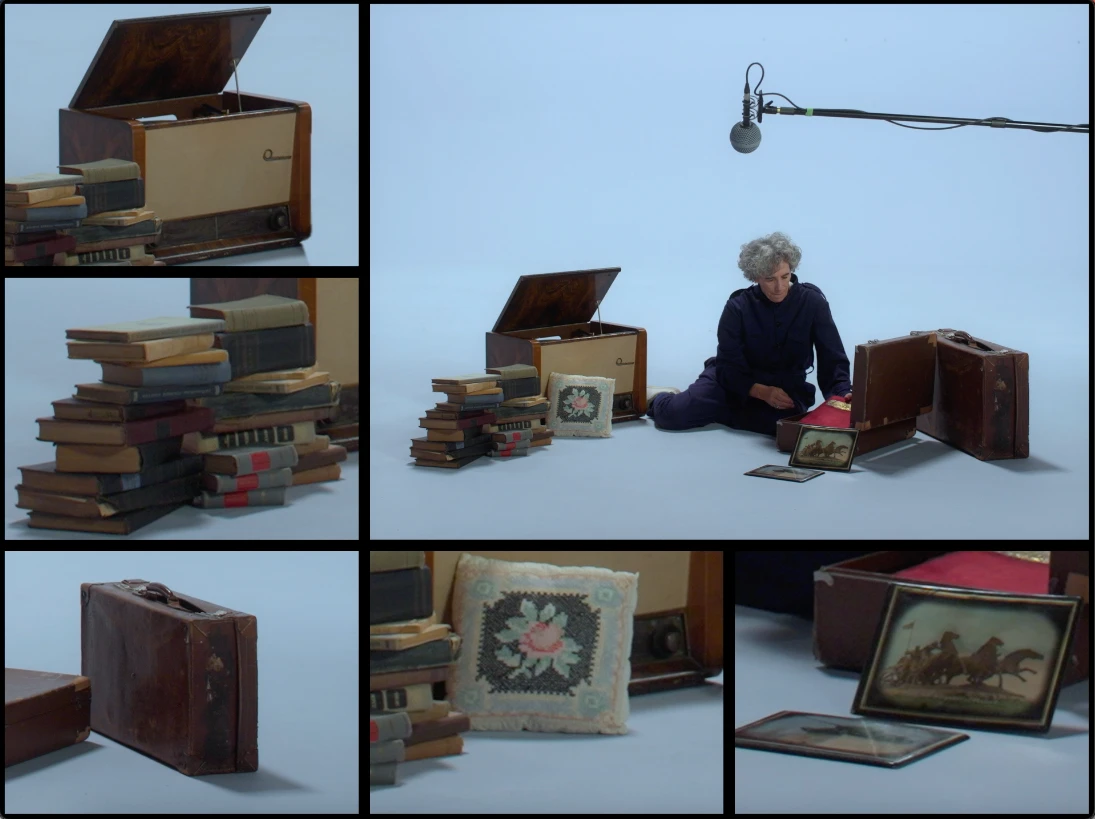
Years later, the results of this research reappear in the cinemas. Like her research, the film – in a hybrid, almost sculptural style, as only a visual artist could conceive – also progresses at the rhythm of the objects. “These are the objects my mother brought from Russia,” she recounts, then begins an extensive enumeration that offers a glimpse into her intimacy: a radio record player; an album of architectural photographs; an album of personal photographs; a bikini knitted by my mother; a stethoscope; his medical degree; a brooch with a dove; a medallion for photographs and a thread; seven ivory elephants.
Without pretending to be a documentary, ¿De qué casa eres? is composed as a constellation of images that brings together some oral testimonies from Angelita Pérez – evoking the scenic device of Jeanne Dielman, 23 quai du Commerce, 1080 Brussels – archival documents and photographs, as well as images of installations previously presented by the artist within the Criatório project in Porto. The film nevertheless approaches a historical truth reconstructed through memory, affections, and material vestiges. Far from being an exercise in image reconstruction, it is these small fragments that offer clues about what life had been like for those children.
In Culture of Europe and Its Barbarism (2007), Edgar Morin reminds us that dark images, although brutal, can reduce the complexity of the event to a single visible effect ("When the Allies arrived at the gates of Dachau, they were faced with piles of corpses. The impression then remained that the Nazi horror was limited to this effect of piling up bodies. However, the Nazi horror has less to do with the piling up of corpses than with the workings of this perfected death machine. Perhaps for this reason, and continuing the tradition inaugurated by Shoah (1985), by Claude Lanzmann - which dispenses with images of concentration camps and constructs the film almost exclusively from voice and narration - ¿De qué casa eres? does not restore the experience, but rather establishes an exercise of imagination and listening, particularly fruitful because it does not confine the image to an obsession with evidence.
It is precisely in this distance in relation to visual evidence that its power lies. In ¿De qué casa eres?, there is space for incompleteness. “I prefer not to talk about it,” Angelita Pérez tells us at one point. The absence is also relevant from the point of view of historical formulation: an indication of some trauma that cannot yet be translated by language. But if this distance makes any totalizing reconstruction unfeasible, it also opens up space for other forms of approximation or (re)enactment, as Susana Bessa writes in her text ¿De qué casa eres?: a casa é o que dela fazemos. According to the author, the film inhabits an ambiguous zone between testimony and (re)enactment. The contours of the narrative shift: the memory unfolds, contradicts itself, recomposes itself. In between, the recreation of Guernica in fabric — designed by Ana Pérez-Quiroga and on display at Appleton until June 19 — functions as a curtain that opens and closes the different scenes. Its presence punctuates the narrative and introduces a theatrical dimension that distances it from any documentary illusion. How do you know, then, what is true? The issue seems to interest the film less than the coexistence of multiple versions of the past; than the possibility of carving a house (a cocoon) for memory. And, in this way, discover the signs of this land that is hers too.
BIOGRAPHY
Maria Inês Mendes is studying for a master's degree in Art Criticism and Curatorship at the Faculty of Fine Arts of the University of Lisbon. She completed her bachelor’s degree in Communication Sciences at NOVA University Lisbon and wrote about cinema for CINEblog, a website run by NOVA’s Institute of Philosophy. She is currently in charge of managing UMBIGO online, where she publishes regularly. Contributes to BEAST – International Film Festival and À Pala de Walsh.
ADVERTISING
Previous
article

29 May 2026
Ateliê – Art&Law: Patronage and Culture in Portugal
By Patrícia Dias Mendes
Next
article
02 Jun 2026
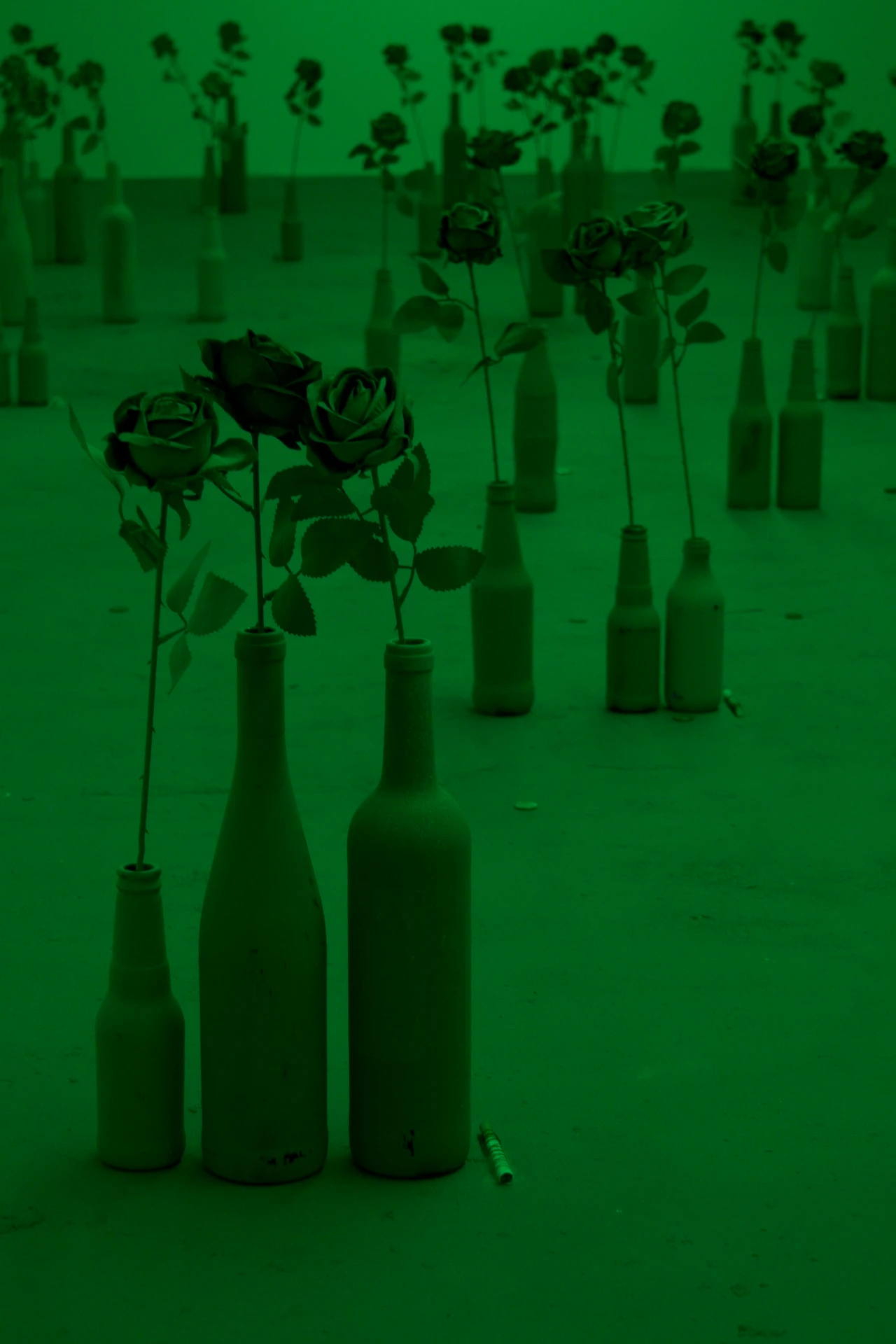
Submundo, de Paulo Wirz, at Teodoro W.
By Mafalda Teixeira
Related Posts
article
01 SEP 2026
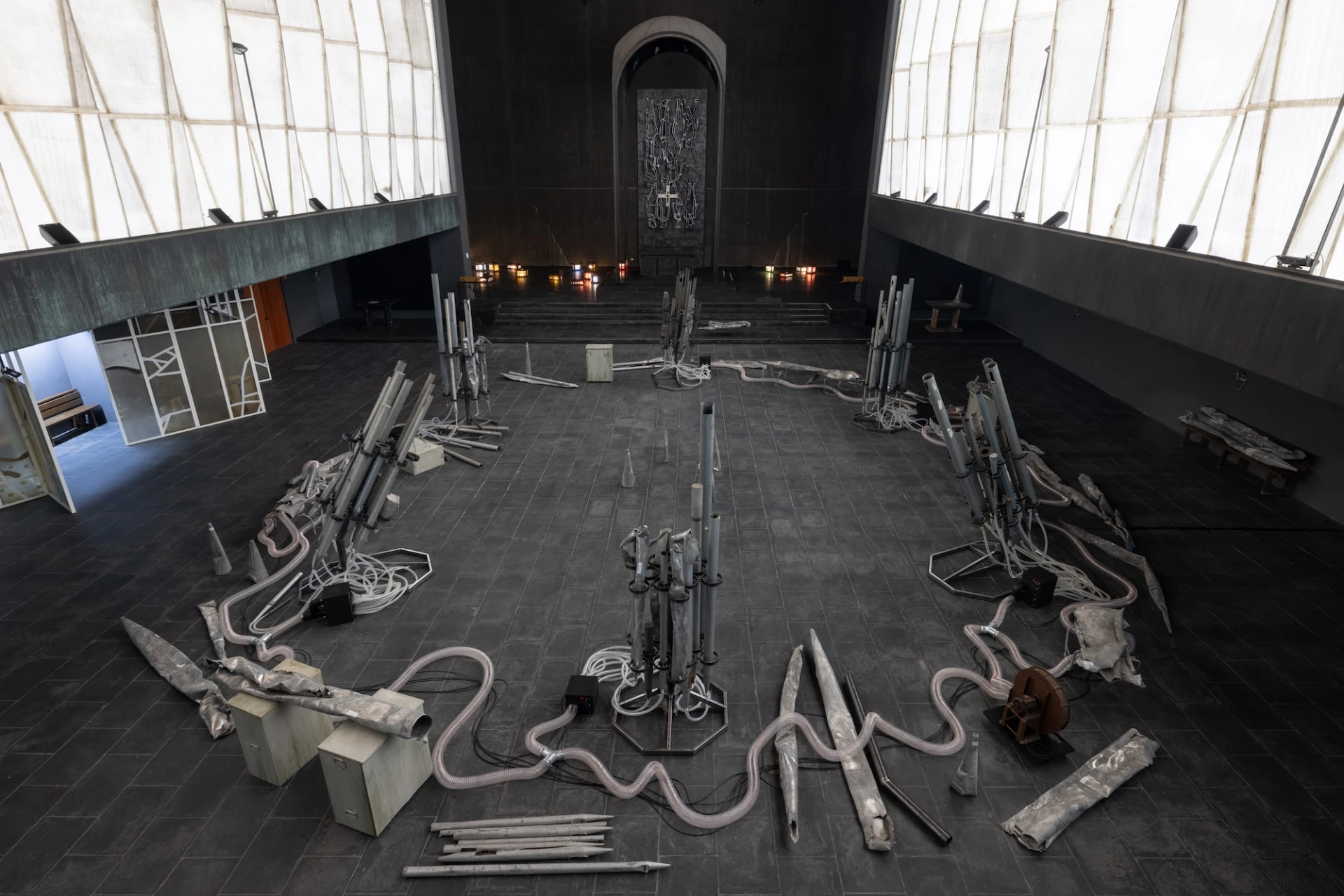
THIS IS (NOT) A CHURCH: Can a church be a place for encounter?
By Maria Inês Mendes
article
14 JUL 2026
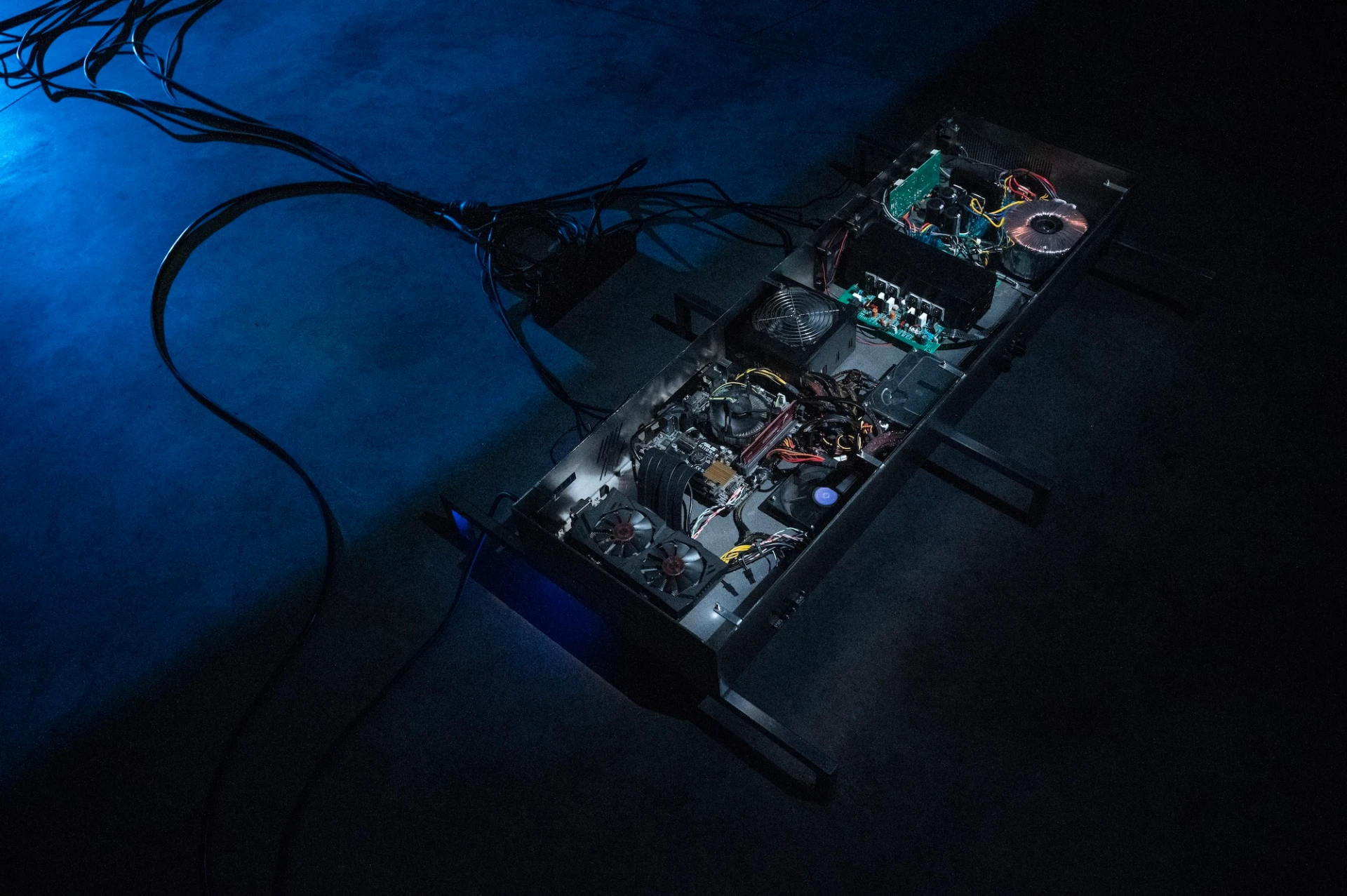
To Whom It May Concern, at Carpintarias de São Lázaro
By Maria Inês Mendes
article
02 JUN 2026
¿De qué casa eres?, by Ana Pérez-Quiroga
By Maria Inês Mendes
article
11 MAY 2026
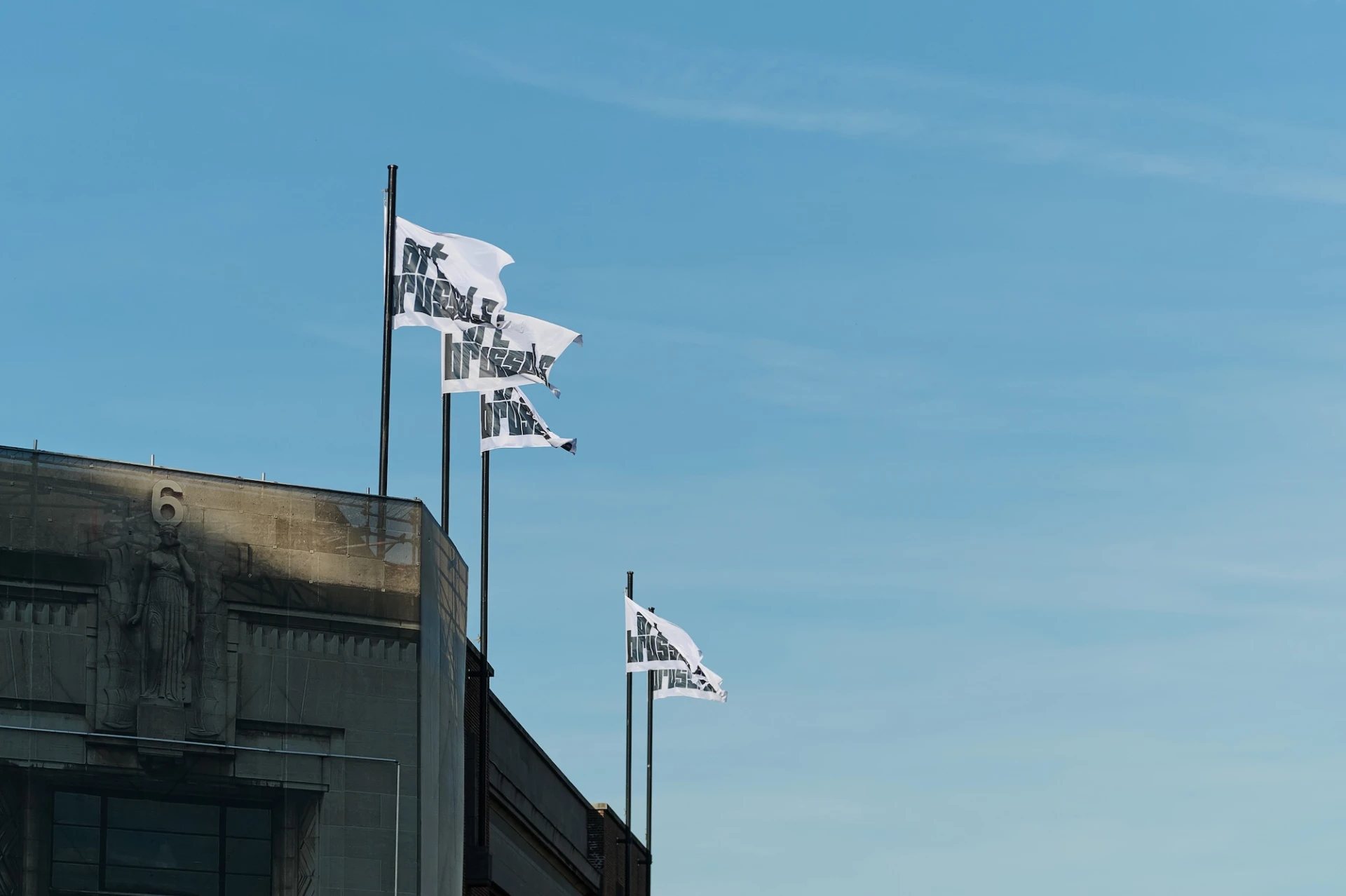
Brief notes on Art Brussels 2026
By Maria Inês Mendes