Article
Jenny Holzer: words that seduce
“For over forty-five years, Jenny Holzer has been exploring our relationship with language, scrutinizing what in words persuades and moves us. What words conceal and what happens when they are censored or altered are also issues that define the artist’s work. From posters to projections, electronic panels to inscriptions in stone, the American artist reimagines words and displays them on different media and in different spaces, questioning the authority they acquire and the effects they have on those who read them.”
Noise. Overload. Repetition. Thank you for your attention. It is with this reversal, a thank-you right at the outset, that Wrong Answers begins, Jenny Holzer’s first solo exhibition in Portugal, at the Serralves Museum.
For over forty-five years, Jenny Holzer has been exploring our relationship with language, scrutinizing what in words persuades and moves us. What words conceal and what happens when they are censored or altered are also issues that define the artist’s work. From posters to projections, electronic panels to inscriptions in stone, the American artist reimagines words and displays them on different media and in different spaces, questioning the authority they acquire and the effects they have on those who read them. That must be why, as I wander through Serralves' rooms, Yiyun Li's words seem to echo when she says that you can't always trust words1. Words can offer refuge, but they can also raise armor and prison walls. They can generalize instead of focusing on the individual; they can stigmatize instead of understanding; they can persuade and incite one of us to embrace their message without fully understanding what it contains. It is this kind of awakening that Jenny Holzer evokes through her work, making the power of words a concern that must also be ours. Words surround us, and even if we are wary of them, that wariness does not free us from them. As Li asks: where would my mind dwell, if not in words?
On the walls, words pile up amid intense colors. They appear in the form of brief pieces of advice, but also in an accusatory and provocative tone: better naivety than disillusionment; morality is for the rabble; the idea of revolution is an adolescent fantasy; your actions are unnecessary if no one notices them. Some stand out for what they say, like flames that set us ablaze upon contact. Among the brief phrases in Truisms (1977–79) and the blocks of text in Inflammatory Essays (1979–82), there are statements so incisive that, were we reading a book, they would be the ones that would prompt us to reach for a pencil to set them apart from the rest. How? By underlining them. And what do we take away from this? That language is compelling, seductive, and that, for better or worse, it guides us. To name is to give verbal form to a thought. Once inscribed, it can endure. The word thus survives the mouth that uttered it. And this is one of its powers.
It is no coincidence that this reflection leads us to Trump’s furious mouth. His image occupies the center of Room Four at Serralves. While the posters covering the walls display various statements without identifying who is speaking, the audio recordings that can be heard are associated with the image of someone whose discourse is anything but moderate. In front of it, at our feet, we find a cracked marble stone that seems to comment on this lack of moderation: moderation kills the spirit.
From the vibrant colors set to the rhythm of the song Eye of the Tiger, we move on to the series Laments (1987–1989); the light becomes less intense, and with this shift comes the realization of transience, not of words, but of the bodies that carry them. Conceived during the AIDS epidemic, this work highlights the preventability of certain deaths. It is into the realm of intimacy that we enter. The body's skin, its breath, contact with another, and the pleasure that arises from this encounter lay the body bare.
What happens when words aren’t enough to confront someone with acts of violence? Holzer turns to human remains to confront us with matter we recognize as our own. In Bone Works, some bones bear strips of text inscribed with excerpts from Lustmord (1993–1995). In these texts, sexual violence is addressed through the voices of those who perpetrate it, those who suffer it, and those who observe it, in a work developed in the context of the wars in the former Yugoslavia. The bones appear as a kind of mirror and, as a mirror, can be interpreted from different perspectives. What these interpretations cannot erase is the physical presence of what remains. These three ways of viewing and narrating violence differ not only in experience but also in the responsibility they assume toward it.
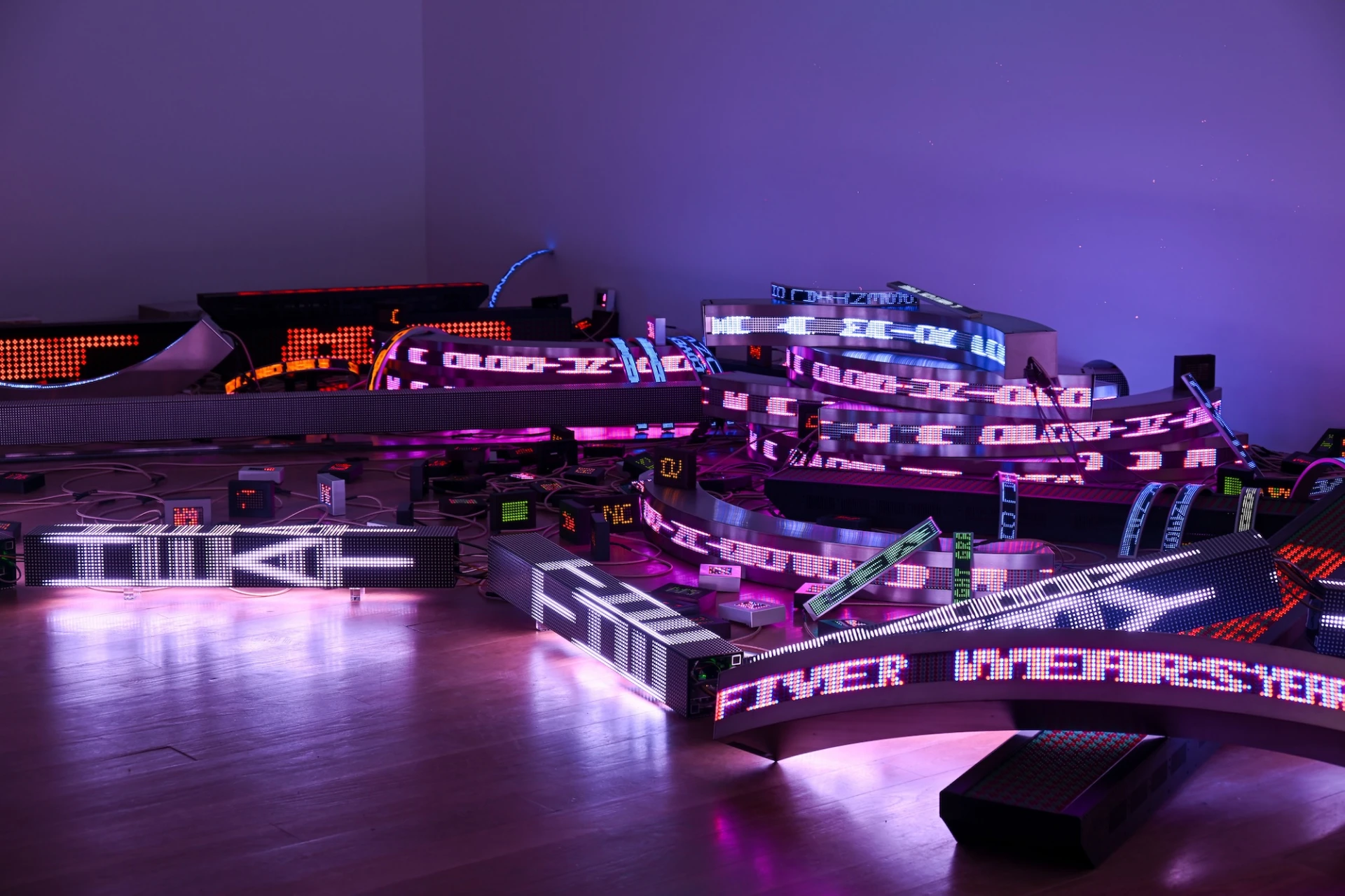
The exhibition closes with a piled-up heap, not of bones, but of words. Chaos takes hold. Noise sets in. Not auditory, but visual, produced by the speed with which the phrases appear. Their flow makes reading and comprehension difficult. What remains are the colors of the LEDs. The lack of understanding is replaced by enchantment. In today's world, where information circulates ever more rapidly, the need for interpretation is greater than ever. The danger lies in accepting what one has not understood, simply because the pace and eloquence make the discourse more convincing. Seduction seems to take precedence over understanding. Like the pencil that underlines a sentence simply because it is beautiful.
The exhibition Wrong Answers is on view at Museu de Serralves until January 3, 2027.
1 Yiyun Li (2025), Tudo na natureza apenas continua (Everything in nature simply goes on). Lisbon: ALFAGUARA
BIOGRAPHY
Débora Valeixo Rana (b. 1990, Lisbon, Portugal) is a philosophy teacher living in Porto. She graduated in Philosophy from the Faculty of Letters of the University of Porto (2011) and has a Master's degree in Teaching Philosophy in Secondary Education (2019). Her academic and professional career reflects a deep interest in the intersection between Art and Philosophy, a dialogue that led her, in 2022, to take up a master's degree in Artistic Studies and Art Criticism at the Faculty of Fine Arts of the University of Porto.
ADVERTISING
Previous
Article
11 Nov 2026
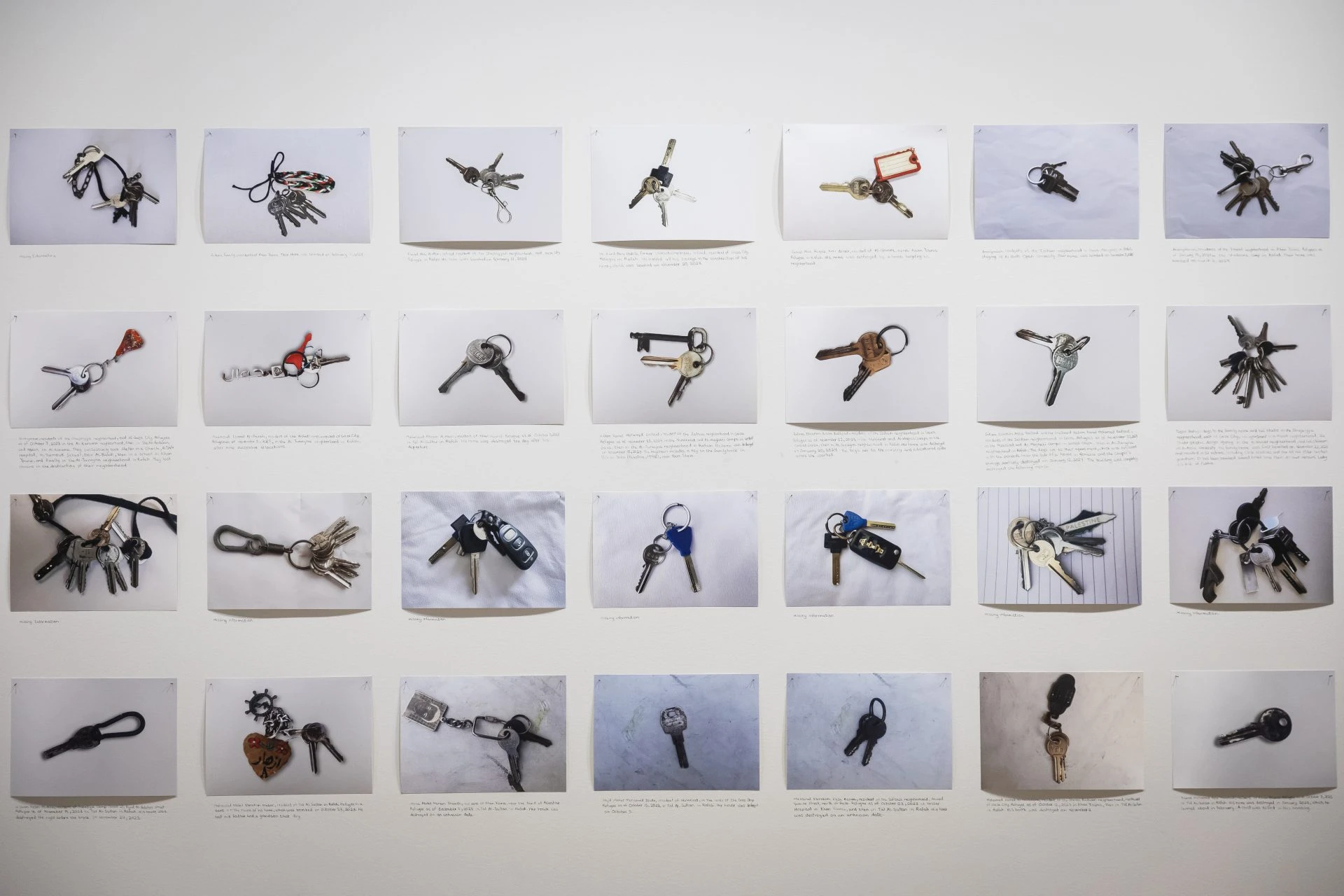
ArtCut - Triennial of Art of the Catholic Universities: Homecoming
By Dela Christin Miessen
Related Posts
Article
13 NOV 2026
Jenny Holzer: words that seduce
By Débora Valeixo Rana
Article
17 SEP 2026
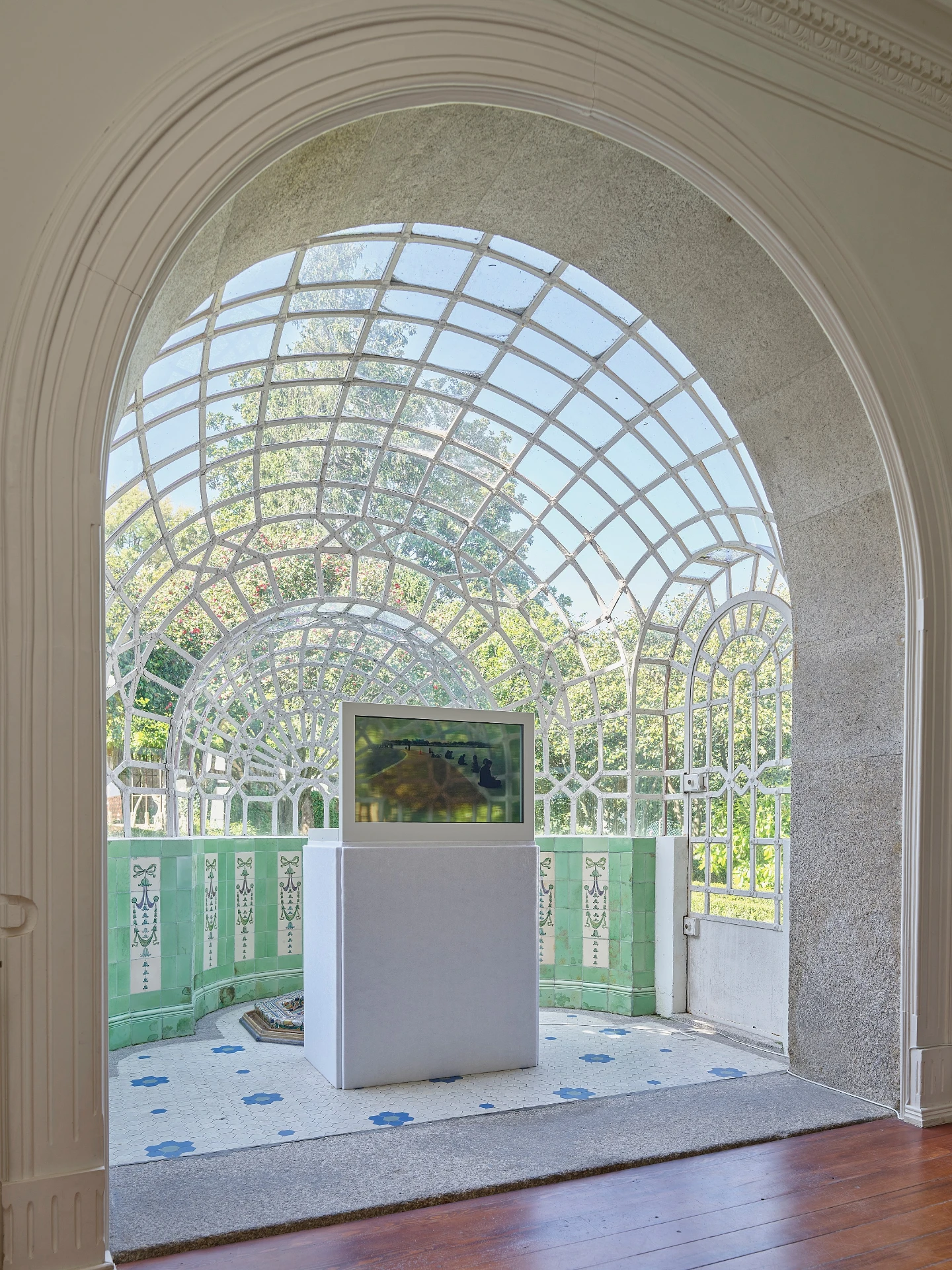
It´s a pink area, by Marc Kokopeli and Sydneys Schrader
By Débora Valeixo Rana
Article
01 APR 2026
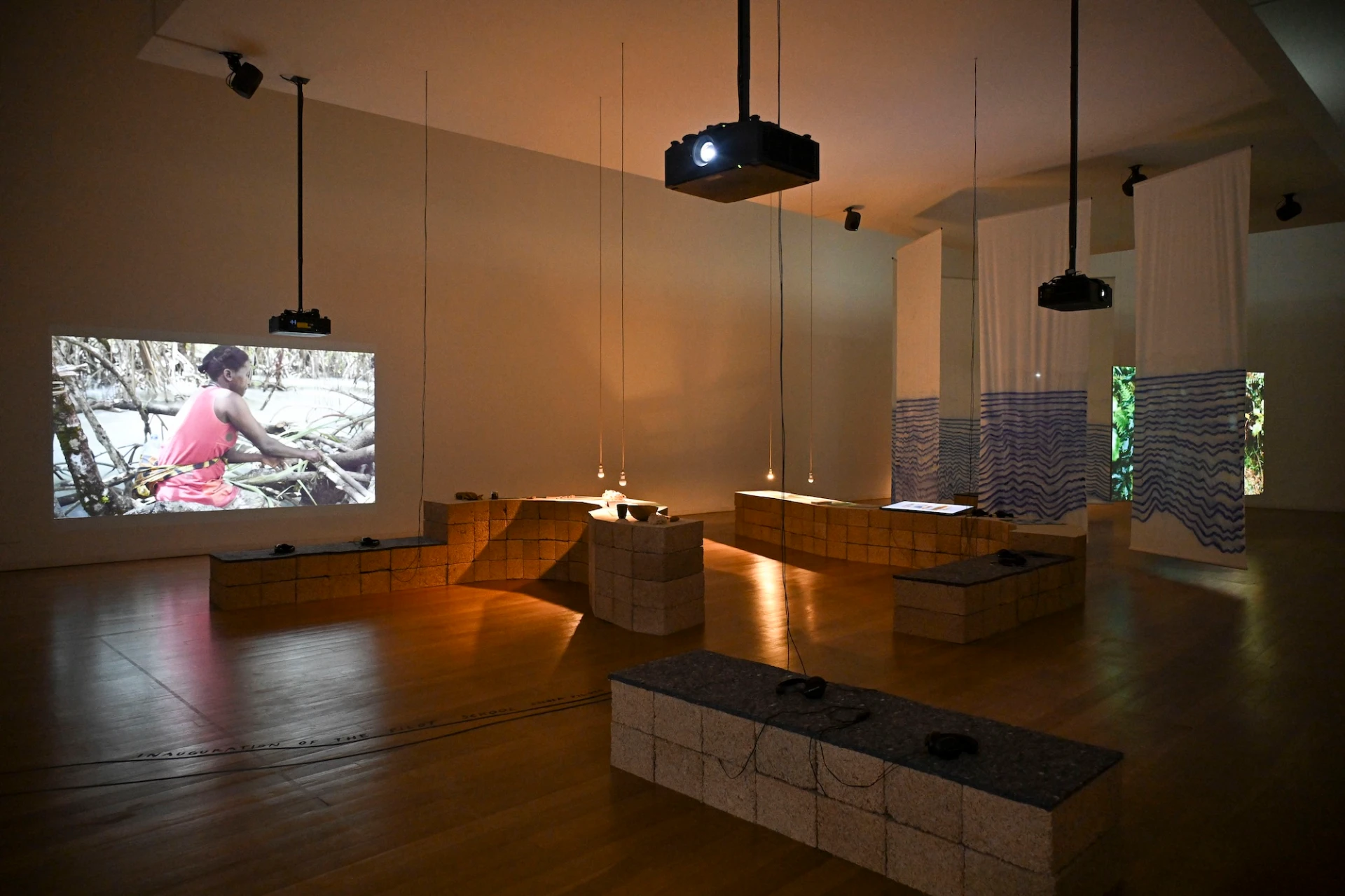
Meteorizações, by Filipa César
By Débora Valeixo Rana
Article
06 FEB 2026
Traslados, by Marcelo Moscheta
By Débora Valeixo Rana