article
Retirar a gravidade à queda, by Carolina Serrano
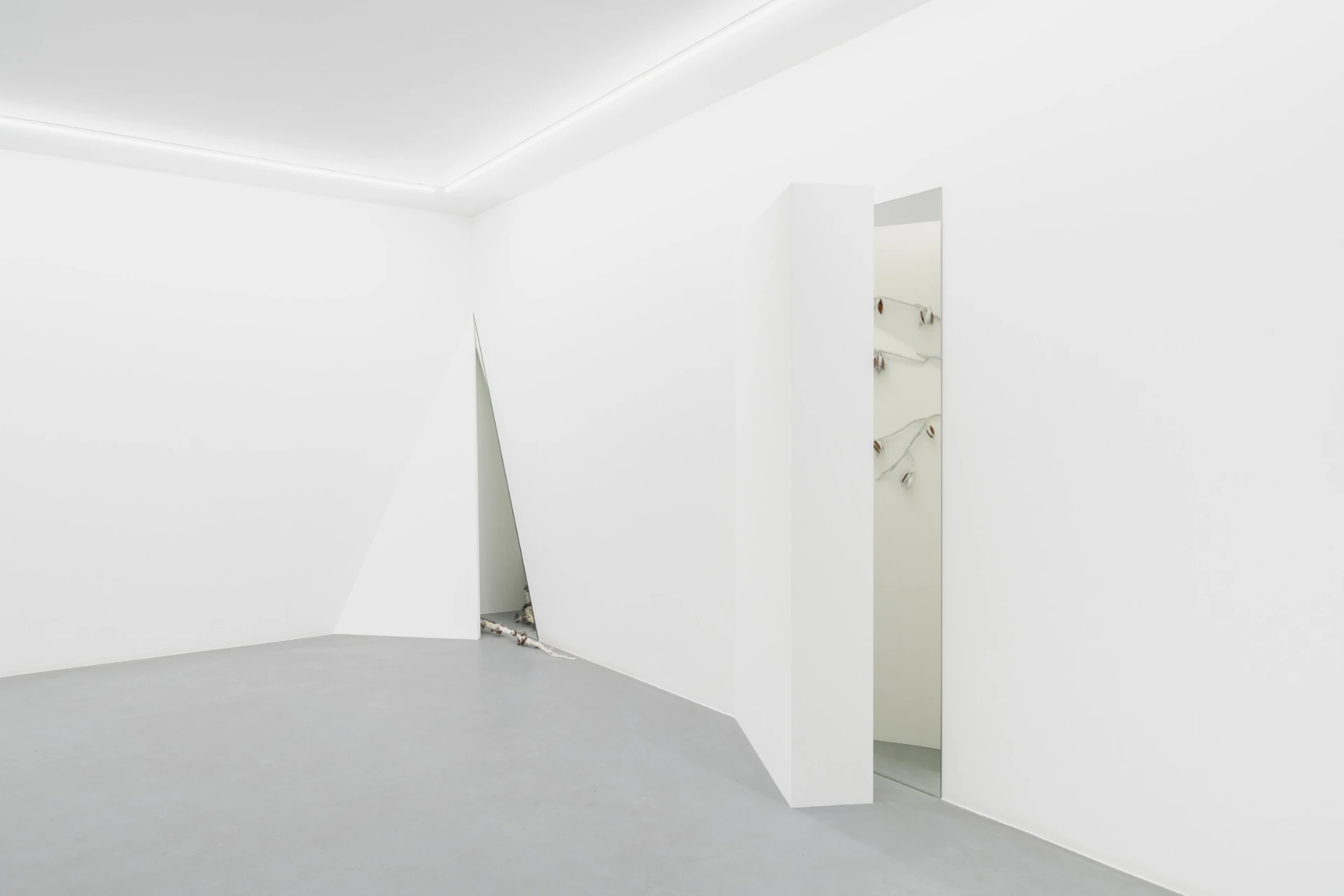
At first glance, the gallery seems empty. After the first few steps, perception adjusts, and it becomes clear that the work´s location does not coincide with the immediate expectation of an exhibition space. The first pieces are not presented in our field of vision: they are behind the walls, integrated into an architecture built for this exhibition, where the very body of the gallery infiltrates the body of the artwork and, in this gesture, also displaces our body, summoning it to the search.
We are thus introduced to Carolina Serrano's first solo exhibition at the Balcony gallery, where access to the works depends on an active relationship with the space, requiring our bodies to lean forward and our gaze to adjust to find what is not immediately revealed. This initial detour organizes the entire exhibition: seeing becomes a process of displacement and approach that leads to a succession of subtle obstacles that continually reconfigure the viewer's position.
There is a recurring interest in the crack, the half-open entrance, the fruit that, as it dries, allows us to see its seeds. In the series Digo apenas em palavras o que conheceis em pensamento, the artist makes the Hakea fruit the core of the sculpture. Peeking through, we observe branches covered in wax where only the fruit remains intact. By covering the trunks and leaving the seeds visible, Serrano shifts the focus from the object to what remains suspended within it. The same happens in the series Delírio, where the artist returns to working with the seed as a tiny body that carries the chance of becoming.
This state of latency accompanies the entire exhibition. Seeds, passages, cracks, or half-open entrances appear as recurring images; they are access points that do not close completely upon themselves and that keep the visible in tension with that which interrupts it.
These are the images we find in the series Vislumbre (2026), where the structure of the sculpture seems to take the form of an open-lidded box or a chest, which, again, dissolves into the gallery walls and only reveals itself when we approach. The image is born within it, reflected in the mirror that duplicates the point of view, and it is in this reflection that we find photographs of cave entrances and openings in rocks. The grotto, as the first refuge and first sacred gallery, emerges as a figure of access, summoning a relationship with the unknown. The mirrors – present in all the works in the exhibition – operate as return devices, inscribing the observer in the very experience of observation. It is precisely from this interplay between approach and revelation that the relationship between the cave – as a literal and metaphorical figure – and the mirror intensifies, because both prolong the movement that the work already imposes on us. We move forward to see better and, yet, the moment we get close, the mirror returns our image to us, creating an interval where the gaze becomes conscious of itself.
The cracks that Carolina Serrano opens in the walls of the Balcony were constructed to simultaneously reveal and conceal, establishing a game of approximation where we are the ones who have to discover and persist, giving form to the word "search." This movement results in encounters with objects and images that, at first glance, were not visible, and it is in this unexpected emergence that new questions overlap with the previous ones.
It is this movement of curiosity that guides us through the exhibition Retirar a gravidade à queda, a title that suggests precisely the transformation of the fall into a state of suspension and possibility. Instead of dissolving the weight of the unknown, the exhibition seems to shift it to the very experience of seeing, making what we see always dependent on our approach and how we position ourselves in the space. The gaze neither fixes nor resolves itself, continuously adjusting to what is being revealed by the exhibition itself.
BIOGRAPHY
Laurinda Branquinho (Portimão, 1996) has a degree in Multimedia Art - Audiovisuals from the Faculty of Fine Arts of Universidade de Lisboa. She did an internship in the Lisbon Municipal Archive Video Library, where she collaborated with the project TRAÇA in the digitization of family videos in film format. She recently finished her postgraduate degree in Art Curatorship at NOVA/FCSH, where she was part of the collective of curators responsible for the exhibition “Na margem da paisagem vem o mundo” and began collaborating with the Umbigo magazine.
ADVERTISING
Previous
agenda
24 Jun 2026
Applications open for the EDP Foundation New Artists Award 2026/27 until July 15
By Umbigo
Next
article
24 Jun 2026
DAWN, de João Pedro Vale + Nuno Alexandre Ferreira
By Ana Grebler
Related Posts
article
11 AUG 2026
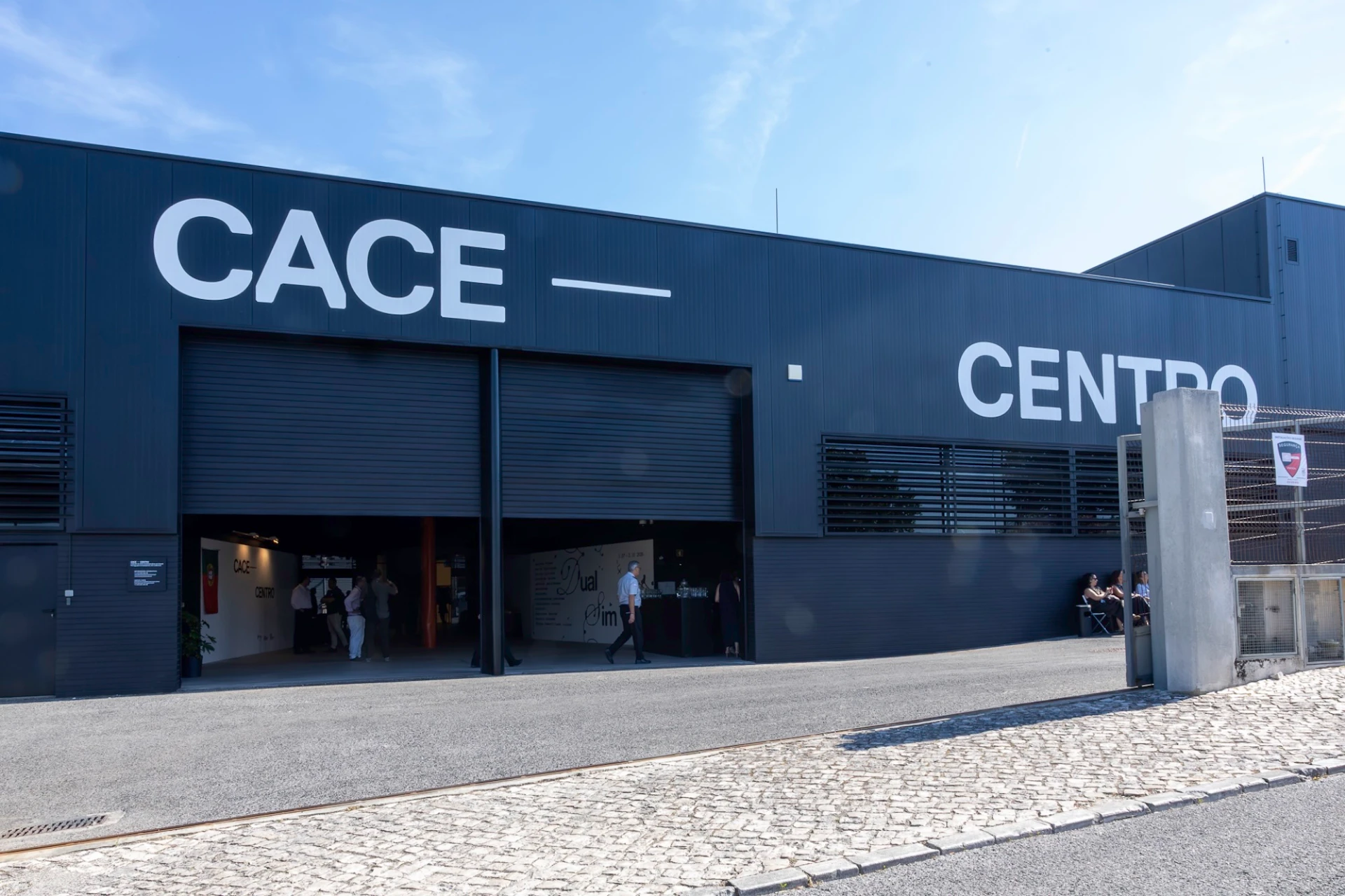
Dual Sim at CACE-CENTRO: what a collection produces
By Laurinda Branquinho
article
24 JUN 2026
Retirar a gravidade à queda, by Carolina Serrano
By Laurinda Branquinho
article
25 MAY 2026
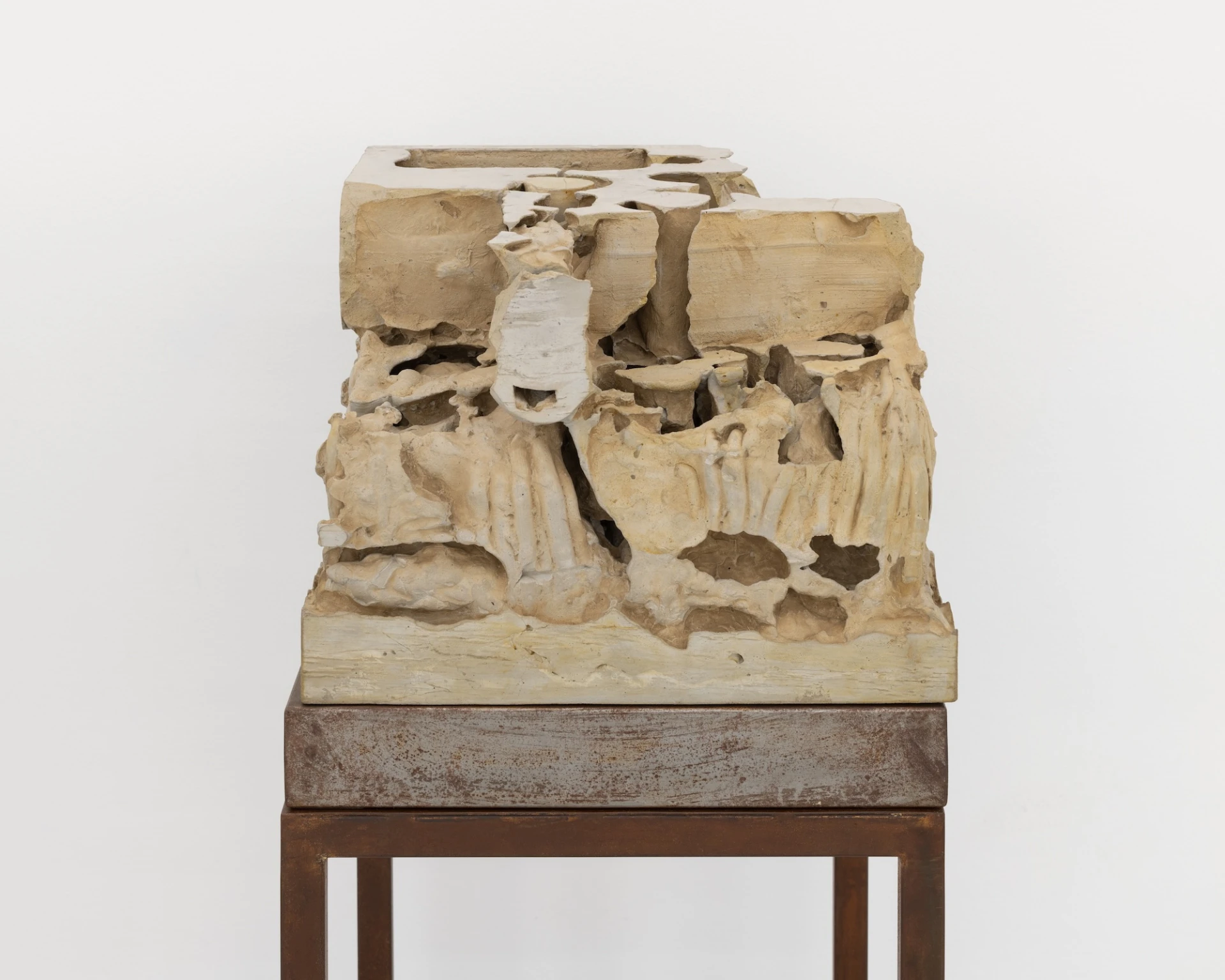
Terra Poética: Ana Maria Maiolino at MAAT
By Laurinda Branquinho
article
20 APR 2026
Interview with João Marques, author of the Umbigo.space cover
By Laurinda Branquinho