article
Visceral Hum: June Crespo at Kunsthalle Lissabon
“Listening to hyle, and experiencing the exhibition itself, I felt as though I had entered an Earth Hum made temporarily tangible and audible. Crespo indeed does not reproduce the sound of the Earth itself, but generates a similar perceptual reversal: what we usually understand as solid and inert, walls, metal, architecture, begins to feel unstable, resonant and alive.”
In the 1990s, scientists began to identify a continuous seismic vibration running through the Earth, oscillating at frequencies far below the threshold of human hearing. This phenomenon became known as the Earth Hum: a strange, constant murmur, suggesting a planet that, even in apparent stillness, is never entirely still.
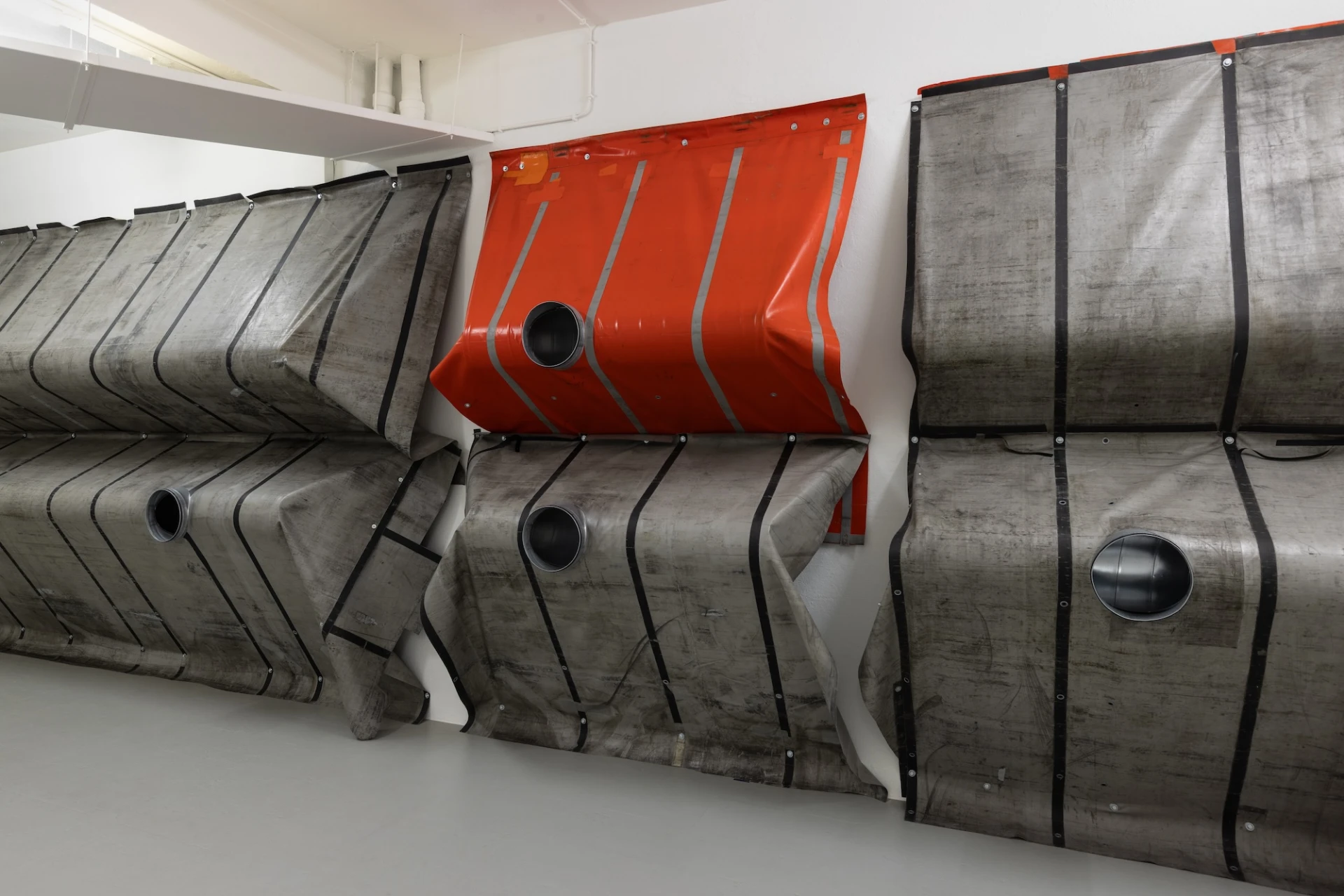
At Kunsthalle Lissabon, in the subterranean exhibition space, June Crespo’s exhibition MÁS GRAVES unfolds through three works, the most prominent of which is the large-scale installation that gives the title to the show. In this piece, ventilation ducts and truck tarpaulins are reassembled into a structure extending across the main wall. The industrial elements appear to belong simultaneously to the infrastructure of the building and to something anatomical: tubes become cavities, organs and conduits through which one could imagine a corporeal energy passing, almost like a breath. Rather than revealing the body, as in much of Crespo’s practice, the work materialises it through structures of support, industrial materials, openings and tensions.
This visceral breath becomes somewhat tangible through hyle (2026), a sound work developed by Crespo in collaboration with fellow artist Estanis Comella, which originates from a recording made inside a pipe that vertically crosses the building where Crespo’s studio is located in Bilbao. At Kunsthalle Lissabon, the sound is diffused in two directions: one speaker projects it into the open exhibition space, towards the visitor, while another faces the opposite direction, sending it into the building itself and activating its hidden cavities. Between these two sonic directions sits another work by Crespo, No osso (occipital) (I) (2026), embedded in the wall opposite MÁS GRAVES (2026) as if it had been built into the architecture itself. Its presence makes the wall become almost a resonating cavity, further blurring the distinction between artwork, architecture and body.
The sound therefore does not accompany the installation as a soundtrack: it seems to inhabit it. Together, MÁS GRAVES, hyle and No osso (occipital) (I) produce the strange sensation that this sonic presence is emerging from the organs, the viscera, of the building itself. The wall becomes a resonating body and the ventilation ducts, perhaps, its gills. Through June Crespo’s intervention, sculpture and architecture begin to dissolve into one another, as if the building itself could breathe, vibrate and emit its own frequencies.
There is something telluric in these vibrations. They evoke a subterranean tension, the feeling of matter holding energy before an event: not the sound of an earthquake itself, but the possibility of one. And in Lisbon, a city whose history has been profoundly shaped by seismic catastrophe, that sensation inevitably acquires another resonance.
Listening to hyle, and experiencing the exhibition itself, I felt as though I had entered an Earth Hum made temporarily tangible and audible. Crespo indeed does not reproduce the sound of the Earth itself, but generates a similar perceptual reversal: what we usually understand as solid and inert, walls, metal, architecture, begins to feel unstable, resonant and alive. MÁS GRAVES asks us not simply to look at matter, but to sense what might already be moving inside it.
The exhibition MÁS GRAVES, by June Crespo, is open until September 5.
BIOGRAPHY
Orsola Vannocci Bonsi is a cultural producer and advisor who has called Lisbon home for eight years. Through her work, she fosters connections through her research and the projects she helps bring to life. With experience as a sales director and gallery manager in various Portuguese art galleries, she was also project manager and artistic director of FEA Lisboa, founded the curatorial collective Da Luz Collective, and contributed to the programming of festivals in Italy and Portugal.
ADVERTISING
Previous
agenda
20 Aug 2026
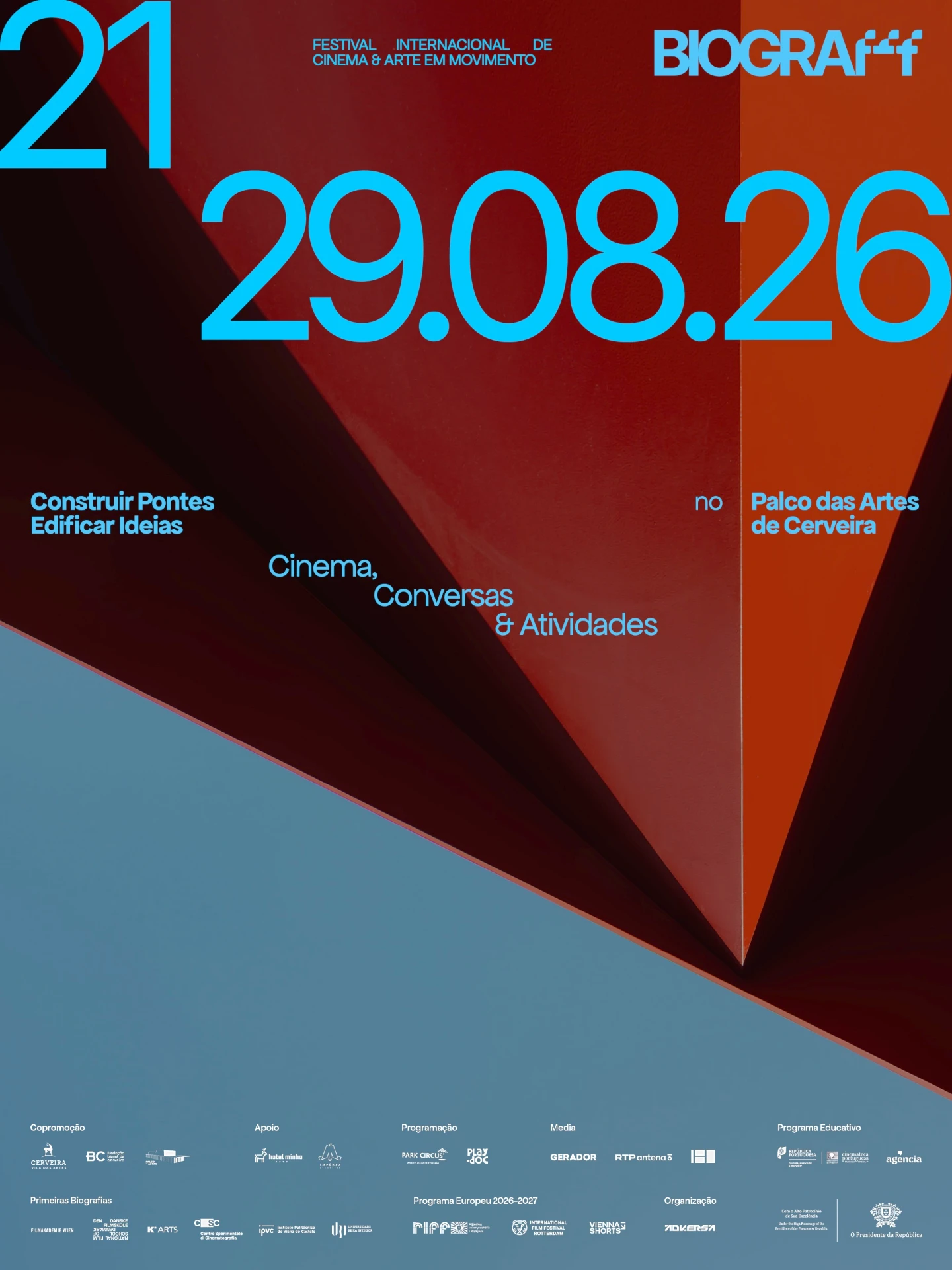
BIOGRAF - International Film and Moving Arts Festival, from 21 to 29 August, in Vila Nova de Cerveira
By Umbigo
Next
article
25 Aug 2026
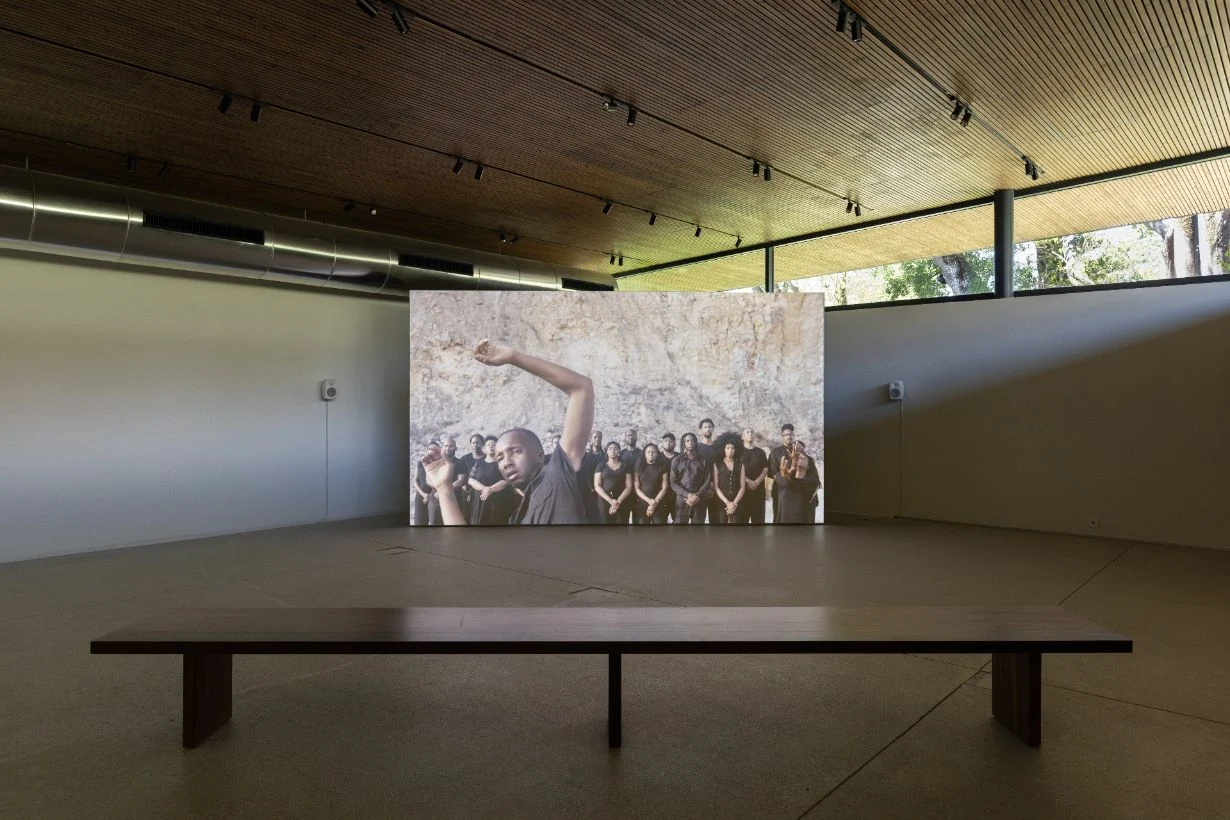
Foreign Monuments: Grada Kilomba at Fundação Albuquerque
By Tomás Camillis
Related Posts
article
21 SEP 2026
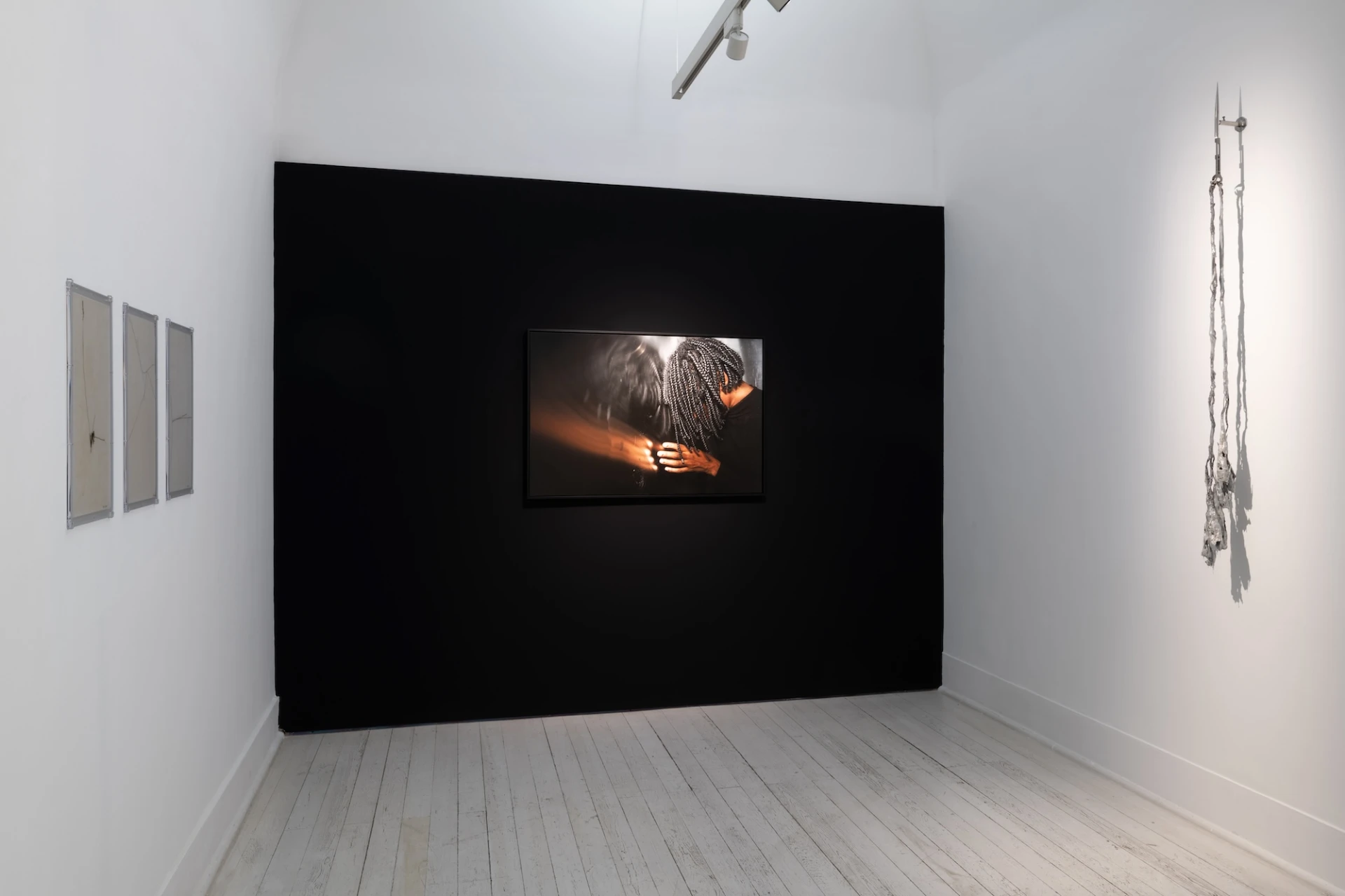
Interview with Germano Dushá, curator of 'Ultratremor' at the Museu Nacional de Arte Contemporânea - Museu do Chiado
By Orsola Vannocci Bonsi
article
21 AUG 2026
Visceral Hum: June Crespo at Kunsthalle Lissabon
By Orsola Vannocci Bonsi
article
16 JUL 2026
Walking, Therefore Perceiving: On Luísa Jacinto's So Many Names
By Orsola Vannocci Bonsi
article
14 MAY 2026
La Chantin, by Cisco Merel: the shell we are
By Orsola Vannocci Bonsi