article
Visions of Transit and Apocalypse in Klaipėda - Klaipeda Biennale of Contemporary Art
Conceived under the theme Sunset Every Two Years, this may well be the smallest art biennial of 2025, yet it is arguably among the most poetic.
The narrative of Orbital (2023), Samantha Harvey’s Booker Prize–winning novel, unfolds over the course of a single day, punctuated by sixteen sunrises and sunsets as the International Space Station circles the Earth. Enclosed within the craft, the astronauts unexpectedly encounter a space of harmony and sustained contemplation—forms of attention and slowness rendered nearly impossible in their terrestrial lives. Observing the planet from above, they experience the sunset not as a spectacle but as a repetition: a routine marvel whose emotional intensity is heightened by isolation and ecological anxiety. Multiplicity does not diminish meaning; it recalibrates it.
Now imagine the inverse: a world in which the sun surrenders its fire only once every two years. The horizon would become a site of collective anticipation, drawing observers like pilgrims toward a singular, golden event. When the sky finally bled into crimson and violet, it would feel as though the Earth itself were holding its breath—a fleeting masterpiece suspended between presence and disappearance. Each rare sunset would mark an ending and a renewal, a ritual of impermanence in which beauty asserts itself precisely through its refusal to endure.Such a thought experiment clarifies the affective power of rarity. What occurs infrequently—like a celestial phenomenon—demands attention, invites reflection, and accrues emotional weight. The sunset, already a symbol of closure and continuation, becomes, in its scarcity, a compressed cycle of loss and promise. This logic of temporal condensation closely aligns with the curatorial premise of the 1st Klaipėda Biennial of Contemporary Art, held in September and October 2025 at the Klaipėda Cultural Communication Centre (KCCC), under the artistic direction of Valentinas Klimašauskas, current director of CAC Vilnius. What emerges most strikingly in the biennale is a tension between modesty of scale and ambition of poetic gesture. From the outset, the biennial resists the theatrical sweep that often characterises such events. Confined primarily to the Klaipėda Culture Communication Centre (KCCC), its exhibition architecture—designed by Gabrielė Černiavskaja from repurposed wooden panels—provides a measured, material grounding for works that otherwise gesture toward expansive temporal and ecological themes. The hand-crafted wooden structures, functioning as frameworks and benches, open up the galleries without overpowering them, allowing light and air to circulate freely, much like the winds that sweep Klaipėda’s Baltic horizon. This architecture speaks quietly but insistently to the biennial’s commitment to situating art within an embodied sense of place—the port city as an infrastructural and affective node of transit rather than a backdrop for spectacle.
Even within Europe, Klaipėda remains largely unknown: a Lithuanian port city on the Baltic Sea, often described as the “city of sunsets.” Situated at the country’s westernmost edge, the city faces directly toward the open sea, offering uninterrupted views of the sun setting over the water—an experience unavailable in most other parts of Lithuania. The Baltic coast’s volatile climate, saturated with moisture and shifting light, produces skies of unusual intensity, where the sea and clouds dissolve into bands of amber, pink, and violet. For decades, locals and visitors alike have gathered at the Klaipėda pier or Smiltynė Beach to witness this daily disappearance, folding the sunset into the city’s collective rituals and imaginaries. These atmospheric conditions have become inseparable from Klaipėda’s cultural identity. The city actively cultivates its image as a place of endings and afterglow, while poets, artists, and photographers repeatedly return to the sunset as a figure of transience, longing, and temporal suspension. Against this backdrop, the biennial does not merely adopt the sunset as a metaphor; it mobilizes it as a curatorial condition—one that frames art as an encounter with thresholds, cycles, and the fragile intensity of moments that cannot be held.
Staged primarily at the Klaipėda Cultural Communication Centre, with extensions into public space—including works by Nina Beier, Kate Novitskova, and Lasia Vasylchenko—the biennial remains closely attuned to the Baltic region and its entangled geographies. Lesia Vasylchenko’s video Tachyon (2022) casts an eerie counterpoint to these interior contemplations. Shown daily on the Port Authority’s outdoor screen, Tachyon imagines two suns and two sunsets above Klaipėda, blending thousands of sunrise images with algorithmically generated catastrophes. The work’s speculative formalism situates the city under a doubled sky—simultaneously mythical and machine-imagined—drawing attention to both ecological precarity and the anxieties of contemporary geopolitics. Yet the piece’s presence also raises a pointed question: do inhabitants ever look upward to see what the artwork proposes? This tension between artistic proposition and urban everyday life encapsulates one of the biennial’s core challenges.
Rather than claiming a stable position, it situates itself in transit: between land and sea, history and speculation, visibility and fading light. Transit—from the Latin transitus, denoting passage, crossing, or transformation—operates as the conceptual anchor of the 1st Klaipėda Biennial. Several artworks stand out for how they activate and refract the biennial’s core theme of transit like Karla Gruodis’ X Beats per Minute (1996), which reverberates with physical and affective intensity. The video’s montage—where a foetus’s heartbeat morphs into the pulse of a bodily techno rhythm—captures a primal cadence that seems to sync with both the viewer’s bodily temporality and the broader, slower temporality of the sunset motif. Here, transit is literalised as a rhythm of life, a beat unfolding in relation to the body’s own durations. Another striking piece os Simon Dybbroe Møller’s Plenty of Time (2023), which places the viewer in what feels like a deserted lobby or forgotten industrial threshold. The work conjures a profound sense of absence and suspended duration. The pieces—objects that seem both familiar and alien—do not narrate so much as embody a melancholic postponement of presence, echoing a city in the midst of transition: one caught between its industrial past and its cultural future. Yet what becomes apparent while moving through the exhibition is that Transit is less a theme to be decoded than a condition one inhabits. The biennial does not ask to be read linearly; it is experienced as a sequence of thresholds, pauses, and temporal dislocations. The biennial itself, cyclical and provisional by nature, mirrors this logic: it appears, withdraws, and returns, leaving behind residues rather than conclusions.
In astronomical terms, a transit describes the brief passage of one celestial body across another—an event that elongates perception and suspends ordinary time. This sense of stretched, desynchronised temporality permeates the exhibition. Walking through the venues, I repeatedly felt that time was neither moving forward nor standing still, but folding in on itself. The works seem to exist in a shared dusk: not yet gone, not fully present. This sensation resonates with Klaipėda’s self-image as “the city of sunsets,” where the day’s most intense chromatic moment is also its point of disappearance. The sunset operates here not as a metaphor to be illustrated, but as a lived atmospheric condition. Its repetition—daily, inevitable, never identical—echoes the biennial’s own structure. It is in these moments of fading light that the exhibition feels most precise: attentive to impermanence without romanticising it. Many of the works on view are not newly commissioned but displaced, carried across contexts. Their prior lives are perceptible. Rather than being neutralised by reinstallation, this sense of having “been elsewhere” generates friction. Meaning emerges through relocation, through the subtle misalignment between past and present frameworks.
Transit also asserts itself as a historical condition. The Klaipėda region bears the weight of successive political, territorial, and ideological transformations, and this instability quietly structures the exhibition. Archival materials and historical photography do not function as background or illustration; they interrupt the present, producing moments where temporal layers refuse to settle. At times, I found it difficult to distinguish where documentation ended and speculation began—a productive ambiguity that mirrors the region’s unresolved histories. As a port city, Klaipėda is shaped by movement as infrastructure. Freight, ferries, passengers, and data pass through continuously, often without leaving visible traces. This logistical reality grounds the biennial’s engagement with metaphorin its original Greek sense—metapherein, to carry across. What struck me was how this logic extended beyond language into spatial and architectural decisions. Poetry here is not an ornamental layer but a structuring force, shaping how bodies move, pause, and orient themselves within the exhibition. Viktor Timofeev’s site-specific installation A Window Without a Building, located on the second-floor balcony of the Klaipėda Railway Station, articulates one of the biennial’s most precise meditations on desynchronised time and architectural fiction. Framed as a two-channel projection with sound, the work transforms an ordinary infrastructural threshold into an illusory viewpoint: a window that opens onto a cityscape that does not exist. Light appears to drift and stall, while a clock runs backwards, its numerals composed of Cyrillic letters that mutate into cryptic, almost hieroglyphic signs. This reversal of temporal and semiotic order destabilises the viewer’s sense of orientation, collapsing distinctions between inside and outside, matter and simulation. Situated within a railway station—a paradigmatic space of transit and waiting—the work resonates acutely with the biennial’s broader concerns, turning architecture into a cognitive device rather than a stable container. Timofeev does not illustrate transit so much as enact it: as a perceptual loop, a linguistic glitch, and a suspended state in which time appears to hesitate, fracture, and quietly resist linear progression.
The maritime ecology of the region introduces a more unsettling register of transit. The Baltic Sea, burdened with submerged chemical weapons, industrial waste, and extractive histories, becomes an archive of delayed consequences. These conditions are not abstract. They surface in the exhibition as a diffuse awareness of toxicity—ecological, political, and affective. The legacy of environmental activism in the region, from Žalias Lapas’ Return of Angakokas to the campaigns for Neringa’s national park status, lingers as a reminder that art and protest here have long shared a horizon. Moving through the works, I sensed an undercurrent of unease: a recognition that pollution, like history, does not remain contained. Yet the “sunset land” is not framed solely through damage or loss. It also appears as a regenerative landscape—one associated with rest, desire, and recalibration. Klaipėda oscillates between being a logistical hub and a peripheral retreat, a place where time seems to slow down almost against one’s will. This deceleration produces a subtle shift in perception. The exhibition taps into this sensation, allowing moments of vulnerability, intimacy, and bodily awareness to surface. Here, transit becomes experiential: a temporary loosening of political, sexual, and social constraints, and a cautious opening toward other modes of being. Janina Sabaliauskaitė’s photographic series Flirt with the Baltic is particularly strong in flipping the biennial’s geopolitical subtext into the realm of the erotic and corporeal. Produced on site during the artist’s residency, the images enact a kind of body-to-landscape dialogue: each photograph captures acts of caress, embrace, or playful entanglement with the rocky shore of the Dutchman’s Cap. Echoing Rimantas Dichavičius’ photographs, where the nude idealised bodies of young women lie on a beach, or writhe among the dunes, his work problematises the distinction between subject and environment and reframes transit as intercorporeal exchange—the body as terrain, the shore as partner. The series brings a sly, playful charge to the biennial’s broader concerns with movement and affective belonging.
Through these overlapping registers, Transit unfolds as a historical, logistical, ecological, extractive, aesthetic, and poetic condition. What stays with me after leaving the exhibition is not a set of arguments but a mood: one of suspension, attentiveness, and unresolved movement. The 1st Klaipėda Biennial emerges not as a declaration but as a response—to the absence of large-scale, recurring contemporary art platforms in Western Lithuania, and to the specific rhythms of a maritime city shaped by arrivals, departures, and afterimages. Taken together, the works on view reveal a biennial that is at once introspective and outward-reaching—interested not in dazzling scale but in attuning to the temporal and material rhythms of its place. The architectural simplicity of KCCC’s display systems allows each work to resonate spatially, encouraging lingering and attentive looking rather than rapid circulation. At the same time, the expansion of art into public sites—whether on screens, streets, or museum facades—gestures toward a dialogue between the institution and the city’s lived environment.
In an era when every city vies for cultural prestige through its own biennial, transforming these events into instruments of self-branding, the proliferation of such exhibitions—from global metropolises to small nations like Lithuania—raises a pressing question: do we still need another biennial, or has the format itself become superfluous? But we should admit that in the current Lithuanian context—where major biennials proliferate yet often align with metropolitan centres—Klaipėda’s inaugural biennial stakes a claim for regional specificity and resonance. It neither mimics larger models nor attempts to annex the biennial format wholesale; instead, it experiments with how international contemporary art might emerge from and contribute to a city’s ongoing transformations. The biennial occupies a cultural terrain that is still in formation—a city negotiating post-industrial legacies, demographic shifts, and ecological anxieties. By engaging these conditions both poetically and critically, Sunset Every Two Years positions itself not as a polished global event, but as a site-responsive proposition in which art and context remain in dynamic, unsettled conversation.
BIOGRAPHY
Alexander Burenkov is an independent curator, cultural strategist and writer based in Paris. His work extends beyond traditional curatorial roles and includes organizing exhibitions in unconventional spaces, often emphasizing multidisciplinarity, interest in environmental thinking and post-digital sensibilities, encompassing projects such as Yūgen App (launched at Porto design biennale in 2021), a show in a functioning gym or online exhibition on cloud services and alternative modes of education, ecocriticism and speculative ecofeminist aesthetics. His recent projects include Metabolizing Time: Propositions of Countering Linearity (MU Hybrid Art House, Eindhoven, 2026); Time That Grows Slowly (Dom Art Projects, Dubai, 2026); Don't Take It Too Seriously at Temnikova&Kasela gallery (Tallinn, 2025); Ceremony, the main project of the 10th edition of Asia Now art fair (together with Nicolas Bourriaud, Monnaie de Paris, 2024); In the Dust of This Planet (2022) at ART4 Museum; Raw and Cooked (2021), together with Pierre-Christian Brochet at Russian Ethnographic museum, St Petersburg; Re-enchanted (2021) at Voskhod gallery, Basel, and many others.
ADVERTISING
Previous
article

03 Feb 2026
A Mesa Posta: The Table Set: Miguel Sánchez Lindo's year-long residency at Atelier 968
By Mariana Machado
Next
article
04 Feb 2026
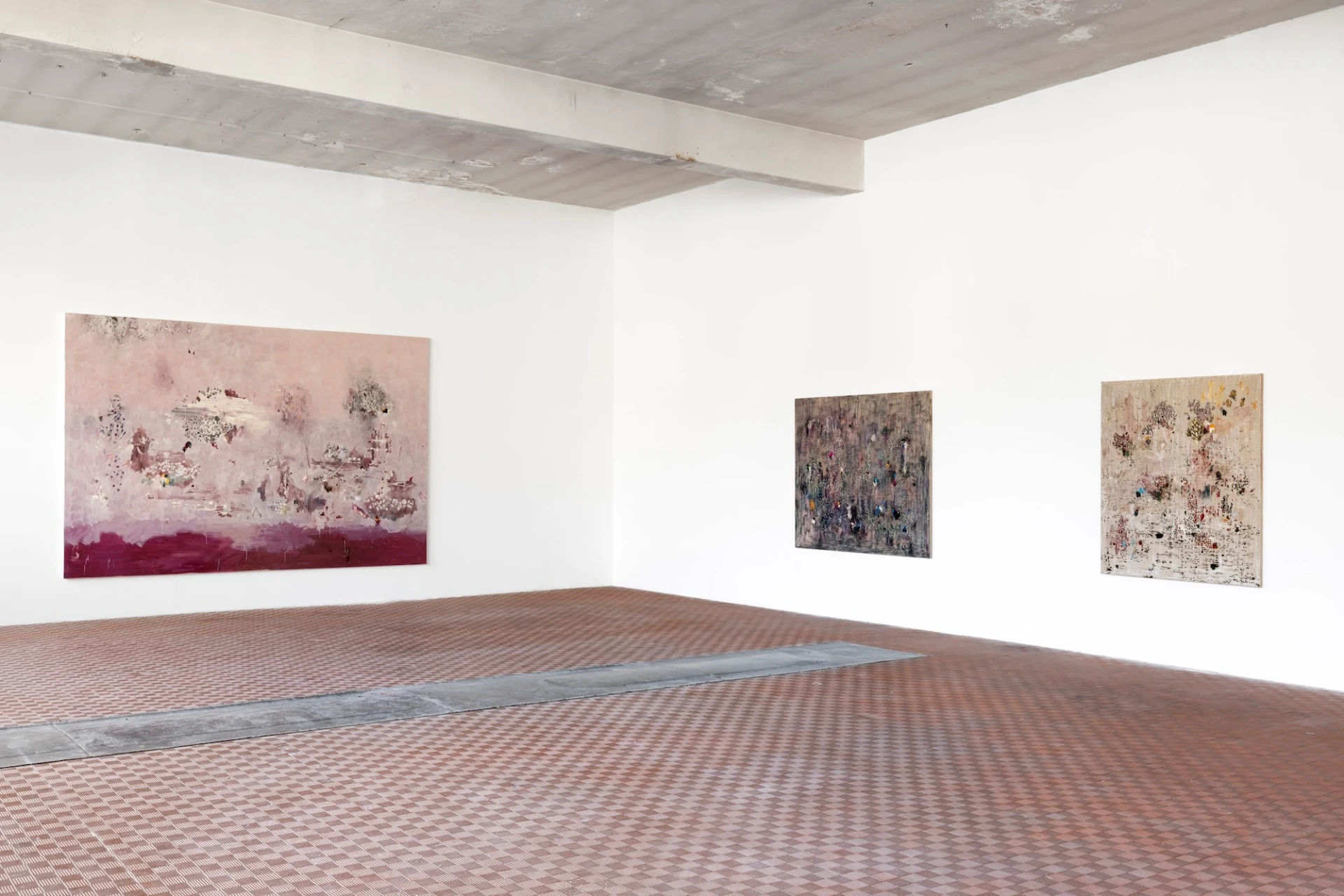
The landscape in Rodamoinho: Marina Rheingantz at the ICA in Milan
By Matteo Bergamini
Related Posts
article
03 MAR 2026
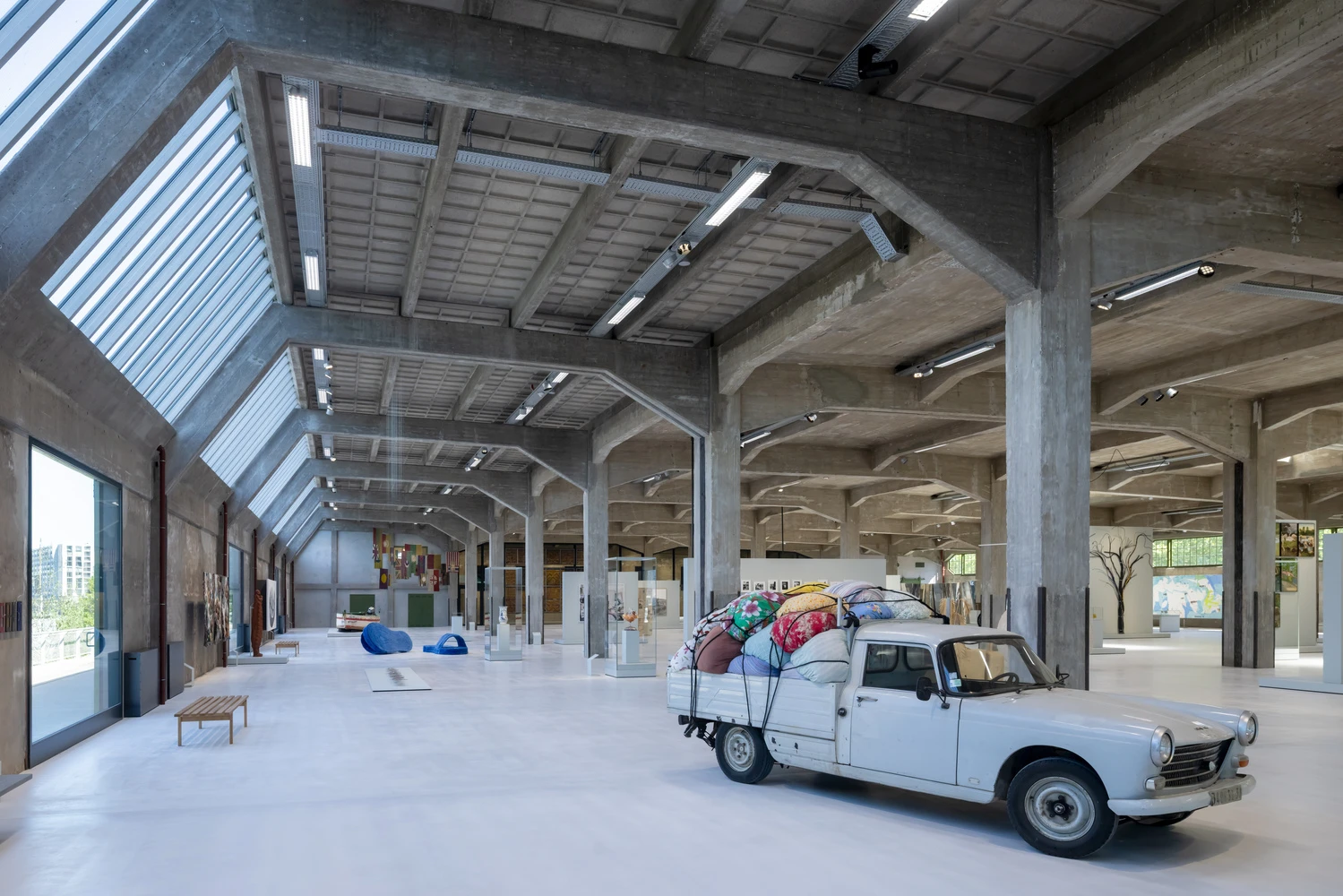
The Labubuification of Trauma: How Fenix Turns Migration into Affective Design
By Alexander Burenkov
article
04 FEB 2026
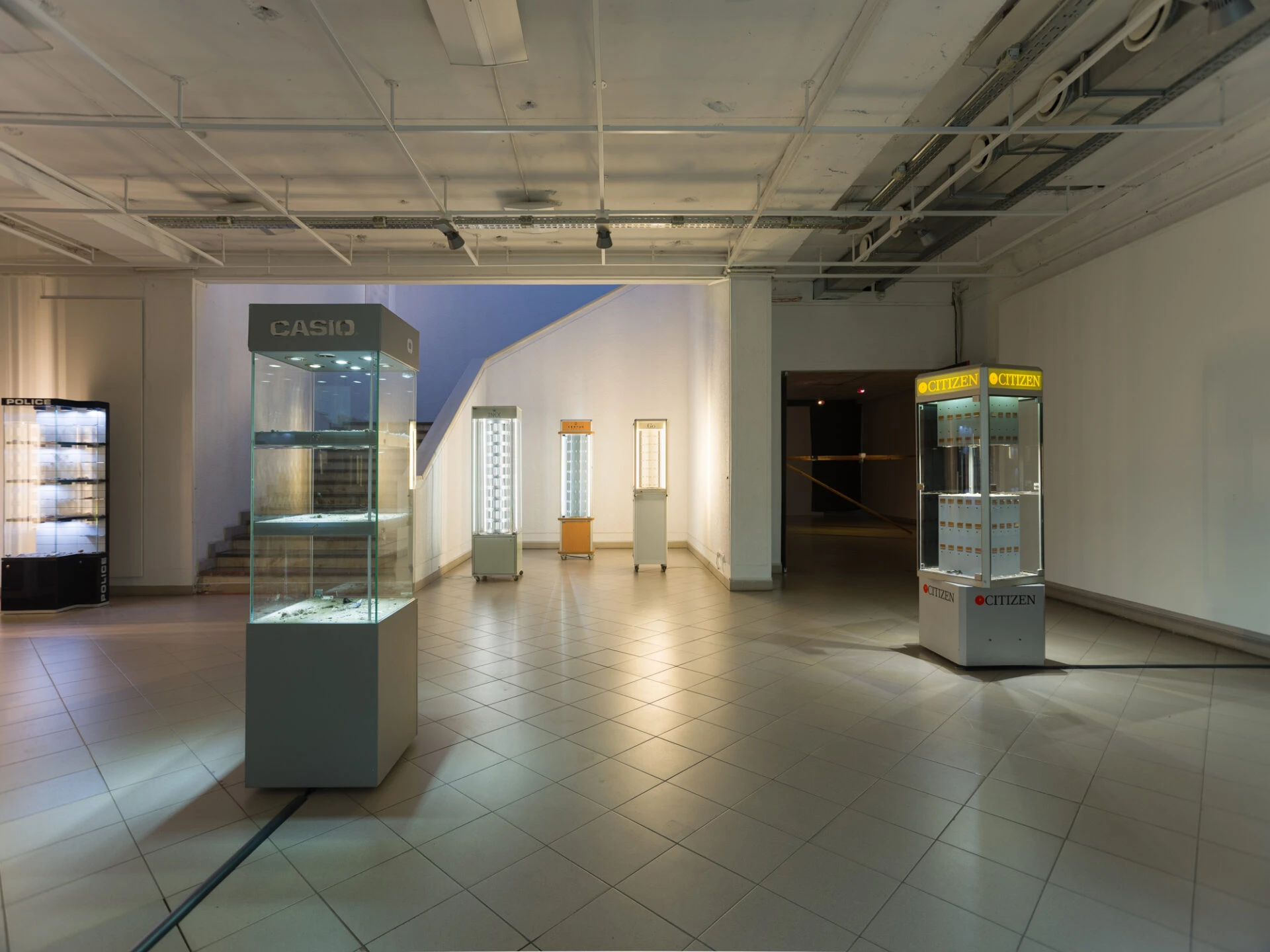
Visions of Transit and Apocalypse in Klaipėda - Klaipeda Biennale of Contemporary Art
By Alexander Burenkov
article
11 AUG 2025
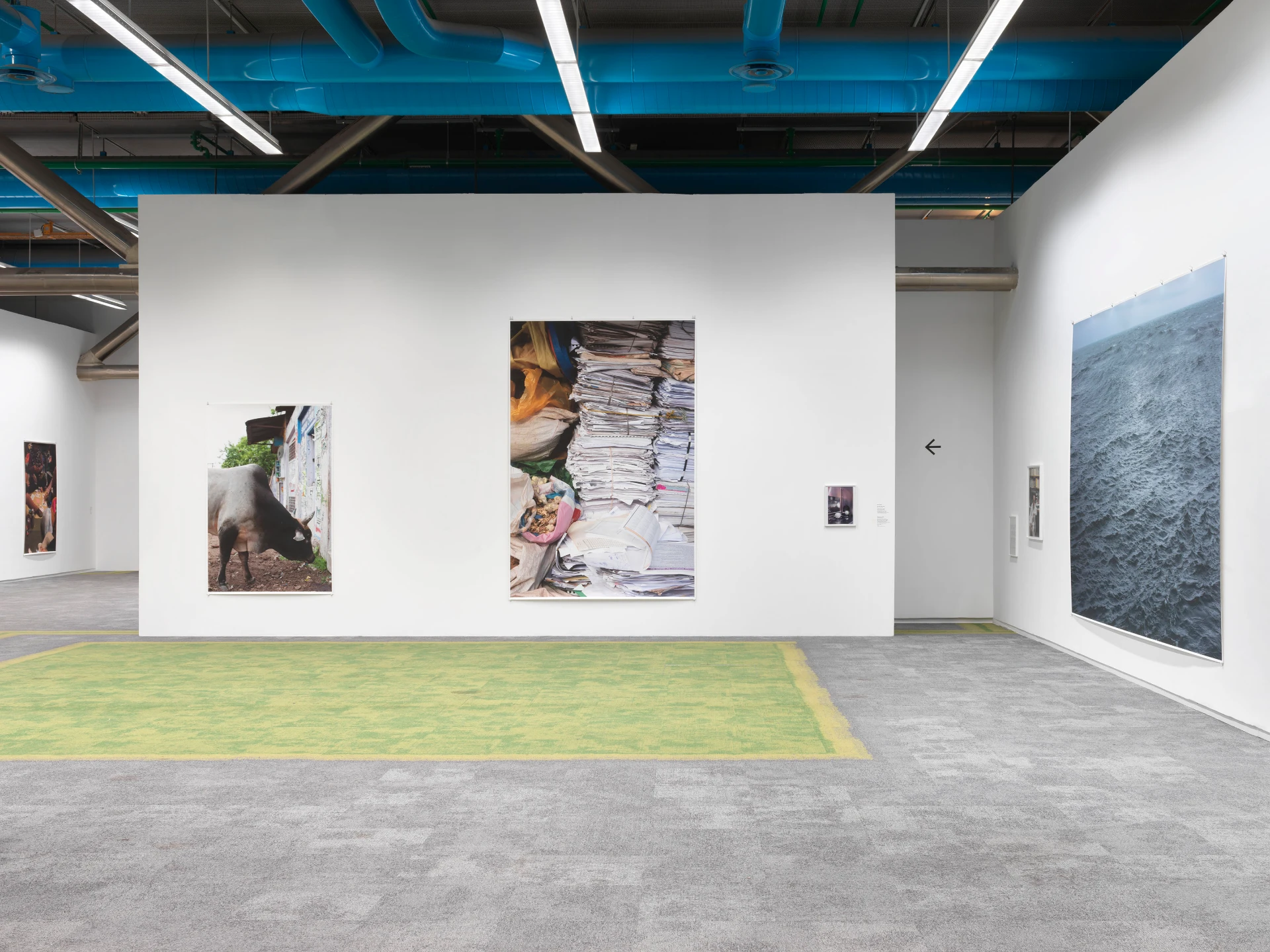
Exercises in Public Intimacy: Wolfgang Tillmans at the Centre Pompidou
By Alexander Burenkov
article
04 AUG 2025
Medardo Rosso in Kunstmuseum Basel: Illusions of Light, Dialogue with Modernity, and New Horizons for Contemporary Sculpture
By Alexander Burenkov