article
Think of Others: With <3 to Palestine at MALA
Themes of loneliness, homeland, existence, belonging, and estrangement are present across the work of Mahmoud Darwish, the Palestinian poet who writes the deepest currents of human feeling. In one of his poems, he distills a harsh landscape into a simple imperative: “Think of others.”
As you prepare your breakfast, think of others
(do not forget the pigeon’s food).
As you conduct your wars, think of others
(do not forget those who seek peace).
As you pay your water bill, think of others
(those who feed on clouds).
As you return home, your home, think of others
(do not forget the refugees in tents).
As you sleep and count the stars, think of others
(those who have nowhere to sleep).
I was excited as I made my way towards Ajuda. It was my first visit to Mala, a gallery directed by Sofia Montanha and Henrique Loja, to see the exhibition With <3 to Palestine curated by Supermala. It presents a selection of works from the homonymous project, initiated by Catarina de Oliveira approximately 2 years ago. It initially brought together over fifty artists from diverse backgrounds on an online platform; each contributing a work, a drop in the current flowing toward a ‘free Palestine, from the river to the sea.’
Shaped around this virtuous thought, much like the poem “Think of others”, the project has continued to grow, with the support of Sílvia Escórcio, Carolina Vieira, and Mariana Silva, now encompassing more than ninety artists and nearly 250 works. Its opening page presents the manifesto clearly:
“We want, above all, a ceasefire.
We want the bombs to stop.
We want universal human rights.
We want respect for Palestinian lives. Respect for the lives of all the people who have been abused, colonised, and occupied.
We want humanity.
More than fundraising we want the voices that ask, yell, demand, beg for a ceasefire to be heard.
We are turning up the volume.”
Since February 2024, the artist collective WITH <3 TO PALESTINE has raised almost 11,000 USD (approximately 10,00 EUR) to MECA for Peace, a non-profit run entirely by volunteers.
All proceeds from the artworks, priced in accessible ranges to encourage wider participation, are transferred in full to MECA (Middle East Children’s Alliance), supporting their humanitarian work.
In the exhibition’s title With <3 to Palestine, the substitution of the word Love with the digital shorthand “<3” evokes, for me, a gesture toward collective consciousness, a reminder of how the language of affection has migrated into coded signs in the digital age. In a moment shaped by digital inertia, the choice also reads as a critique of the silence and passivity that accompany technologically mediated expression.
We are all aware that the shared consciousness around the Palestinian struggle grows from an urgent principle: opposition to war, and the insistence on the right to live freely and equally.
In the book The Hundred Years’ War on Palestine, Rashid Khalidi traces this struggle over a century, from 1917 -immediately after the First World War- through to 2014, showing that Palestine has never been allowed to live in peace, not even in periods without officially declared war. Especially after the 1948 war, Palestinians became almost invisible: scarcely present in Western media, rarely permitted to represent themselves on international platforms. The Palestinian question was solely reduced to the ‘Arab–Israeli conflict,’ a framing that diminished Palestinian claims.
Nuno da Luz’s Sunbird (for Mosab Abu Toha), inscribed on a survival blanket whose metallic surface catches the light, stands at the center of the exhibition, offering these lines that listen closely to the call for a free and just life:
‘the sound of a drone
intrudes violently
it fails to move on and
leave us alone for some seconds
refuses to listen to music
or the whistling of birds.’
The exhibition’s works are not arranged under a single thematic heading, yet each carries a quiet defiance, a modest presence that joins a larger act of resistance. Some pieces speak through linguistic play; others through reflections, flickers, or vortex-like forms. On the gallery’s white floor, all the works seem to converge, as if coming together to form a single, unified artwork.
This sense of wholeness arises from the ethos behind With <3 to Palestine and from the collective philosophy that animates similar art initiatives also dedicated to supporting Palestine. After all, every effort made to prevent the erasure of an entire culture becomes profoundly important.
Israel’s attacks on Gaza have also inflicted irreversible devastation on the city’s cultural heritage. Religious sites, museums, archaeological structures and historic buildings, all have been reduced to rubble, their stories silenced. Shababeek for Contemporary Art, a leading art institution in Palestine, continues to nurture creativity by running art workshops for women and children in a tent; its building had been razed in 2024 after attacks on Al-Shifa Hospital.
Written in 1914, the words of the Palestinian journalist Yusuf al-‘Isa, known as a founder of modern journalism in Palestine, expose the tragedy of a people with devastating clarity:
‘We are a nation threatened by disappearance.’
Disappearance. The most brutal threat to the right to exist.
Wars have always carried excuses like ‘defense,’ ‘possession,’ or ‘protection’, yet they bring nothing but destruction, the exact opposite of these so-called virtues. The absurdity of war continues to destroy countless lives and uproot people from their homes.
I recall the poor protagonist Giovanni Drogo in Dino Buzzati’s magnificent novel The Tartar Steppe. Drogo, after years of military training, finally takes his post at the remote Bastiani Fortress, ready to defend his homeland. His life unfolds within its walls as he waits for an enemy who never arrives. He waits so long that he eventually begins to long for their appearance, willing to give everything just to confront them, even when they emerge only as a mirage on the horizon.
But no, Giovanni Drogo never ends up defending the fortress from anyone. The long-awaited enemy never comes. And the waiting itself turns into an absurd, relentless, self-consuming form of existence.
My thoughts flow from the novel into Susana Mendes Silva’s remarkable poem, the world that we built in peace (2024):
2.
think about what the world would look like if geopolitical decisions over territories had never been made without listening to the native residents.
3.
think about what it would look like if there were no nations built on crimes, ethnic cleansing, or population displacement.
Only a path grounded in equality and justice can bring an end to the century-long conflict against Palestine, leading to the lasting peace that the Palestinian people rightfully deserve.
Among the many works featured in the With <3 to Palestine exhibition, I encountered selections made by various writers and curators. I wish to conclude this text by offering my own humble selection from among the works, as a personal reflection within this collective dialogue.
- Alisa Heil, Words don’t come easy, 2015
- Bruno Bogarim, Totem, 2023
- Catarina Bogarim, Nuvem, 2025
- Diana Policarpo, Sem título, 2024
- Filipe André Alves, Vesbio, 2025
- Henrique Loja, gate 48, 2023
- Manuel Caldeira, Sem título, (Orelha Quebrada), 2024
- Pedro Barassi, Fogo branco, 2024
- Tiago Borges, The Centre of the Dream, 2024
- Tita Maravilha, Milhão, 2025
With <3 to Palestine can be visited at Mala by appointment until December 30th with the participation of:
Adrien Missika, Alice dos Reis, Alisa Heil, Ana Cardoso, André Guedes, Ana Grebler, Ana Manso, Andreia Santana, Beatriz Neves Fernandes, Bruno Bogarim, Carolina Vieira, Carla Dias, Catarina Bogarim, Catarina de Oliveira, Constança Entrudo, Diana Policarpo, Elisa Pône, Elmira Abolhassani, Filipe André Alves, Gisela Casimiro, Gonçalo Sena, Guilherme Curado, Guilherme Figueiredo, Henrique Biatto, Henrique Loja, Inês Mendes Leal, Inês Raposo, Isabel Carvalho, Jabulani Maseko, Joana Escoval, Joana Trindade Bento, João Vasco Paiva, Lara Dâmaso, Madalena Anjos, Maja Escher, Manuel Caldeira,
Marcelo Alcaide, Maria Ana Vasco Costa, Maria Palma Dias, Maria Ventura, Mariana Tilly, Mauro Cerqueira, Mingyu Wu, Neusa Trovoada, Nikolai Nekh, Nuno da Luz, Pedro Barassi, Pedro Barateiro, Pedro Liñares, Renato Chorão, Sara Graça, Sofia Montanha, Tiago Baptista, Tiago Borges, Tita Maravilha, Uriel Orlow.
BIOGRAPHY
Ayşenur Tanrıverdi is an Istanbul-based writer, living in Lisbon since September 2022. She studied at Istanbul University and is the author of two published works of literary fiction. A regular contributor to Cumhuriyet, a major Turkish newspaper, where she focuses on Portuguese culture. Her essays and critical texts on theatre, literature, and contemporary art have also been featured in various art magazines.
ADVERTISING
Previous
article
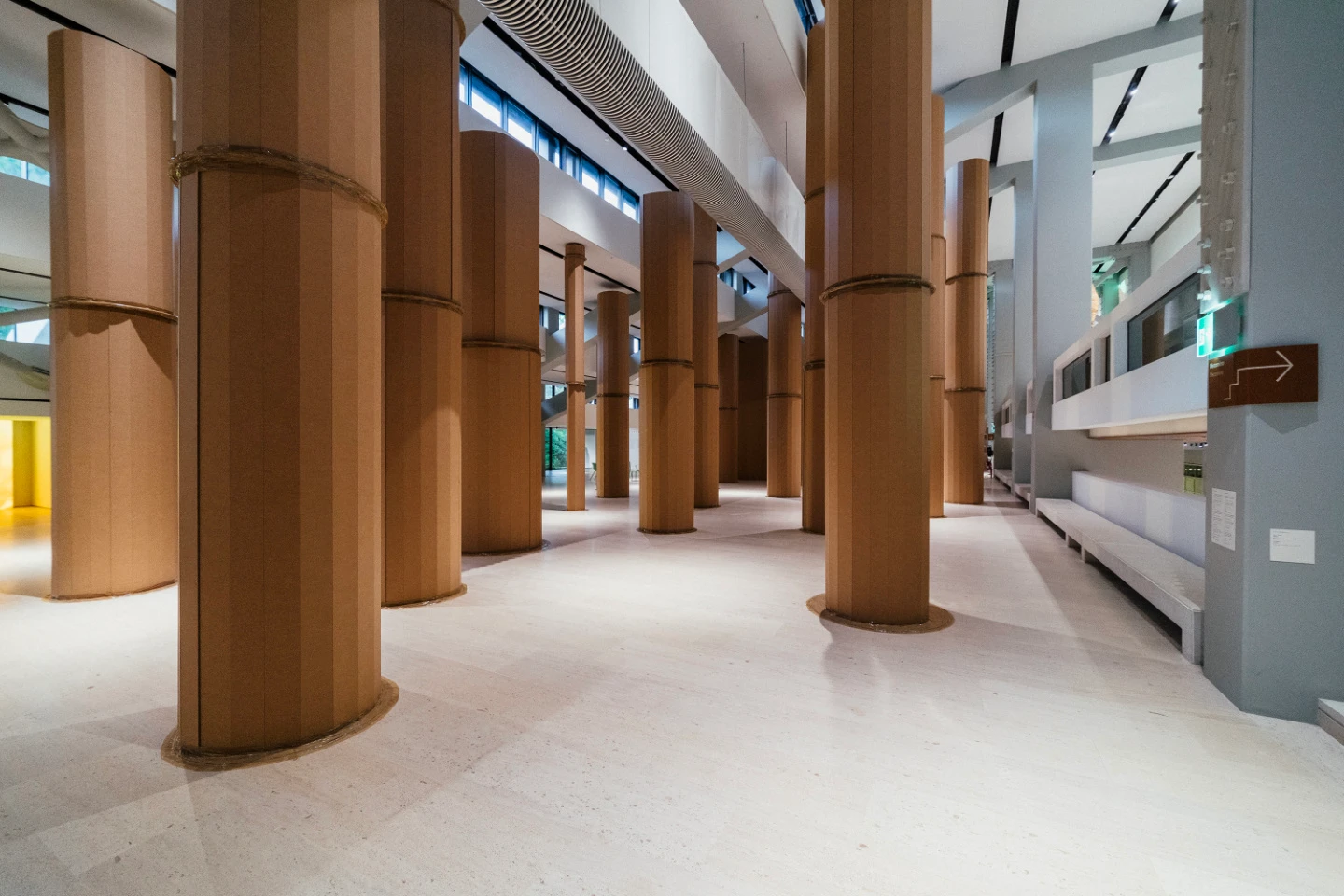
05 Dec 2025
A home in CAM, by Carlos Bunga
By Joana Duarte
Next
article
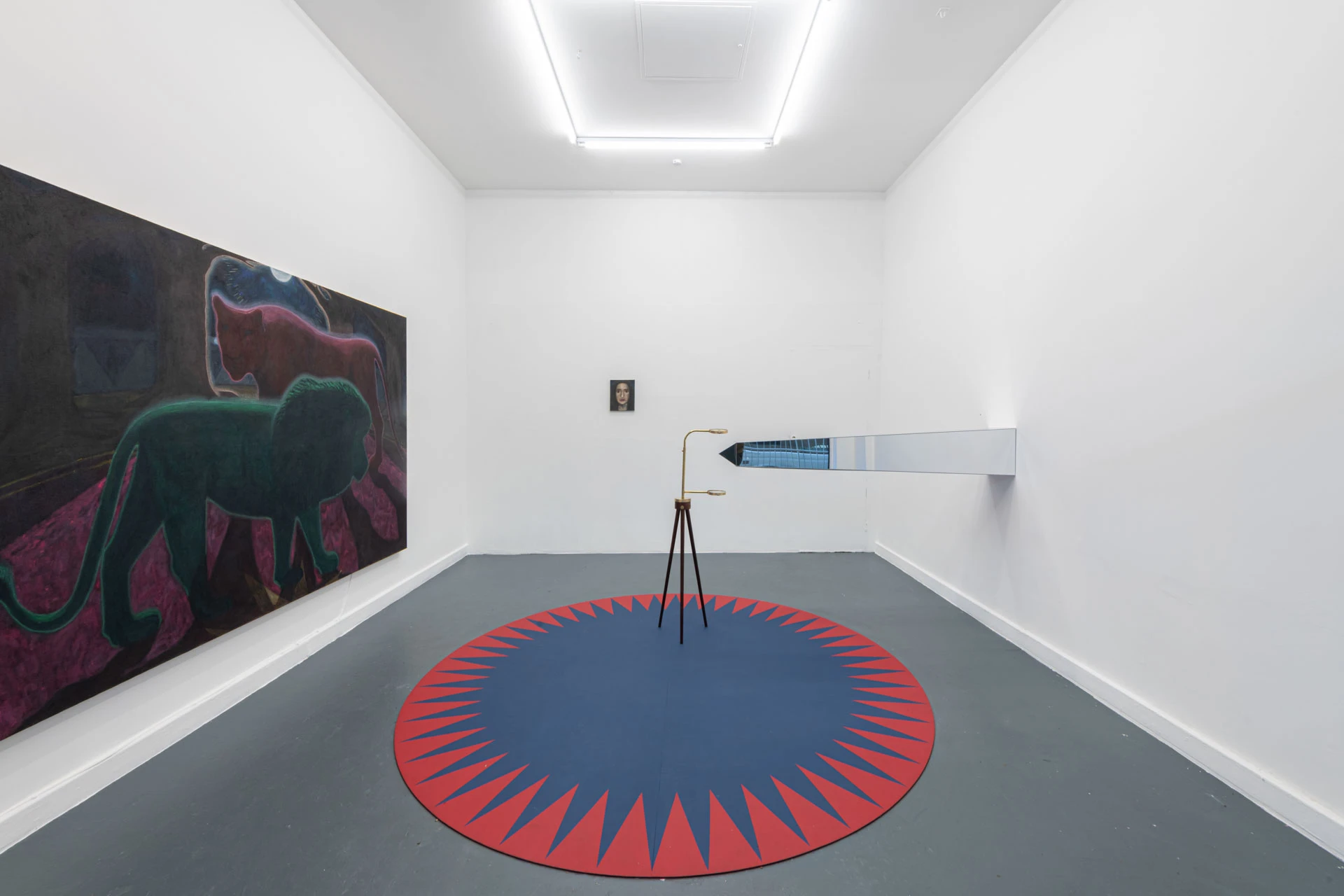
09 Dec 2025
Vanishing Act: Eduardo Antonio + Maria Máximo
By Mariana Lemos
Related Posts
article
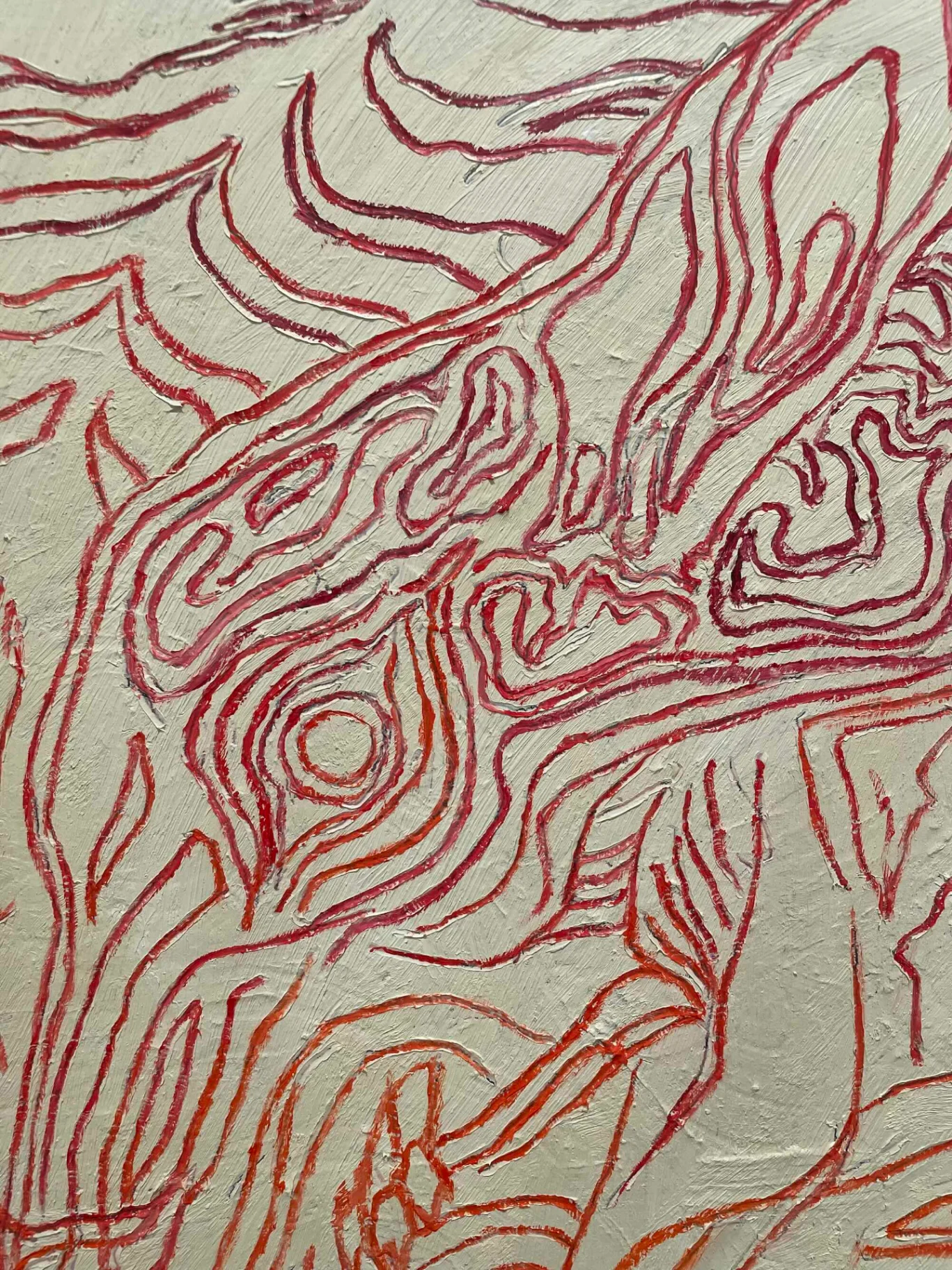
18 JUN 2026
Olho de Vidro, by Pedro Barassi: The Gravity of the Gaze
By Ayşenur Tanrıverdi
article
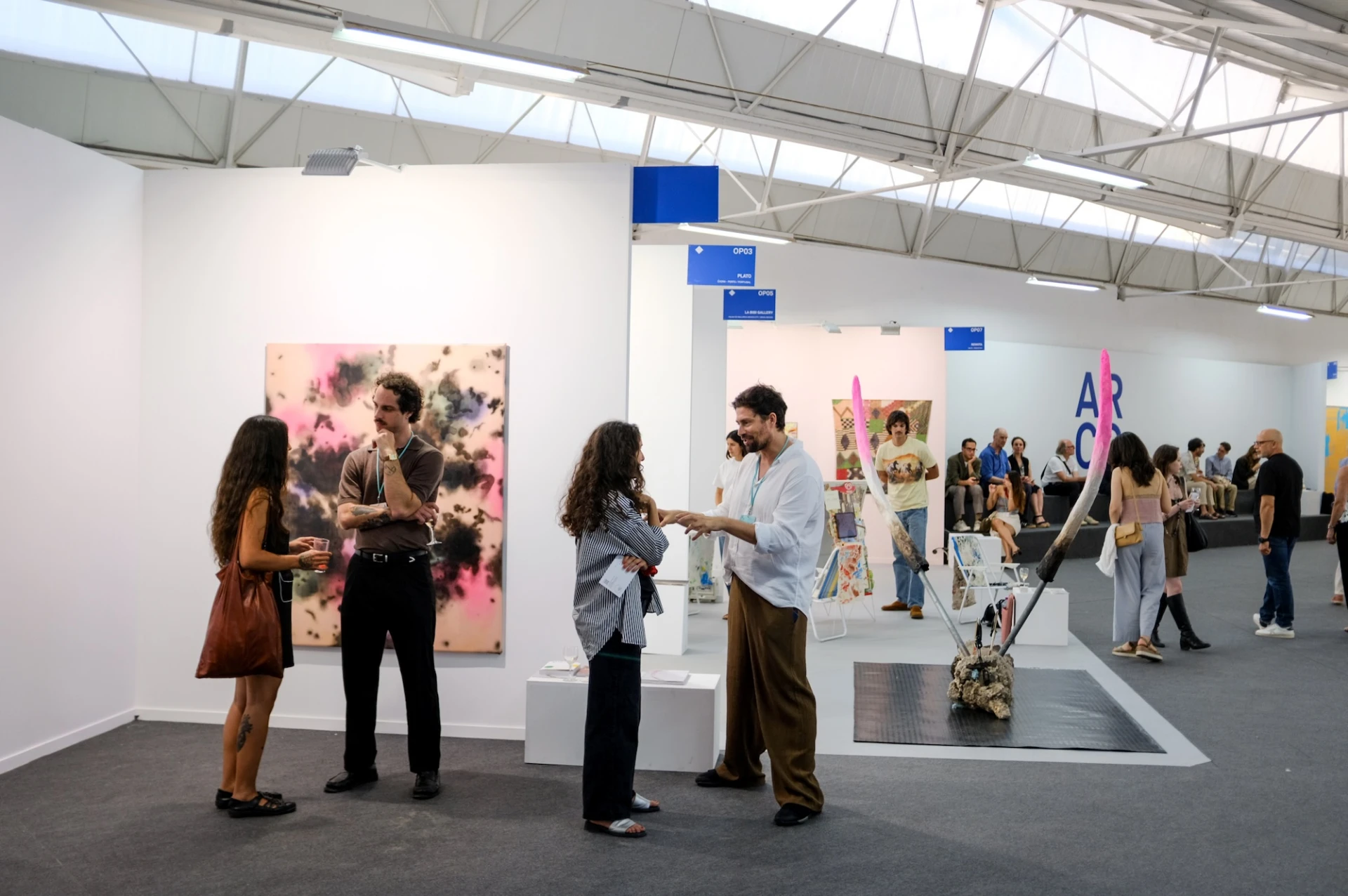
15 JUN 2026
Notes on ARCO Lisboa 2026
By Ayşenur Tanrıverdi
article

08 JUN 2026
Língua Turva: The Aesthetic Unconscious
By Ayşenur Tanrıverdi
article
02 JUN 2026
On Wandering Among Beings: "Entre Seres" by Susanne Themlitz
By Ayşenur Tanrıverdi