article
The Intersection of Individual and Collective Resistance: Standing Here Wondering Which Way to Go
The life-size living room reconstructed by Zineb Sedira offered me an unexpected sense of recognition. Its resemblance to my grandmother’s home was striking: the mirrored glass cabinet and the fragile objects arranged within it, the velvet sofas decorated with crocheted cushions, the figurines, wall posters, hand-woven rug motifs, even the choice of plants. These details activated memory as a lived, emotional space rather than a visual reference. Standing there, I was drawn to the words of Louise Glück: We look at the world once, in childhood. The rest is memory.
Zineb Sedira was only one year old when Algeria marked its first year of independence, following 130 years of French colonial rule. Describing herself as an heir to this colonial history, Sedira stands as a compelling example of how deeply political history is embedded in the fabric of our everyday lives.
Composed of four distinct scenes, the exhibition opens with an installation built from the seats of Cinematic Algeria, the first cinema ever established in Algeria. I sit down. The worn, overlapping images begin to flicker, partially recalled, partially erased. Here, Sedira foregrounds the significance of the archive. As she has noted herself, particularly in Algeria during the 1950s and 1960s, the act of making films was a political gesture. Photography and cinema were the only means through which information about the war could circulate.
The exhibition’s title, Standing Here Wondering Which Way To Go, comes from a song performed at PANAF by the African-American gospel singer Marion Williams. PANAF was a large-scale cultural and political event that celebrated culture as a tool of resistance against colonial domination, offering a powerful expression of hope for change worldwide. It brought together people from across Africa, but not only Africans: Vietnamese, Palestinians, Irish, Chileans, Cubans, and members of the Black Panthers - anyone who had experienced racism, colonialism, or fascism. For the first time, Algerians could gather to share and discuss their experiences under colonialism and fascism.
Zineb Sedira’s statement that “the personal is political” becomes a universal call to all who resist, regardless of nation or identity, and for whatever cause. In The Book of Laughter and Forgetting, Milan Kundera has Mirek reflect: “The struggle of man against power is the struggle of memory against forgetting.” Today, Zineb Sedira’s exhibition at CAM can be read precisely as such a struggle against oblivion. At its core lies a constant: the understanding that freedom and belonging are two vital forces that grow from the same ground. She brings the elements that sustain it vividly into the present.
In the following scene, we return to the space mentioned at the beginning of this essay: Way of Life, Sedira’s life-size reconstruction of her London living room in the style of the 1960s, alongside We Have Come Back, a record collection of militant songs. One track playing in the room immediately catches my attention. I Shazam it: Víctor Jara’s Manifesto.
I don't sing for the love of singing,
or because I have a good voice.
I sing because my guitar
has both feeling and reason.
It has a heart of earth
and the wings of a dove,
it is like holy water,
blessing joy and grief.
Then, on the coffee table at the center of the room, I notice the book that has lingered in my mind since the beginning of the exhibition: The Wretched of the Earth. Frantz Fanon writes: “In the colonies, the economic infrastructure is also a superstructure. The cause is effect: you are rich because you are white, you are white because you are rich.”
Fanon’s words served as a call to the oppressed everywhere, urging resistance at any cost. Among those who drew inspiration from them were revolutionaries fighting dictatorships in Latin America, as well as members of the Black Panther Party, who read Fanon while patrolling the streets of California in response to racist policing.
Struggling to find a job, Fanon eventually took up a post at a psychiatric hospital in Algeria in 1953. In Algiers, he directly observed the routine violence carried out by French colonial authorities. By day, he used his role at the hospital to shelter Algerian fighters and to care for those whose minds had been damaged by French torture. By night, he wrote passionately in support of the FLN and the anti-colonial struggle.
At this point, it is also worth turning to the stance taken by the Algerian-born French writer Albert Camus during the same period.
Albert Camus maintained a centrist and detached stance in the face of the horrors of colonization. He affirmed the French state’s presence and authority in Algeria through his choice of words and through his omissions. Despite the vast imbalance in the scale of loss at Sétif and Guelma, his concern seemed to lie mostly with the French settlers. Camus described the systematic killing of more than ten thousand Algerian civilians by the army, the police, and settler militias as the “suppression of events.” In his attempt to project a conciliatory image, his words found no favor with the resistors and drew sharp criticism.
Meanwhile, Jean-Paul Sartre publicly called on French troops to desert rather than fight against the Algerians, and openly expressed his hope for France’s defeat. He wrote prefaces to numerous books by anti-colonial writers, as this was often the only way their work could bypass publishing censorship.
In my view, the divergence in the positions adopted by intellectuals of that period remains something we must continue to reckon with today.
In the final scene, as the sounds of the Pan-African music festival fill the room -records spinning, voices overlapping- I catch sight of the poet Marcelino dos Santos, one of Mozambique’s greatest poets. A founding member of FRELIMO, the Mozambique Liberation Front, established in 1962 to resist colonial rule, he was among the significant figures who fused poetry and politics into a single practice. In Maputo, he stood firm through poetry, becoming one of the Mozambican people’s most enduring figures of resistance.
Standing right beside Santos, the Moroccan poet and writer Mohammed Khair-Eddine appears:
Je vais dans un pays de joie jeune et rutilante, loin des cadavres. Ainsi, me voilà nu, simple ailleurs. (I am going to a land of youthful, radiant joy, far from corpses. And here I am, naked, simply elsewhere.)
It is clear that neither poets nor musicians of that period hesitated in their choice of words. They could speak openly of “corpses” because this was no longer a term to be avoided or treated with caution, but a reality that demanded to be named.
Zineb Sedira’s question, Where might I encounter less racism?, does not offer us a particularly optimistic answer today. And yet, she insists that art remains the only viable space through which such disappointments and injustices can be articulated.
I deeply believe in Walter Benjamin’s words: It is more difficult to honor the memory of the nameless than that of the heroes. Historical construction is devoted to the memory of the nameless. Zineb Sedira’s works act as a reminder that we are all heirs to our own histories and that what ultimately matters in life is not mere existence, but existing in a particular way.
The exhibition can be visited at the Centro de Arte Moderna Gulbenkian - CAM until January 19, 2026.
BIOGRAPHY
Ayşenur Tanrıverdi is an Istanbul-based writer, living in Lisbon since September 2022. She studied at Istanbul University and is the author of two published works of literary fiction. A regular contributor to Cumhuriyet, a major Turkish newspaper, where she focuses on Portuguese culture. Her essays and critical texts on theatre, literature, and contemporary art have also been featured in various art magazines.
ADVERTISING
Previous
article
-rwdro.jpg)
05 Jan 2026
La Vie en Close: Manuel Costa Cabral at Brotéria
By Maria Brás Ferreira
Next
article
06 Jan 2026
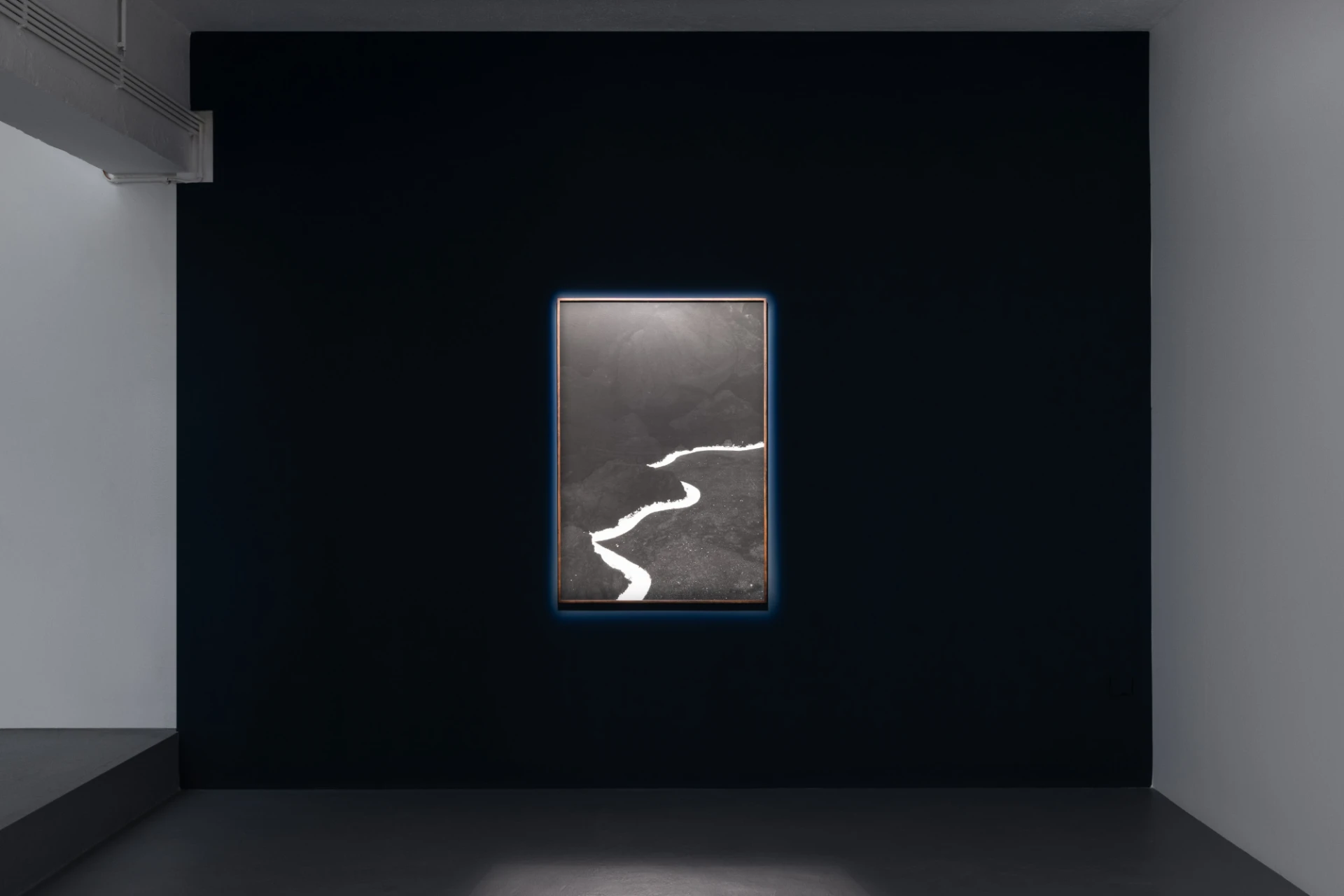
Selva Oscura, by Tito Mouraz, at 3+1 Arte Contemporânea
By Maria Brás Ferreira
Related Posts
article
18 JUN 2026
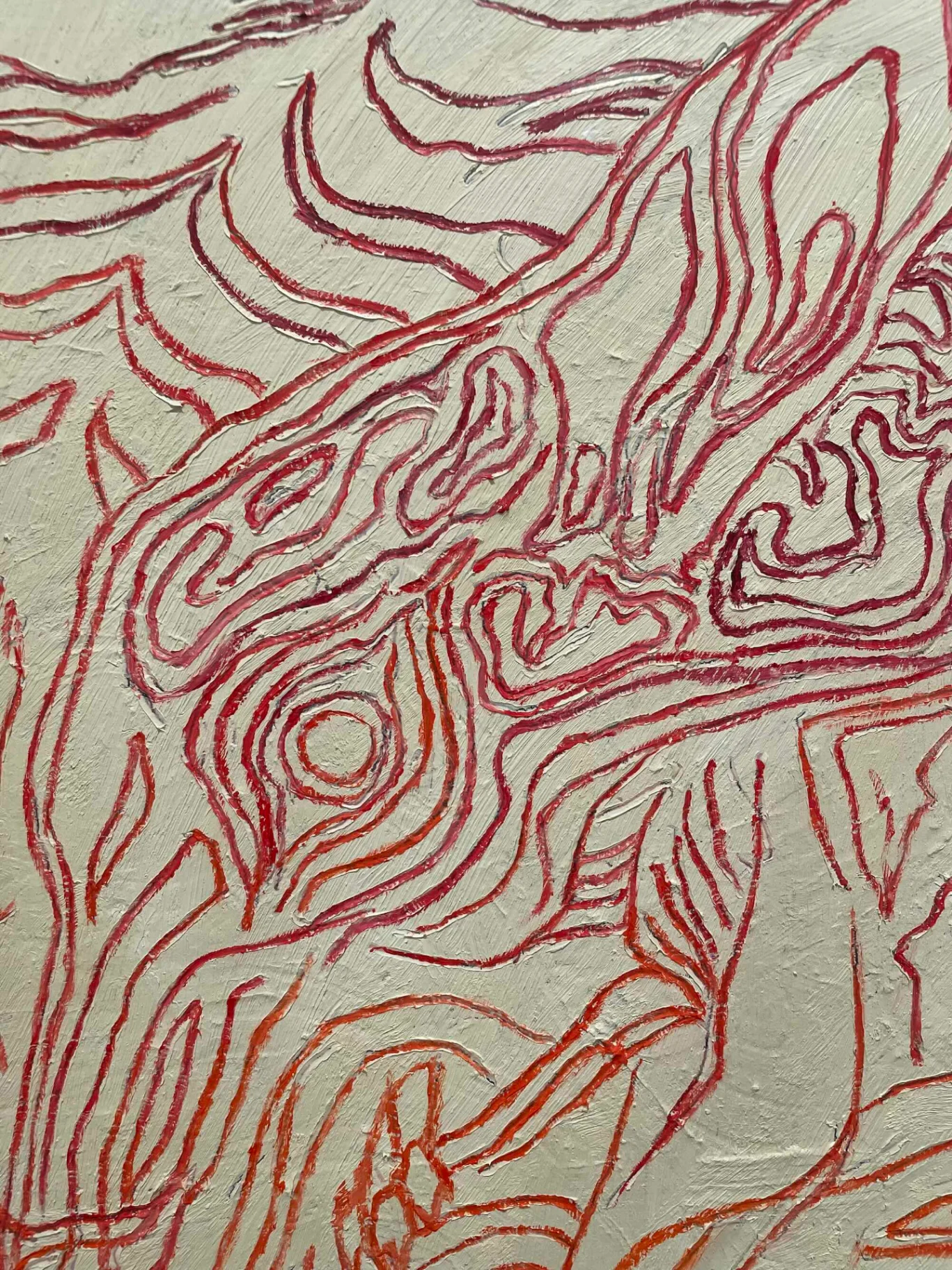
Olho de Vidro, by Pedro Barassi: The Gravity of the Gaze
By Ayşenur Tanrıverdi
article
15 JUN 2026
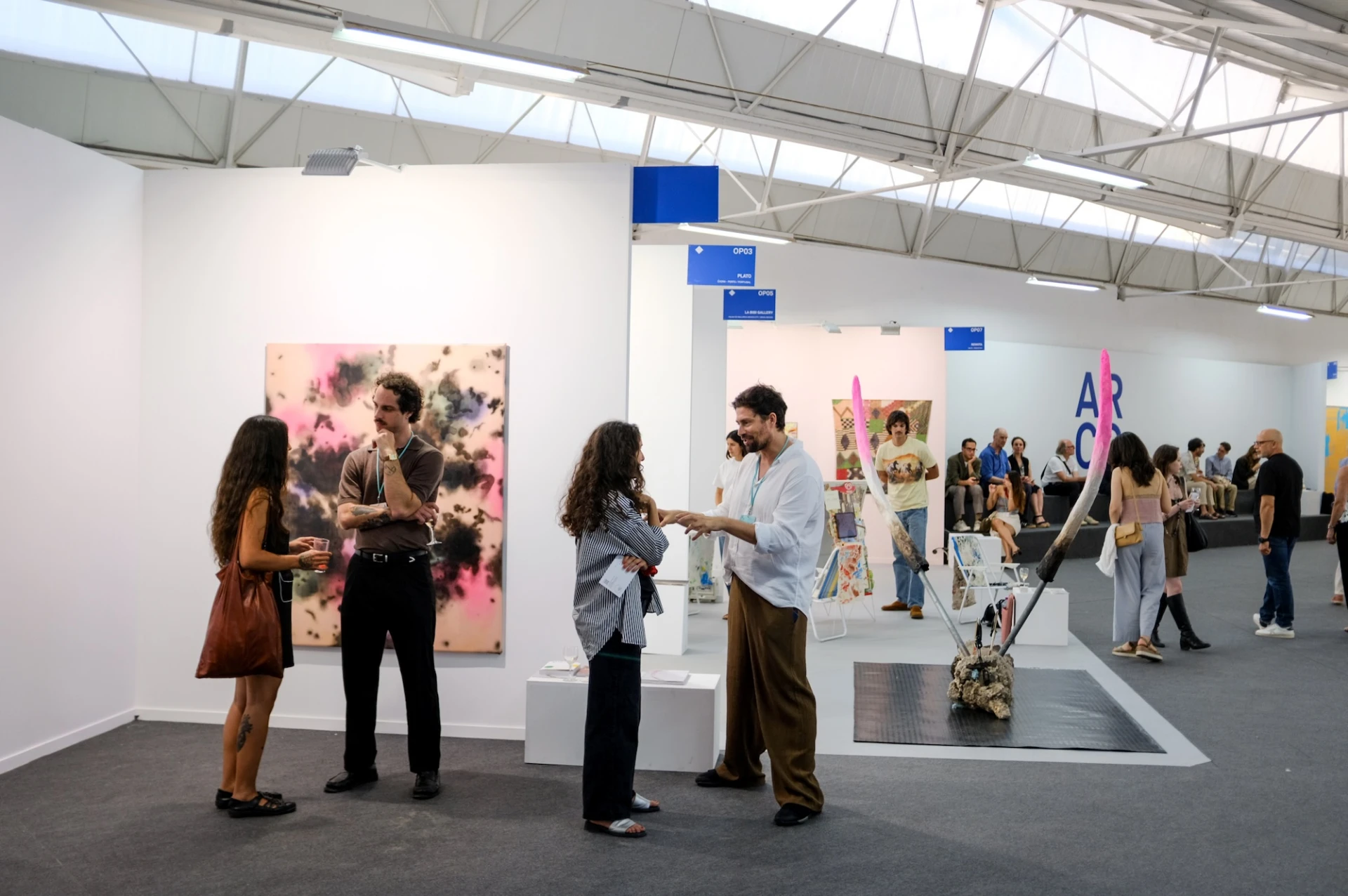
Notes on ARCO Lisboa 2026
By Ayşenur Tanrıverdi
article

08 JUN 2026
Língua Turva: The Aesthetic Unconscious
By Ayşenur Tanrıverdi
article
02 JUN 2026
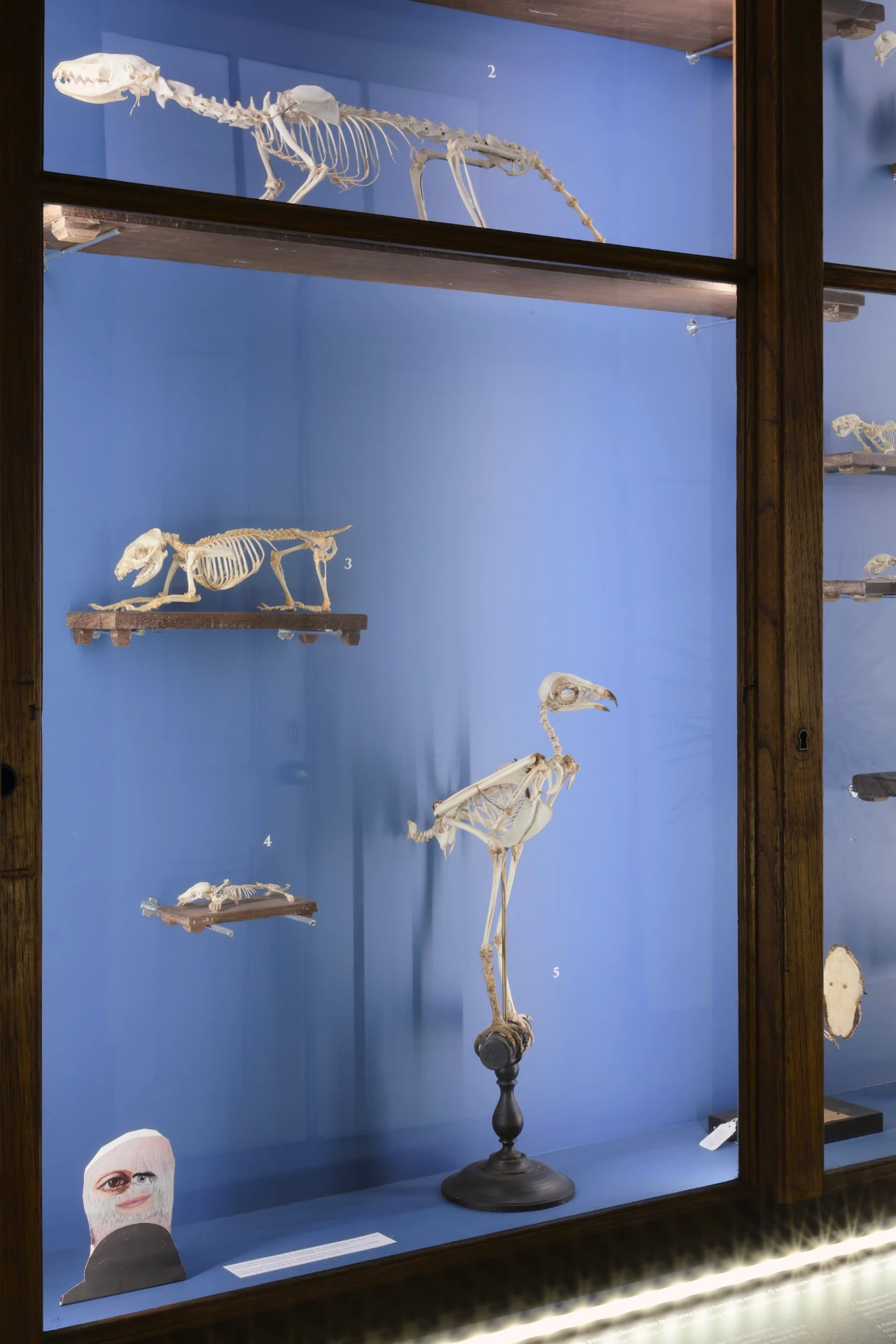
On Wandering Among Beings: "Entre Seres" by Susanne Themlitz
By Ayşenur Tanrıverdi