article
Avenida 211 at MAC/CCB – When will there be another 'occupation' action?
Building number 211 on Avenida da Liberdade was, for many years (2006-2014), a residence of resistance against precariousness in the cultural sphere. "Occupied" by artists through a temporary and consensual agreement, the building constituted a communal refuge from governmental and institutional abandonment during the period largely affected by the global financial crisis (2008-2009) and the actions of the Troika (2011-2014) in Portugal.
This was a time of enormous recession which, as usual, resulted in severe cuts and a reconfiguration of cultural policy. The complete occupation of this building, located on one of the most central arteries of the capital, allowed for the recovery of space, i.e., material conditions that ensured the exhibition and production of art without formal or contractual ties. In just under a decade, the project, which survived on its autonomy, transformed the Portuguese contemporary art scene and became a benchmark for its experimental nature and irreverence. Even more so because it allowed the launch and consolidation of the artistic careers of several individuals who, in other circumstances, might have considered emigrating due to a lack of decent living, creative, and working conditions.
In celebration of the second anniversary of MAC/CCB in October 2025, the institution inaugurated the exhibition Avenida 211: Um espaço de artistas em Lisboa (Avenida 211: An Artists' Space in Lisbon), whose subject matter – as mentioned above – celebrates non-institutional cultural organization or, better, the disorganization1 of the art and housing markets. The title immediately reveals this subject matter and advocacy; "a space belonging to artists" implies autonomy. There could even be some irony here – that of an institution celebrating popular self-sufficiency – if we did not take into consideration the state of culture today. I mean, with regard to public policies in the cultural sector, which constitute the conditions for the production and circulation of the national artistic scene. At the same time, saying 'nowadays' in relation to cultural policy in Portugal is as embarrassing as invoking 'contemporary' in Didi-Huberman, since what is being updated are the actors, while the object in question, cultural policy and its management, appear somewhat stagnant and dusty since its inception. I say this, knowing of course that there are periods of greater and less investment and intervention. Far from a homogenizing, demoralizing or even reactionary attitude, what I am trying to communicate is the parallelism or correlation between the years of activity of Avenida 211 (2006-2014) and the state we have reached (or to which we cyclically return), 'nowadays'. Which I also believe may have been the curatorial intention. That is, to highlight what was being done recently in resistance to precariousness, and what can be done today, fulfilling the same desire. Perhaps even more so if the occupations are truly 'genuine' in relation to the appropriation of vacant property for community use. Clearly, this is already an expression of my will and not a suggestion from the team responsible for the exhibition, although they insist on emphasizing that they do not intend merely to tell the story of this vital occupation in the Portuguese cultural context; to reconstruct unique experiences; or to present a frozen past; but to reinforce "a living network of experiences, flows and intensities that still inspires and questions the present"2.
With the present question in mind, I recall what I have been saying throughout my recent writings. I have been calling for and appealing for a critique that shifts from a place of judgment to a practice of assisted mediation, like a doula. This is what María Inés Plaza, editor and founder of the journal Arts of the Working Class, considers an exercise that moves away from hermeneutic interpretation, while instead focusing on awakening an attention maintained and sustained by critical tools. According to this approach, the question ceases to be about what a particular work or curatorial project tries to show, but rather about what it tries to create. What kind of world does each project seek to propose or inhabit? To critique as a doula translates into opening a space for what is to come, instead of forcing clarity.
It was important to repeat and reinforce this methodological approach, since in the context of this exhibition I consider it fruitful – perhaps more so than in any other situation – not to remain on the plane of contemplation – of what the project now on display once meant – but to reflect on the current state of the cultural structures and social networks that persist for the survival of professional arts.
When we finally entered the exhibition, we understood that the curators, Nuria Enguita and Marta Mestre, intended to create a living archive based on the research developed by Giorgia Casara and Sara de Chiara. They immediately shared with us the difficulty they encountered in gathering material for this occasion, since Avenida 211 was a project based on experimentation, interdisciplinarity, and spontaneity, with little concern for its documentation. Even so, several rooms – in a free and labyrinthine layout, just as it was on the floors of the artists' building – contained an enormous variety of works, prints, accounts, and reconstructions of what was once an entirely "occupied" palace, now filled with workshops, exhibition spaces, studios, and even sound laboratories.
In the first room, right when we go in, a film by Francisca Manuel (2018) clarifies the true nature of this occupation, which is worth highlighting in order not to romanticize an exceptional situation. While documenting the end of the project, Manuel talks with Gonçalo Sena, André Guedes, and Isadora Neves Marques (artists who had studios in the filmed spaces). In this dialogue, they all recall that Avenida 211 was not an occupation, "but rather a tacit agreement between the artists and, through António Bolota, Banco Espírito Santo, in a discreet patronage initiative." Despite this, this temporary concession was more than crucial and necessary in a time of governmental and state abandonment and marred by the lack of non-institutional initiatives.
From then on, the beautiful and somewhat scattered exhibition does justice to the constant experimentation and deconstruction experienced during the eight years of activity in the building on Avenida da Liberdade. The detachment from market constraints and logics to which the institutional branch is bound allowed the development of a free and independent predicate that brought together the ideal conditions for creative prosperity, unparalleled in national contemporary art. This does not mean a romanticization of precariousness, but its opposite; the ideal conditions are the material ones that – and the curators intend to emphasize this argument – recognize "in the studio the symbolic value of economic independence, personal space, and the time necessary for freedom of thought"3.
Among the works and fragments that remind us of exhibitions, collaborations, and concrete situations, the curatorial selection also highlights names and projects that were inaugurated, grew, and thrived in this self-managed space. In 2006, there were 4 artists sharing space for production studios; by 2014, there were 40 in the same situation. It was home to the curatorial project Kunsthalle Lissabon and the birthplace of others such as The Barber Shop, Parkour, and Escritório. But what sets the project's identity apart is its communality, which appears to have been very well received by the community. In its early years, four events open to the public and organized by Filho Único demonstrated this receptiveness, with over 700 tickets sold in a single edition. This was reflected in the "come, come and bring a friend too" dynamic, reflecting an inclusive nature that exceeded expectations. More than transversal, it was intergenerational; teachers and students (from art schools) shared the same workspace and creative environment. The building's basement was also a crucial space for sonic exploration, not just as a profession, but as an exercise. An example of this was the debut of one of the most enduring and unique projects in the Portuguese music scene, Osso Exótico, which performed in the basement of Avenida for the first time.
Finally, the opportunities created by utilizing a derelict building in Lisbon, specifically in what is considered its center, allowed us to understand what we are capable of doing in a situation without mediation. Furthermore, it allows us to question why we don't have more ease in taking advantage of these empty spaces that the State and the City Council own and that they could provide us with, without the constraint of excessive bureaucracy, because after all, who owns the municipal property? In a year, or a time, when community groups are being evicted from the spaces and neighborhoods they helped to revitalize; when the Ministry of Culture is being dismantled to make way for one that merges it with Youth and Sports, the question remains: what are we still willing to tolerate? When will there be another occupation action?
Curated by Marta Mestre and Nuria Enguita, Avenida 211 – Um Espaço de Artistas em Lisboa is on display at MAC/CBB until April 5, 2026.
1 As I have mentioned in previous reviews, ‘disorganisation’ differs from ‘dis-organisation’, and it is the hyphen that reveals the distinction. While the first term refers to a state of chaos, devoid of any order, the second refers to the rejection of a governmental organisation that establishes order based on the denial of the human ability to organise and demands self-control, that is, instead of control (or organisation) by the Church, the State or the labour entity. These are the considerations of sociologist and cultural criminologist Stephen Lyng (2009).
2 From the exhibition room text.
3 From the exhibition room text.
BIOGRAPHY
Benedita Salema Roby (b. Lisbon) has a degree in Art History (2019) and a master's degree in Aesthetics and Artistic Studies (2022) from the Faculty of Social Sciences and Humanities of Universidade Nova de Lisboa with the dissertation ‘Graffiti: Considerations on the Aesthetics of Transgression in the Public Space of the City’. She is currently doing her PhD in Artistic Studies - Art and Mediations at the same institution, where she is developing a research, with funding from the FCT, centred on the potential for societal and collective liberation around transgressive (artistic) practices such as graffiti and political graffiti. On this theme, she also participates in the making of documentaries and organises workshops on practice and thought for young people. Her thesis project, entitled ‘The Deconstruction of the (Experience of the) City and the Construction of the Counter-Public Sphere: Transgressive Creative Writing, Aesthetics and Politics’, is supervised by Cristina Pratas Cruzeiro and Joana Cunha Leal. As well as academic publications, he writes about emerging artists and visual and performing arts exhibitions for independent magazines such as Umbigo and Sem Título.
ADVERTISING
Previous
article
20 Feb 2026
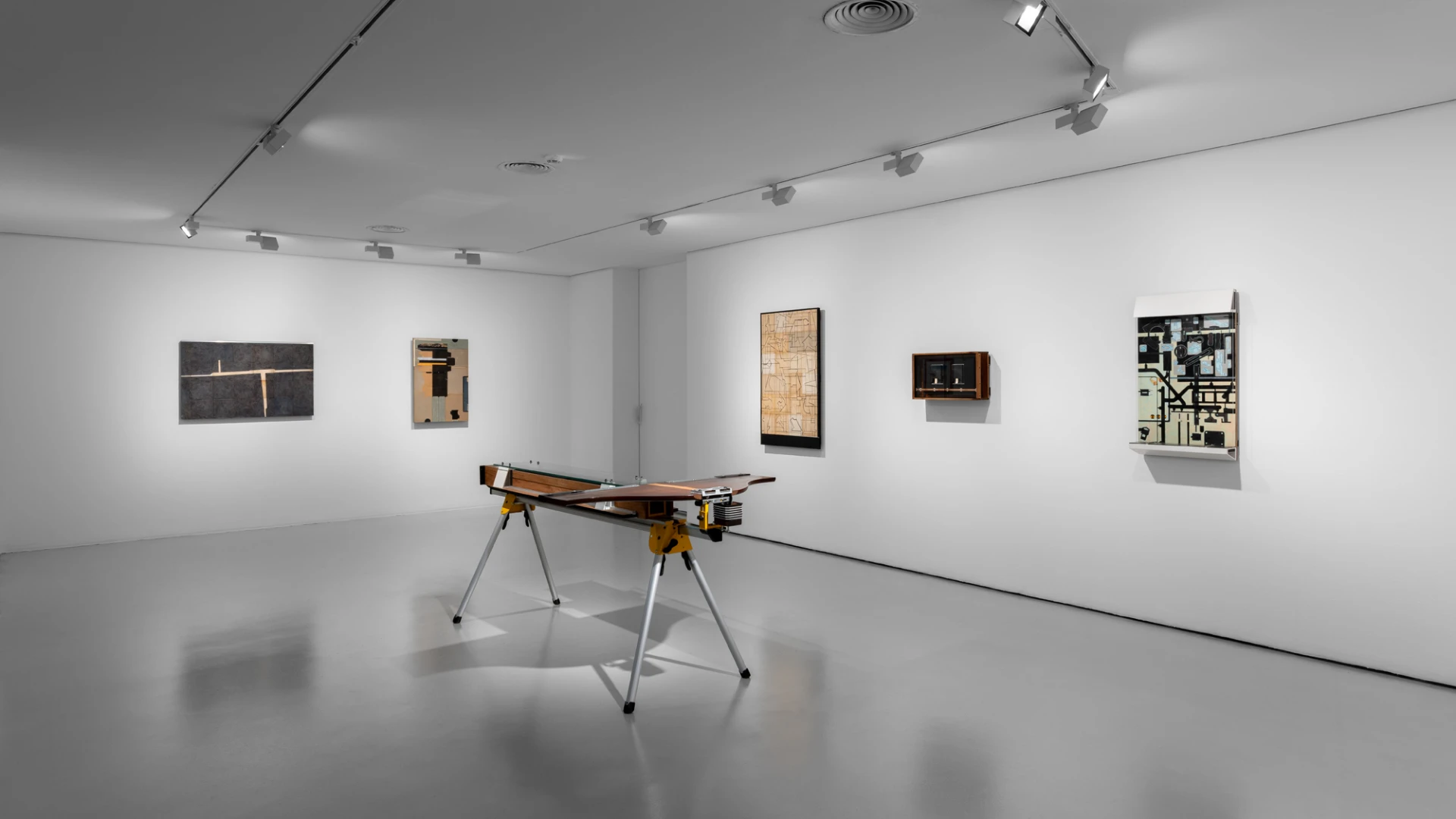
João Paulo Feliciano, at Cristina Guerra Gallery: The Autonomy of Objects
By Ayşenur Tanrıverdi
Next
article
20 Feb 2026
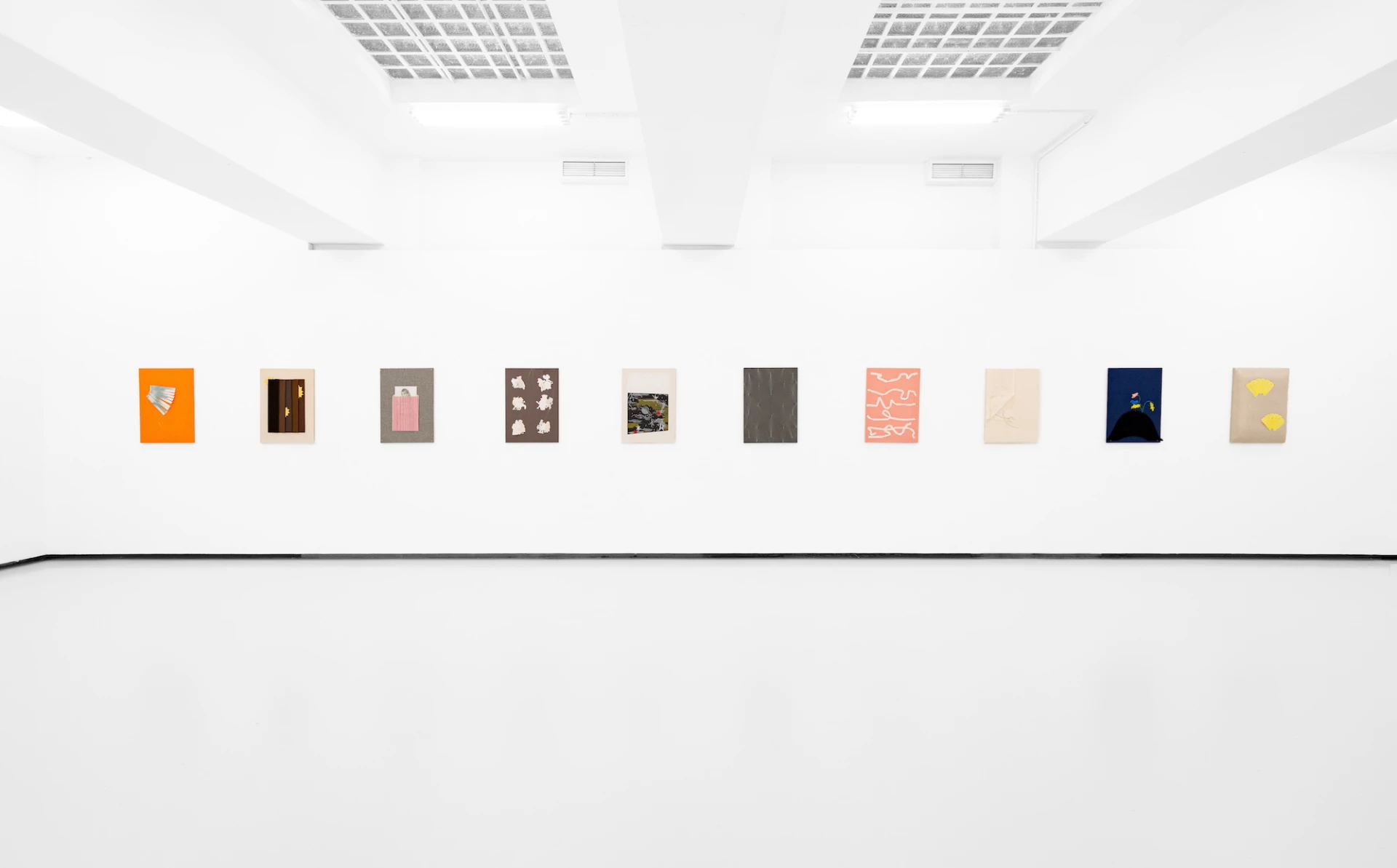
No Words, by Isa Toledo at Galeria Miguel Nabinho
By Tomás Saraiva
Related Posts
article
![How to [un]do Things with Words, Numbers, Flags, Maps and Signs:
A Jasper Johns Retrospective at the Guggenheim Bilbao](https://umbigo.s3.us-east-1.amazonaws.com/public/space/bilabo 4 -xnvdr.jpg)
06 JUL 2026
How to [un]do Things with Words, Numbers, Flags, Maps and Signs:
A Jasper Johns Retrospective at the Guggenheim Bilbao
By Benedita Salema Roby
article
20 FEB 2026
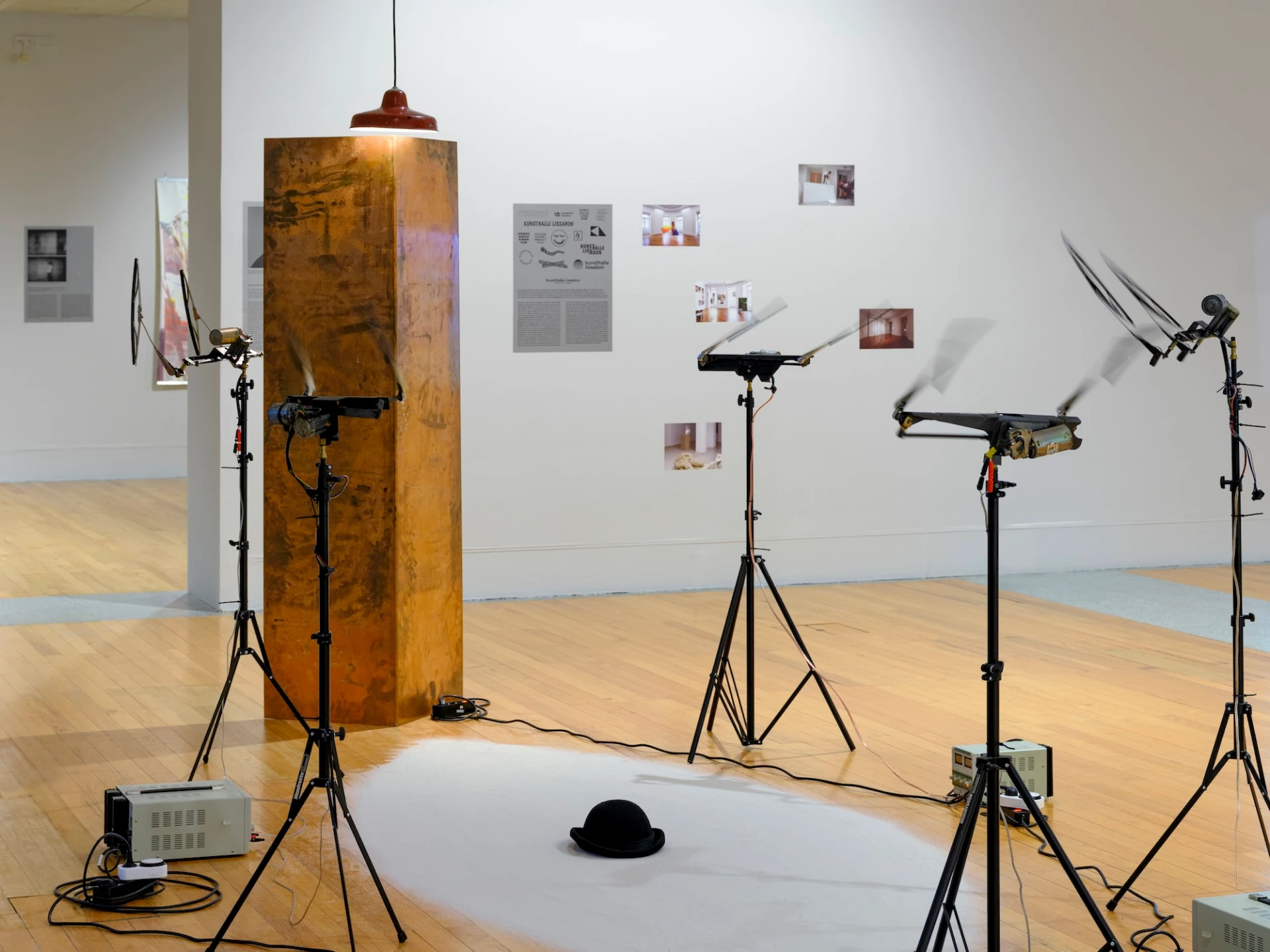
Avenida 211 at MAC/CCB – When will there be another 'occupation' action?
By Benedita Salema Roby
article
19 JAN 2026
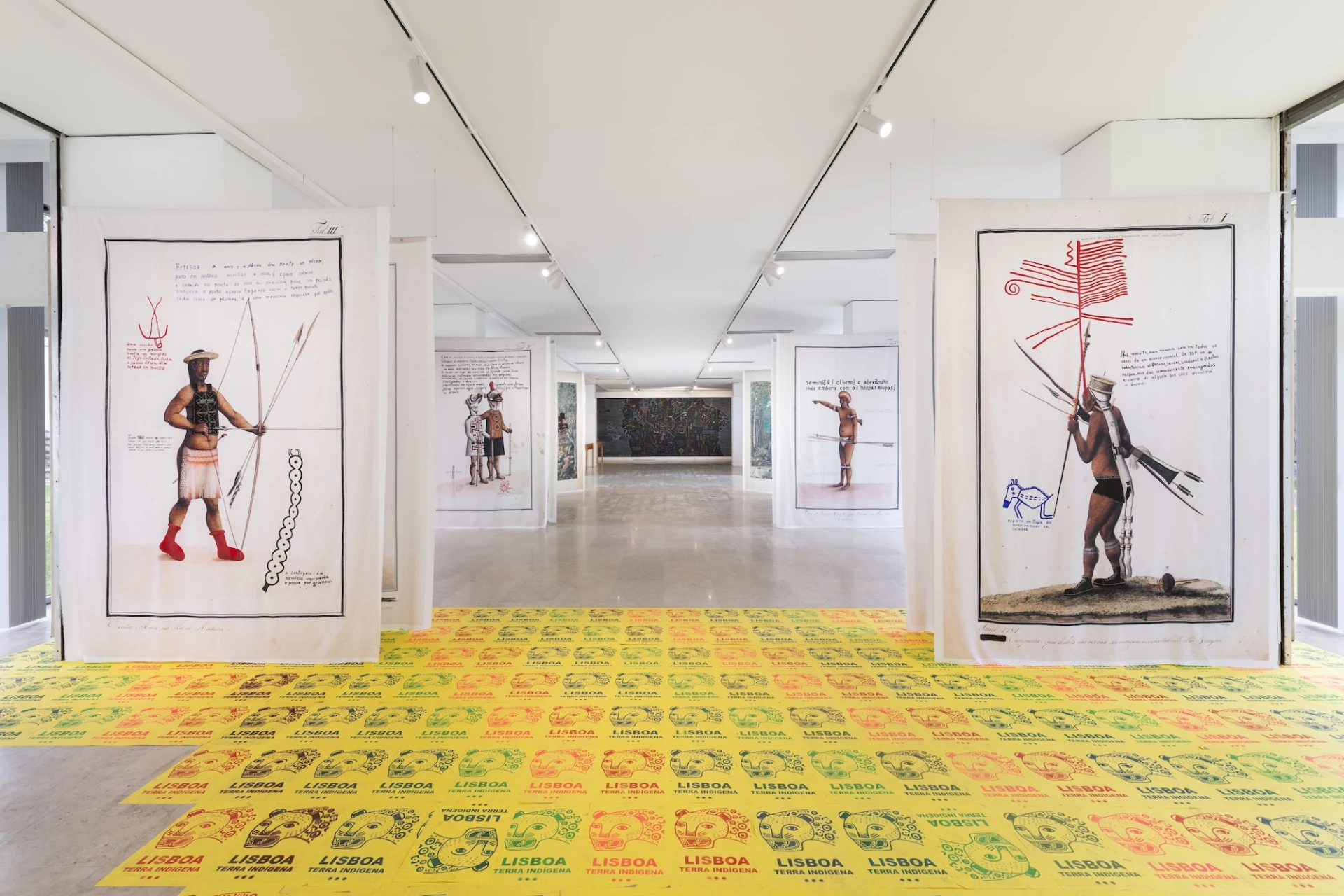
One says “kill,” the other says “skin”—except that the first was misunderstood and was a noun.
Denilson Baniwa's Counter-Spell and everyone's Wayuri
By Benedita Salema Roby
article
30 OCT 2025
Weaves of Worlds Under Construction – Walk&Talk returns as a Biennial
By Benedita Salema Roby