article
CARAVANSERÁ: Liberty in Motion
"Conceived and artistically directed by choreographer and dancer Gustavo Ciríaco, curated by Rita Fabiana, and developed in collaboration with João Gonçalo Lopes for the set and exhibition design, Caravanserá represents a sensorial carnival, an ever-forming, participatory bloco in continuous becoming."
Long before I knew its history, the caravanserai had already taken root in my imagination. In childhood stories of the Silk Road, merchants crossed vast deserts and caravans dissolved into horizonless landscapes. The caravanserai was never merely architecture, but a promise: shelter arising in the heart of uncertainty, hospitality standing against the vastness of the unknown.
Built in the 12th and 13th centuries as protection against desert bandits, caravanserais were positioned a day’s journey apart -roughly 30 to 40 kilometers- punctuating the vastness with intervals of safety. Much later, I would recognize in this spatial logic an affinity with the philosophy of movement developed by Henri Bergson: “If we place ourselves within movement, we can draw from it, through thought, as many stopping points as we wish.”
I have long sensed that movement inclines the human spirit toward a particular openness and creative alertness. When a traveler once asked where the poet William Wordsworth kept his study, a servant replied: “His library is here, but his study is outside the house; everywhere.” The anecdote feels less romantic than precise: for some minds, thought does not withdraw from the world; it advances through it.
Conceived and artistically directed by choreographer and dancer Gustavo Ciríaco, curated by Rita Fabiana, and developed in collaboration with João Gonçalo Lopes for the set and exhibition design, Caravanserá represents a sensorial carnival, an ever-forming, participatory bloco in continuous becoming.
The word caravansará, borrowed from Persian, is playfully transformed in Portuguese through the pun será (“will be”), reminding us of the possibility of imagining the future with hope.
Developed around the poetry of Gustavo Ciríaco’s mother, the poet and visual artist Maria José de Figueiredo Ciríaco, Caravanserá unfolds as an open process that they kept visible to the public from beginning to end. Shaped by organic participation and spontaneity, the project resists the logic of rehearsal. It resembles, rather, the course of a river: a continuous current one may enter at any point and leave at another - always in motion, always unfinished.
Within the Caravanserá bloco, familiar carnival anthems intertwine with a samba-enredo drawn from Maria José’s texts, composing a musical landscape in which everyone is invited to participate, an inclusive score that transforms spectators into collaborators.
In a body of work, she called Porta-trovas, Maria José de Figueiredo Ciríaco created what she described as “poem-carriers”: folded paper objects within which verses were hidden. The act of folding did more than protect the text; it transformed it. These compact forms were, in themselves, already poetic, sculptural gestures suspending language in midair.
A system was devised in which each flag corresponds to a letter that Maria José used for her poems is the nautical alphabet used for communication between ships. What emerged was a shared matrix -portable and open-ended- something anyone could carry elsewhere, extending the work far beyond its original site.
Within the project, the question of “foundation” takes on the quality of spatial consciousness. The layered series titled Baldrame states the act of marking a house before it is built-tracing where a room or a kitchen will stand, delineating possibility before structure. The lines drawn on the ground - as fundações - as they are called in Portuguese - refer not simply to architecture, but to the logic of dwelling. A viga baldrame (ground beam) transfers structural loads to the foundation while remaining in contact with the earth, bridging material and space, concept and form.
For Gustavo Ciríaco, a project is never conceived apart from its site. Every measure of fullness and emptiness -each subtle interval- shapes the work’s structure. Conversely, a single gesture or decision within the creative act can alter space itself, reshaping its conditions. A double movement in which space forms the work, and the work reconfigures space. Within this rhythm lies the possibility of reimagining one’s place in the world and of envisioning oneself within a broader collective body.
When Gustavo mentioned that his mother would often say, “Every garden can become a caravanserai” I began to perceive, more clearly, the artistic bond that had gradually grown between them. It was the joy he inherited from her that continued to ripple through his practice, finding in Caravanserá -with its intrinsic sense of movement- a living continuation. Beckett was right when he said, “Nothing is funnier than unhappiness.” At the core of all forms of resistance and the desire for freedom, we must place the joy that no dictatorship can ever extinguish.
Maria José de Figueiredo Ciríaco kept the gate of her garden perpetually open to children, referring to it as the quintal das artes, the “garden of the arts.” This notion of the quintal resonates directly with the architectural logic of the caravanserai: a structure organized around an open central courtyard, where protection and encounter coexist and community forms through shared space.
On 14 February, during the Caravanserá procession in the Engawa garden of CAM – Centro de Arte Moderna, Maria José de Figueiredo Ciríaco’s poetry was magnified and set in motion: letters traveled among the participants, constantly shifting and reconfiguring, forming a passage in which words themselves became a living, ever-changing ritual.
Maria José’s central question was: what if we could lift it from its place and play with it?
Henry David Thoreau, an American writer and philosopher of nature, once wrote in his journal, “If you have not risen to live, how futile it is to sit down to write!” For Gustavo and Maria José, this insight reveals itself in movement: a joyful being is one that leaps, dances, and moves, a presence alive, exuberant, and perpetually in motion.
One of the carnival’s most striking features was the way it opened a natural space where everyone could engage as fully or as lightly as they wished, or simply remain an observer. In Gustavo’s words, it was a state of “wholeness,” where people could be simultaneously sexy and funny, absurd and serious, recalling the playful spirit of the song “My flesh is made of carnival.”
Throughout the Caravanserá bloco, spontaneous forms of learning occurred in real time: grandparents danced hand in hand with small children, discovering and teaching in equal measure. A grandmother might learn a child’s dance steps, or a child might be shown how to thread a needle; exchanges that emerged organically, playful, intimate, and spanning generations.
Caravanserá can also be read as a form of resistance against those in power. The Brazilian educator, critical pedagogue, and philosopher Paulo Freire, in Pedagogy of the Oppressed (1968), writes:
"The oppressors prevent any action that might awaken in the oppressed even a small sense of unity. Concepts such as unity, organization, and struggle are immediately labeled as dangerous. Indeed, these concepts are dangerous for the oppressors—because their realization is essential for acts of liberation. (…) Every stir toward unity among the oppressed signals the possibility of new action; unity and organization can contribute to transforming the oppressed into a force capable of recreating the world and making it more humane."
I asked myself: what is it that makes mobility so essential, so attuned to creative impulse?
The answer emerges through the chemistry of our bodies. Just as collective action awakens the spirit of liberation, individual movement awakens the body and mind, drawing us toward creativity. As we move, our hearts beat faster, sending blood and oxygen not only to our muscles but to every organ, including the brain, mirroring the physiological reactions of falling in love. Ancient Greek philosophers captured this insight succinctly: “The good brings into being and sets in motion, and that which sets in motion is good.”
Philosophers such as Socrates and Aristotle, members of the Peripatetic school, practiced philosophy while walking, constructing a philosophy of movement through human interaction. The term peripatetikos derives from the Greek for “to walk around.” In Raphael Sanzio’s The School of Athens, Plato and Aristotle can be seen at the center, walking and conversing, with others following their movement, an image that embodies philosophy in action, and the enduring connection between thought, motion, and life.
This philosophy of movement, rooted in human interaction, finds a contemporary echo in Gustavo Ciríaco’s carnival, where every material and gesture transform the space into a living continuum. In the end, what remains is, in Ciríaco’s own words, “pure joy.”
Following the format of an open residence, Caravanserá was on display at Espaço Engawa, at the Gulbenkian Modern Art Centre, between 28 January and 2 March 2026, featuring a range of set designs and video works. The residency culminated in the Carnival parade, which took place on 14 February in Jardim Sul.
BIOGRAPHY
Ayşenur Tanrıverdi is an Istanbul-based writer, living in Lisbon since September 2022. She studied at Istanbul University and is the author of two published works of literary fiction. A regular contributor to Cumhuriyet, a major Turkish newspaper, where she focuses on Portuguese culture. Her essays and critical texts on theatre, literature, and contemporary art have also been featured in various art magazines.
ADVERTISING
Previous
article
06 Mar 2026
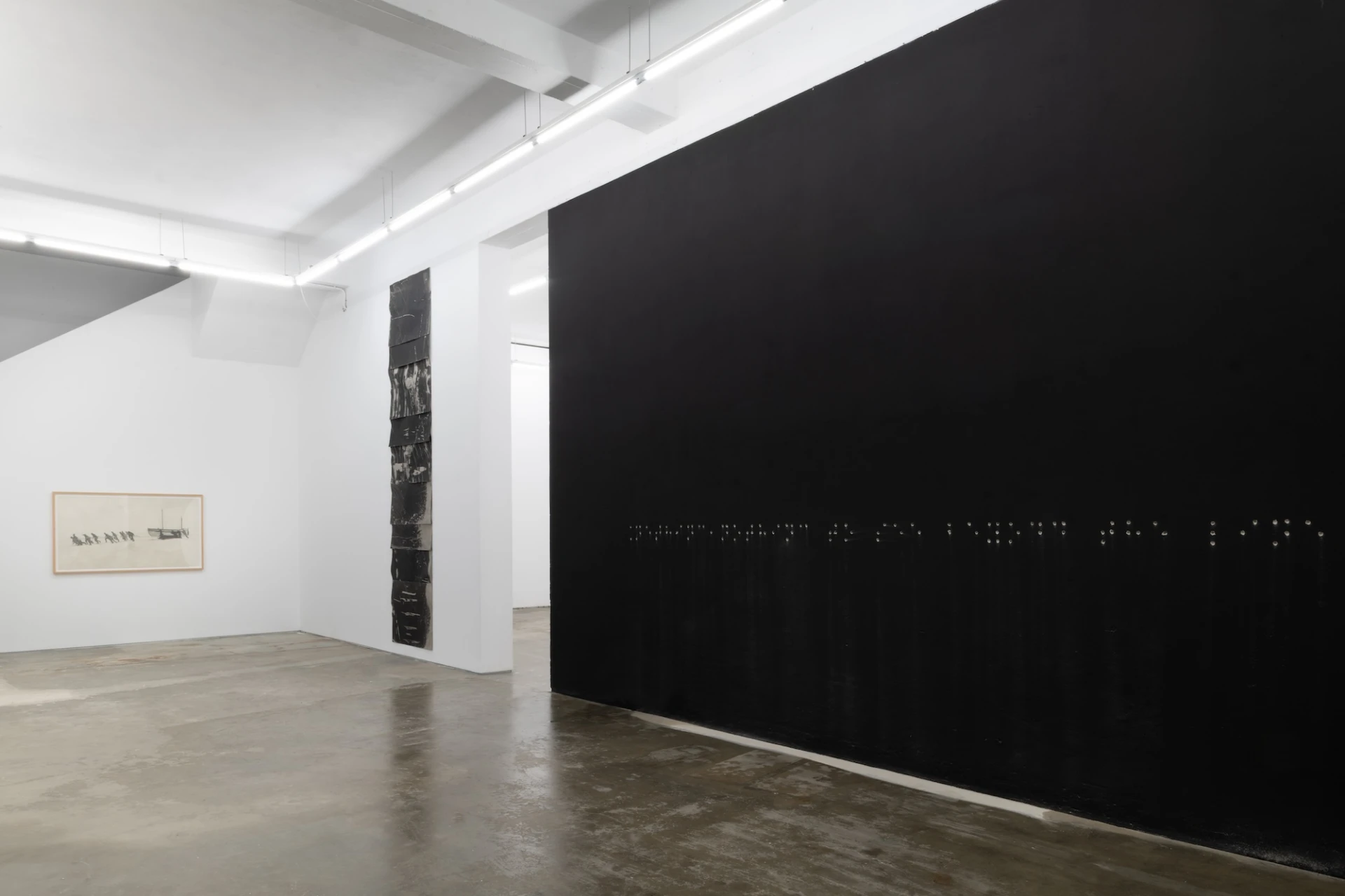
O Eco das Palavras Mudas…images that scream
By Maria Inês Augusto
Next
article
09 Mar 2026
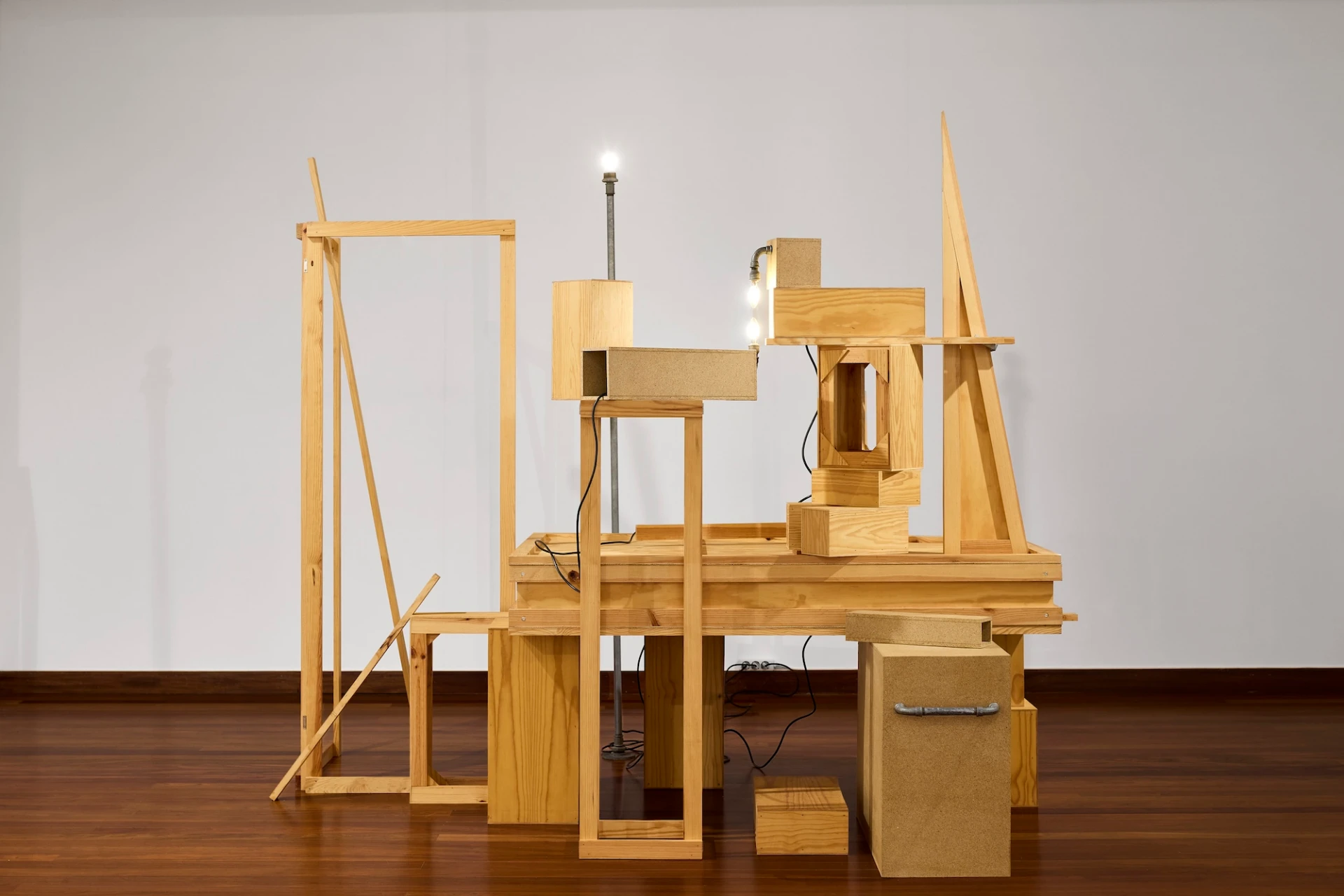
Rui Sanches: Line and Stain, Body and Machine
By Ana Isabel Soares
Related Posts
article

09 OCT 2026
Geographies of Memory: A Stone in the Middle of the Road
By Ayşenur Tanrıverdi
article
18 JUN 2026
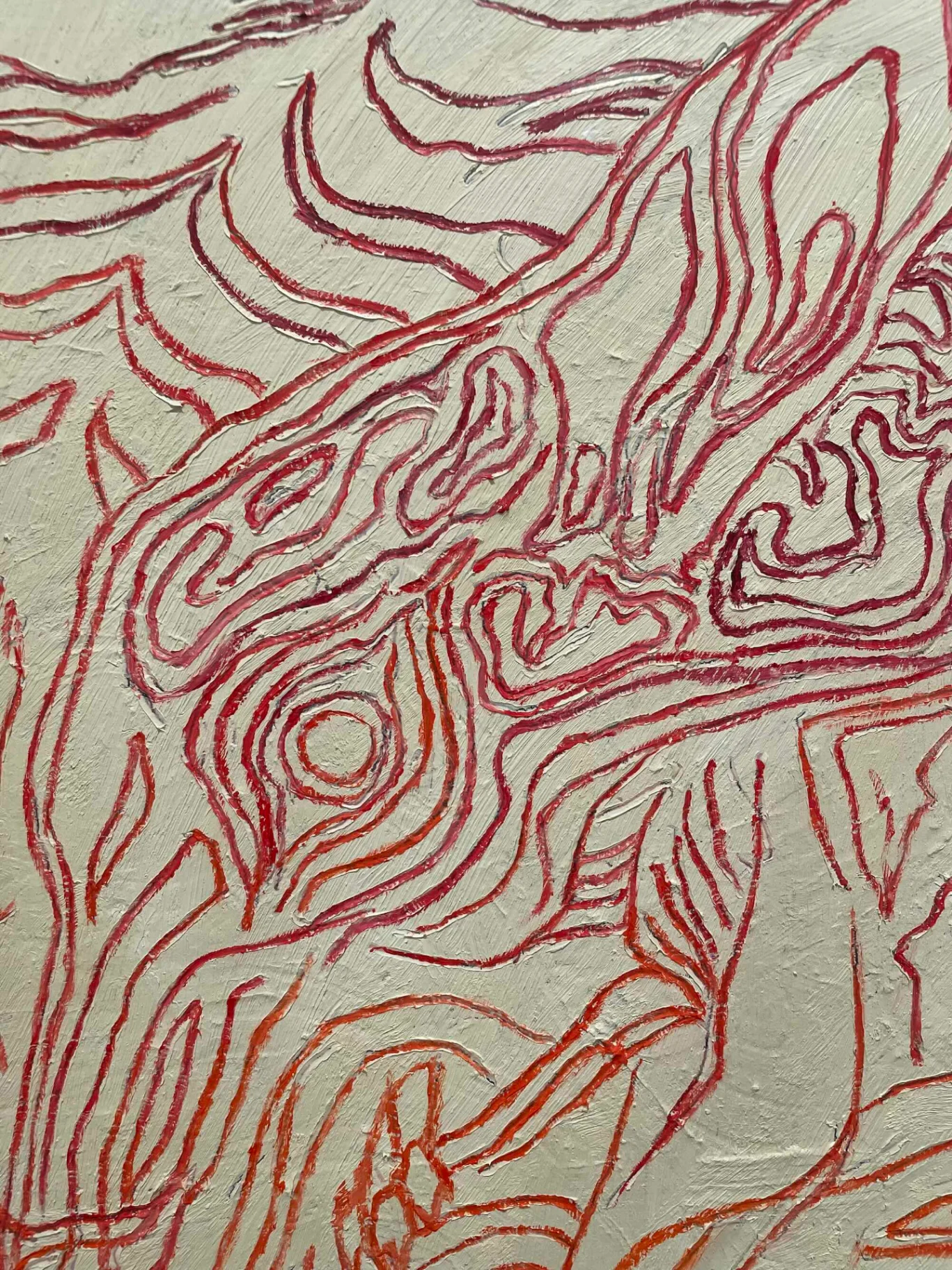
Olho de Vidro, by Pedro Barassi: The Gravity of the Gaze
By Ayşenur Tanrıverdi
article
15 JUN 2026
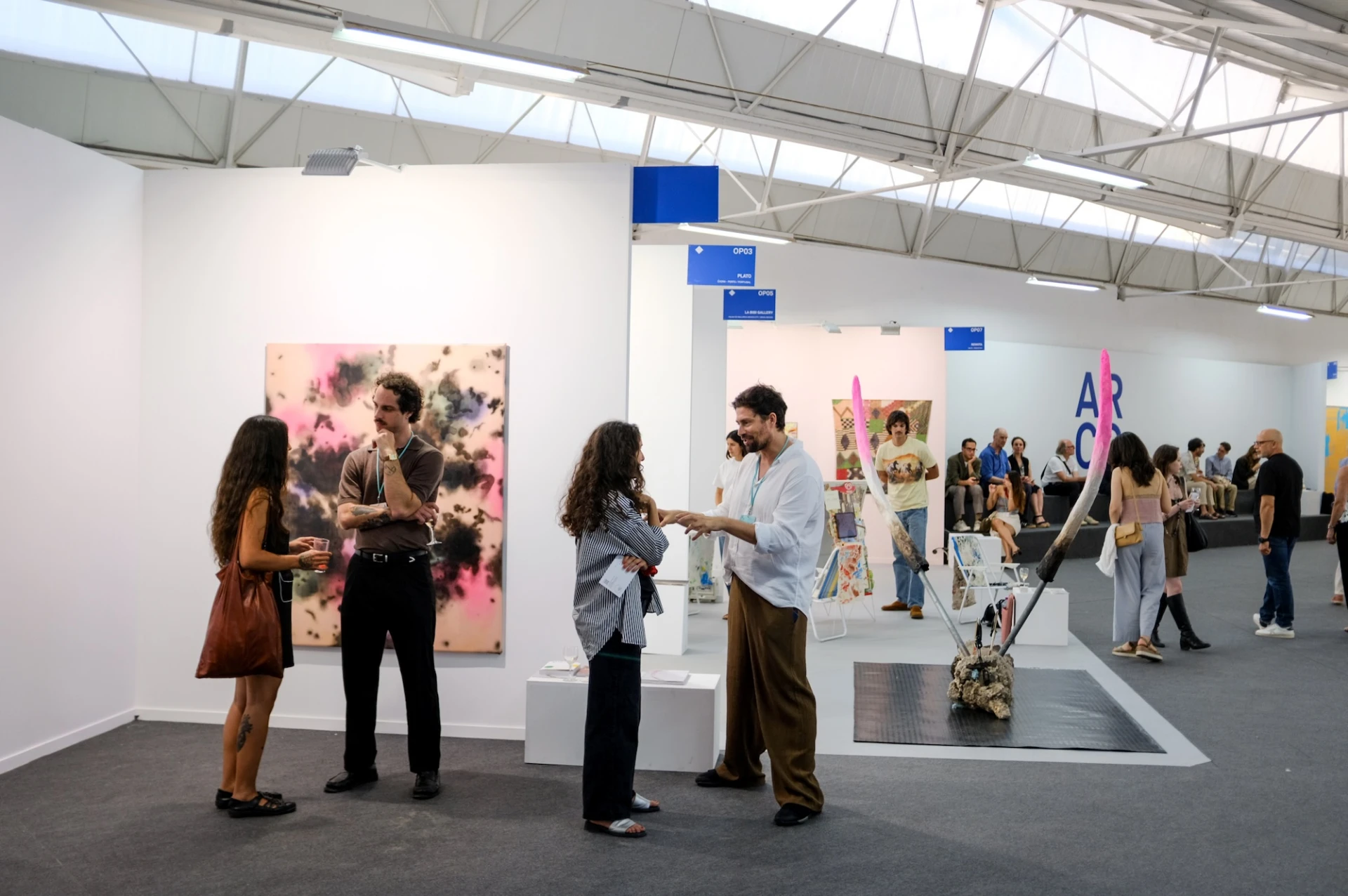
Notes on ARCO Lisboa 2026
By Ayşenur Tanrıverdi
article

08 JUN 2026
Língua Turva: The Aesthetic Unconscious
By Ayşenur Tanrıverdi