article
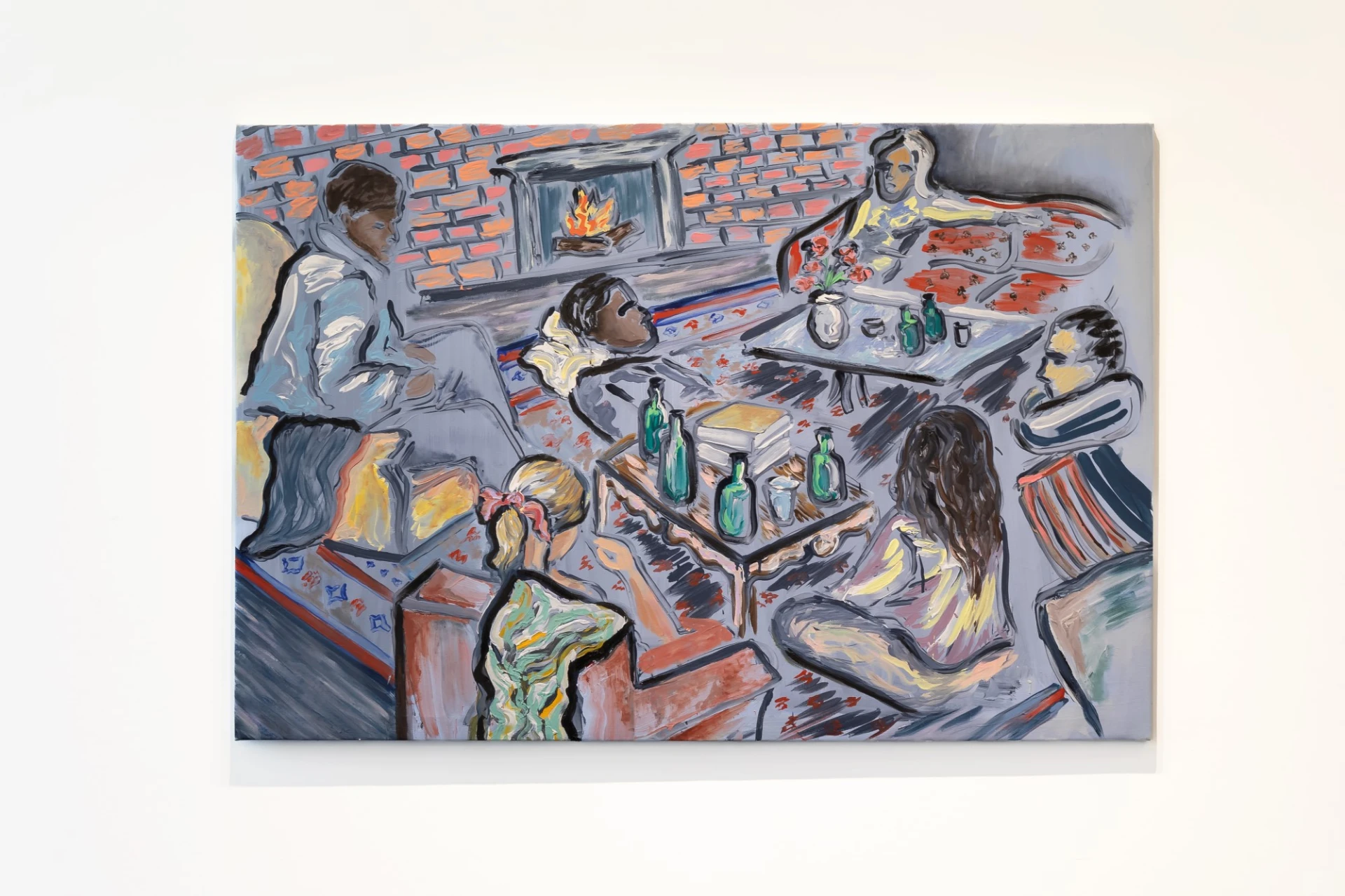
Notre Feu, by Isabelle Ferreira
“With Isabelle Ferreira, the journey begins, not in the sense of wandering and roaming, but of a space that extends beyond the mountain ranges and makes the horizon tangible.”
Humans inscribe their journey between place and landscape.
Rivers, oceans, rugged mountains, walls, barbed wire, interweaving natural materials and divisive constructions, scopic regimes that expand across time.
With Isabelle Ferreira, the journey begins, not in the sense of wandering and roaming, but of a space that extends beyond the mountain ranges and makes the horizon tangible. Salto (Leap) dates back to the Pyrenees, to the memory of her father who, during the Salazar dictatorship, crossed borders “without documents, without permission (...) At first a clandestine immigrant, then legalized, but always a bit of a foreigner. Without the right to vote, without a voice.”1
Frédéric Gross2 says that the freedom to walk lies in being nobody, because the body that walks has no history; it is just a whirlpool in the flow of immemorial life. Immersing ourselves in nature takes us back to this material sense that transcends us immeasurably. Rock surfaces are defined by a geological scale, cycles that transform over millions of years. Weather conditions define the speed of the journey, the risk, the breaks, and the times. Elements in dialogue with the body. However, when we transform nature into language, the prevailing meaning is that of the extreme life experience determined to achieve freedom. At the point of exhaustion, the body does not recount the journey. Naming is an insurmountable measure in the face of experience in the territory.
Mountains appear fragmented, remnants that emerge from memory, from a memory of memory, from a father-body that shelters itself in another body of ice and rock. These white fragments appear, at first glance, like small blankets of snow. Nevertheless, upon closer inspection, we realize that the white gives way to a flaw, a gap that thickens in the landscape. Throughout the exhibition, it is this presence-absence that prevails, the anonymous faces, fragments of images. Children who left their country and now live on the other side, invisible beyond the border. The half of the image that returns is a specter, evidence of life.
Once the destination has been reached, the boundary is inscribed in communication, in the affective dimension of another language that this son, now a father, learns with his French-Portuguese daughter. As Isabelle tells us, “I am that encounter between your courage and my freedom. Between your land and my language. Between your self-sacrifice of yesterday and my horizons of today”3.
The individual stories, the difficulties that reconstruct the memory of the “father/mother or grandfather/grandmother"4 are recounted by their children and grandchildren, who give tangible form to the unspeakable.
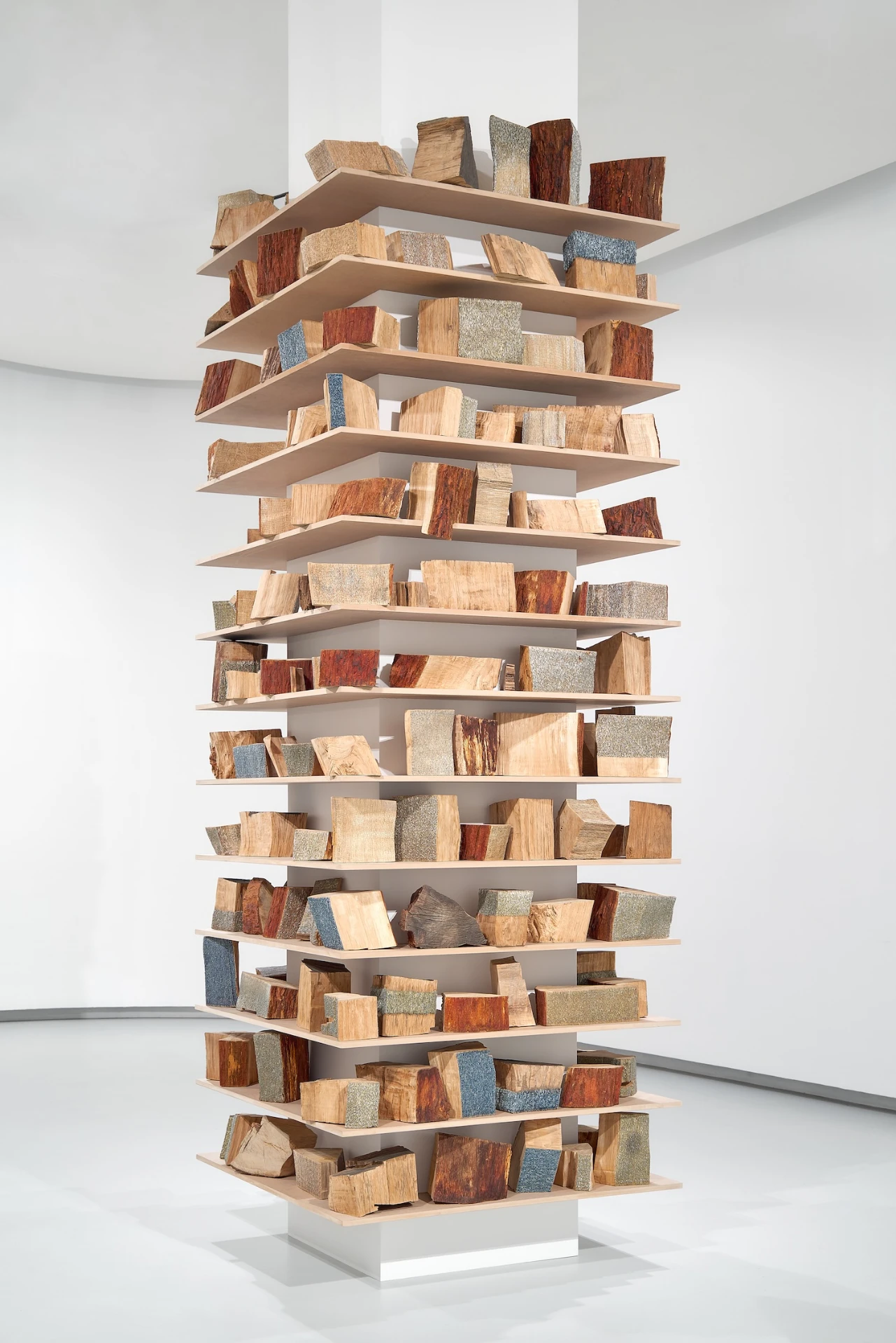
Amidst the immensity of the crossing, elements are subtly scrutinized. On display, the interplay of scales invades our gaze. Before the colossal mountains, traces that humanize are outlined, remnants that reveal the wear and tear of the body, walking sticks covered with staples that damage the material and foreshadow pain, fragmented century-old trees, without roots and without the possibility of taking root, landscapes composed of torn leaves, where blue and emptiness reign.
Sea, atmosphere, sky, mountain, father and daughter, nascent and telluric body(ies), notre feu that melts the snow and brings forth, through the mist, the meaning of freedom.
Curated by Joana P. R. Neves, the exhibition is on view at MAAT until March 2, 2026.
References:
(1), (3), (4) Isabelle Ferreira, Carta ao Meu Pai, in Isabelle Ferreira, Notre Feu, Fundação Edp, 2025.
(2) Frédéric Gross, A Philosophy of Walking, Verso ed., London (2023, p. 29).
BIOGRAPHY
Margarida Alves (Lisbon, 1983). Artist, PhD student in Fine Arts (FBAUL). Researcher by the University of Lisbon. Degree in Sculpture (FBAUL, 2012), Master in Art and Glass Science (FCTUNL & FBAUL, 2015), Degree in Civil Engineering (FCTUNL, 2005). She is a resident artist in the collective Atelier Concorde. Collaborates with national and foreign artists. Her work has an interdisciplinary character and focuses on themes associated with origin, otherness, and historical, scientific and philosophical constructions of reality.
ADVERTISING
Previous
article
11 Feb 2026
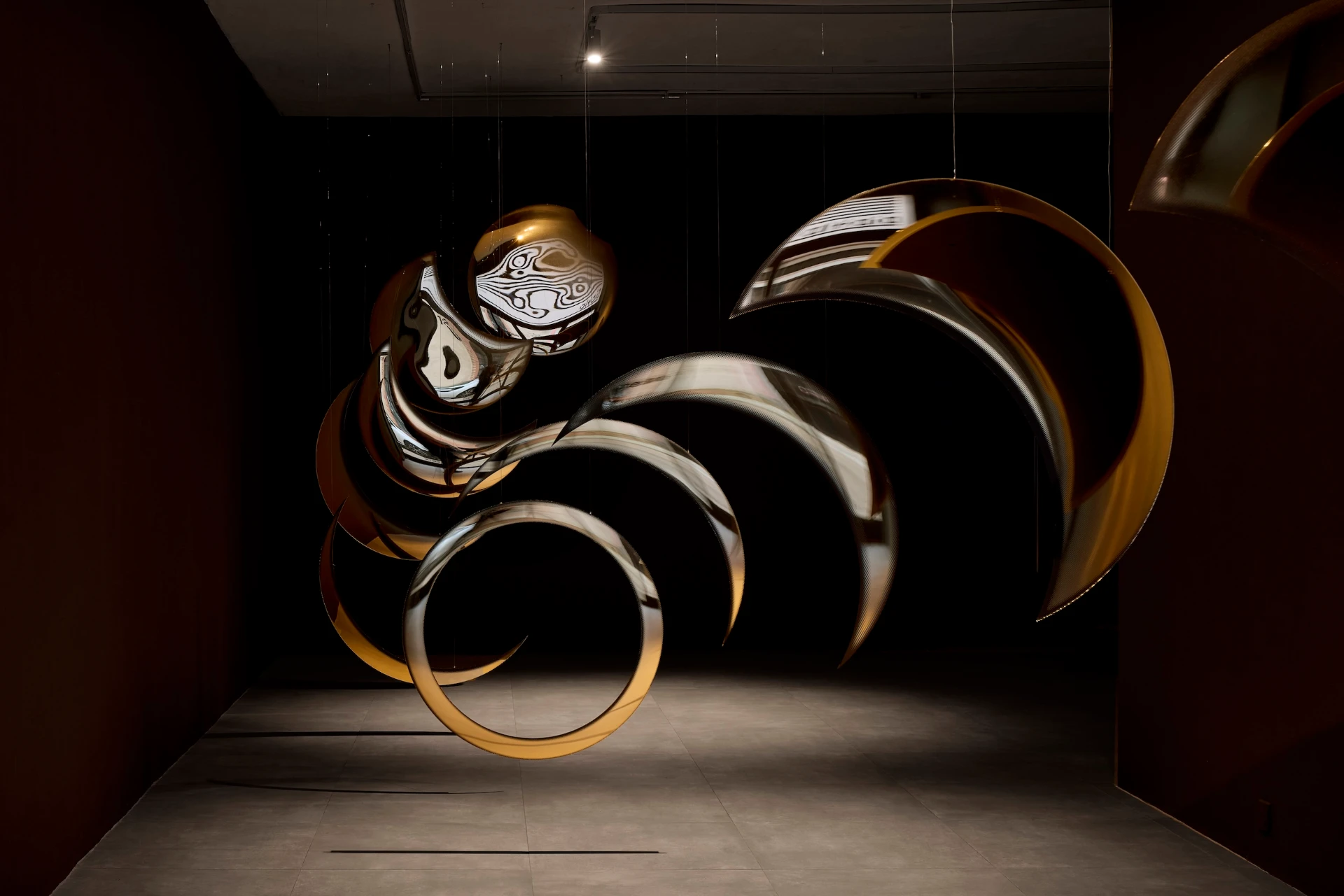
Eclipse, by Diogo Evangelista, at Alfaia
By Ana Isabel Soares
Next
article
12 Feb 2026
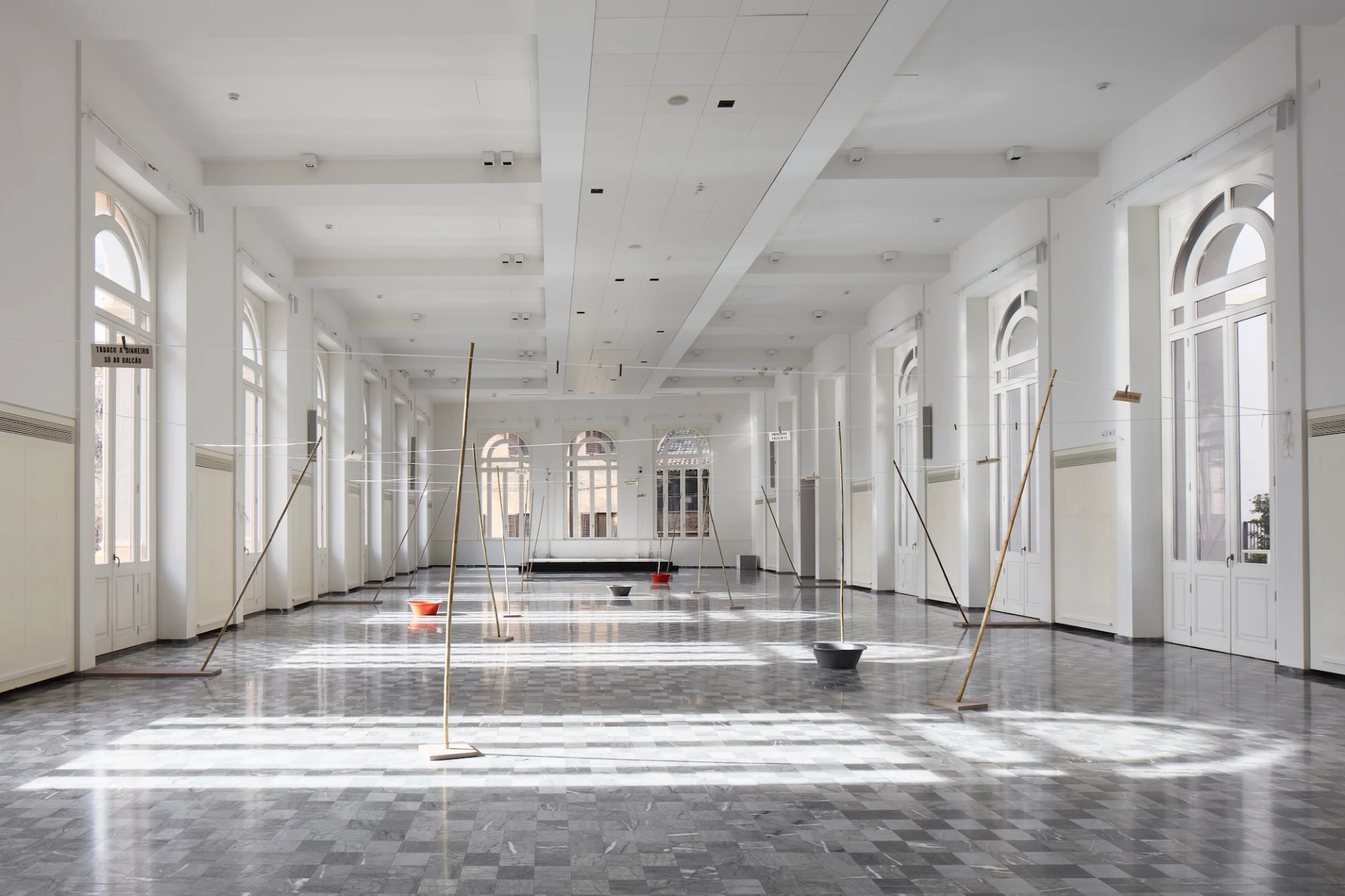
Stories of shadows and worlds: Francisco Tropa in Bologna
By Matteo Bergamini
Related Posts
article
28 SEP 2026
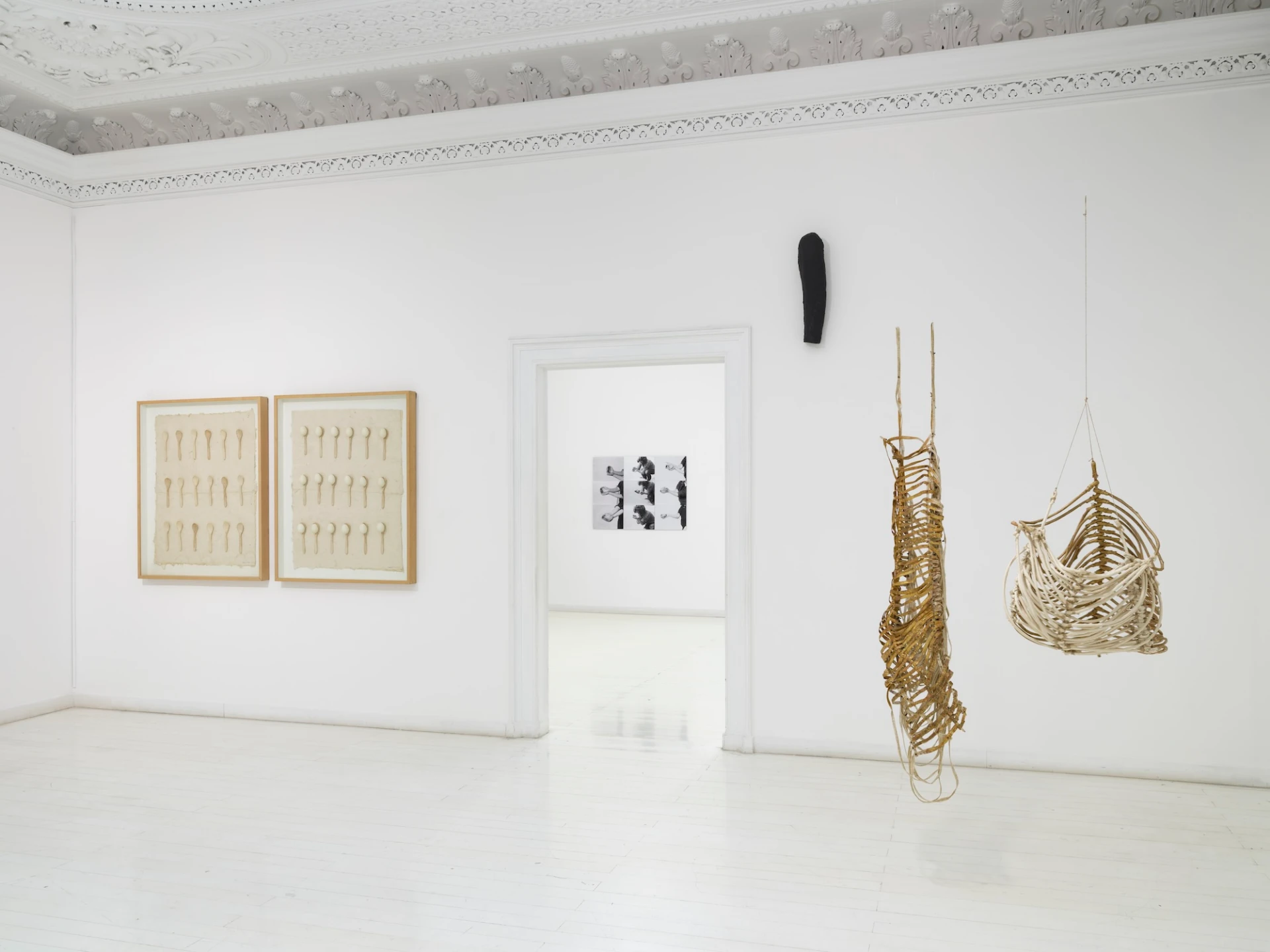
Eu que já fui eu, by Maria José Oliveira
By Margarida Alves
article
11 FEB 2026
Notre Feu, by Isabelle Ferreira
By Margarida Alves
article
-054-xns5g.jpg)
03 DEC 2025
Earth Gods / Velar Sculpture, at the Museu do Oriente
By Margarida Alves
article
03 NOV 2025
Caos com Carinho, by Mariana Malheiro
By Margarida Alves