article
The sweetness of invisible friction: Homework 4 at Galeria Madragoa
The fourth iteration of Homework at Galeria Madragoa unfolds as a subtle yet intellectually charged meditation on still life as an expanded field of relations. Bringing together artists whose practices intersect across painting, sculpture, textile, and hybrid media, the exhibition refuses the static neutrality historically associated with the genre. Instead, it proposes still life as a site of tension—between bodies and objects, surfaces and atmospheres, memory and material, presence and disappearance. What emerges is a choreography of invisible forces: gravity, breath, gesture, affect, and social meaning.
Across the exhibition, objects do not rest; they vibrate within networks of energy. Stillness becomes provisional. The gallery itself becomes a field of invisible friction, where material forms register pressures both physical and symbolic.
Conceptually, the exhibition resonates with an expanded genealogy of thought and practice: Joseph Beuys’s understanding of art as social sculpture and transformative field; Hélio Oiticica’s Neo-Concrete insistence on sensorial participation and the dissolution of boundaries between artwork and life; Walt Whitman’s democratic poetics of the body and world as continuous matter; Clarice Lispector’s intuition of self as a state of interior unfolding; and Luce Irigaray’s philosophy of relational becoming and fluid exchange. These references function less as external citations than as atmospheric affinities. They situate the exhibition within a broader field in which matter, subjectivity, and relation remain in constant negotiation, where art becomes not a static object but an active site of transformation and encounter.
Operating as an axis of criticality in consort with the surrounding works, Lucrezia Bracci’s sculptural installations establish one of the exhibition’s most palpable registers of breath and spatial tension. Working with drapery, fabric, and structural supports, Bracci constructs forms that resist the rigidity traditionally associated with sculpture. Her works appear suspended in states of negotiation: soft textiles stretch, sag, and gather against rigid frameworks, producing equilibria that feel temporary and responsive. These sculptures do not assert dominance within space; they inhabit it as porous bodies. Their presence is not monumental but atmospheric. They inhale and exhale the surrounding environment, transforming the gallery into a zone of shared respiration.
Bracci’s sculptures articulate a profoundly anti-phallocentric spatial language. Where classical and modernist sculptural traditions have often privileged verticality, solidity, and permanence—qualities historically coded as masculine authority—Bracci proposes softness, flexibility, and contingency. Fabric becomes the primary agent, displacing the authority of rigid form. Drapery destabilizes structure. Folds accumulate like breaths held and released. Gravity collaborates rather than opposes. Form emerges through relation rather than imposition.
Her work resonates closely with Luce Irigaray’s philosophy of fluid relationality and mutual becoming. Irigaray writes: “You give me being. But what I love is the fact that you give it to me. Staying there is of little matter to me. I like your giving me a mirror which is not made of ice. Your flowing into me, and me into you. Receiving you melting, molten, and giving that flow back to you. Without end.”
Bracci’s sculptures seem to materialize precisely this exchange: a circulation between body, material, and space in which boundaries soften and forms remain open. Fabric flows into structure and structure into fabric; space moves through the work and the work through space. Rather than asserting a fixed presence, the sculptures exist as ongoing processes of giving and receiving. They mirror without freezing. They remain molten, responsive, and permeable.
This breathable quality carries a phenomenological dimension. The sculptures register the artist’s gestures while remaining open to environmental influence. Air circulates through and around them; light shifts across their surfaces. They appear capable of change, as though a slight movement or alteration in atmosphere might reconfigure their balance. In this sense, Bracci’s practice redefines still life not as a frozen arrangement but as a momentary stabilization within ongoing processes. Her works are still only in the sense that they pause briefly within a continuous choreography of forces. They ask viewers to attune themselves to subtle tensions—to feel space as something lived rather than observed.
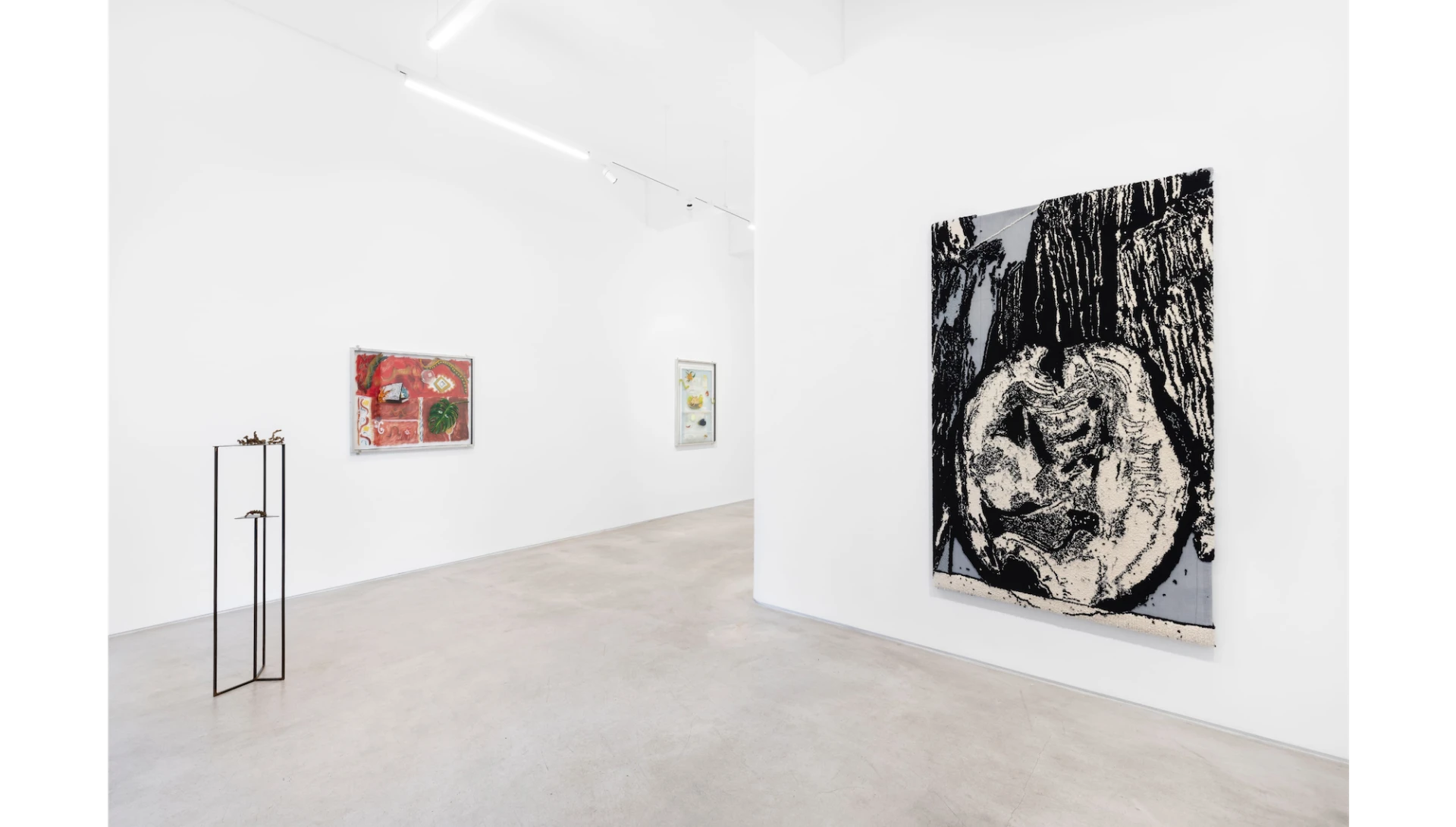
In consort with Bracci’s spatial propositions, Beatriz Capitulé’s wool-on-canvas works introduce a tactile and gestural dimension that operates between drawing, textile, and performance. Created with a carpet-weaving gun, her stark black-and-white compositions evoke landscapes that hover between representation and abstraction. Each tufted line is a physical event. Gesture is embedded into surface. The works possess a raw immediacy aligned with a neo-primitivist sensibility—a return to mark-making as embodied and ritual-like action—yet this primitivism functions as a contemporary strategy rather than a nostalgic one.
Capitulé’s practice resonates strongly with the Neo-Concrete movement in Brazil and with Hélio Oiticica’s insistence on art as a sensorial and participatory structure. Like Oiticica’s Tropicália, her works foreground tactility, process, and bodily engagement. Though wall-bound, their dense textile surfaces produce an environmental presence. The viewer’s gaze traverses them as if crossing terrain. Each tufted mark records time and action, echoing Neo-Concrete ideas of the artwork as a living organism. By translating drawing into textile using a tool associated with craft and domestic labor, Capitulé destabilizes hierarchies between high and low culture, aligning with Oiticica’s expanded field in which art merges with lived experience.
If Capitulé’s works pulse with gestural immediacy, Carla Dias’s paintings unfold through a more measured yet equally complex orchestration of objects, operating as painterly assemblages in which everyday things become charged sites of relation rather than passive motifs. Her compositions evoke the grammar of traditional still life yet function less as depictions than as constellations in which proximity generates meaning through friction. Familiar objects—utensils, containers, fragments of packaging—are placed in careful relation. The result recalls the display logic of Damien Hirst at a distance, yet Dias replaces spectacle with psychological density. Objects are not fetishized commodities but participants in an unstable emotional ecology.
Read through Joseph Beuys’s expanded conception of art and his rethinking of pop, her practice becomes especially resonant. Beuys sought to absorb pop’s immediacy while redirecting it toward transformation, toward a field in which art could function as a “social sculpture.” Dias’s paintings operate within this post-pop terrain. They adopt the visual vocabulary of everyday commodities yet refuse glossy neutrality. Objects appear estranged, relational, emotionally charged. In keeping with Beuys’s rejection of distinctions between elite and popular culture, Dias allows banal and aestheticized objects to coexist without hierarchy. The still life becomes democratic terrain. Yet her work also enacts transformation: objects shift meaning through adjacency and scale, revealing psychological and social residues embedded within material culture. Against the coldness of consumer display, she introduces warmth—painterly touch, memory, and vulnerability. Her paintings function as quiet social sculptures, reorganizing relations between objects and viewers.
Sofia Mascate’s paintings introduce a more atmospheric and lyrical register. Drawing on late nineteenth-century American still-life traditions, she transforms the genre into a mutable landscape of perception. Objects appear suspended within vaporous color fields. Glass surfaces and translucent layers create spatial instability. The still life becomes a landscape in flux.
Her work resonates with the democratic poetics of Walt Whitman, whose embrace of multiplicity and bodily presence echoes through her compositions. Objects coexist without hierarchy. Surfaces breathe. Light diffuses as if moving through air or flesh. The boundary between object and environment dissolves, aligning with Whitman’s sense of the world as a continuous field of relation. There is also a Lispectorian interiority in Mascate’s work: a quiet attention to states of perception and feeling, to the subtle intensities of presence that unfold beneath the visible. Her paintings invite viewers into a slower mode of attention, where still life becomes a space of interior and atmospheric transformation.
Matilde Sambo’s sculptures and engravings introduce a ritualistic and symbolic dimension grounded in the logic of totemism. Her bronze and glass forms evoke hybrid bodies and mythological fragments that function as contemporary totems—objects through which collective identity and memory condense. Bronze suggests permanence; glass suggests fragility. Together they create forms that hover between endurance and dissolution. Sambo’s works do not prescribe meaning; they gather it. They operate as nodes within a field of collective imagination, emphasizing relational identity and the interconnectedness of human and non-human realms.
Taken together, the works in Homework 4 articulate a network of tensions: softness and rigidity, warmth and coldness, stability and flux, individual gesture and collective meaning. In consort, the practices of Bracci, Capitulé, Dias, Mascate, and Sambo establish a shifting yet coherent field in which these tensions remain productively unresolved. Each artist contributes a distinct register of friction while maintaining openness to transformation.
The exhibition ultimately leaves the viewer suspended within a state of heightened awareness—one attuned to intensity without melancholy, to form without closure. It recalls a desire for presence that is instinctive and expansive: “I want the following word: splendor, splendor is fruit in all its succulence, fruit without sadness. I want vast distances. My savage intuition of myself.”
In this spirit, Homework 4 does not resolve the tensions it sets in motion. It allows them to ripen, circulate, and breathe across the field of invisible friction, where matter, body, and image remain in continuous exchange and where still life expands into a living, relational, and quietly radiant terrain.
The exhibition is on view at Madragoa Gallery until February 28.
Selected Bibliography:
Beuys, J. (2004). What is art? (V. Harlan, Ed.; M. T. Reynolds & M. E. Berghahn, Trans.). Clairview Books.
Irigaray, L. (1992). Elemental passions (J. Collie & J. Still, Trans.). Routledge. (Original work published 1982)
Lispector, C. (2012). Água viva (S. Tobler, Trans.). New Directions. (Original work published 1973)
Oiticica, H. (2013). Hélio Oiticica: To organize delirium (L. Pérez-Oramas, M. Basualdo, C. Pedrosa, & G. Schollhammer, Eds.). DelMonico Books / Museum of Fine Arts, Houston.
Whitman, W. (2005). Leaves of grass. Dover Publications. (Original work published 1855)
BIOGRAPHY
Josseline Black is a contemporary curator, writer, and researcher. She holds an M.A. in time-based media from the Kunst Universität Linz and a B.A. in Anthropology (specialization Cotsen Institute of Archaeology) from the University of California Los Angeles. She operated for five years as in-house curator of the international artistic residency program at the Atelierhaus Salzamt (Austria) wherein she had the privilege of working closely with a number of brilliant artists. Included in her duties within the institution she allocated and directed the Salzamt hosting of the E.U. CreArt mobility for artists program. As a writer, she has reviewed exhibitions and co-edited texts for Museu Nacional de Arte Contemporânea do Chiado, Portugal, Madre Museum Naples, the Museums Quartier Vienna, MUMOK, Guimarães Gallery, Gallery Michaela Stock. She is regular theoretical contributor to the Contemporary Art Magazine Droste Effect. In addition, she has published with Interartive Malta, OnMaps Tirana, Albania, and L.A.C.E (Los Angeles Contemporary Exhibitions). In tandem to her curatorial practice and writing, she has for the past decade used choreography as a research tool inquiring into the ontology of the performing body with a focus on embodied cartographies of public memory and space. She has held research residencies at the East Ugandan Arts Trust, the Centrum Kultury w Lublinie, the University of Arts Tirana Albania, and the Upper Austrian Architectural Forum. It is her privilege to continue developing her approach to curatorship which derives from an anthropological reading of art production and an ethnological dialectic in working with cultural content generated by art makers. Currently, she is developing the methodology which supports the foundation of a performance-based trans-disciplinary platform for a spectral critique on art production.
ADVERTISING
Previous
article

09 Feb 2026
O chão na cabeça, by João Timóteo
By Laurinda Branquinho
Next
article
11 Feb 2026
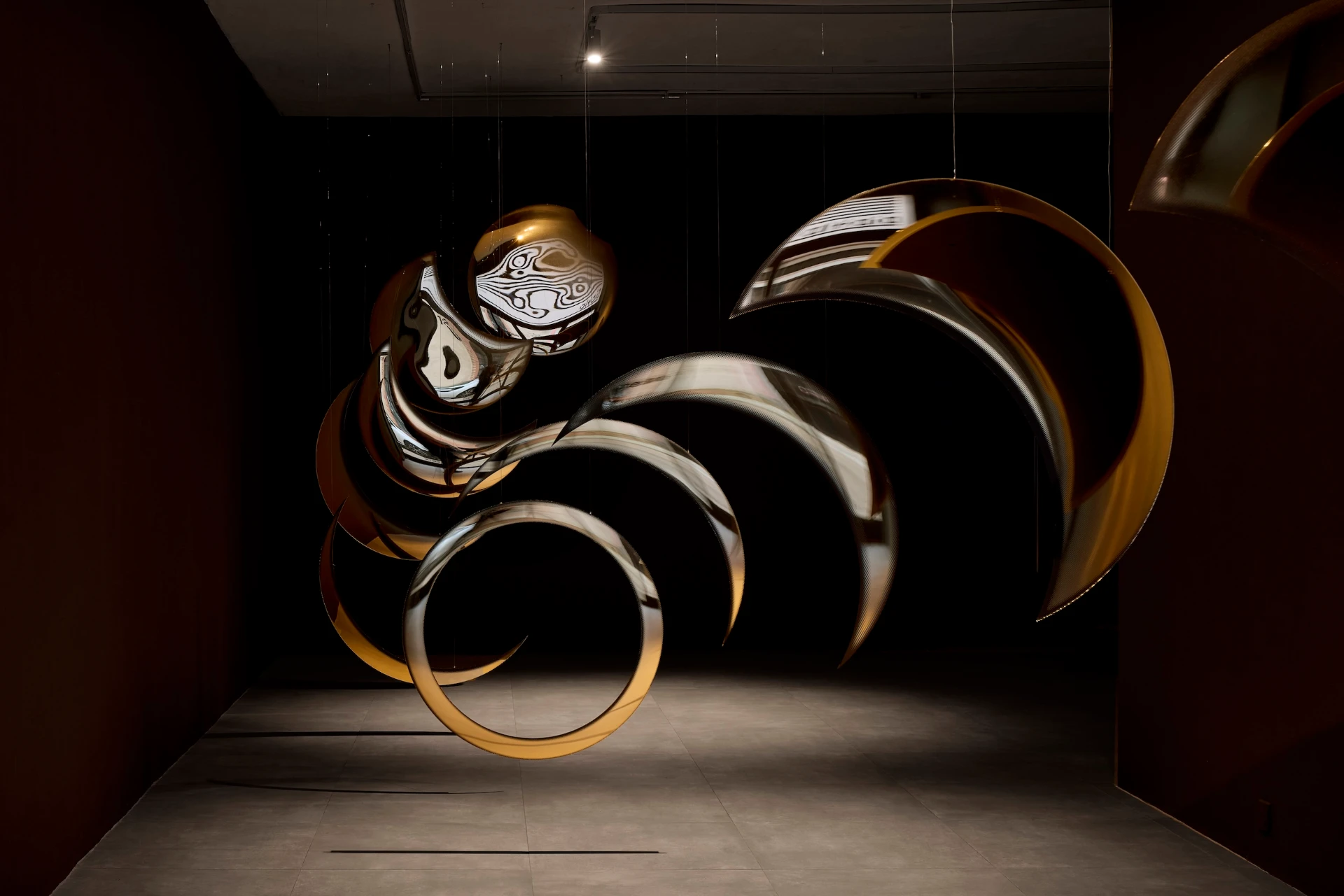
Eclipse, by Diogo Evangelista, at Alfaia
By Ana Isabel Soares
Related Posts
article
15 JUL 2026
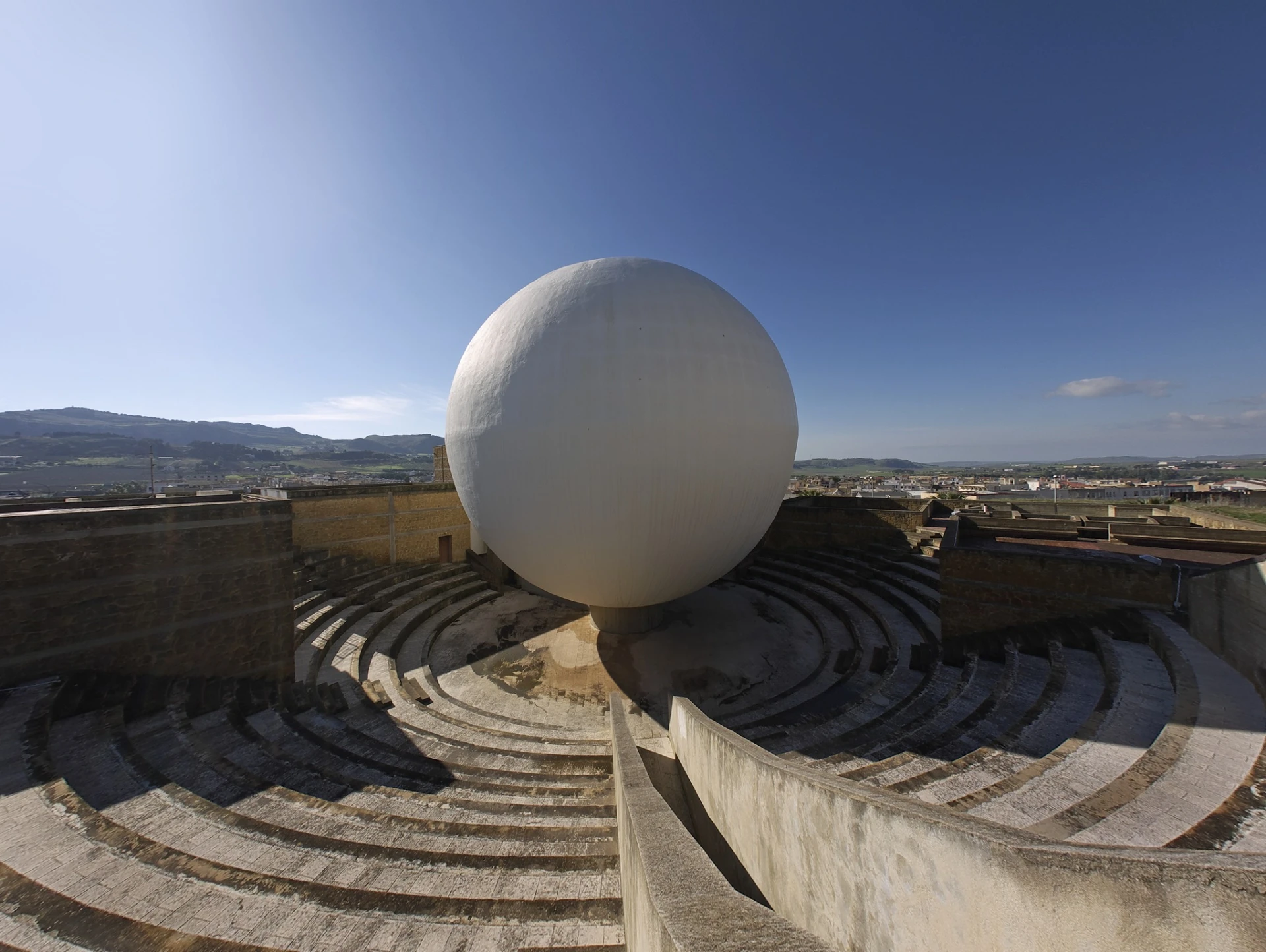
Gibellina - Capitale Italiana dell'Arte Contemporanea 2026
By Josseline Black
article
29 JUN 2026
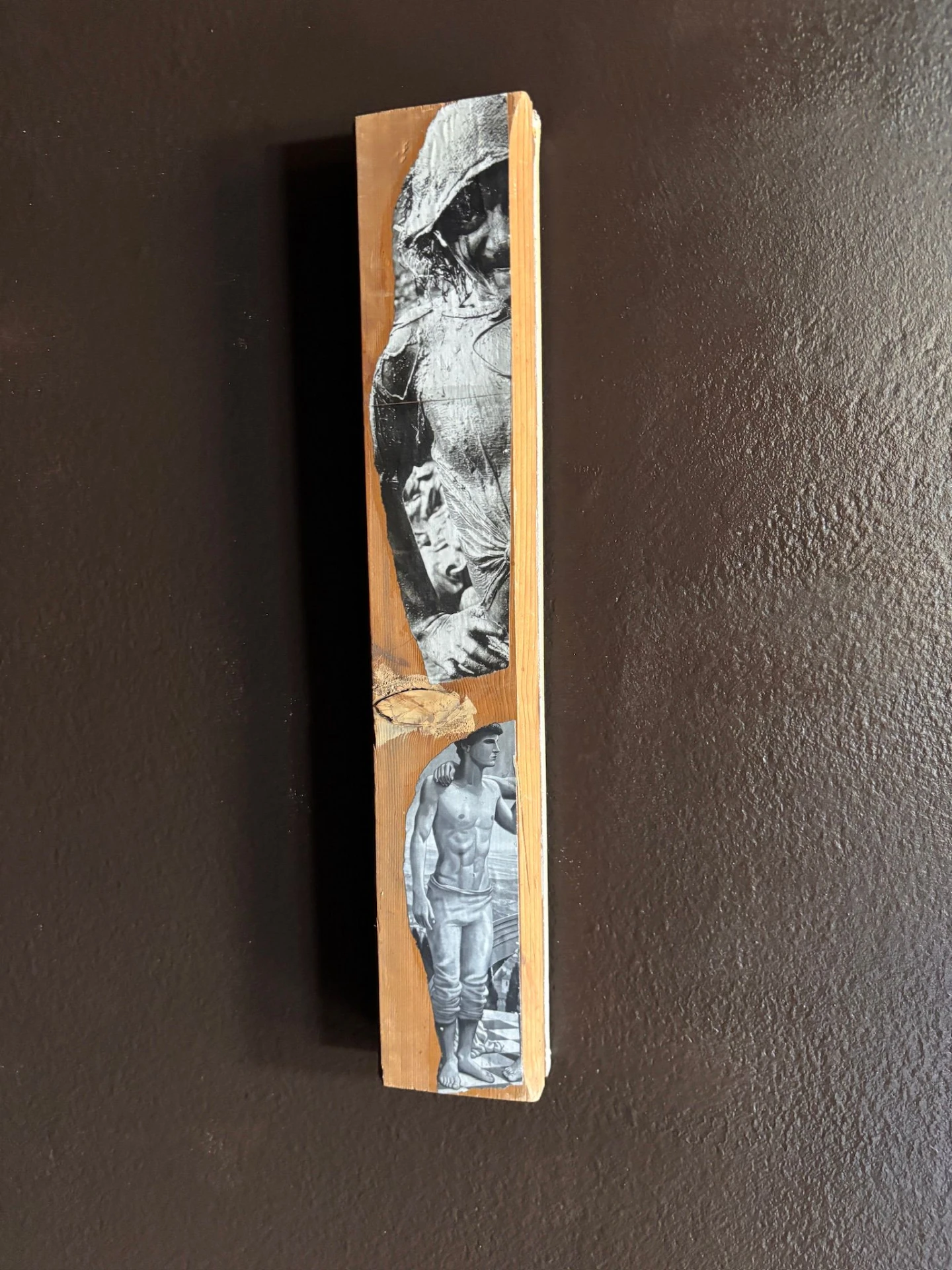
The Theatre of Care at Galleria Federico Vavassori
By Josseline Black
article
15 MAY 2026
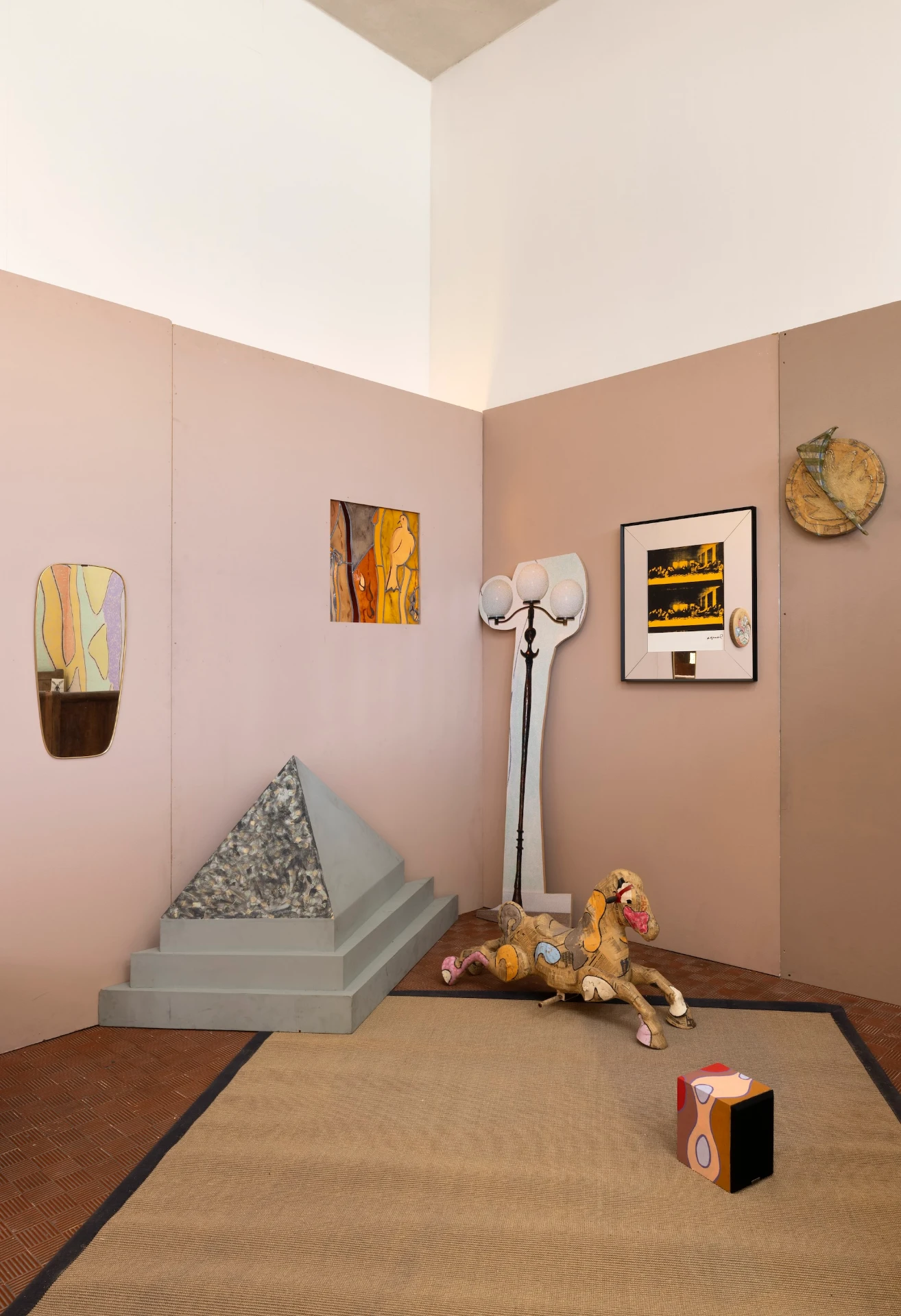
Writing the Crystalline Field of Collectivity: The Second Shadow at ICA Milano
By Josseline Black
article
10 FEB 2026
The sweetness of invisible friction: Homework 4 at Galeria Madragoa
By Josseline Black