article
O chão na cabeça, by João Timóteo
It is precisely with two cabinets that João Timóteo establishes the beginning of the exhibition O chão na cabeça, presented at Carpintarias de São Lázaro, with a double projection on the back of these pieces of furniture that transports us into the interior of a house. And it is around this house, his grandmother's house, that the entire exhibition is organized.
Não se pode dormir com o cabelo molhado - faz mal.
Faz mal e acordo a meio da noite com a cabeça dorida.
Parece que tenho o chão na cabeça.1
(You can't sleep with wet hair - it's bad for you.
It's bad for you and I wake up in the middle of the night with a headache.
It feels like I have the floor on my head.)
There are household objects that transcend their practical function and become silent memory devices. They not only store things, but accumulate gestures, habits, and presences, organizing familiar memory over time. Among them, living room cabinets occupy a special place, simultaneously exposed and closed, visible and secret.
For Gaston Bachelard, cupboards (and wardrobes) are not merely functional pieces of furniture, but objects that possess a profound connection to the history and intimacy of the family. In his book Poetics of Space, the cupboard is described as a "center of order" that protects the entire house from external disorder and recalls the family's history through the arrangement and preservation of its most intimate belongings2. Each family cupboard possesses a unique signature of intimacy, often linked to specific smells or objects that remain etched in memory—sensory and visual details that anchor personal and family history to the physical object.
It is precisely with two cabinets that João Timóteo establishes the beginning of the exhibition O chão na cabeça (The Floor in the Head), presented at the Carpintarias de São Lázaro, with a double projection on the back of these pieces of furniture that transports us into the interior of a house. And it is around this house, his grandmother's house, that the entire exhibition is organized.
We are introduced to its interior in a single take that traverses the various rooms. Without furniture, doors, or windows, we navigate through it in a void occasionally interrupted by objects (from eyeglasses to trinkets or a wall clock) suspended in the air, floating like ghosts, in an inertia reminiscent of a dream. The house shown to us does not appear as a habitable space in the functional sense, but as a mental territory. The walls exist, but the elements that usually guarantee their use and comfort are missing. What remains is the minimal structure that allows the imagination to operate, and it is precisely in this state of suspension that this house is constructed, as a space that no longer belongs to the present, but to the unstable time of memory.
The exhibition occupies only a part of the Carpintarias de São Lázaro, organized like a carefully distributed stage set. The low light, punctuated by precise spotlights on each sculpture, accentuates the theatrical effect of the installation, as if we were witnessing the silent unfolding of a play. From this space emerges the possibility of fantasizing about an action, of imagining stories as we wander through each of the elements.
The figure of the grandmother functions as the affective axis and guiding star of the entire exhibition. There is the grandmother, the memory of the objects that belonged to her house, but above all there are João Timóteo's memories of her. The installation that gives the exhibition its name, which has two pieces of furniture as its pillar, does not seek to faithfully reconstruct a place or a biography; rather, it stages the way in which memory is formed, repeated, altered, and lost.
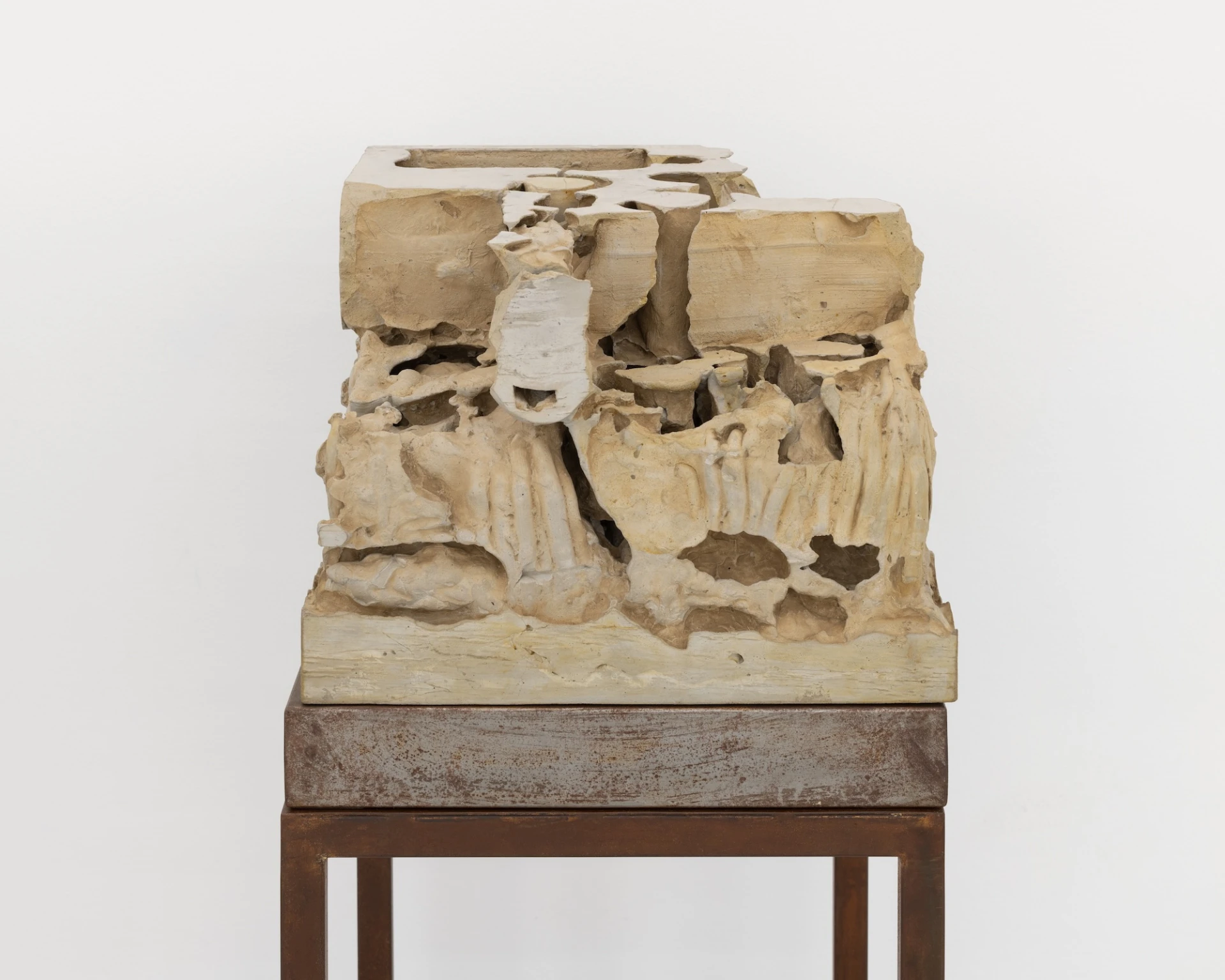
This instability manifests itself formally in repetition. The various stoneware sculptures we see, both displayed in the two cabinets and arranged throughout the space, multiply in minimal variations, and the motifs range from airplanes to angel-gremlins. The repetition does not aim for the perfection of the original, but for an approximation to something that never allows itself to be fixed. Just as in memory, each attempt to return modifies the remembered object: some details disappear, others emerge. The sculptural gesture thus becomes an exercise in reconstructing memory, an attempt to bring memory into the material world knowing it, from the outset, to be treacherous and therefore fallible.
The cabinets—painted off-white, matching the tone of the sculptures—reinforce this ambiguity between intimacy and distance. They are typical pieces of furniture in a family room, designed both to display and to conceal. However, the monochrome neutralizes the chromatic uniqueness of the objects and creates a sterile effect on the domestic. This intimate space seems suspended, incomplete, reduced to the fading of what survives only in memory.
The knick-knacks in a house are objects that seem to have no practical function but are fundamental as supports for the imagination and anchors of symbolic security (where, normally, only their owner truly knows the meaning they carry). The various sculptures we see operate as a direct homage to these objects, whether through their reduced scale, the motifs represented, or the way they are arranged in space. They contain references to popular culture, such as Princess Diana's dress, Charles's costume, or the Wicked Witch from The Wizard of Oz, the latter with a double meaning: the work is titled Mary Witch, a reference to the first album by rapper Allen Halloween. The images that the artist evokes coexist on the same plane as the familiar objects and actively participate in the construction of domestic identity, inseparable from the artist's own identity.
The artist's own body infiltrates this space. The fragments and molds of his face, arranged in the cupboards, cause João Timóteo to become part of the collection of objects in his grandmother's house. The artist ceases to be merely an observer of memory and becomes an integral part of its archive, inscribing his body within the continuity of the imagined house.
The house, like memory, takes on multiple forms, and the building where it is located is also modeled in miniature and repeated in variations: sometimes complete, sometimes reduced to a facade, sometimes resembling a ruin. Each version seems to correspond to a different state of memory—more whole, more fragmented, more distant. The installation thus creates a memory of a place and of a person, aware that this construction is always partial and mutable.
The space he constructs also approaches the regime of dreams. The house is never presented in its entirety: there are no defined rooms, only furniture and sculptural objects that coexist on the same plane. This spatial organization reflects the very functioning of memory, which is not composed in a linear or total way, but through overlaps, gaps, and associations.
In O chão na cabeça, the house is not presented as a stable refuge, but as a device for imagination and loss. The house, as a reliquary of memory, becomes an extension of the identity of the person who inhabited it—in this case, Timóteo's grandmother—because houses are inevitably made of those who lived in them. But it is also, simultaneously, part of the artist's own identity, because if a house reverberates so deeply within someone that it becomes the subject matter of their work, then that house ceases to be merely an inheritance and becomes constitutive of the self. It is in this sense that the sculptures of his own face, placed in the cupboards, do not function as self-representation, but as evidence that this house—imagined, fragmented, and reconstructed—is also the place where his own identity is inscribed.
The exhibition is part of the Half-Life project and is the result of a collaboration between Carpintarias de São Lázaroand Rosalux in Berlin, where the research extends to the collective exhibition Welt am Draht / O mundo por um fio. The show is part of the Tech Dreams program of the POGO collective, an independent structure founded in Lisbon in 1993, whose work develops at the intersection of theatre, cinema, visual arts, writing and performance, understanding the intersection of languages as a continuous field of artistic investigation.
On the last day of the exhibition, February 15, 2026, there will be a performance by Rita Só based on a text written by the artist, as well as a guided tour by Constança Pupo Cardoso, author of the exhibition leaflet, and João Timóteo.
1 Excerpt from a text by João Timóteo, written based on his grandmother's memories and performed by Rita Só at the opening and closing of the exhibition.
2 Gaston Bachelard, "Drawers, Chests and Wardrobes", in The Poetics of Space (Boston: Beacon Press, 1994), págs. 74-89.
BIOGRAPHY
Laurinda Branquinho (Portimão, 1996) has a degree in Multimedia Art - Audiovisuals from the Faculty of Fine Arts of Universidade de Lisboa. She did an internship in the Lisbon Municipal Archive Video Library, where she collaborated with the project TRAÇA in the digitization of family videos in film format. She recently finished her postgraduate degree in Art Curatorship at NOVA/FCSH, where she was part of the collective of curators responsible for the exhibition “Na margem da paisagem vem o mundo” and began collaborating with the Umbigo magazine.
ADVERTISING
Previous
article
06 Feb 2026
Traslados, by Marcelo Moscheta
By Débora Valeixo Rana
Next
article
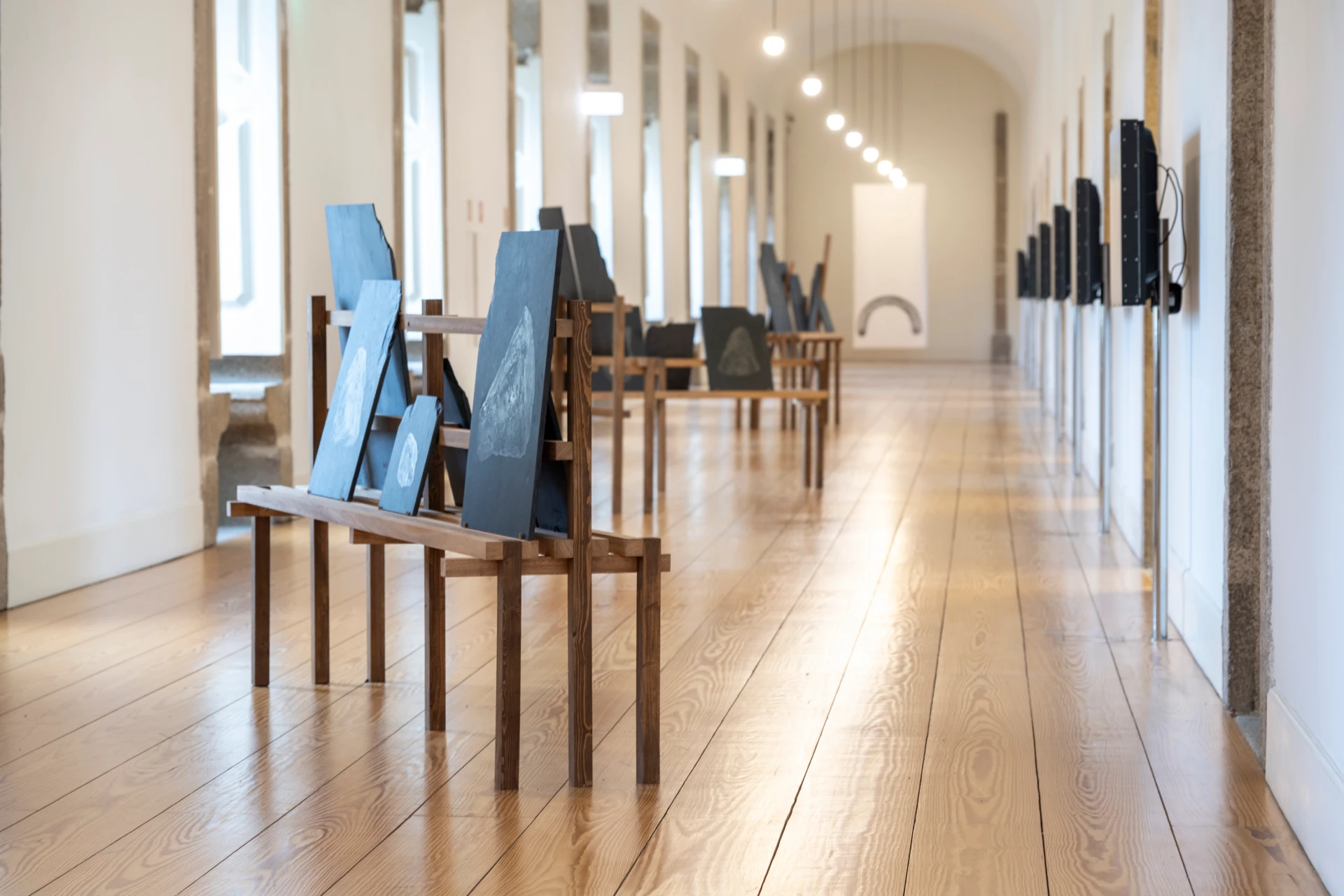
10 Feb 2026
The sweetness of invisible friction: Homework 4 at Galeria Madragoa
By Josseline Black
Related Posts
article
11 AUG 2026
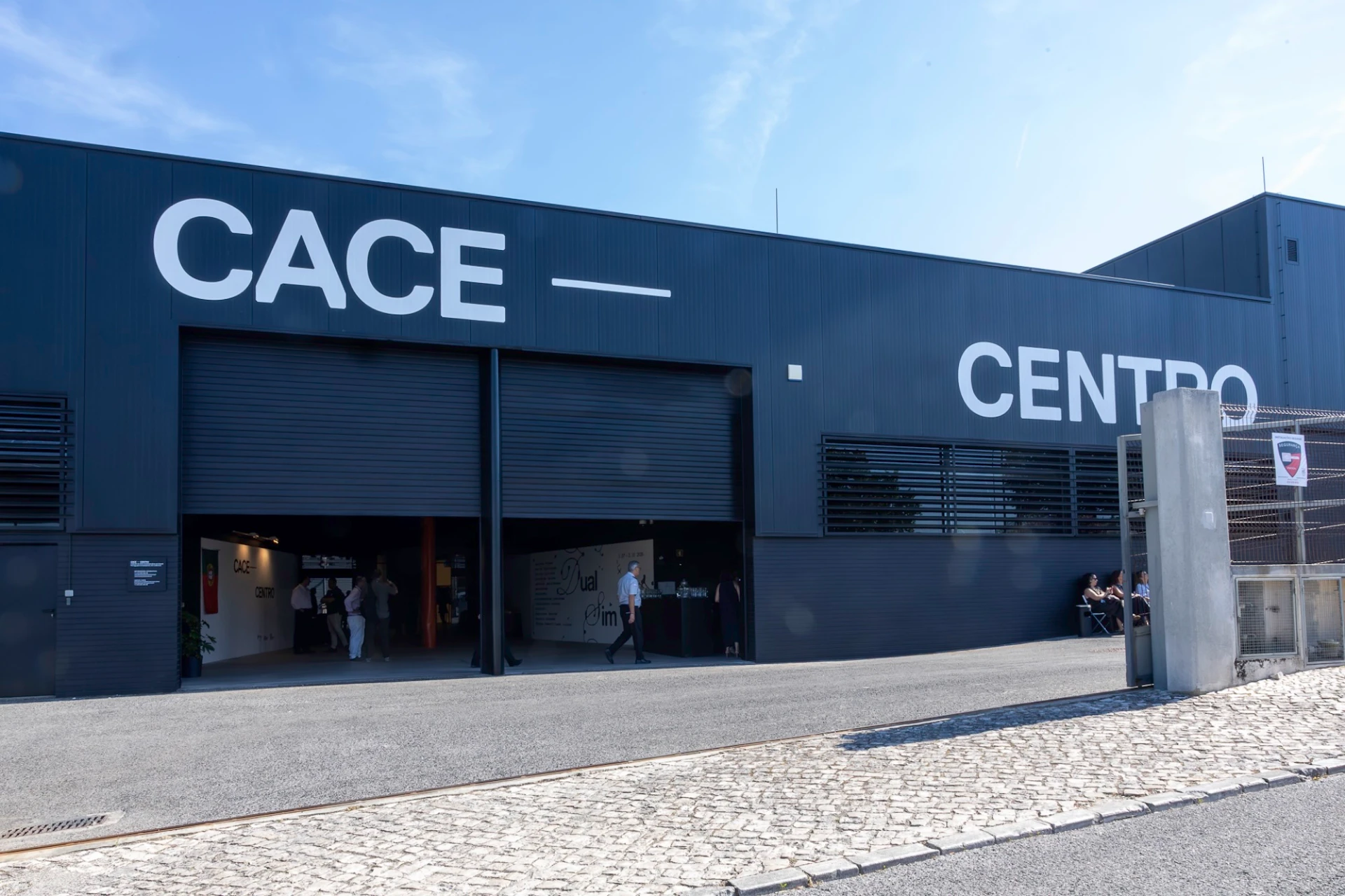
Dual Sim at CACE-CENTRO: what a collection produces
By Laurinda Branquinho
article
24 JUN 2026
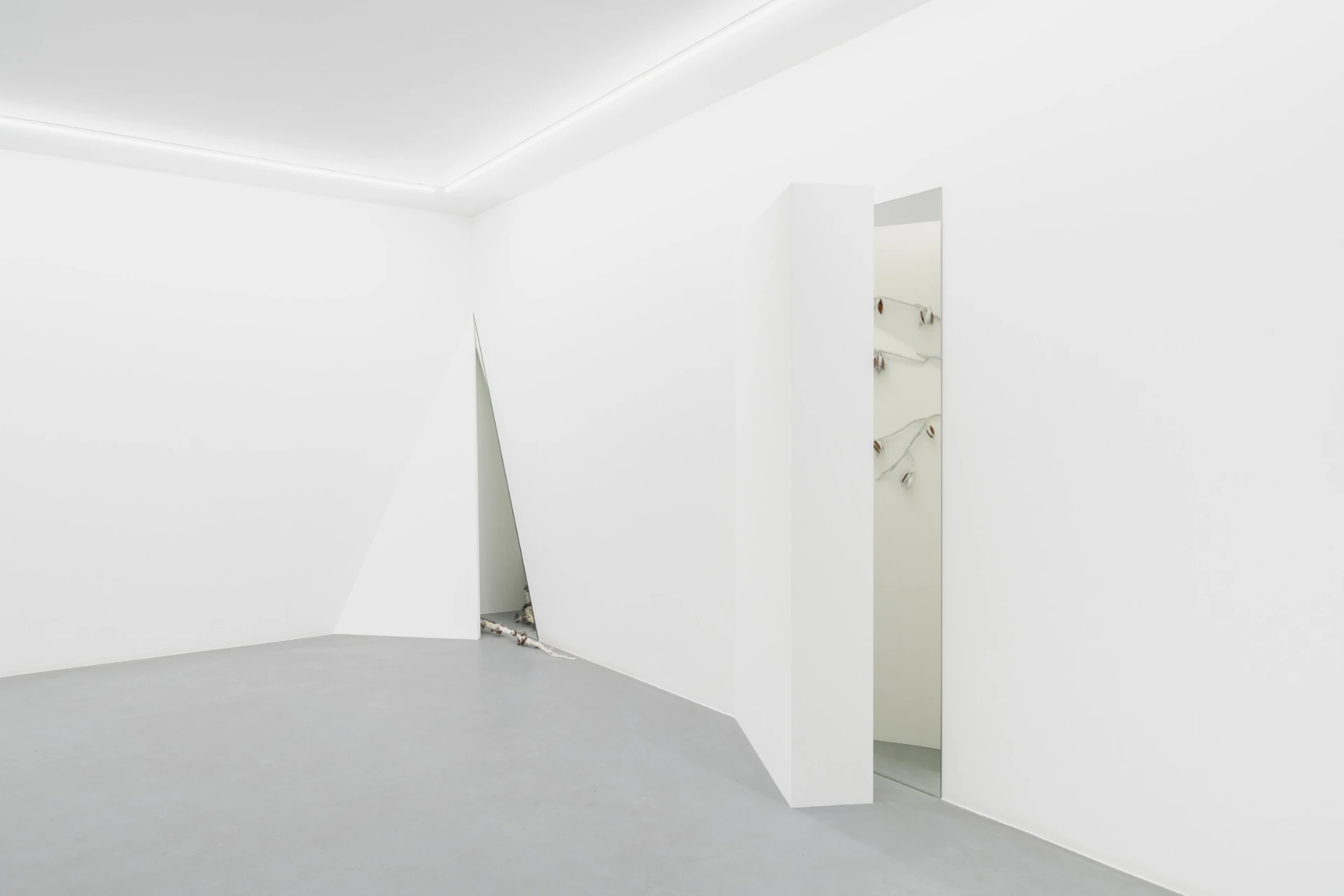
Retirar a gravidade à queda, by Carolina Serrano
By Laurinda Branquinho
article
25 MAY 2026
Terra Poética: Ana Maria Maiolino at MAAT
By Laurinda Branquinho
article
20 APR 2026
Interview with João Marques, author of the Umbigo.space cover
By Laurinda Branquinho