article
Dual Sim at CACE-CENTRO: what a collection produces
“A collection remains alive when it is continually recirculated through different contexts, interpretations, and audiences. By opening the reserves to the public and inviting two young curators to construct new readings from the most recent acquisitions, CACE-CENTRO presents the collection as a space in permanent construction of meaning.”
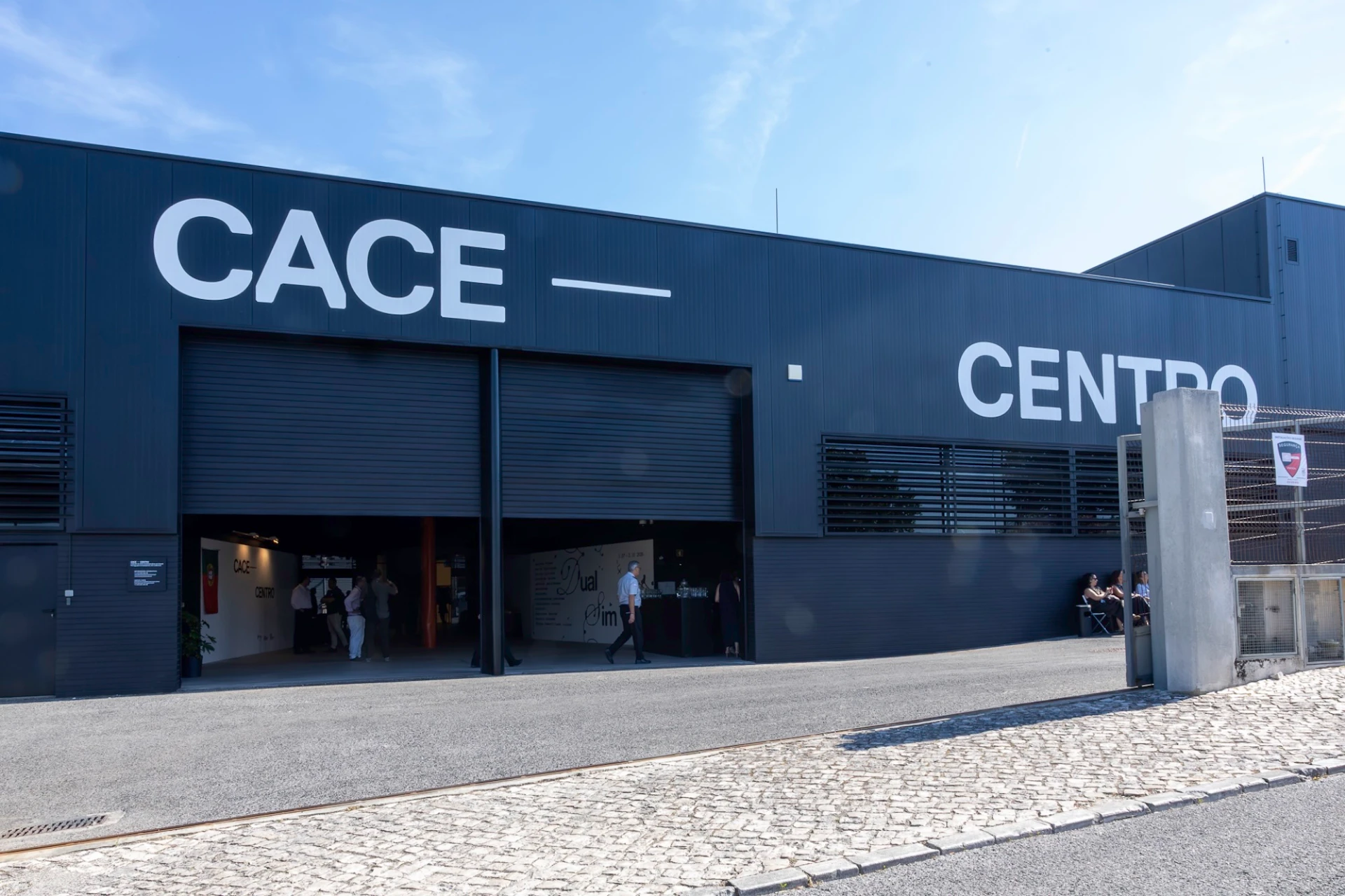
The group exhibition Dual Sim inaugurates CACE-CENTRO, the new space of the State Collection of Contemporary Art (CACE), which opened to the public in early July in Alcabideche, Cascais. Divided between two twin rooms, the exhibition brings together twenty-three works integrated into the collection since the beginning of the annual program of acquisitions of contemporary art in 2019. From the perspective of the young curators Filipa da Rocha Nunes and Sofia Montanha, this is the first curatorial interpretation built specifically for this space, exploring the collection's capacity to generate new relationships, meanings, and questions. Also for the first time, the storage areas are open to visitors, allowing the public an encounter with the invisible side of contemporary art.
The curatorial concept takes the Dual SIM system (1) as a starting point as a metaphor for circulation between networks, geographies and identities. It is a pertinent image for a public collection whose mission is precisely to decentralize access to contemporary art and circulate the national artistic heritage. Even so, during the visit, it becomes evident that the exhibition quickly surpasses this premise. The duality does not end in the title, nor in the curatorial division. It is inscribed in the very installation, in the unexpected juxtapositions between works, in the rhythms that are built between one space and another, and in the possibility of each work displacing the meaning of the next.
The exhibition route is free-flowing, and successive relationships are built as the gaze traverses the space, growing in importance. Sunbirds (2024), by Nuno da Luz, unfolds across the two rooms in four thermal blankets suspended like flags, inscribed with poems by Palestinian authors. The gold/silver surface continually reappears on the periphery of the gaze, accompanying the visitor even when they pause before other works. The installation extends the presence of Sunbirds beyond the space it occupies, introducing a political frequency that remains active throughout the entire exhibition.
Beyond Nuno da Luz's thermal blankets, many of the works start from recognizable objects, close to the domestic and everyday experience. Leonor Antunes's Tapete (Rug) (2006) recovers the memory of Persian carpets through coiled copper tubes, simultaneously evoking an absent object and its condition of being stored in reserve. Joanna Piotrowska's photograph, from the Frantic series, depicts a woman sheltered in a fragile and ephemeral structure, improvised with personal furniture, where the worried expression of her body reveals the precariousness of the refuge. This movement extends to Susanne S. D. Themlitz's installation where furniture, ceramic pieces, and small artifacts accumulate in a vertical construction that seems to grow from a continuous gesture of searching.
This body of work reveals the displacement of objects and images to contexts where their original function comes into tension with new forms of use, memory, and perception. It's about destabilizing the immediate perception of what surrounds us. This is what happens with A Bengala (The Cane) (2015), by Von Calhau, installed right at the entrance of one of the rooms, near the floor. The cane refuses its function as a support to become a performative obstacle—a subtle trap that tries to "outsmart" those who enter. The perception and displacement of the body are extended in Chuva (2018), by Joana Escoval, where hundreds of silver elements draw a cadence of lines on the wall, like raindrops in a storm. The work demands the viewer's movement, revealing itself as the shine of the metal shimmers with each step we take.
The diversity of languages and materials present in Dual Sim could easily result in a fragmented presentation of the collection, limited to enumerating different practices and generations. However, the exhibition finds its coherence precisely in the way it allows these differences to remain related. The works extend into one another through the gaze of those who walk through the exhibition. Joana Piotrowska's improvised shelter appears traversed by the reflection of Nuno da Luz's thermal blankets; Susanne S. D. Themlitz's vertical construction seems to resonate with the volcano painted by Luísa Correia Pereira in 1999. Likewise, the ghost represented by Gabriel Abrantes in Drunk Ghost (2022), based on an image generated by artificial intelligence, approaches the suspended presence of Sede (Thirst)(2022), by Luísa Jacinto.
A collection remains alive when it is continually recirculated through different contexts, interpretations, and audiences. By opening the reserves to the public and inviting two young curators to construct new readings from the most recent acquisitions, CACE-CENTRO presents the collection as a space in permanent construction of meaning. As Hans Ulrich Obrist writes, “the task of curating is to make connections, to allow different elements to be touched” (2). It is precisely in this capacity to relate works produced in different times, contexts, and languages that one of the greatest qualities of Dual Sim resides. The exhibition reveals a collection that remains close to the present, in which issues such as artificial intelligence, political violence, and colonial legacies appear inscribed in the works themselves, demonstrating how a collection can continue to respond to the time in which it exists.
Alongside Dual Sim, CACE continues to develop a program distributed throughout the country. Three more exhibitions are on display in different locations across the country: Corpo Fantasma (Phantom Body), at the Villa Portela Art Center in Leiria, until August 30; Chuva de Verão (Summer Rain), at the Sines Arts Center, until October 17; and O Silêncio de Hefesto (Hephaestus’ Silence), at the Arquipélago — Centro de Artes Contemporâneas, on the island of São Miguel, until November 1.
The Dual Sim exhibition can be visited by appointment until October 2, 2026.
- The Dual SIM system allows the simultaneous use of two SIM (Subscriber Identity Module) chips in the same mobile device, enabling the management of two numbers or communication networks on the same cell phone. The technology became popular mainly from the 2000s onwards, associated with international mobility contexts, reduced roaming costs, and the need to switch between different telephone networks.
- Hans Ulrich Obrist, Ways of Curating, London: Penguin Books, 2014.
BIOGRAPHY
Laurinda Branquinho (Portimão, 1996) has a degree in Multimedia Art - Audiovisuals from the Faculty of Fine Arts of Universidade de Lisboa. She did an internship in the Lisbon Municipal Archive Video Library, where she collaborated with the project TRAÇA in the digitization of family videos in film format. She recently finished her postgraduate degree in Art Curatorship at NOVA/FCSH, where she was part of the collective of curators responsible for the exhibition “Na margem da paisagem vem o mundo” and began collaborating with the Umbigo magazine.
ADVERTISING
Previous
article
10 Aug 2026
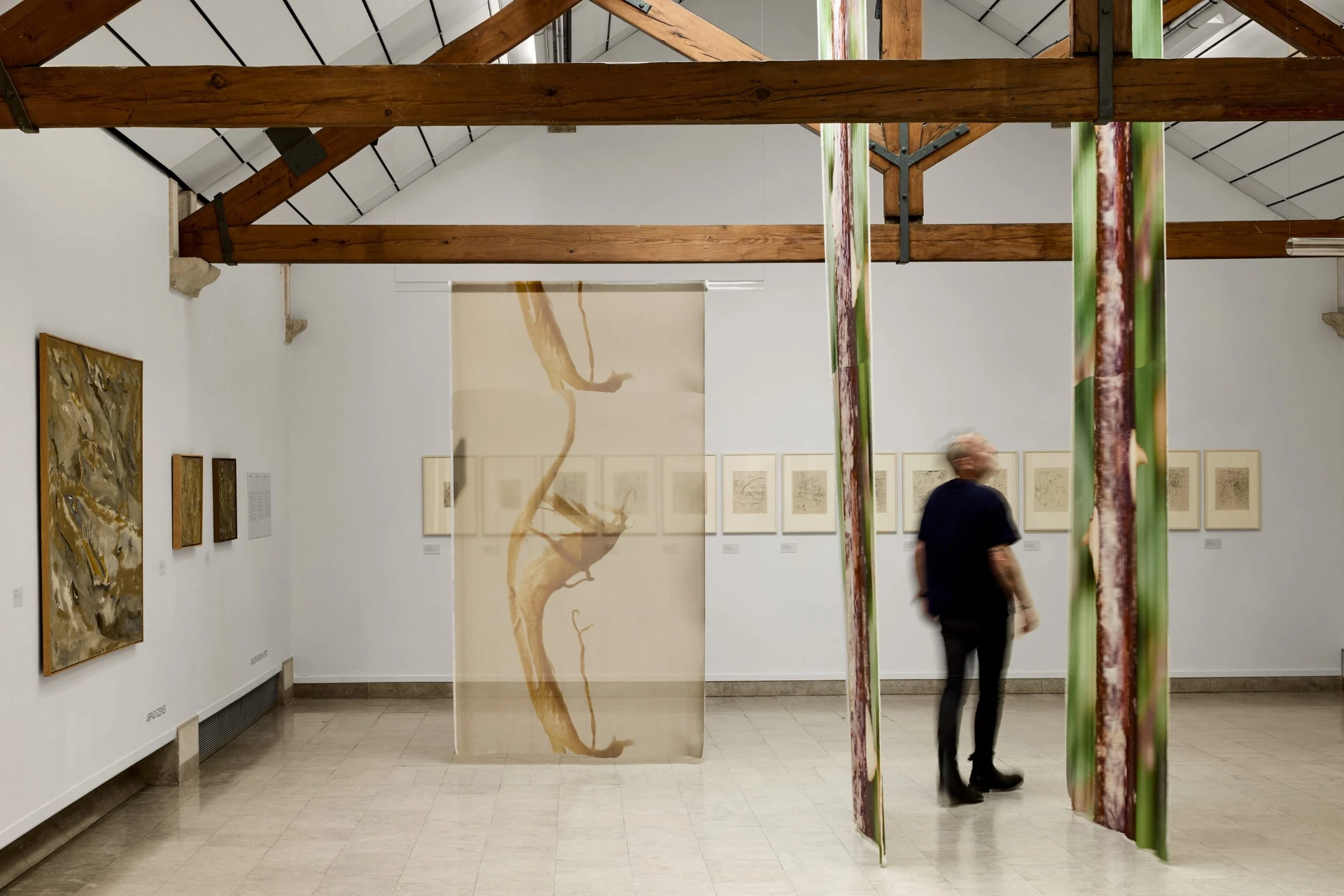
Second Cycle of Exhibitions at the Arpad Szenes – Vieira da Silva Foundation
By Carla Carbone
Next
article
13 Aug 2026
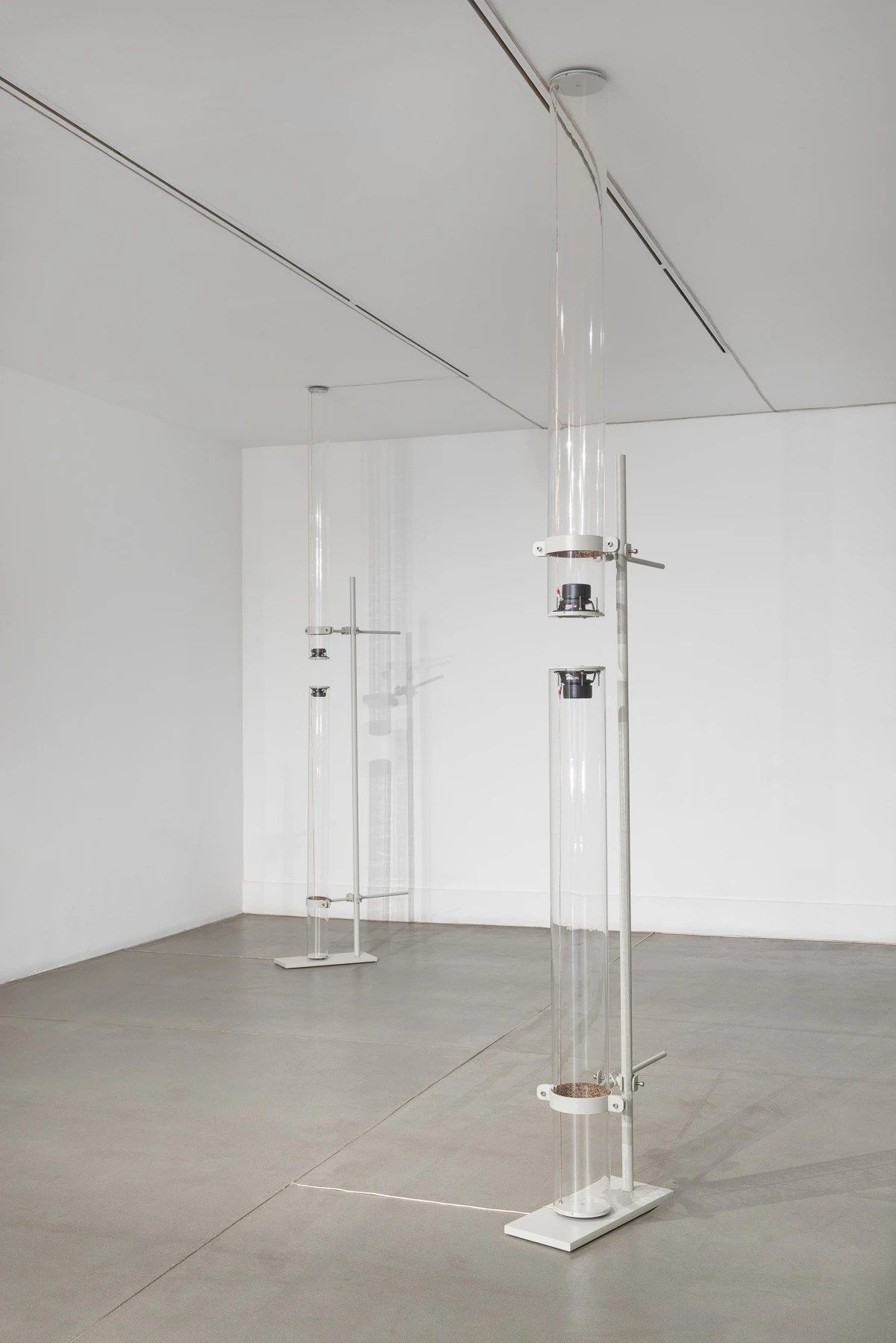
Reaching the fata morgana, by Inês Mendes Leal, at the Boavista Gallery
By Tomás Saraiva
Related Posts
article
11 AUG 2026
Dual Sim at CACE-CENTRO: what a collection produces
By Laurinda Branquinho
article
24 JUN 2026
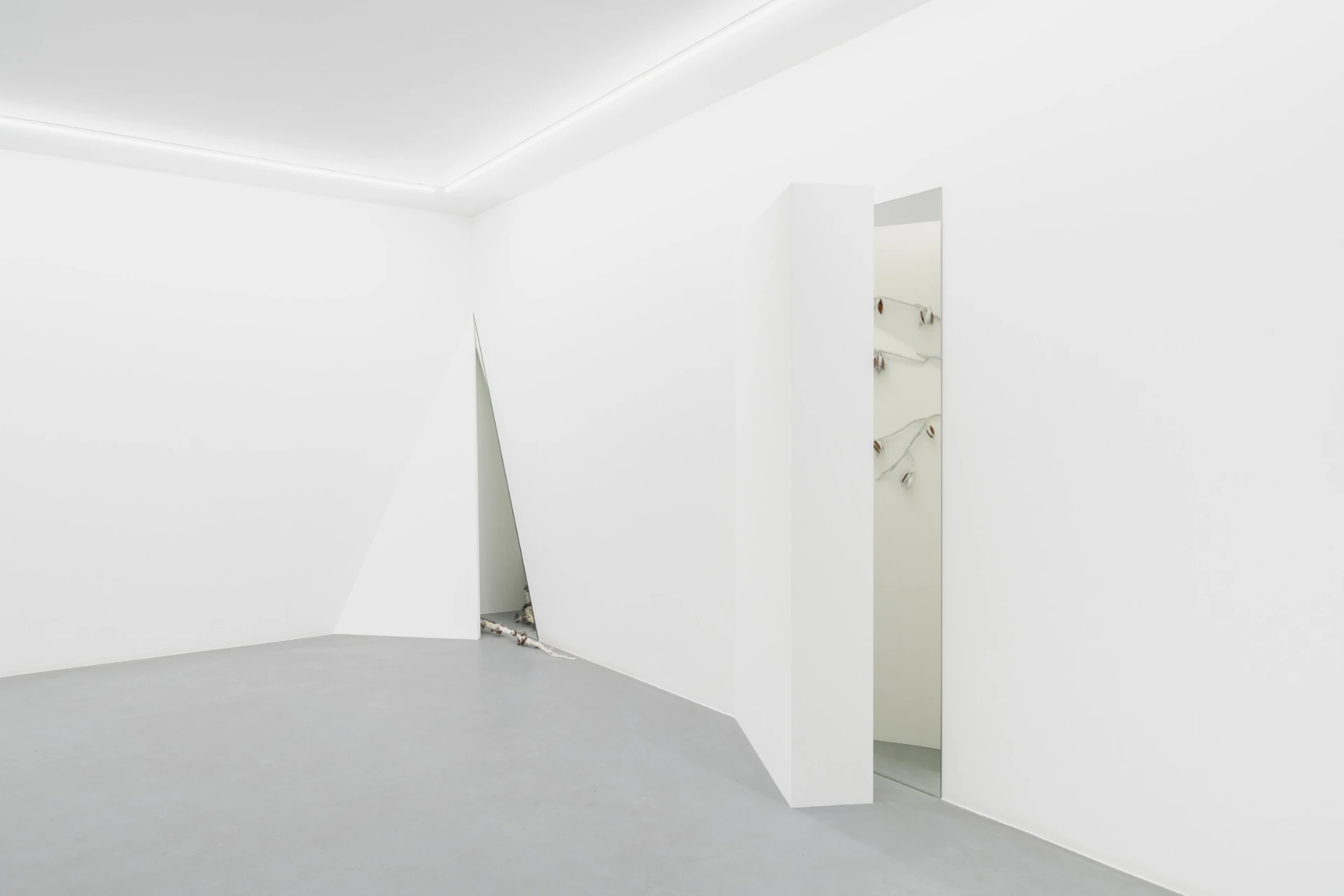
Retirar a gravidade à queda, by Carolina Serrano
By Laurinda Branquinho
article
25 MAY 2026
Terra Poética: Ana Maria Maiolino at MAAT
By Laurinda Branquinho
article
20 APR 2026
Interview with João Marques, author of the Umbigo.space cover
By Laurinda Branquinho