article
It´s a pink area, by Marc Kokopeli and Sydneys Schrader
“Curated by Anthony Huberman, It’s a Pink Area brings together two distinct modes of working: those of Marc Kokopeli and Sydney Schrader, two artists based in New York. A historic manor house becomes a zone of contact between familiar images and devices, and works whose form and purpose we do not immediately grasp.”
Pink seems like an easy color. Tamed by the gaze, it carries a certain kind of education. Often associated with sweetness and innocence, it seems to lend the surfaces it covers a soothing, serene quality. I am not talking about hot pink. The second term, in fact, serves to disrupt the balance I have just described. I am talking about pink. That particular pink that, if you close your eyes right now, you may be able to conjure. Or perhaps you can no longer do so without disturbance: the shock, now named, alters the field of color.
But between shock and softness, a space opens up, made of other shades. Perhaps there is something within color itself that unsettles this harmony, like the transition from the surface of the skin to the flesh beneath. Beneath intact skin, pores form small openings in the surface, discreet yet essential passages between inside and outside. When the skin is cut, this continuity is interrupted: flesh emerges, moist and vibrant, and color asserts itself as an intensity that can no longer be reduced to delicacy. It is in this cut that the existence of spaces created by the different shades and intensities that a color can contain becomes visually perceptible. The area begins there: a space that emerges from variation, transition, and contact of surfaces.
This idea extends beyond the realm of color and unfolds throughout the rooms of Casa de São Roque. Curated by Anthony Huberman, It’s a Pink Area brings together two distinct modes of working: those of Marc Kokopeli and Sydney Schrader, two artists based in New York. A historic manor house becomes a zone of contact between familiar images and devices, and works whose form and purpose we do not immediately grasp.
Kokopeli develops a practice centered on the ways identity is shaped through childhood, media culture, and the consumer objects that accompany it. His work draws on a recognizable visual repertoire, from television devices to figures from popular culture. It is no coincidence that he returns to characters from South Park. In them, Kokopeli finds a generational imaginary. We do not see them in a television context (even though their framing might suggest one), but rather in an exhibition context. This shift in context encloses the figures within a kind of scenographic solitude. Displayed in devices that function like vitrines, the figures no longer belong to the rapid flow of television or to the shared episode experienced on the sofa. The emotions they express find no echo in the frame that surrounds them. Fixed within light boxes, these figures do not simply return a memory to us, but also evoke the mechanisms through which we have learned to desire and consume. Two verbs that play a role in shaping who we become, and which Kokopeli’s work activates through seemingly playful settings that nonetheless operate as devices of seduction.
The possibility of handling small televisions attached to plastic and metal rings, each containing excerpts from television programs broadcast in the past, transports us, with each change, to something familiar: the act of searching, zapping. Along the way, equally recognizable songs emerge, such as Talkin’ About a Revolution by Tracy Chapman. This gesture reopens moments from the past and, with them, a sense of nostalgia, even longing. These are no longer the times we live in. The nostalgia is extended by the contrast between the old television set and the contemporary device through which we once again access its images. Throughout the different rooms of the house, prints of televisions are displayed, enlarged and presented from oblique perspectives. But it is in the lower part of the house that we are invited to pick up a portable device and point its camera at one of these images, thereby activating a narrated slideshow. Our eyes do not focus on the enlarged image; they settle instead on the small screen that makes it legible, adding movement, voice, and time. It is the micro-screen, placed before the macro, that gives it depth.
In Sydney Schrader, this depth shifts elsewhere. Form emerges from an attentiveness to what usually goes unnoticed. The American artist works across sculpture, painting, and writing, creating works that cannot be fully contained within any one of these fields. What seems to interest Schrader is precisely this unstable condition: the moment when a form approaches figuration without abandoning abstraction; we anticipate the gesture, the pose, but the figure never fully settles. The artist herself states that the sculptures came first: she worked on them until she found “truly compelling figures, figures I would not have imagined without working with clay.” In Schrader’s work, matter comes before image. And this origin is important. The form we see does not emerge fully formed or obedient; it appears through persistence. There is something formless about it, as though the figure were caught within the material. Clay does not serve to execute a preconceived idea; rather, it forces the artist to negotiate with the surface and with accident. Her work thus operates according to a conditional logic: if the material yields, perhaps the form will gain consistency.
The sculptures from the Emil series also resist being reduced to decorative objects. Made of bronze and stainless steel, they were conceived to balance against the wall. Curved, suspended, and heavier at the top, these pieces depend on the wall to fulfill their purpose while simultaneously exerting pressure on it: the flat, vertical section is pushed against the wall by the weight of the upper part, which projects outward and curves. Their presence is physical, but not monumental: on the one hand, they do not simply decorate the space; on the other, they do not assert themselves as its absolute center. Thus, what they are, in teleological terms, remains open.
We, the passersby moving through the house, cross the familiar and the formless. We, too, are surfaces of contact. We are not a single shade. We are not neutral. We are unstable. We sway according to where the weight falls.
It’s a Pink Area, by Marc Kokopeli and Sydney Schrader, is on display at Casa de São Roque in Porto until October 4.
BIOGRAPHY
Débora Valeixo Rana (b. 1990, Lisbon, Portugal) is a philosophy teacher living in Porto. She graduated in Philosophy from the Faculty of Letters of the University of Porto (2011) and has a Master's degree in Teaching Philosophy in Secondary Education (2019). Her academic and professional career reflects a deep interest in the intersection between Art and Philosophy, a dialogue that led her, in 2022, to take up a master's degree in Artistic Studies and Art Criticism at the Faculty of Fine Arts of the University of Porto.
ADVERTISING
Previous
article
 11.53-mk8cv.jpeg)
15 Sep 2026
One Million Points of Light: Alfredo Jaar at Galeria Francisco Fino
By Katya Savchenko
Related Posts
article
17 SEP 2026
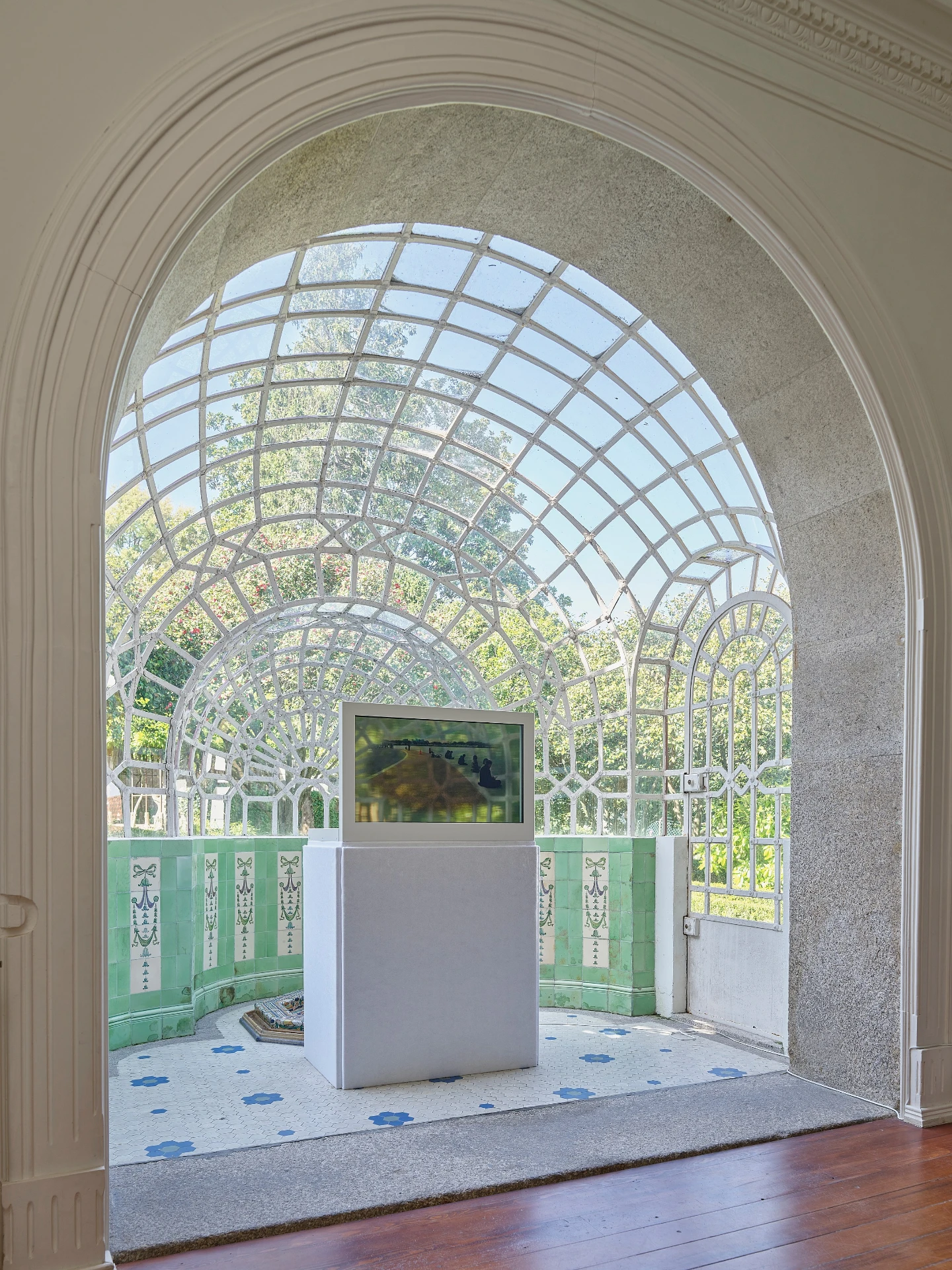
It´s a pink area, by Marc Kokopeli and Sydneys Schrader
By Débora Valeixo Rana
article
01 APR 2026
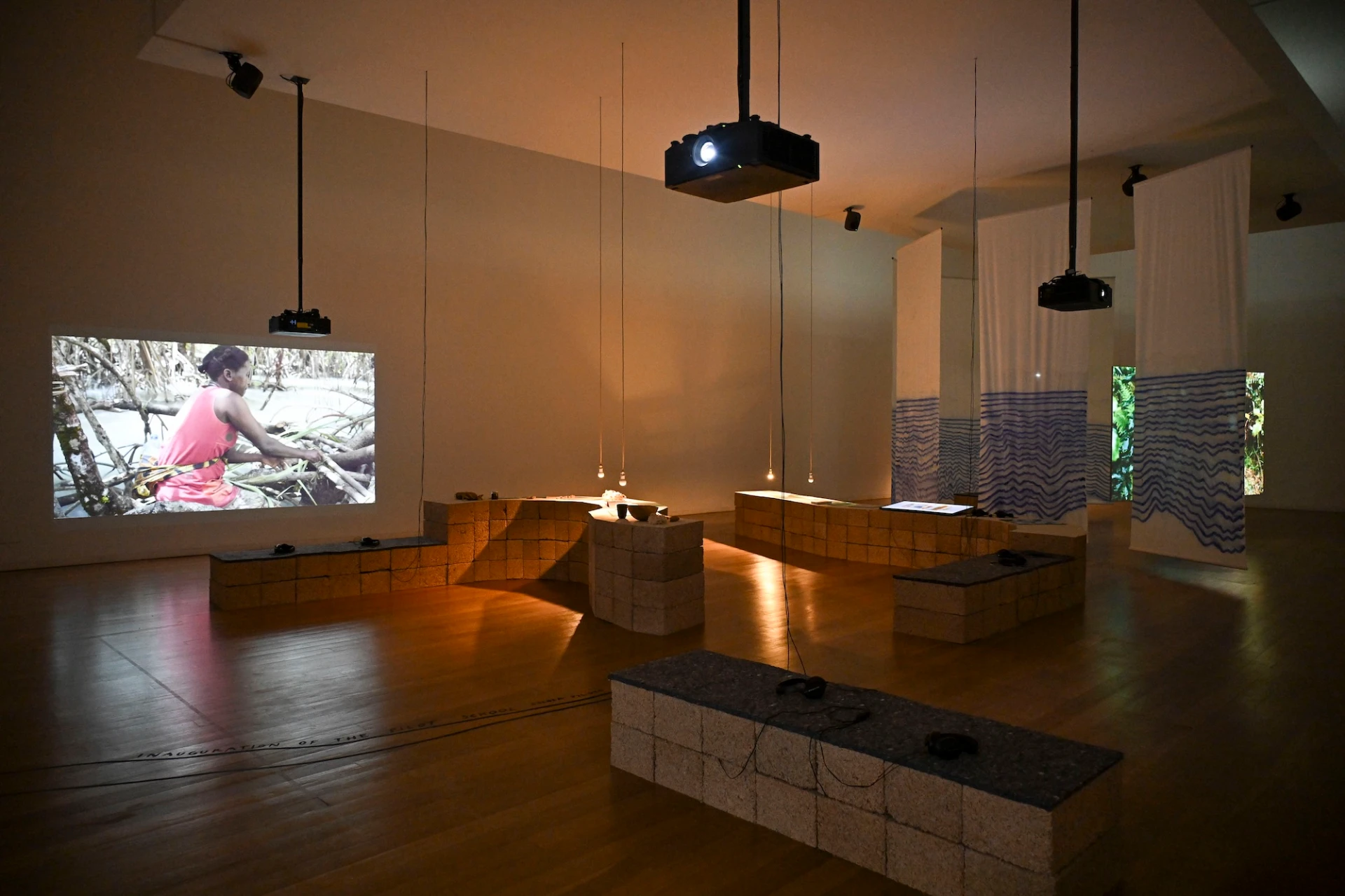
Meteorizações, by Filipa César
By Débora Valeixo Rana
article
06 FEB 2026
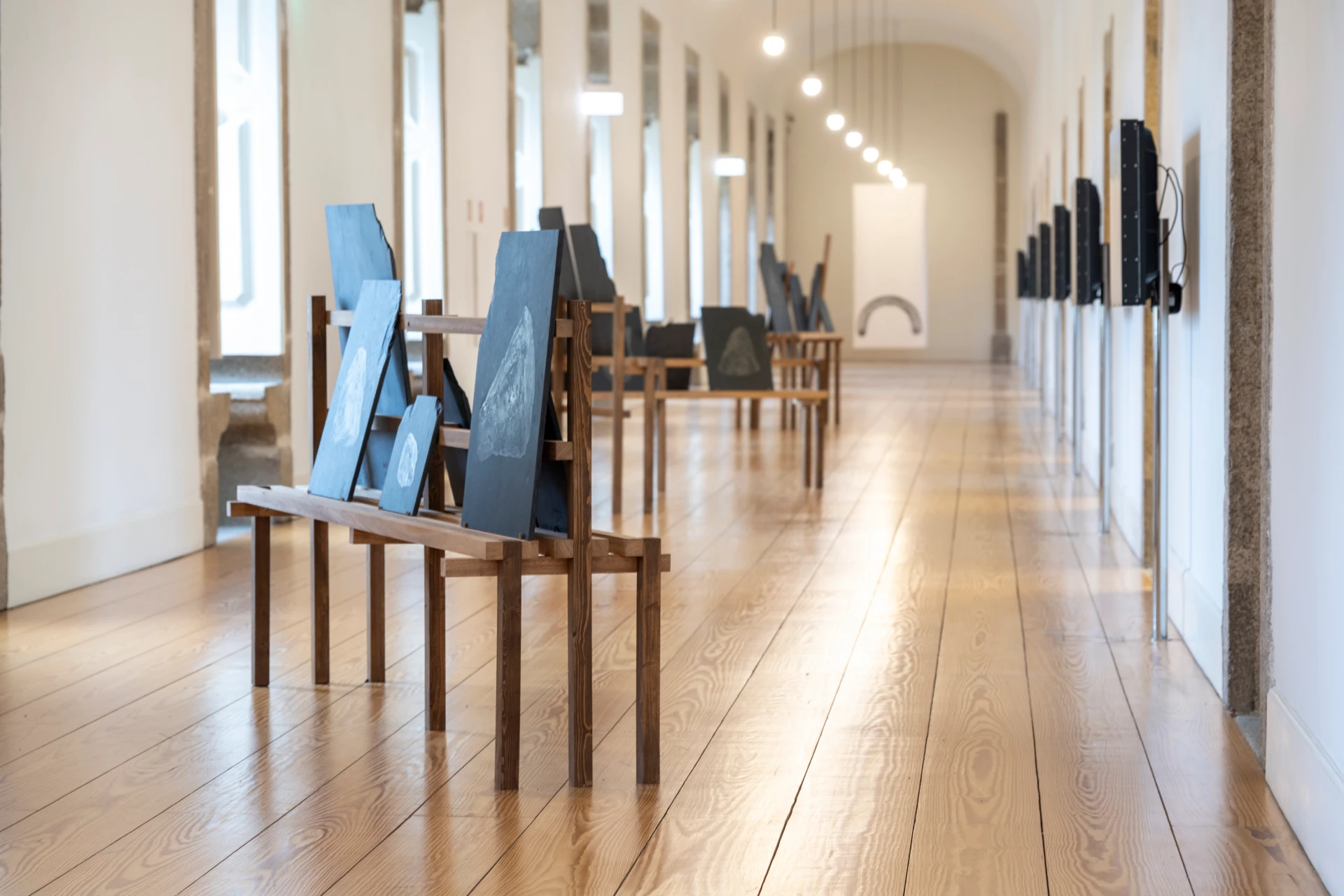
Traslados, by Marcelo Moscheta
By Débora Valeixo Rana
article
07 JAN 2026
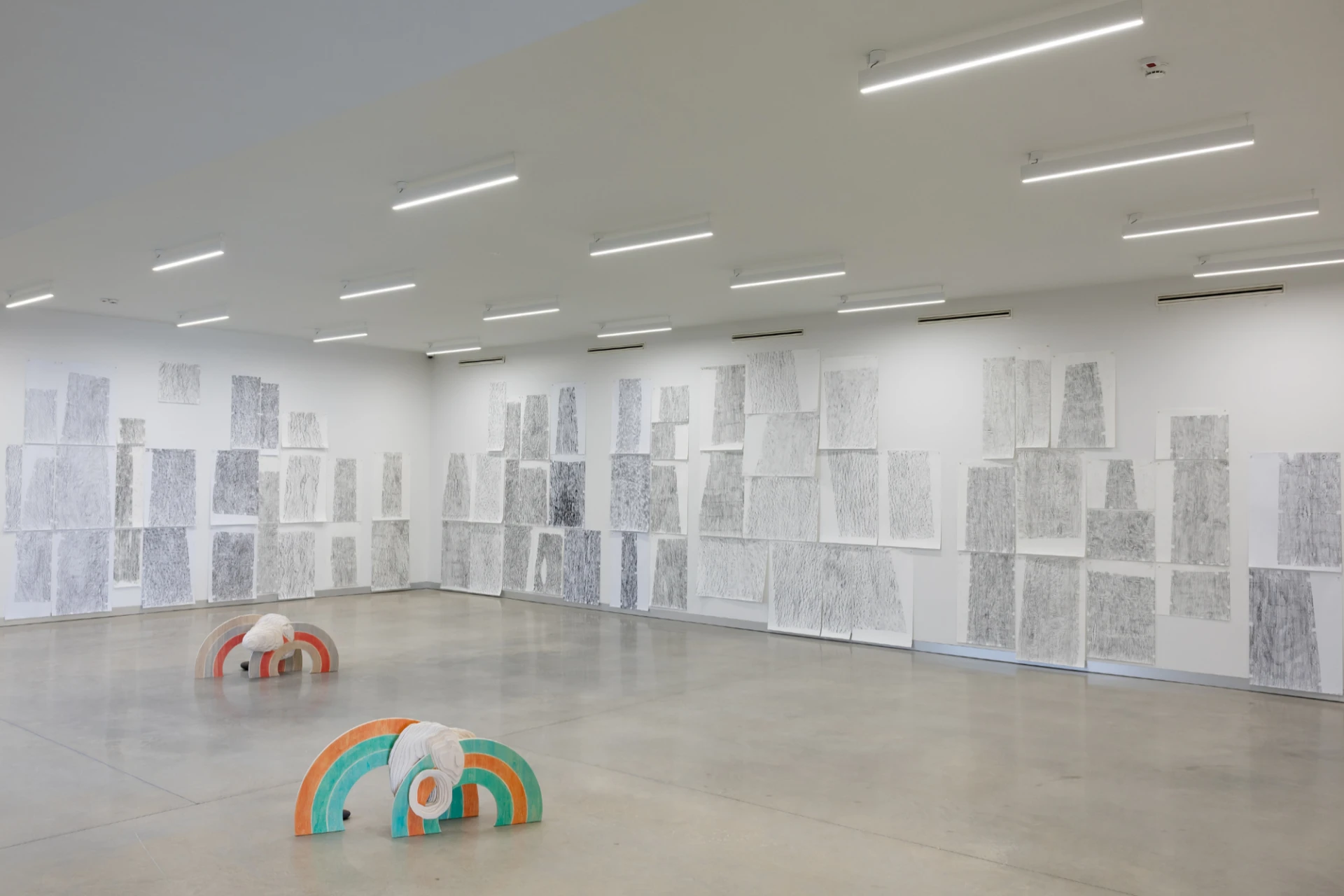
A Morte Escreve a Floresta, by Nuno Henrique
By Débora Valeixo Rana