article
Loop End: a knot is a promise
A knot is a promise. It promises to secure that which moves, give shape to that which could fall apart, and act as a link, a mediator, and a connecting device. The knot's promise is, above all, one of continuity. But it is also a dependency: a system that needs something external to fulfill its function. In this sense, the knot is a relational, sharing body, because it is only fully realized when it is crossed by another force.
The Loop End exhibition, on display at OSTRA, embodies this image, where the encounter between works and artists is constructed as a series of successive anchors—individual gestures that derive meaning from their shared tension. The exhibition brings together works by Batu Behram, Ingrid Pumayalla, João Migwel, Regina Silva, Miguel Abreu, and Colin Ginks, artists who participated in the Chain Reaction program, a collective experimentation field founded by artists Hugo Brazão and Elizabeth Prentis.
The exhibition opens with Mas a gente vai para onde (Where should we go, 2025) by Batu Behram, which shows a television image of two people on the ground, surrounded by police, under the words “Talude neighborhood.” The image is followed by a sound piece played through headphones. The neighborhood, scarred by recent demolitions and evictions, is a mirror of the institutional violence that permeates urban peripheries. Like a rope holding a falling stone, the artist forces an image to remain in a place where the media flow normally dissolves it, in a gesture of resistance.
The knot as a root appears in the work of Ingrid Pumayalla, a Peruvian artist who has been investigating the links between memory, territory, and community practices in the Andean region. In La memoria del maíz Morado (Purple Corn Memory, 2025), purple corn—a sacred plant in Andean cultures—is used as a pigment to dye fabric, evoking harvest rituals. The artist delves into the symbolic and political layers of corn, associating it with indigenous resistance and the preservation of ancestral knowledge, threatened by contemporary natural resource exploitation.
João Miguel presents two glazed ceramic pieces—inner conflict and Self Promo—that seem to emerge from an imaginary world of inner conflict. In inner conflict (2025), two similar human forms intertwine in a gesture that evokes combat. The figures share the same anatomy, as if fighting against their own image. And in Self Promo (2025), the suspended sculpture resembles a zeppelin, an aerodynamic body that seems to want to float, but here remains dependent on the currents that hold it. The zeppelin, a vehicle for propaganda and spectacle in the early 20th century, is reappropriated here as a metaphor for an ego vulnerable to falling. In both pieces, the conflict is both internal and structural. These are two forms of resistance: one against oneself, the other against emptiness. The artist appears to recognize that it is in this friction, between weight and lightness, between the desire to ascend and the danger of falling, that the very condition of existing and creating is formed.
Regina Silva takes the materiality of the frame and turns it into a sculptural piece. In Mean-While (2025), the frame's function is reversed: instead of delimiting the image against the wall, it makes it extend into the room. The frame is placed perpendicularly, breaking with the frontal logic of contemplation and taking over the viewer's space, forcing them to go around it, peek at it, and figure out where they are. The see-through acrylic, which is drawn with black lines, makes the empty space that usually holds the image visible. The frame thus becomes a knot, anchoring the invisible and materializing what is fragile and transitory in the act of seeing.
In Suntub (2025), Miguel Abreu presents a sculpture in which a solar panel acts as a structural and symbolic base. On top of it, a sheet with a geometric design is protected by a glass plate, on which salt, paraffin, and pigment accumulate. The solar panel, normally associated with capturing and converting light into energy, acquires another dimension: becoming a support that collects but does not produce. The ensemble seems to question the very idea of energy, not only solar energy, but vital and symbolic energy as well. There is an alchemical dimension to this work. The materials seem to summon a latent energy that never fully manifests itself.
Finally, in Morte térmica (Thermal death, 2025), Colin Ginks presents a video on an iPhone XR showing snippets of everyday life—images captured through a window or in a nightclub—alternating with pauses where texts appear describing the final destiny of the universe, such as a return to darkness. Contrasting the cosmic scale of the words with the banality of the images we see, it offers an entropic and lucid view of the contemporary condition. The cell phone screen becomes a mirror of an existence where light, the driving force behind all forms of life and knowledge, is also what heralds the end.
Each work explores images of connection and tension, restraint and flow, weight and movement. The artists are eager to capture what escapes, to give shape to what insists on dissolving, but they remain aware that every knot holds within itself the possibility of unraveling. Loop End inhabits this interlude, where the act of joining also implies letting go. Here, art reveals itself as a promise of continuity and connection in a world that tends toward dispersion.
The exhibition includes the piece A fruta, vamos distribuindo, by Filipa da Rocha Nunes, written as part of the Chain Reaction project. Her text traverses the territory as if following the course of water—between valleys, dams, and springs— summoning images of sharing and memory. Like the works in the exhibition, it also considers the gesture of connection, but here it is in food that the promise of encounter lies.
BIOGRAPHY
Laurinda Branquinho (Portimão, 1996) has a degree in Multimedia Art - Audiovisuals from the Faculty of Fine Arts of Universidade de Lisboa. She did an internship in the Lisbon Municipal Archive Video Library, where she collaborated with the project TRAÇA in the digitization of family videos in film format. She recently finished her postgraduate degree in Art Curatorship at NOVA/FCSH, where she was part of the collective of curators responsible for the exhibition “Na margem da paisagem vem o mundo” and began collaborating with the Umbigo magazine.
ADVERTISING
Previous
article
-6dqqe.gif)
07 Nov 2025
Umbigo x FBAUL (Transverse Means of Painting)
By Umbigo
Next
article
10 Nov 2025
Nem pena nem paixão: Paulo Serra at Salto
By Dela Christin Miessen
Related Posts
article
11 AUG 2026
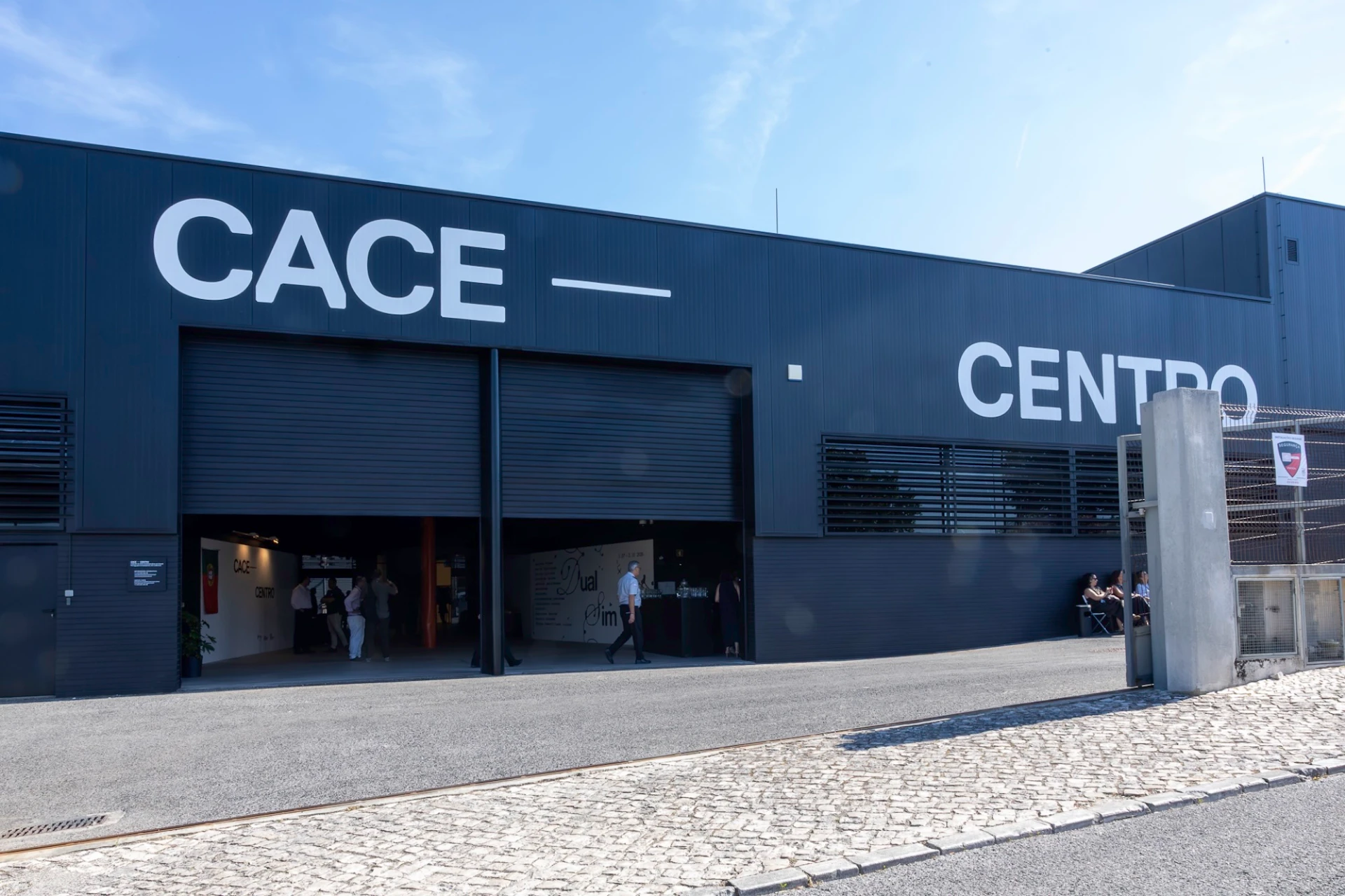
Dual Sim at CACE-CENTRO: what a collection produces
By Laurinda Branquinho
article
24 JUN 2026
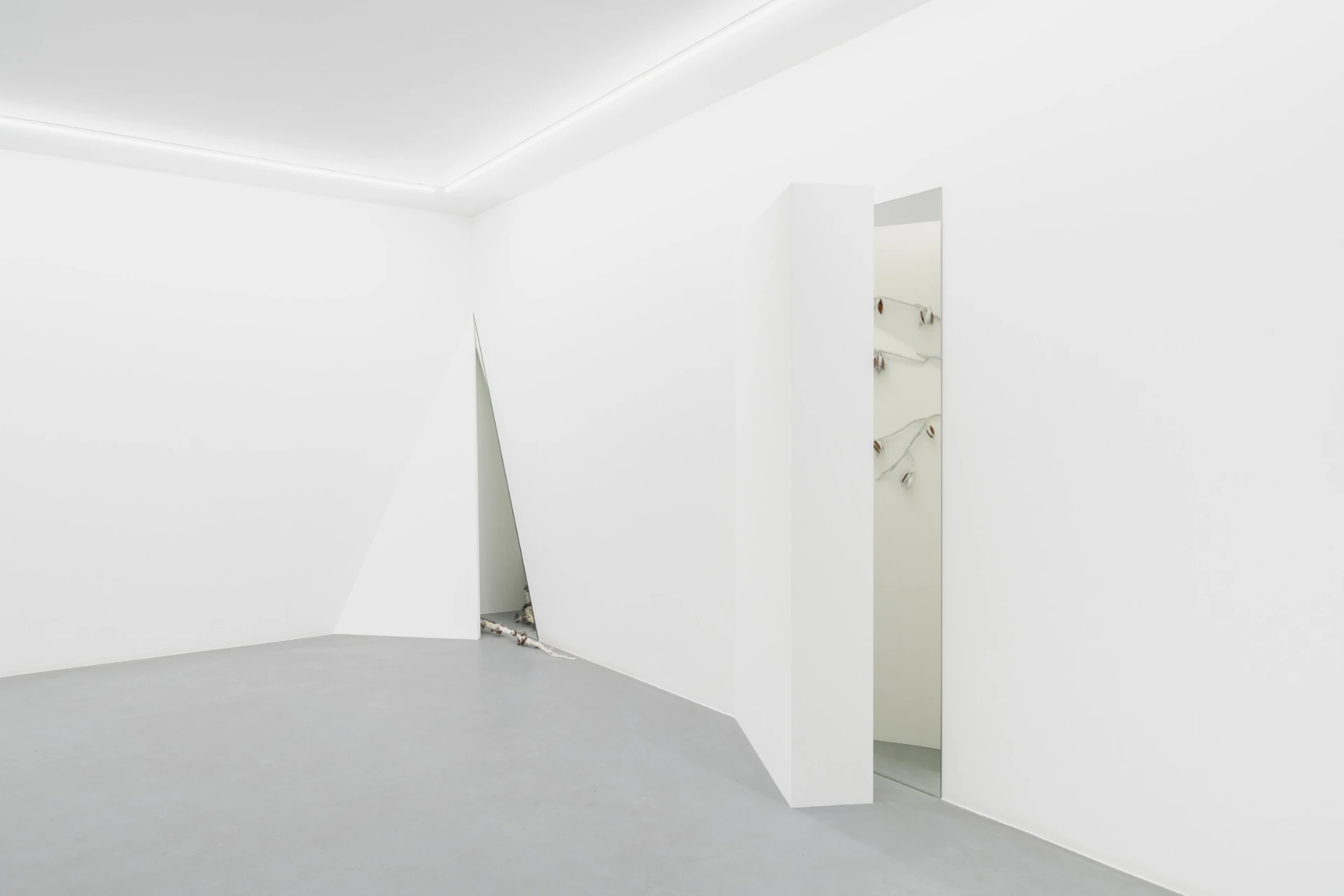
Retirar a gravidade à queda, by Carolina Serrano
By Laurinda Branquinho
article
25 MAY 2026
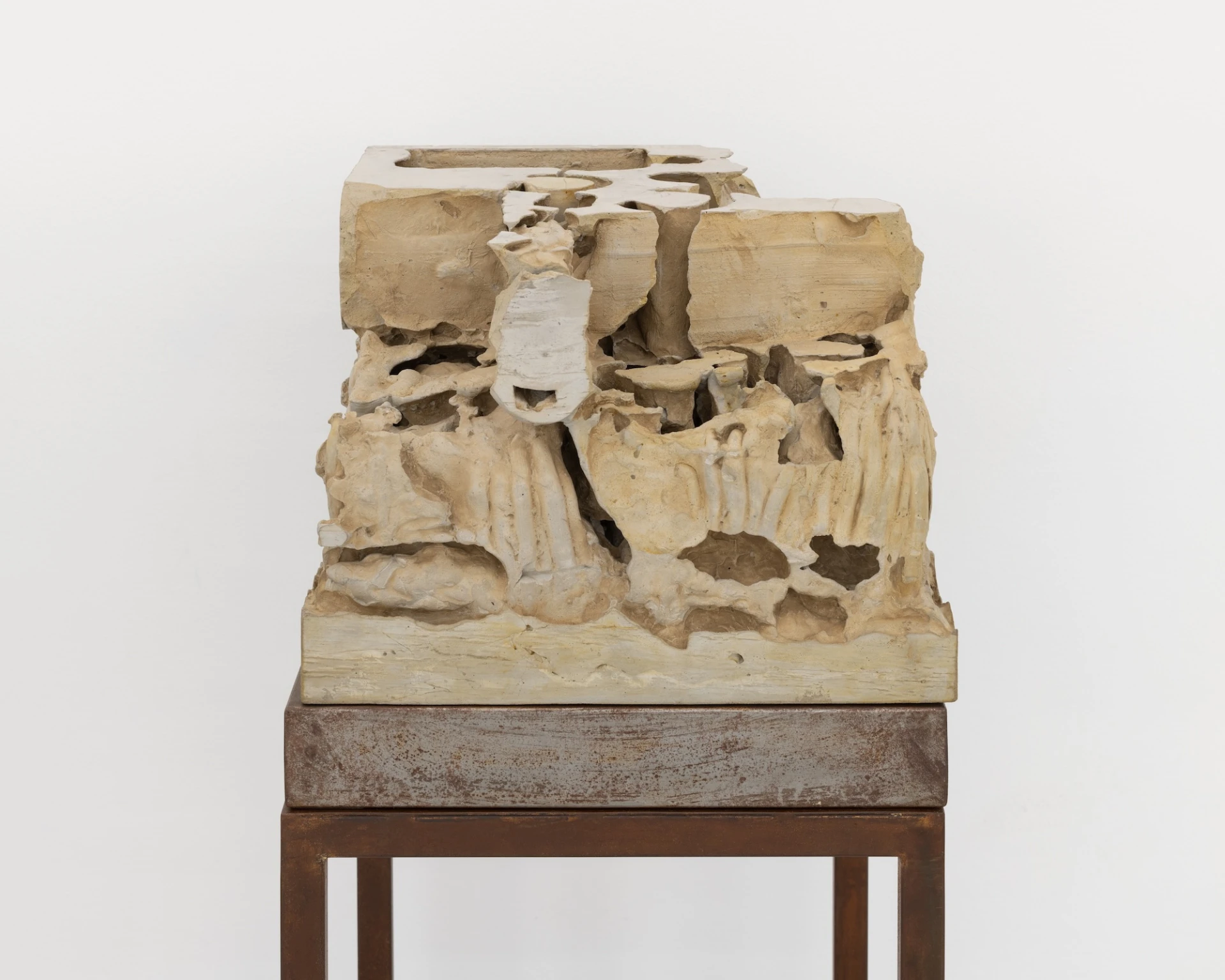
Terra Poética: Ana Maria Maiolino at MAAT
By Laurinda Branquinho
article
20 APR 2026
Interview with João Marques, author of the Umbigo.space cover
By Laurinda Branquinho