article
Luminous Anesthesia: Guilherme Parente at the Carmona e Costa Foundation
In the first work of the exhibition Mistério e Revelação (Mystery and Revelation), curated by Nuno Faria at the Carmona e Costa Foundation, one can see how Guilherme Parente articulates the gap between symbolic evocation and abstract construction, between the mental machine and the playful space, between an august balance and implicit restlessness.
In the tiny image, I believe I witness an immense bat spreading its wings over an arid landscape. Behind the golden mountains, the silhouette of the city emerges, which will soon be ravaged by its inconceivable evil. Or perhaps it is just a palace echoing the silhouette of its owner, the angry archangel who comes to rest after a certain metaphysical adventure. Or even a landscape devoid of gods and animals, only the rolling of slow dunes and sandy hills that finally reach two distant red mountains like mirrors of the setting sun. Or, who knows, nothing but a play of planes and contours and colors and textures that neglects pictorial representation to reaffirm the plastic reality of the work.
In the first work of the exhibition Mistério e Revelação (Mystery and Revelation), curated by Nuno Faria at the Carmona e Costa Foundation, one can see how Guilherme Parente articulates the gap between symbolic evocation and abstract construction, between the mental machine and the playful space, between an august balance and implicit restlessness. His chromaticism and gesturality, two of his main attributes, are even more explicit in a series that begins with the second painting on display, featuring a grid of analogous purples and focal points scribbled in yellow, its complementary color. In the third, they float in a dark pictorial space that only reinforces the focal points. In the fourth, they acquire depth—the previously abstract forms now become figures in a landscape, perhaps buildings levitating next to an immense structure rising beyond. In this evolutionary succession, we glimpse the breath with which Parente explored the relationships between the figurative and the abstract. In him, the physical dimension of painting is never sublimated in favor of the image.
More than the corrective of rigor, perhaps his works are born of a satisfaction with the open process, which assimilates the spontaneity of scribbling and the ecstasy of color. Almost always, the artist reduces the elements to their plastic aspect. Heads are drops of impasto, bodies are indolent gestures. As the support is wood, its creases are made explicit in curved lines. A table is a flat square, a plain is a rectangle, the beam of light is a splash of paint, the clouds are careless swirls in blue. In abstract works, he colors geometric shapes with expressive scribbles, reaffirming the imperfection of the hand. Her world is material, so as not to be real — in more idiosyncratic landscapes, she places shaded monuments in flat landscapes, generating an incoherence that abstracts the representation. In other words, her playfulness is also metaphysical, as she is concerned with the ontological essence of each aspect of a work, understood as the construction of shapes and colors in smooth rhythms and gestural planes. This being what one is, conveying what one believes in at every moment, without irony or sarcasm, is also an acceptance of the process as an artistic experience, seeking achievements only possible in a drawing that is sometimes almost automatist. Thus, she achieves an artistic honesty that balances pictorial suggestion, physical reality, and procedural sincerity.
But what happens in these floating planes and lines, inflated by their own artificiality? Incorporeal figures like colored shadows wander among pale monuments, magicians' hats conify at the foot of slender solids built beyond. Columns of smoke snake around trees in absurd trajectories while sleepy monsters display their silhouettes. There is also a symbolic dimension here, in this frivolous world where everything is also staged with an almost Byzantine conciseness—but Parente does not privilege communication, as his surreal temperament delays meaning. Parente embraces the unpretentious, jovial aspect of pop. But his childishness is not condescending, nor is his lightness simple. If pop is usually strident and communicative, in Parente there persists a silence that is as much an absence of interiority as it is a suspension of meaning. I think of De Chirico, his stage-world populated by mannequins devoid of interiority or agency. Parente's figures are also like mannequins — oily radiations devoid of detail, but exultant in their distant reality. They seem to be at the beginning of their formulation. But things that are born do not come from nothing. Their genesis contains the memory of something else, the genealogy that determines the future. Where does this memory of things come from? Parente's paintings suggest narratives that never materialize, becoming more of an exploration of archetypes that wander through indistinct landscapes, like symbols of a collective unconscious. Between the memory of a formative past and its articulation in a childlike sensibility where everything is still in the process of becoming, another image comes to mind that perhaps translates his painting in a more genuine way: a pleasant dementia at the end of life.
Perhaps his images are not forming, but rather falling apart. Although the relationship between the vertical axes and the horizontal zones gives the scene a compositional balance, the crude symbolism delays interpretation; the cheerful hues stimulate a sense of general happiness, and the weightlessness of the figures neglects gravity. Yet, his works are threatened by the specter of dispersion. In Parente's paintings, there is nothing perishable, but everything can disappear in a sudden lapse of memory. This threat of oblivion is sometimes signaled in his landscapes, in the columns of smoke that rise in the distance, in the flaccidity of the cliffs, in the purity and solitude of the monuments, in the atrophied silhouettes of the figures. Still, I believe it is best explained in the very emptiness of his landscapes and in the chromatic intensity of his scenes.
Their colors also favor visual impact over realistic veracity. Why not paint one vein of the cliff burgundy, another yellow, and yet another green? More immediate than reproducing real shadows is understanding how these colors relate to each other on the chromatic plane. Governed by sensation, they emancipate themselves from the scene to promote their own reality, in chromatic constructions of saturated hues with high tonal value, contributing both to the charm of a lighthearted joy and to the warning of a faint anguish. Parente explores all kinds of coloristic principles, whether neutral or monochromatic, complementary or analogous — I am not unaware that he paints greenish landscapes to better explore the impact of red. In the exhibition, one can see, in some abstract works, how he uses chromatic exercises similar to those of Josef Albers, an influence that may have suggested a more experimental approach to color, as when he contrasts a cyan-bodied martyr with his yellow halo, both CMYK primary colors of an almost uncomfortable intensity, in an exercise that alludes to Double Homage to the Square, from 1957. Parente also uses semitones, shades between purple and red accompanied by almost orange shades, then intertwined with greens, yellows, and blues, or purplish blues flanking yellows and oranges, in an expansion of what is understood by the relationship of divided complements in color theory. Sometimes he also splashes elements in primary and secondary colors that do not touch, but compose a system of pictorial ties. As the Venetian masters did, he articulates color by superimposing vertical elements in the foreground with horizontal landscapes—long geological formations of multicolored shading or red vegetation create distinct chromatic relationships with areas colored in greens, yellows, purples, and blues.
Colors do not exist in isolation, but always in interaction, as Albers, influenced by Delacroix, once said. In Parente, there is an attempt at sensual interactions between different elements in order to construct, together with the viewer, a less categorical approach to life, where each thing radiates its influence in the hope of softening the silhouettes of others, of testing spontaneous articulations amid natural dispersion. Perhaps this is why he paints hats on the ground and solitary monuments — to experience the reality of things whose presence is not perceived, but felt in a stroke of inexplicable intuition.
The exhibition Mystery and Revelation, Painting and Drawing 1960-70, by Guilherme Parente, can be visited at the Carmona e Costa Foundation until December 20.
BIOGRAPHY
Tomas Camillis is an author and researcher based in Lisbon, working on fiction and on essays in the interplay between art, philosophy and literature. He has a master's degree in Art Theory by PUC-RJ. In recent years he has participated in researches, taught courses in cultural institutes, helped organize conferences and published in specialized magazines. He currently collaborates with the MAC/CCB Educational Service and Umbigo magazine.
ADVERTISING
Previous
article
-poow5.jpg)
10 Dec 2025
Nage Libre: Sillon Contemporary Art Biennial
By Joerg Bader
Next
article
15 Dec 2025
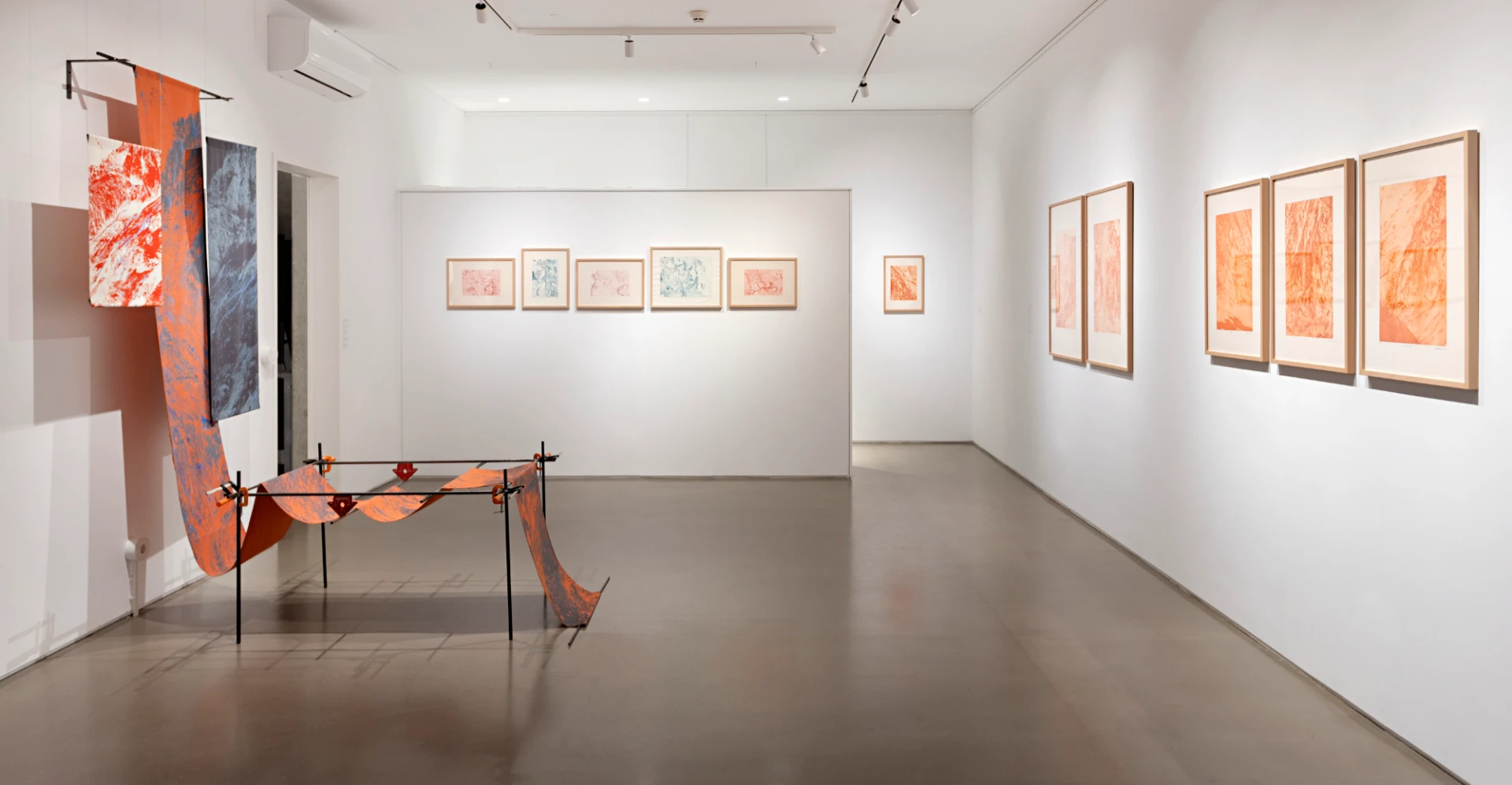
Flavia Regaldo: On the proportion of shapes
By João Pedro Soares
Related Posts
article
25 AUG 2026
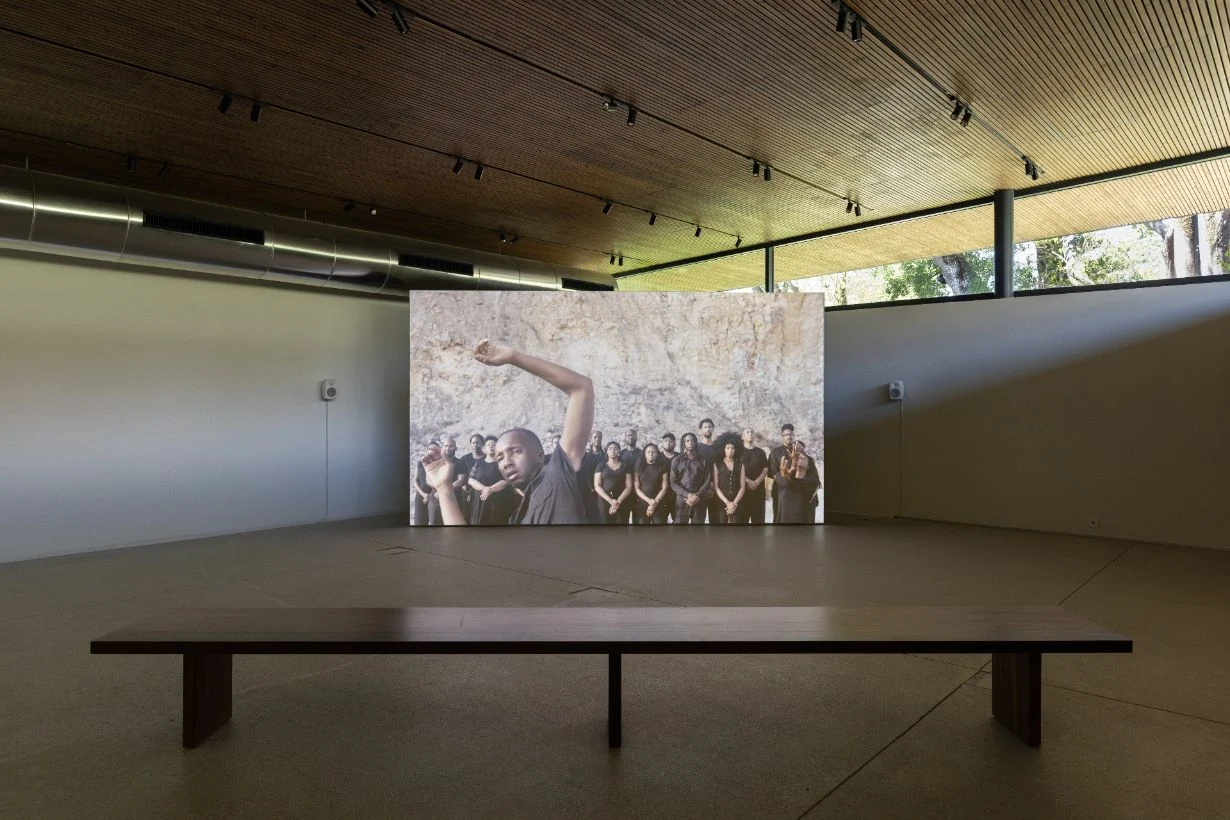
Foreign Monuments: Grada Kilomba at Fundação Albuquerque
By Tomás Camillis
article
18 AUG 2026
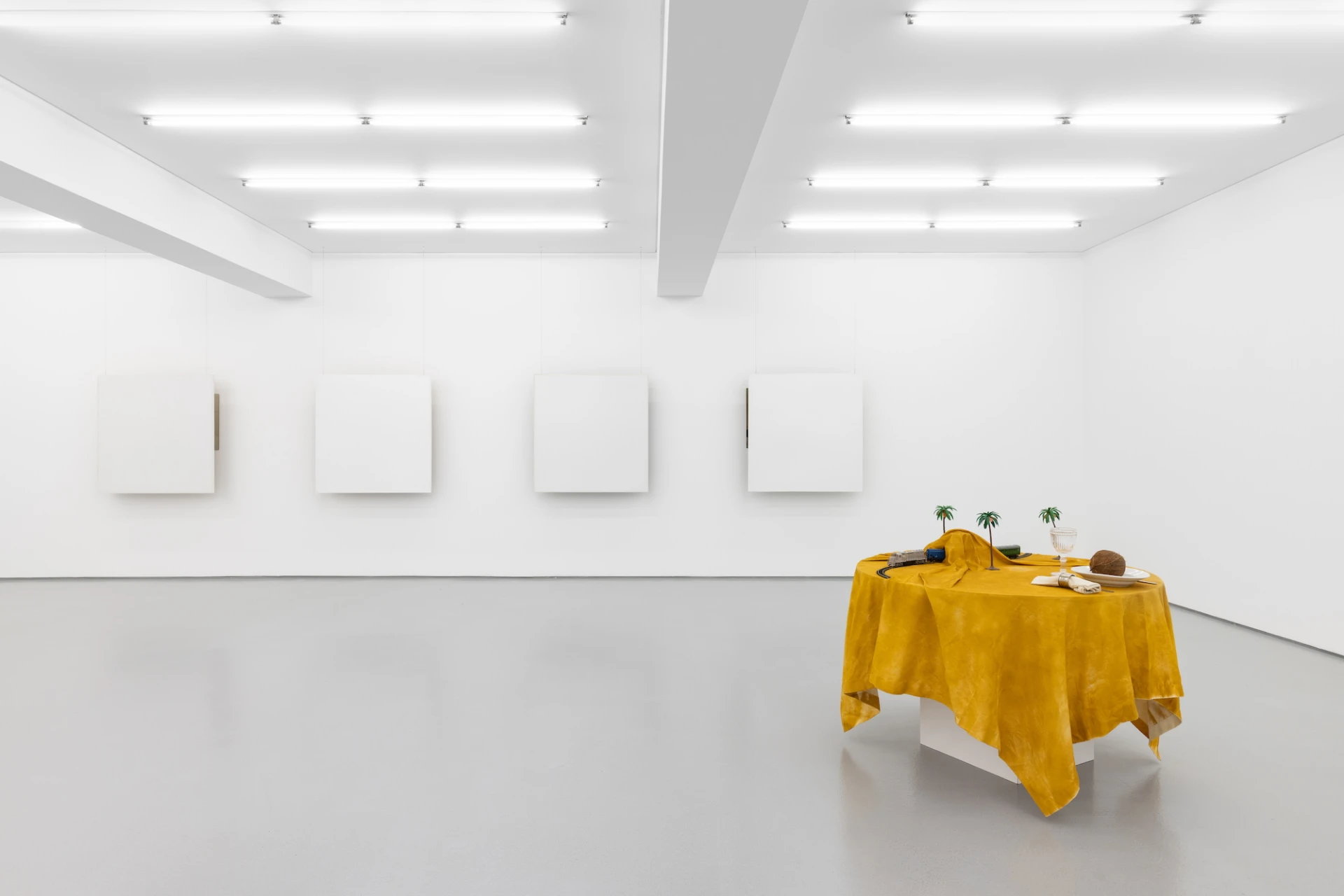
The distant work: Ana Vieira at Galeria Vera Cortês
By Tomás Camillis
article
30 JUL 2026
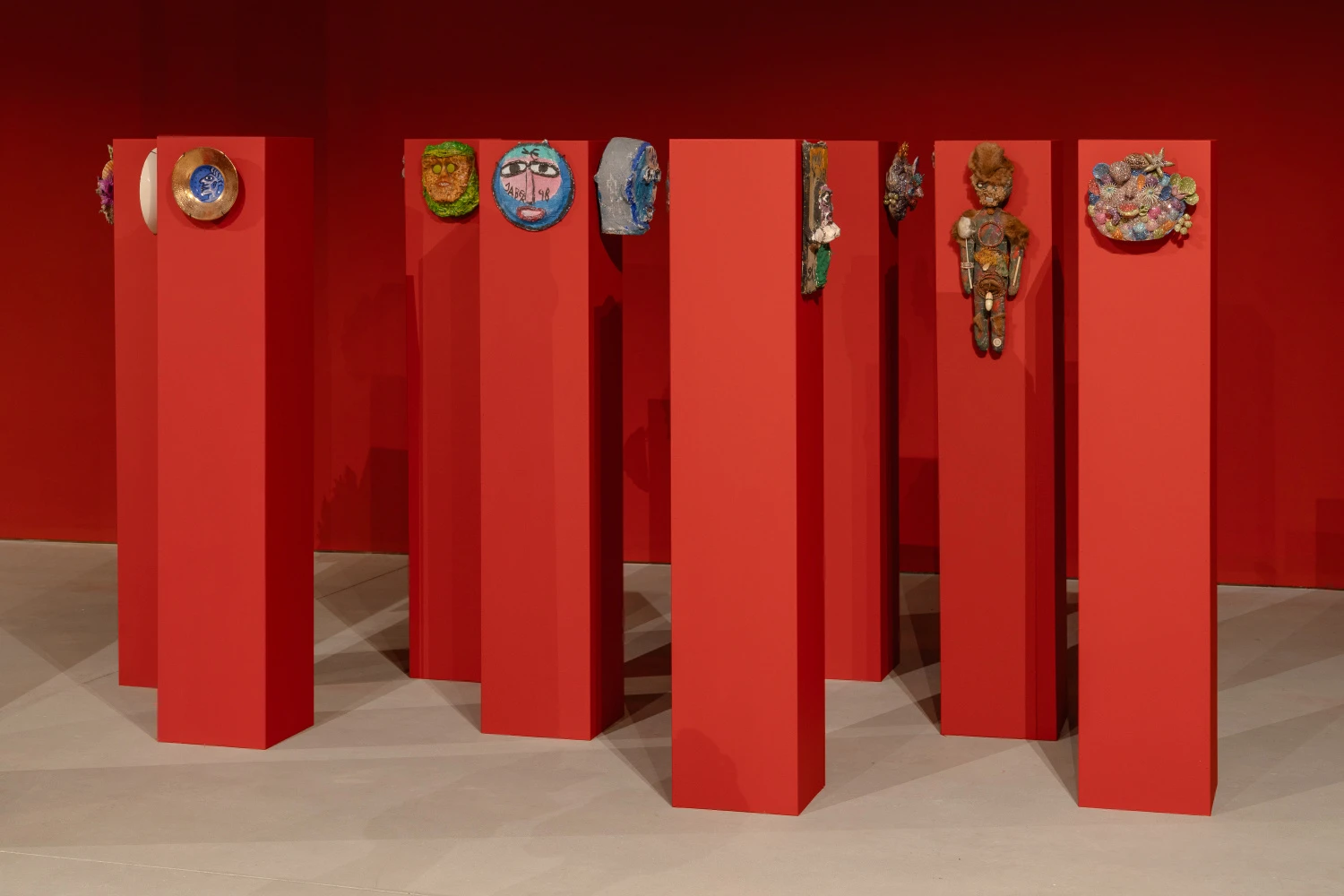
Excess and Silence
By Tomás Camillis
article
08 JUL 2026
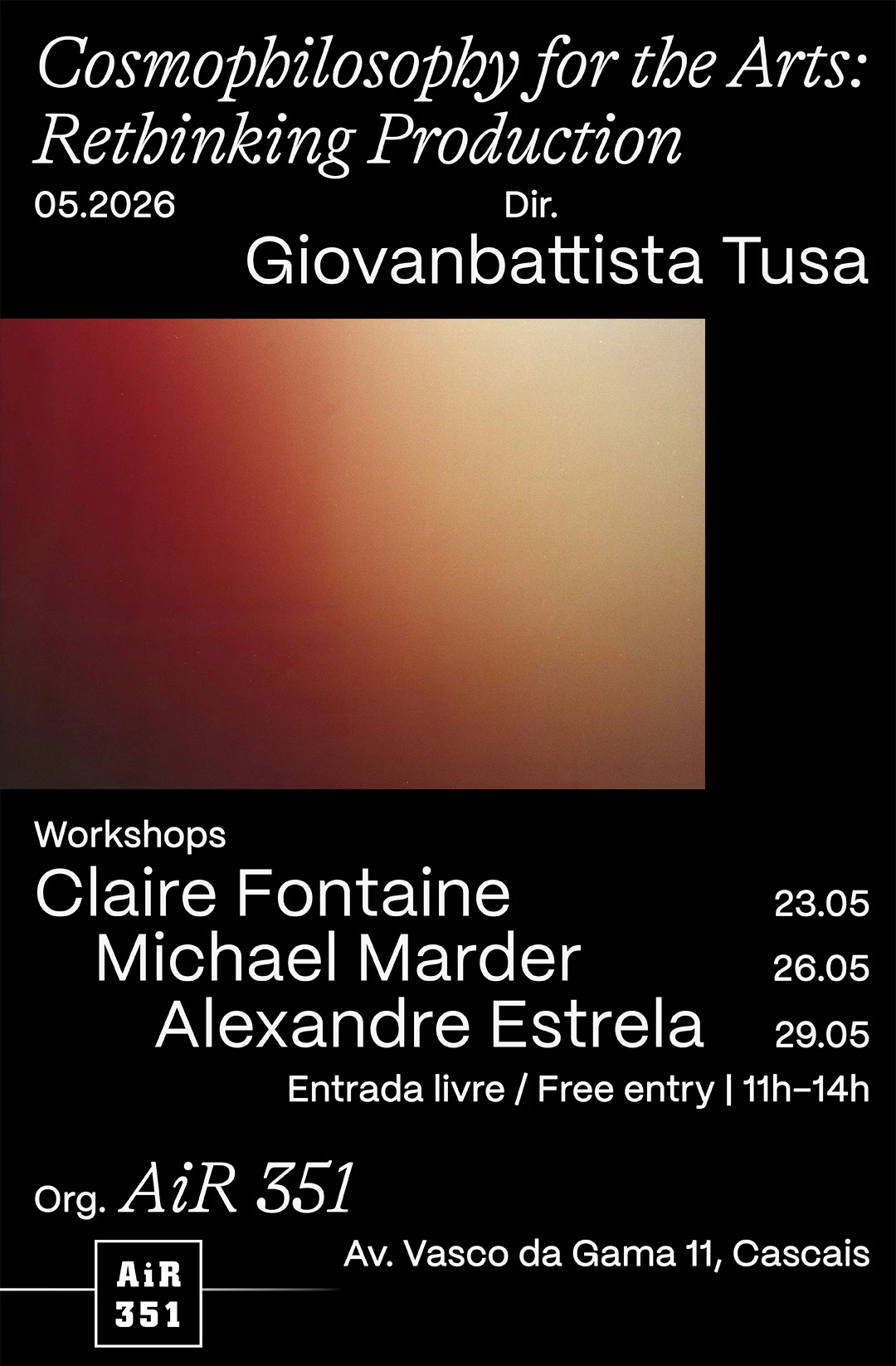
TOWARDS TERRA INCOGNITA: Interview with Giovanbattista Tusa
By Tomás Camillis