article
RedSkyFalls, Portugal at the Venice Biennale: An Interview with Alexandre Estrela
Alexandre Estrela (b. 1971, lives and works in Lisbon) is set to represent Portugal at the upcoming Venice Biennale (May 9–November 25) with his large-scale installation RedSkyFalls.
In fact, this year's Biennale marks the return of the Portuguese pavilion to the Fondaco Marcello space—after several editions held in the first-floor rooms of Palazzo Franchetti, at the Accademia—a location that also influenced the “Venetian” version of the artist’s project.
Represented by the Travesía Cuatro gallery (Madrid, Mexico City, Guadalajara), Estrela’s practice explores the perception of still and moving images through the manipulation of objects and projections. Curated by Ana Baliza and Ricardo Nicolau, in addition to a parallel program that is part of the project, curated by Marco Bene, RedSkyFalls presents itself as a decidedly complex work, where various voices contribute to the possibilities of once again feeling the pulse of the world, between technology and seismic waves.
Matteo Bergamini: RedSkyFalls is a very poetic title for a very complex process: could you tell us about the origins of the project, starting with the work of the same name that you created in 2019?
Alexandre Estrela: Truth be told, the name came about in early 2001, in New York, for practical reasons. I needed a way to filter out the excess paper in my mailbox. I came up with a company called RedSkyFalls. Anything that arrived from that sender went straight into the unopened trash. The disposal of these letters and envelopes in the trash had a figurative meaning for me—a small settling of scores with the corporate world. In 2005, driven by the craze for online sharing, I started a YouTube channel where I started collecting experimental films and videos, Eastern animations, educational and technical videos, excerpts from commercial films, and unclassifiable concerts. There were as many as 600 of them. I began teaching most of my classes using them, improvising according to the logic dictated by the clips themselves, linking them together intuitively. I could show a Viennese shareholders’ orgy followed by Ibizan greyhounds hunting in the woods, interspersed with advertising spam. The channel was a repository of favourite videos; I uploaded practically nothing: I immersed myself in others’ preferences, in their personal libraries, collecting clips by affinity, without mediating algorithms—and cross-referencing them on RedSkyFalls. In 2007, during an update required by Google, I made a mistake—a misclick—and lost everything.
MB: But when did the work take on the shape we will see at the Venice Biennale, even though it has been modified since its initial presentation?
AE: The first version of RedSkyFalls as a performance piece was presented at the Museo Rufino Tamayo in Mexico City—a city prone to frequent earthquakes—in 2020. It was still a very rudimentary version, but Miguel Abras’s sound was already shaking the building’s foundations. It was then that the High Sierra landscape on my Mac’s desktop took on a seismic dimension. Scaled up to a monumental size, it became the backdrop for a loudspeaker onto which I projected a rippling video of a filter grid covered in green aquatic slime. Taking ownership of a corporate image and contaminating it was a form of poetic justice that RedSkyFalls continued to enact. This piece was later upgraded for the exhibition A Natureza Aborrece o Monstro at Culturgest Lisbon in 2024, where it was connected to an international seismic monitoring network. At the end of that exhibition, I faced a problem. We were at the end of Trump’s first term, and his funding cuts to the USGS, a world-renowned geological agency, caused me to lose access to seismic data, rendering the installation offline. The piece was discontinued, like an old appliance. The idea for Venice emerged from this blackout: to reactivate it using data from European agencies and transform it into an operating system for a series of pieces—a diorama powered by the Earth’s energy, much like the holograms in Bioy Casares’s A Invenção de Morel, produced by the force of the tides.
MB: In RedSkyFalls—as the presentation states—you place digital beings, artificial sentinels whose infrasound signals of subterranean disturbances reveal the world’s “heartbeats.” From your perspective, are these the last and, at the same time, the newest testimonies to the complexity of life, to its most hidden forms?
AE: There is a long history of using animals as natural sentinels. It is common to observe in the behavior of certain species the prescient signs of an impending catastrophe. During the 20th century, seismic monitoring programs were even developed through the observation of animals with electrical sensitivity—an attempt to systematize empirical knowledge, turning into science what fishermen and hunters already knew. What I tried to do in RedSkyFalls was to animate a series of drawings based on animal movement recorded in behavioral neuroscience studies. The drawings are semi-abstract skeletons and become concrete and almost alive when the movements of other species are superimposed upon them, reacting like animals to earth tremors, sensing them. By observing these small chimeras—seemingly simple yet highly complex—we too can sense what is coming.
MB: Do you feel that humans are becoming increasingly oblivious to their surroundings, as if their senses were failing them?
AE: I wouldn’t say that humans are becoming absent-minded. But we do live in systems deliberately engineered to capture our attention and manage our productive time. In this context, the ability to read the environment, to sense a shift in the air or unease in animals, has been systematically de-trained, replaced by reliance on technology-mediated data. We haven’t lost the ability—we’ve lost the habit, and with it the value we once placed on it. The digital sentinels of RedSkyFalls do not replace that attention, they may allow us to recalibrate and revive it.
MB: I continue reading the project’s statement: "In all its aspects, RedSkyFalls proposes a poetic method of survival through the construction of a synchronized relational infrastructure." Responding to the theme proposed by Koyo Kouoh, "In Minor Keys," is it in the areas of rupture that a new perception of the world can take shape? Can art, in this sense, accompany this process, construct it, or merely imagine it?
AE: The theme introduced by Koyo Kouoh is unnervingly prescient at a time when war is becoming globalized. It is unimaginable how many known and unknown ecosystems are being driven to extinction when bombs are detonated. The rupture is not merely political or social, but also ecological—and possibly irreversible. In this context, RedSkyFalls functions not as a seismograph of others’ misfortune—but as a perceptual experience of the empathic mechanism arising from the movements of a shared ground and innate principles of reaction: synchronization with global seismic activity is a reminder that we inhabit the same world. On the other hand, I believe that artistic research free from practical application is at risk of becoming extinct and being absorbed by market pressure, industrial pragmatism, and the efficiency of artificial intelligence—and must survive as an “unnecessary” and autonomous practice in the production of knowledge. My work draws on the visual legacy of art history—technology and science are present, like other materials. Venezia can also be a stage for this undercurrent: exchanges of artistic knowledge that take place on the margins of the spectacle.
MB: On a practical note: what were the steps involved in creating this new version of RedSkyFalls? How are the daily preparations for Venice going? This year, Portugal is returning to the Fondaco Marcello, quite a different venue from the country’s previous location at the Palazzo Franchetti all’Accademia: can you give us a preview of how the space will be used?
AE: The piece is currently installed in my studio—a former movie theater—running day and night. It’s a demanding process, where we work through the data generated by each glitch (debugging). The drawings were animated by Ian Duclos using a blend of traditional animation and generative computer animation based on animal behavior data. Each skeleton moves with body parts borrowed from another species, a Frankenstein. With this material, we constructed each sentinel's narrative—their states, their hesitations. Then came the screen, the fine-tuning of each image to its setting, and finally, the moment when everything began to function as a single body, a living drawing. Regarding the exhibition space, I like the fact that it’s a warehouse—it’s the kind of place I’m used to. A palace presents other challenges that interest me less, because they tend to superimpose the context onto the piece: the architecture imposes itself, the building’s history competes with the work, and the visitor arrives already framed by an expectation that is difficult to undo. I am part of a modernist legacy founded by bourgeoisie and workers—industrial, without aristocratic subservience. If I had been in a palace, I would feel, as Henry Flynt said, like an aristocracy's lapdog.
MB: However, Fondaco is also a place with a very distinct identity...
AE: Although Fondaco is not neutral, it is the ideal space for exploring the intersection between two worlds: that of the audience and that of the play. The building becomes a sounding board—a place where what happens inside also depends on what happens outside, in real time. This resonance is also literal: seismic activity is a unifying principle that connects the installation to replicas of the play presented in other regions across the Americas, branching out to The Wattis Institute and RedCat in the United States; to Mali in Lima; and to Lisbon, at the Zé dos Bois gallery. These institutions decentralize the Venice installation and expand it to other geographies. Fundaco is no longer a pavilion for an isolated national representation but becomes a link in a broader network. But there is something else I appreciate about this space: it evokes the memory of an artistic lineage. Francisco Tropa, João Maria Gusmão, and Pedro Paiva exhibited there—and I feel part of that lineage, built through contagion rather than by design, with intellectual coherence and without concessions, godfathers, or sponsorships. The two Ângelos: Ângelo de Sousa and Ângela Ferreira are also anchored in this Fondaco genealogy.
MB: Within RedSkyFalls, Marco Bene's performance-based work and his “Portable Seismic Archive”—an exhibition within the exhibition—will also play a key role, inviting other artists and thinkers to inhabit instability: how did this collaboration come about?
AE: The curatorial team is essential to this project—it is not merely a support structure, but an integral part of the work. Ana Baliza and I have built a close working relationship over more than a decade, through our joint programming at farO (formerly Oporto) and her involvement in virtually all of my exhibitions. We have an ongoing dialogue, a thread woven from references and ideas that we exchange daily. Ricardo Nicolau was a fellow traveler on one of the most demanding exhibitions for me—Meio Concreto—a baptism by fire in large-scale exhibitions with a unifying driving force. He was the one who introduced me to the world of Bioy Casares. Marco Bene worked with me in the studio for years and developed his own curatorial process, which I see as thought in action. What the Portable Seismic Archive will, perhaps, do in Venice is open up underground currents in my work through pieces by other artists—constructing a three-dimensional Mnemosyne. The artists that he included in the program will produce resonances with unpredictable waves and effects.
ADVERTISING
Previous
article
01 Apr 2026
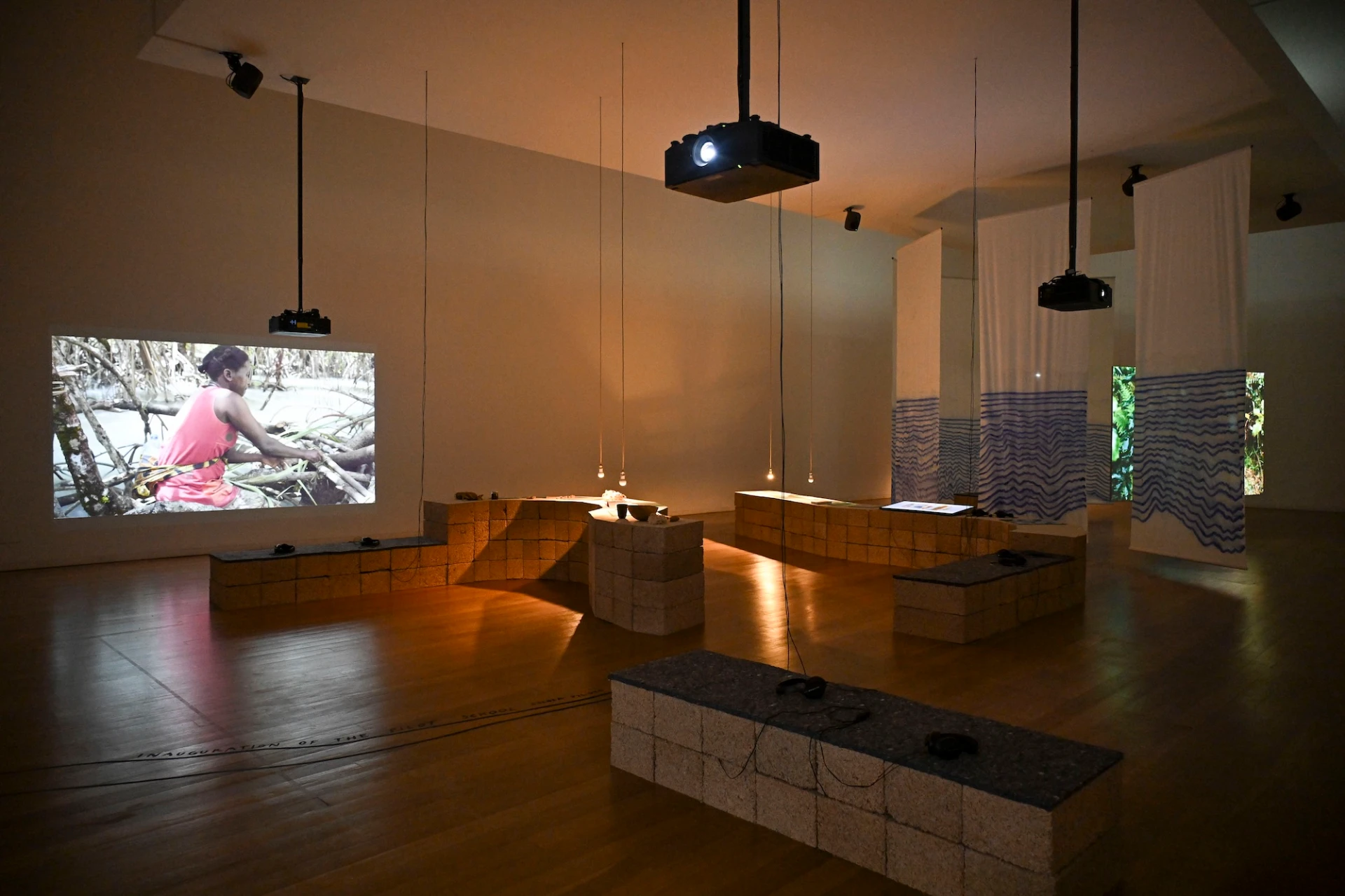
Meteorizações, by Filipa César
By Débora Valeixo Rana
Next
article
07 Apr 2026
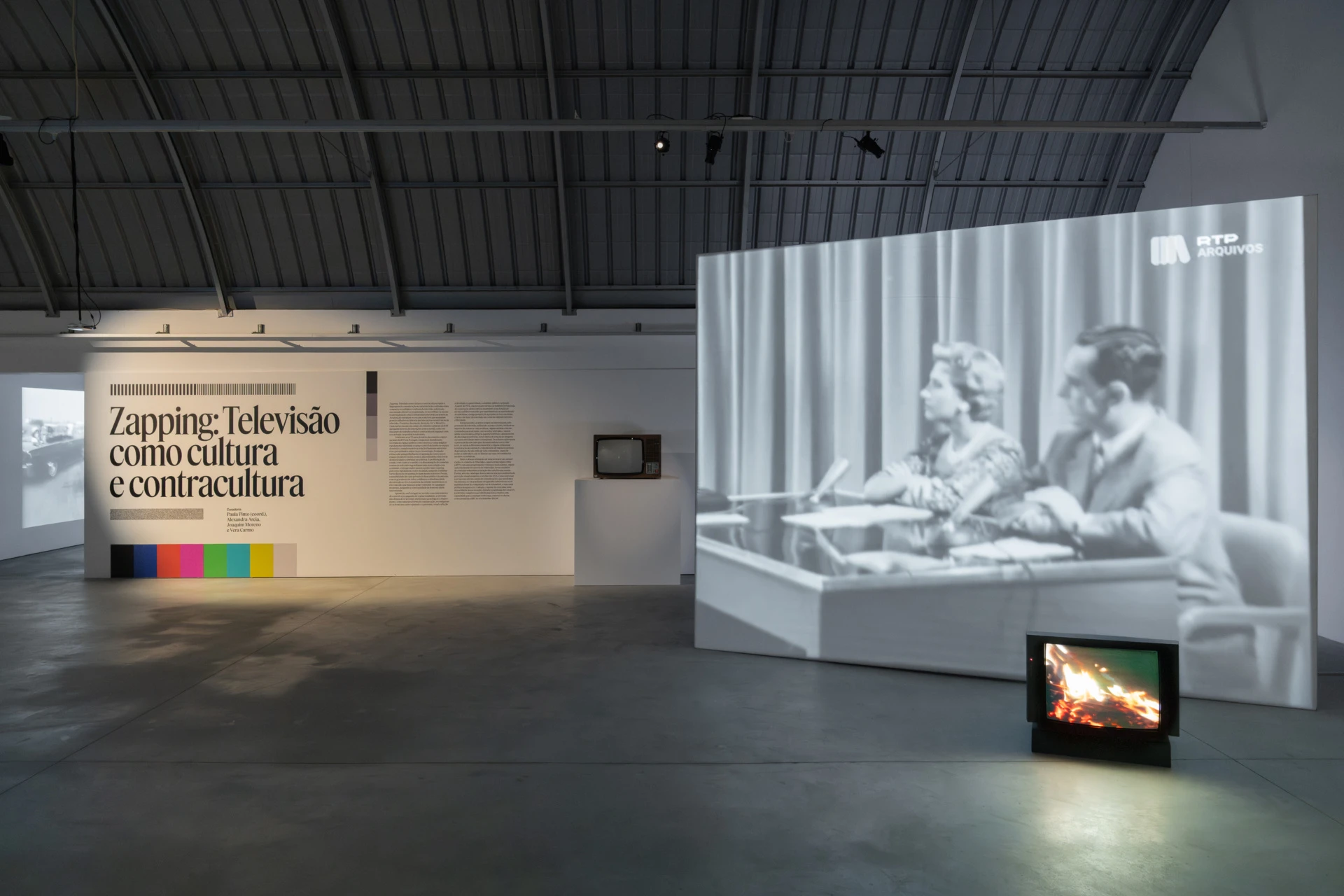
Zapping: Television as Culture and Counterculture
By Mariana Machado
Related Posts
article
-6qspq.jpg)
07 APR 2026
RedSkyFalls, Portugal at the Venice Biennale: An Interview with Alexandre Estrela
By Matteo Bergamini
article
12 FEB 2026
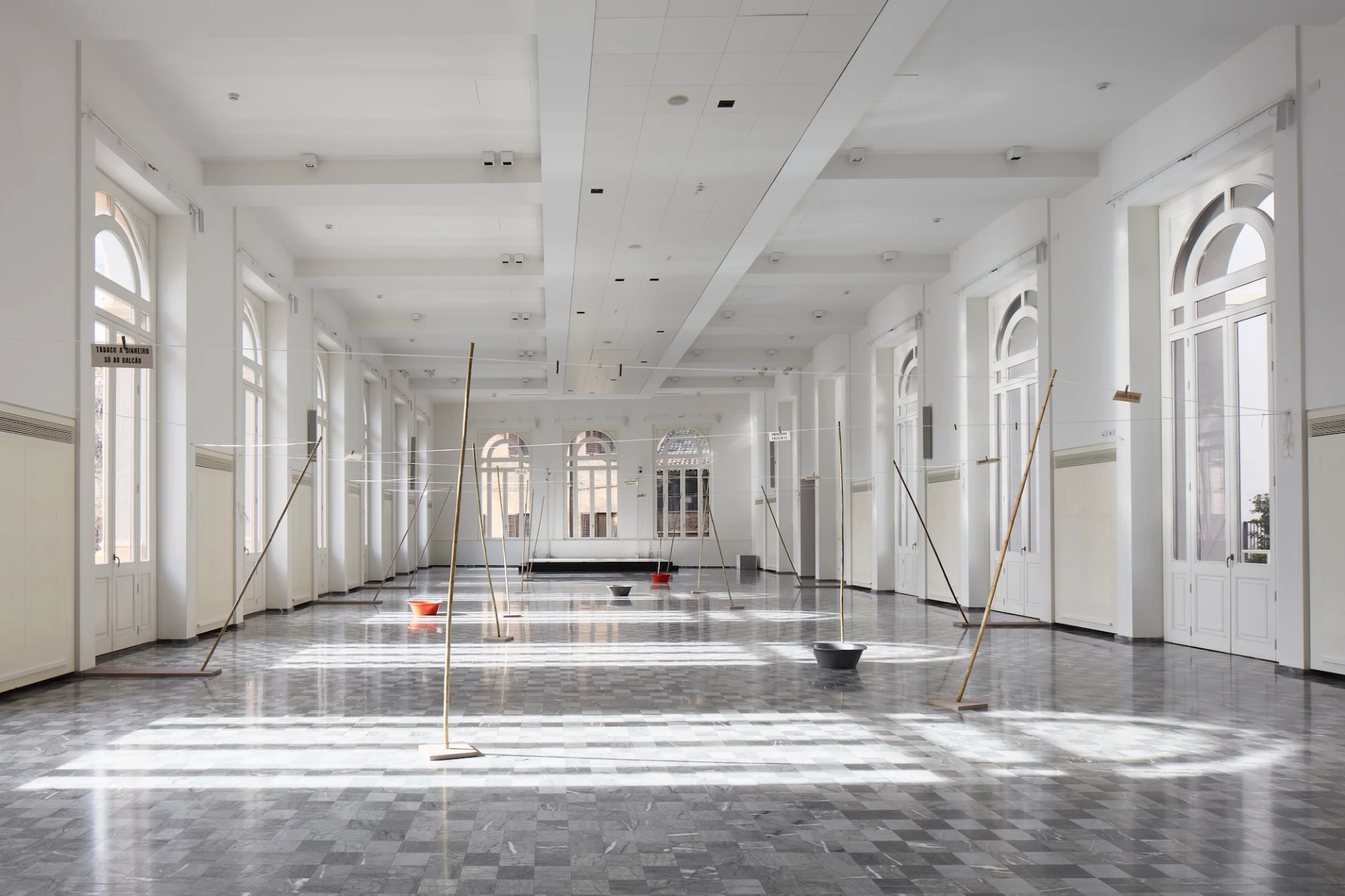
Stories of shadows and worlds: Francisco Tropa in Bologna
By Matteo Bergamini
article
04 FEB 2026
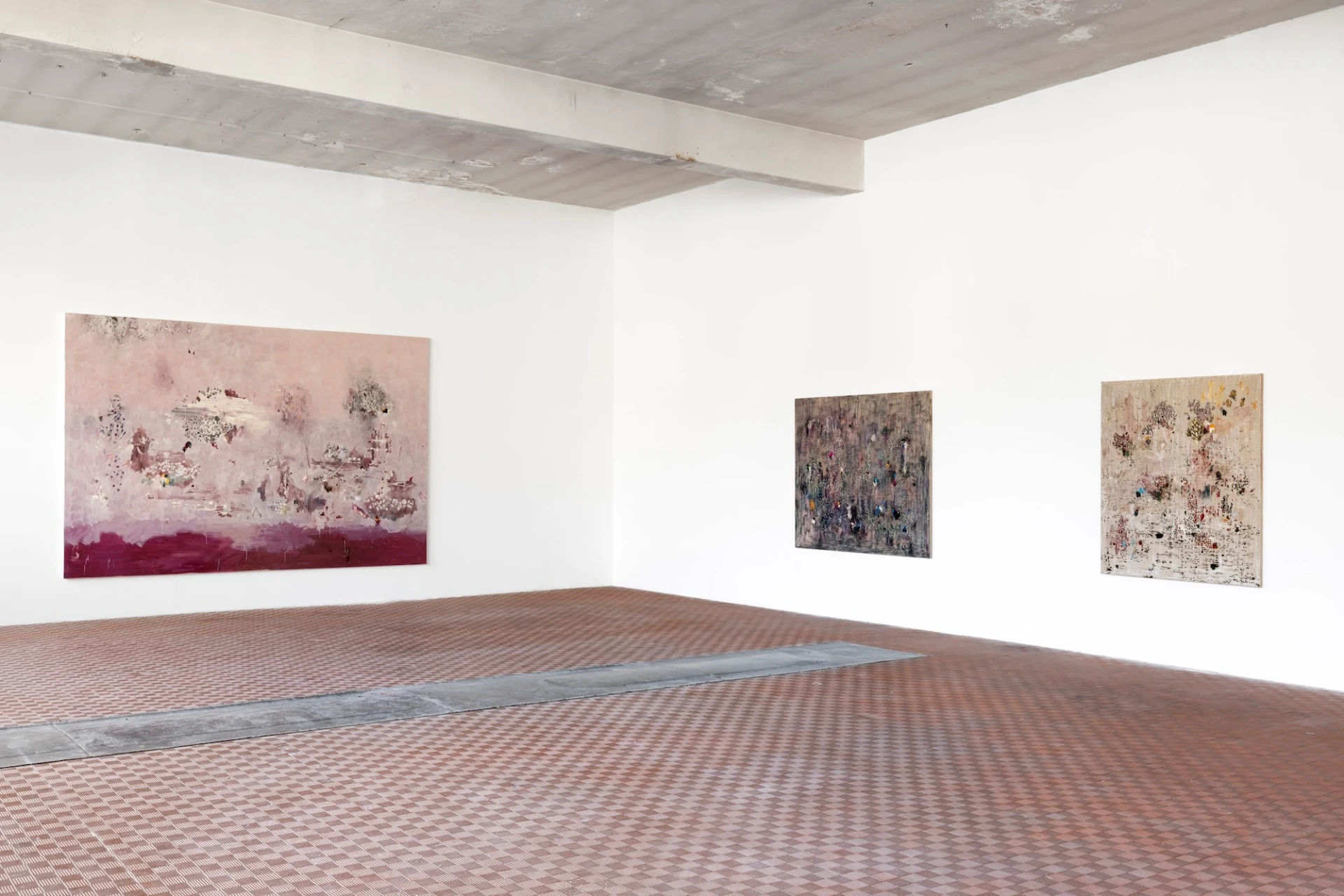
The landscape in Rodamoinho: Marina Rheingantz at the ICA in Milan
By Matteo Bergamini
article
05 AUG 2024
Yet another title for contemporaneity
By Matteo Bergamini